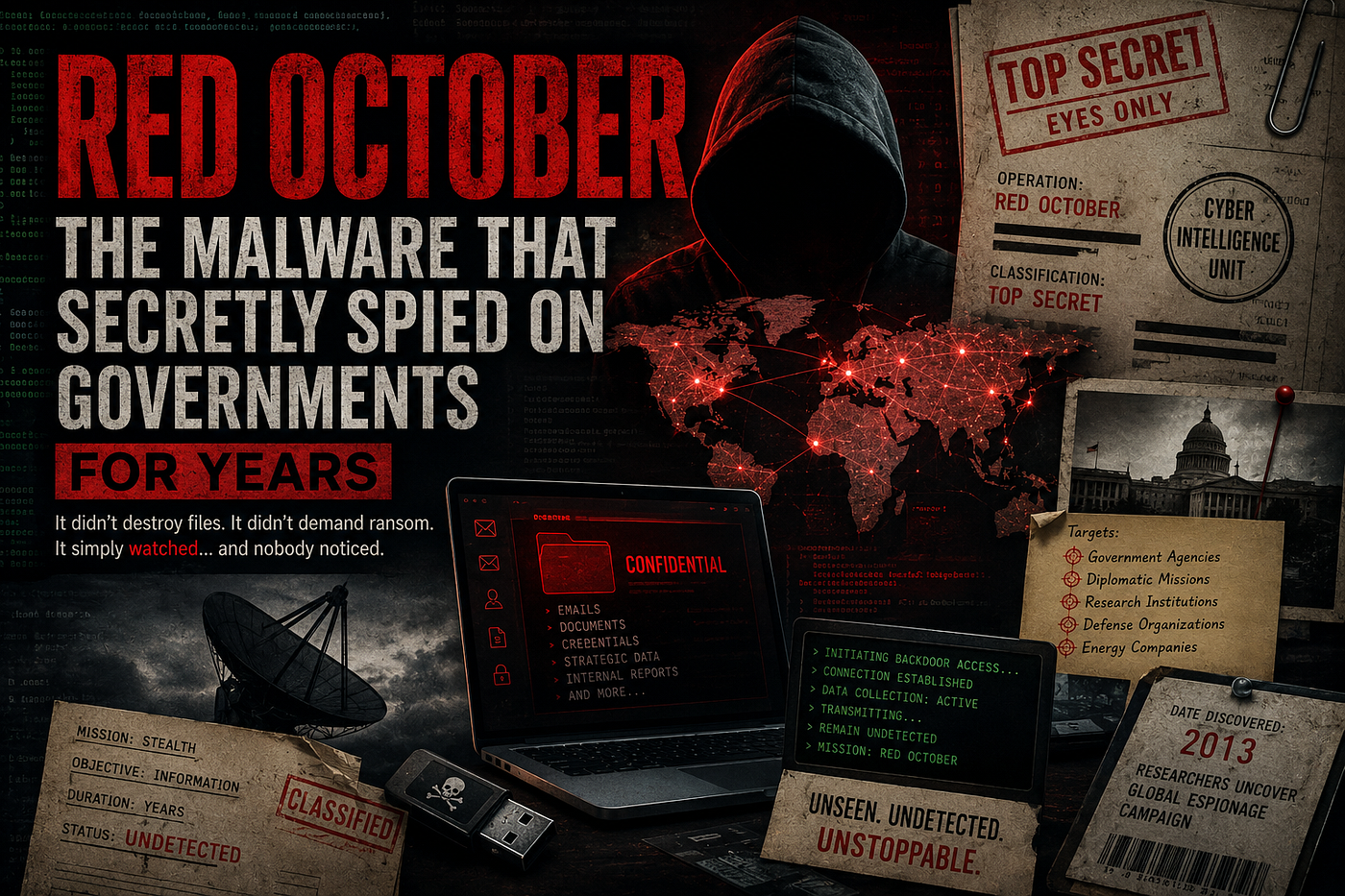
The Malware That Secretly Spied on Governments for Years
It didn’t destroy files. It didn’t demand ransom. It simply watched… and nobody noticed.
The Malware That Secretly Spied on Governments for Years
It didn’t destroy files. It didn’t demand ransom. It simply watched… and nobody noticed.
Imagine someone breaking into your office.
They don’t steal anything.
They don’t leave a message.
They don’t make a sound.
Instead, they quietly read your documents, copy your emails, and watch everything you do for years.
That’s essentially what one of the most sophisticated cyber-espionage campaigns in history did.
Its name was Red October.
And for years, it secretly collected information from governments, diplomatic organizations, research institutions, and embassies around the world.
━━━━━━━━━━━━━━━━━━
🌍 The Discovery
In 2013, cybersecurity researchers uncovered a massive cyber-espionage operation that had been running largely undetected for years.
The malware campaign was nicknamed Red October, inspired by the famous Cold War novel and film.
What researchers found was alarming.
The malware had infected organizations in dozens of countries and was specifically targeting institutions that handled sensitive information.
This wasn’t cybercrime motivated by money.
This was cyber-espionage.
━━━━━━━━━━━━━━━━━━
🎯 Who Was Being Targeted?
The victims reportedly included:
🏛️ Government agencies
🌐 Diplomatic missions
🔬 Scientific research organizations
⚡ Energy companies
🛰️ Aerospace and defense organizations
The attackers weren’t interested in crashing systems.
They wanted information.
Lots of it.
━━━━━━━━━━━━━━━━━━
🦠 How Did It Infect Systems?
Like many sophisticated attacks, the campaign often began with something simple:
An email.
Victims reportedly received carefully crafted messages containing malicious attachments.
Once opened, the malware quietly installed itself on the system.
No alarms.
No obvious warning signs.
The infection happened silently.
━━━━━━━━━━━━━━━━━━
👀 What Made It So Dangerous?
Most malware wants to make itself known.
Ransomware encrypts files.
Banking malware steals money.
Red October had a different mission.
It wanted to remain invisible.
The malware was capable of collecting:
📧 Emails
📄 Documents
🔑 Credentials
📱 Information from mobile devices
💾 Files stored on removable media
The campaign’s primary weapon wasn’t destruction.
It was patience.
━━━━━━━━━━━━━━━━━━
🕵️ Years of Espionage
What shocked researchers most wasn’t just the malware itself.
It was how long the operation had remained active.
For years, the attackers quietly gathered information from infected systems.
Every stolen document.
Every captured credential.
Every email.
Piece by piece, valuable intelligence was being collected.
The victims often had no idea they were being watched.
━━━━━━━━━━━━━━━━━━
💡 Why This Story Matters
Cybersecurity discussions often focus on ransomware and financial crime.
But some attackers don’t want money.
They want information.
Trade secrets.
Research.
Intelligence.
Strategic advantage.
And unlike ransomware, espionage operations often try to remain hidden for as long as possible.
The longer they stay undetected, the more valuable the stolen information becomes.
━━━━━━━━━━━━━━━━━━
🛡️ What Can We Learn From This?
Red October demonstrated several important cybersecurity lessons:
⚠️ Not every attack is financially motivated.
⚠️ Email attachments remain one of the most effective attack vectors.
⚠️ Sophisticated attackers often prioritize stealth over destruction.
⚠️ Detection and monitoring are just as important as prevention.
━━━━━━━━━━━━━━━━━━
🧠 One Thing to Remember
The most dangerous cyberattacks aren’t always the loudest ones.
Sometimes there are no ransom notes.
No website defacements.
No systems crashing.
Sometimes attackers simply sit quietly in the shadows, collecting information for months or even years.
Because in cyber-espionage, the goal isn’t to break the system.
It’s to understand it better than the people who own it.
Follow for more…….
메타데이터
- post_id
- 03735a36588a
- slug
- the-malware-that-secretly-spied-on-governments-for-years-03735a36588a
- url
- https://medium.com/@bensec/the-malware-that-secretly-spied-on-governments-for-years-03735a36588a
- canonical_url
- https://medium.com/@bensec/the-malware-that-secretly-spied-on-governments-for-years-03735a36588a
- author_url
- https://medium.com/@bensec
- status
- ok
- fetched_at
- 2026-08-19 01:22:14



