A Guided Tour Through Madrid’s Highlights: Comparing Four Iconic Areas
Introduction:
A Guided Tour Through Madrid’s Highlights: Comparing Four Iconic Areas
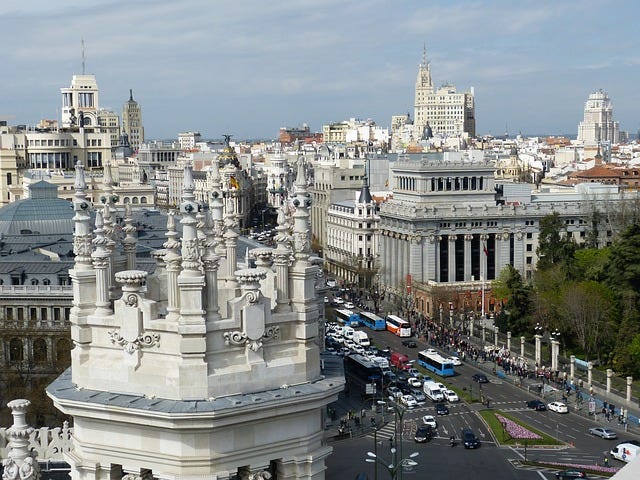
Discover the secrets of Madrid and plan your visit with more details here!
Introduction:
Welcome to **Madrid, the heart of Spain, where history, art, and culture blend seamlessly. In this guided tour, we’ll explore four iconic areas that tell the city’s rich story: Royal Palace, Prado Museum, Almudena Cathedral, and Plaza de la Villa**. Each stop has its own unique charm, and by the end of this journey, you’ll know which one calls to you the most.
1. Royal Palace: A Regal Step Back in Time

Explore the grandeur of the Royal Palace and find everything you need to plan your visit.
We begin our tour at the Royal Palace of Madrid (Palacio Real), a magnificent symbol of Spain’s monarchy and one of the largest palaces in Europe. Construction began in 1738 under the orders of King Philip V, on the site of the old Alcázar of Madrid, which had burned down in 1734. The palace was completed in 1755, during the reign of Charles III, who became its first royal resident.
The palace boasts 3,418 rooms, including the Throne Room, with its opulent red velvet walls and gilded decor, and the Royal Chapel, where ornate frescos adorn the ceiling. The Royal Armoury displays a fascinating collection of ceremonial swords, shields, and armor, some dating back to the 16th century.
Its gardens are equally stunning. The Sabatini Gardens, built in a neoclassical style, offer a tranquil retreat, while the Campo del Moro Gardens give sweeping views of the palace, framed by lush greenery.
Historical Highlights:
- 1738: Construction begins under Philip V.
- 1755: Officially completed; Charles III moves in.
- The palace was used as the royal residence until 1931, when King Alfonso XIII went into exile.
Why Visit?

Uncover the fascinating history of the Royal Palace — learn more about it here!
It’s a must-see for history enthusiasts, architecture lovers, and anyone intrigued by royal traditions. Guided tours give insight into centuries of Spanish history and monarchy.
Pro Tips:
- Book tickets in advance to avoid long queues.
- Visit in the evening for stunning views as the palace lights up.
- Time your visit with the changing of the guard, held on Wednesdays and Saturdays.
What’s Next? Let’s head toward the world of timeless art at the Prado Museum.
2. Prado Museum: A Treasure Trove of Art and History

Take a deeper dive into Prado Museum’s treasures and discover how to visit it here.
Our next stop is the Prado Museum (Museo del Prado), a cornerstone of Madrid’s cultural identity and one of the most prestigious art galleries in the world. Opened in 1819, the museum was originally conceived by King Charles III in 1785 as a natural history cabinet. However, it was his grandson, King Ferdinand VII, and Queen Maria Isabel de Braganza who transformed it into an art museum to showcase the Spanish crown’s vast collection.
Artistic Highlights:
The museum houses over 8,000 paintings and 700 sculptures, though only a fraction are on display. Among its treasures are masterpieces by Spanish artists like Diego Velázquez, Francisco de Goya, and El Greco, as well as works by international greats like Titian, Rubens, and Hieronymus Bosch.
- Las Meninas (1656) by Velázquez: Often called the “world’s greatest painting,” this enigmatic work offers a behind-the-scenes look at royal life.
- The Garden of Earthly Delights (c. 1500) by Bosch: A surreal triptych that captivates with its fantastical imagery.
- The Third of May 1808 (1814) by Goya: A poignant tribute to Spanish resistance during the Napoleonic Wars.
Historical Facts:
- 1819: The Prado officially opens to the public with just 311 works, primarily from the royal collection.
- 1868: The museum’s collections are nationalized, making them public property.
- During the Spanish Civil War (1936–1939), many artworks were evacuated to protect them from damage.
- In 2019, the Prado celebrated its bicentenary, solidifying its status as a cultural icon.
Why Visit?
The Prado isn’t just about admiring art; it’s about stepping into history. Every brushstroke tells a story, from the grandeur of Spain’s golden age to the trials of war and revolution. Whether you’re an art expert or a casual visitor, the museum offers a deeply moving experience.
Pro Tips:
- Free admission is available during the last two hours of the day (Monday to Saturday, 6 PM–8 PM; Sundays, 5 PM–7 PM).
- Wear comfortable shoes — you’ll be walking a lot!
- Combine your visit with a stroll through El Retiro Park, just a short walk away, to reflect on the art you’ve seen.

Ready to visit Prado Museum? Click here to see what awaits you!
The Prado Museum embodies Madrid’s soul, blending art, history, and culture in a way few places can. Next stop? Let’s explore the spiritual beauty of Almudena Cathedral!
3. Almudena Cathedral: A Modern Masterpiece with a Historical Soul

Discover the magic of Almudena Cathedral— find all the details you need to explore it.
From the Royal Palace, a short walk brings us to the magnificent **Almudena Cathedral (Catedral de la Almudena), a landmark that bridges Madrid’s medieval past and modern present. Though its construction was completed in 1993**, the story of this cathedral spans over two centuries, making it a fascinating blend of history, religion, and architectural styles.
Historical Journey:
- 1561: Madrid becomes the capital of Spain, but it lacks a grand cathedral, unlike other major cities.
- 1624: Plans for a cathedral dedicated to the Virgin of Almudena are first proposed, honoring Madrid’s patron saint.
- 1883: Construction officially begins, initiated by King Alfonso XII and Queen María de las Mercedes, whose untimely death inspired the cathedral’s dedication to her memory.
- The original design by Francisco de Cubas envisioned a neo-Gothic cathedral, but construction delays and political turmoil caused numerous modifications.
- 1993: After more than 100 years, the cathedral is consecrated by Pope John Paul II, becoming one of Europe’s newest major cathedrals.
Architectural Highlights:
The Almudena Cathedral is a fascinating mix of styles:
- The neo-Gothic interior features colorful, modern stained glass and a vibrant ceiling adorned with geometric patterns.
- The neoclassical facade harmonizes with the adjacent Royal Palace, giving the area a unified appearance.
- The crypt, built in a neo-Romanesque style, is one of the oldest parts of the cathedral and houses a revered 16th-century image of the Virgin of Almudena.
- The dome, accessible for a small fee, offers breathtaking 360-degree views of Madrid, including the Royal Palace and Casa de Campo.
Religious Significance:
The cathedral is dedicated to Nuestra Señora de la Almudena, Madrid’s patron saint. Legend has it that during the Reconquista in the 11th century, a hidden statue of the Virgin Mary was miraculously discovered in the city walls. This sacred image now resides in the cathedral, drawing pilgrims and visitors alike.
Key Dates:
- 1883: Construction begins.
- 1911: The crypt is opened for worship.
- 1993: Consecration by Pope John Paul II.
Why Visit?
The Almudena Cathedral is more than just a place of worship — it’s a testament to Madrid’s resilience and ability to adapt through changing times. Its unique combination of old and new creates a distinct atmosphere that’s both inspiring and tranquil.

Learn more about this iconic landmark and start planning your Almudena Cathedral experience today!
Pro Tips:
- Visit in the late afternoon to climb the dome during golden hour. The views are magical as the sun sets over Madrid.
- Don’t miss the Cathedral Museum, which includes artifacts and offers insight into the cathedral’s complex history.
- Pair your visit with the Royal Palace — it’s right next door, and the two complement each other beautifully.
The Almudena Cathedral stands as a symbol of Madrid’s enduring spirit, uniting the past and the present in a single breathtaking structure. Let’s continue to our final stop: the historic Plaza de la Villa.
4. Plaza de la Villa: A Window into Madrid’s Medieval Heart
Find out why the Plaza de la Villa is a must-see destination — more info here!
Our journey concludes at the Plaza de la Villa, one of Madrid’s oldest and most atmospheric squares. Nestled in the heart of the city’s historic district, this small yet significant plaza offers a glimpse into medieval Madrid, a time before the bustling boulevards and grand palaces we see today.
Historical Background:
- The square dates back to the 15th century and was once a vital center of civic life. Its name, “Plaza de la Villa,” means “Square of the Town,” reflecting its role as the nucleus of local governance during Madrid’s early days.
- In the 16th century, Madrid’s population grew significantly after the city became Spain’s capital in 1561, and Plaza de la Villa became a hub for political and social gatherings.
The square is surrounded by three historic buildings, each with its own story:
1 Casa de la Villa (17th Century):
- Built in 1644 during the reign of King Philip IV, this Baroque-style building served as Madrid’s City Hall until 2007.
- Designed by architects Juan Gómez de Mora and Teodoro Ardemans, its facade features elegant stonework and a central balcony used for public announcements.
- Inside, the interiors are richly decorated, showcasing the grandeur of Madrid’s administrative past.
2 Casa de Cisneros (16th Century):
- Built in 1537 by Cardinal Cisneros’s nephew, this Renaissance-style palace later became part of the municipal offices.
- Its arched passageway, connecting to Casa de la Villa, is a striking architectural feature, blending medieval charm with Renaissance elegance.
3 Casa y Torre de los Lujanes (15th Century):
- This is one of the oldest civil buildings in Madrid, constructed in a Mudéjar-Gothic style.
- The Lujanes family owned the house, which is believed to have temporarily housed King Francis I of France as a prisoner after his defeat at the Battle of Pavia in 1525.
Architectural Features:
The square is a visual treat for history lovers. Cobblestone streets, wrought-iron balconies, and intricate stone carvings transport you back to a time when Madrid was a small but vibrant town. In the center of the plaza stands a statue of Álvaro de Bazán, a 16th-century naval hero, sculpted by Mariano Benlliure in 1891.
Why Visit?
**Plaza de la Villa** offers a peaceful escape from Madrid’s busier attractions. It’s a place to pause and imagine what life might have been like centuries ago. The square’s historic significance and architectural beauty make it a favorite for photographers and history enthusiasts alike.

Plan your visit to Plaza de la Villa and learn all about its wonders here.
Pro Tips:
- Visit in the early morning or late afternoon to enjoy the square when it’s quieter.
- Join a walking tour to learn about the fascinating stories behind the surrounding buildings.
- From here, take a short stroll to San Miguel Market, where you can enjoy local delicacies after immersing yourself in history.
Key Dates:
- 15th Century: Plaza de la Villa becomes the administrative hub of medieval Madrid.
- 1537: Casa de Cisneros is built.
- 1644: Casa de la Villa is constructed as Madrid’s City Hall.
- 1525: King Francis I of France is held in Casa de los Lujanes after his capture.
5. Seven Hidden Gems and Must-Visit Spots in Madrid

Take the first step in your Gran Vía journey — get the full guide here!
Madrid is a city that never stops giving! Beyond its iconic landmarks, it’s filled with hidden gems, cultural experiences, and vibrant spots that cater to every interest. Here are 7 must-visit destinations to make your Madrid adventure even more unforgettable:
1. Santiago Bernabéu Stadium
If you’re a football fan, visiting the **Santiago Bernabéu Stadium is a dream come true. Home to Real Madrid**, one of the world’s most famous football clubs, the stadium offers guided tours that let you walk onto the pitch, visit the locker rooms, and admire the glittering trophy room. Even non-football fans will be impressed by the history and passion on display here.
2. El Retiro Park
Escape the hustle and bustle of the city at **El Retiro Park, a lush green oasis in the heart of Madrid. Take a leisurely stroll, row a boat on the park’s iconic lake, or admire the stunning Crystal Palace**, an architectural gem often hosting art exhibitions. It’s the perfect spot to relax and soak up Madrid’s vibrant yet serene atmosphere.
3. Flamenco Shows in Tablaos

Explore Madrid’s Flamenco culture and find the perfect tablao to visit!
Dive into the passionate world of **flamenco by attending a live show at a tablao, such as Casa Patas or Corral de la Morería**. With soulful singing, rhythmic guitar playing, and powerful dancing, flamenco is a quintessential Spanish experience that will leave you spellbound. Combine it with a traditional Spanish dinner for an unforgettable night.
4. Mercado de San Miguel
For food lovers, the **Mercado de San Miguel** is a feast for the senses. This historic market is a hub for gourmet tapas, fresh seafood, artisan cheeses, and more. Grab a bite of Iberian ham or sip on a glass of Spanish wine as you explore the lively stalls and mingle with locals.
5. Temple of Debod
Discover a piece of ancient Egypt in Madrid at the **Temple of Debod. This 2,200-year-old temple was gifted to Spain by Egypt in 1968 and is now a unique cultural site. Located in Parque del Oeste**, it offers stunning sunset views over Madrid, making it a favorite spot for photographers and romantics alike.
6. Las Ventas Bullring
Dive into Spanish culture and history at Las Ventas, the world-famous bullring. While bullfighting may not be for everyone, the architecture and history of the arena are worth exploring. The **Bullfighting Museum** inside provides insights into this controversial yet significant part of Spanish heritage.
7. Gran Vía
No trip to Madrid is complete without walking down **Gran Vía**, the city’s bustling main avenue. Lined with stunning early 20th-century architecture, high-end shops, theaters, and restaurants, it’s the perfect place to experience Madrid’s urban energy. At night, the street lights up, making it ideal for a stroll after dinner.
These destinations offer something for everyone, from sports and culture to relaxation and adventure. Which one will you explore first? Madrid promises memories at every turn!
Madrid is a city that weaves together centuries of history, artistic masterpieces, vibrant traditions, and modern energy. From the regal elegance of the Royal Palace, where Spain’s monarchic past comes to life, to the world-renowned Prado Museum, housing treasures from Velázquez to Goya, every corner tells a story. The spiritual beauty of Almudena Cathedral blends the city’s historical soul with modern charm, while the medieval Plaza de la Villa takes visitors back to Madrid’s early days as a bustling town square.
Beyond these iconic landmarks, Madrid offers even more: the electrifying atmosphere of Santiago Bernabéu Stadium, the peaceful retreat of El Retiro Park, the soulful passion of flamenco shows, and the culinary delights of Mercado de San Miguel. Whether admiring the Temple of Debod’s sunsets, exploring the cultural heritage of Las Ventas Bullring, or strolling down the dynamic Gran Vía, Madrid enchants with its endless contrasts.
This guide captures the essence of **Madrid**, a city that promises unforgettable experiences at every turn. Dive into its royal history, artistic treasures, and cultural vibrancy to create memories that last a lifetime!
메타데이터
- post_id
- 037a3a367b5b
- slug
- a-guided-tour-through-madrids-highlights-comparing-four-iconic-areas-037a3a367b5b
- url
- https://medium.com/@rabhnasr/a-guided-tour-through-madrids-highlights-comparing-four-iconic-areas-037a3a367b5b
- canonical_url
- https://medium.com/@rabhnasr/a-guided-tour-through-madrids-highlights-comparing-four-iconic-areas-037a3a367b5b
- author_url
- https://medium.com/@rabhnasr
- status
- ok
- fetched_at
- 2026-06-27 07:40:21