Best 2026 Platform for Digital Reading Of Books And Magazines for Students
The problem: Hopping between separate apps for PDFs, news, and notes eats away at your time, your focus, and your budget — even though none…

Best 2026 Platform for Digital Reading Of Books And Magazines for Students
- The problem: Hopping between separate apps for PDFs, news, and notes eats away at your time, your focus, and your budget — even though none of it feels like a big deal in the moment.
- The fix: Bring your reading together in one ad-free library spanning genres like Science, Tech, and History, all under a single login and a single bill instead of a handful of scattered subscriptions.
- The habit shift: Swap passive skimming for active highlighting and bookmarking, so what you read stays searchable later instead of vanishing into your browsing history.
- The payoff: Steady annotation over time builds a personal “second brain” — an actual, searchable knowledge base you can draw on for exams, research, or a thesis when you need it.
- The focus angle: A clean, notification-free space guards your attention and pulls you out of the narrow, repetitive loop most algorithm-driven feeds quietly trap you in.
- The cost angle: A single bundled subscription almost always works out cheaper than piecing together several separate magazines, apps, and books across a year.
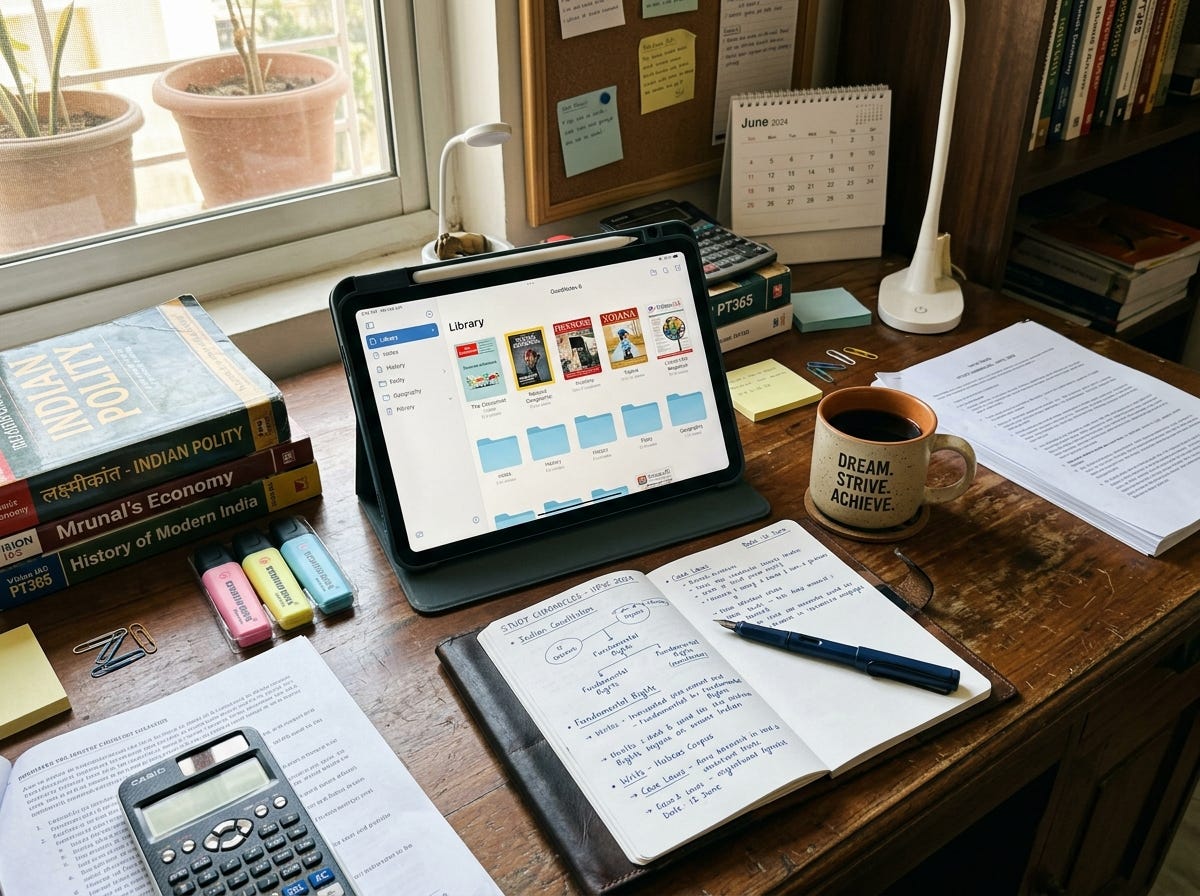
If you’re a student in 2026, you’ve probably got a phone full of apps you forgot you downloaded. A news app for headlines. A PDF reader for that one research paper. A magazine app you signed up for during a free trial and never cancelled. A note-taking app for the stuff you actually want to remember.
None of it is connected. All of it costs something, in money or in the mental energy it takes to keep track of.
This is the case for treating your reading like a single, organized system instead of a pile of separate tools — and why an *all-in-one digital library* for students is worth actually looking into, rather than adding one more app to the stack.
How to Manage Information Overload as a Student
It’s worth naming the actual problem here, because “just read less” isn’t useful advice. The real issue isn’t how much information exists — it’s how scattered it is.
Following a dozen different accounts, apps, and websites to stay current in your field doesn’t make you better informed. It usually just makes you tired. Knowing how to manage information overload for students really comes down to narrowing your sources to a few genuinely good ones and going deeper with them, rather than skimming everything shallowly across ten different tabs.
The Modern Student’s One-stop Digital Reading Platform
There’s a specific kind of tired that comes from managing too many logins. Not physically tired — just worn down by the small, constant decisions: which app has that article, which platform has your notes, which subscription is even still active.
Consolidating your academic reading into a single, consolidated online reading platform solves a problem most students don’t realize they have until it’s gone. One login. One place to search. One bill instead of four or five small, easy-to-forget ones.
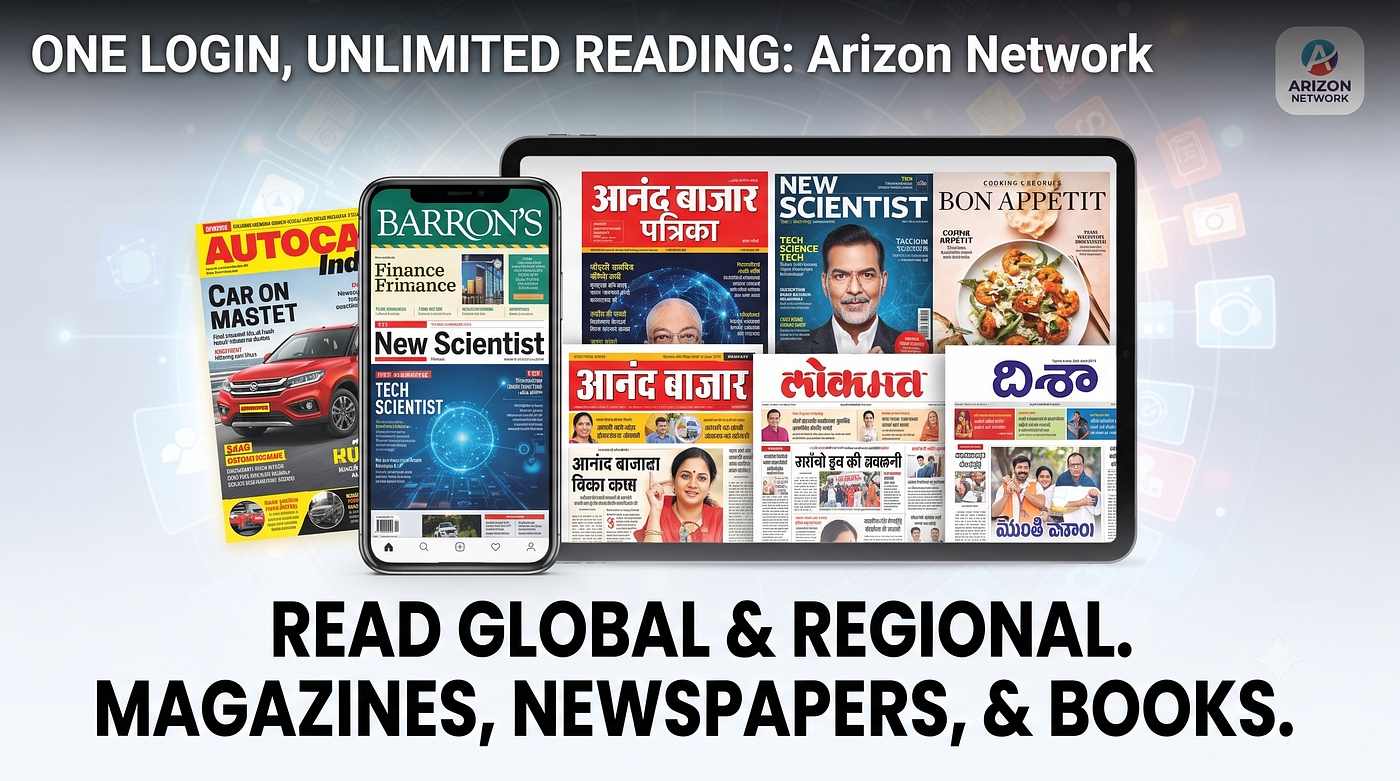
A platform like *Arizon Network *is built around exactly that idea — a single library covering magazines, newspapers, and books across dozens of genres, from History and Technology to Science, all under one subscription. If you’re looking for an affordable digital resource for university students that doesn’t mean stitching together five separate services, that kind of consolidation is where you start.
From Skimming to Deep Work: Hacking Your Reading Speed
Not all reading is created equal, and most students default to the least useful kind — passive skimming, where you finish an article and can’t actually explain what it said five minutes later.
A better way to improve your academic research workflow starts with active reading: highlighting as you go, bookmarking anything you’ll want to reference later, and actually organizing what you’ve read instead of letting it disappear into your browsing history. This is where digital study platforms for university research genuinely beat print. Searching for a keyword across months of back-issues takes seconds. Flipping through a stack of old magazines to find one paragraph does not.
If you’re wondering how to organize digital research and study notes without building an overly complicated system, the simplest version works best: bookmark as you read, highlight the specific lines you’d actually reuse, and revisit that collection every few weeks instead of letting it pile up unread. Over a semester, that habit is what turns scattered reading into real annotated study resources for students — and it’s a big part of how to streamline academic reading and research without adding more apps to your routine. Done consistently, it becomes a personalized digital knowledge base for learners that you actually built yourself, not a randomly saved pile of links.
Academic Digital Research Platforms Worth Knowing About in 2026
Beyond note apps and citation managers, having consistent online access to scholarly journals, books and magazines matters more than students often give it credit for. A history student who can search across years of History-focused magazine coverage, or a science student following ongoing reporting in a title like New Scientist, is building context that a single textbook chapter can’t provide.
This is really the difference between digital study platforms for university research that just store information, and ones that help you actually think with it.
The Curiosity-First Habit: Exploring Beyond the Classroom
Here’s something that gets lost in a lot of “productivity” advice: curiosity is not a distraction from studying. It’s often what makes studying sustainable in the first place.
Tech-savvy students already know this instinctively — they’ll happily go down a rabbit hole about a niche topic on their own time, the same curiosity that, pointed at their coursework, becomes genuine engagement instead of obligation. A broad library that covers Technology, Science, and History alongside more casual genres gives that instinct somewhere useful to go, instead of just another algorithm-fed feed.
This matters for a simple reason: the “why students should switch from print to digital reading” conversation usually focuses on convenience, but the real upgrade is breadth. A physical magazine subscription locks you into one title. A *digital library* lets you wander from a technology feature into a history deep-dive in the same sitting, for the same subscription.
More Than Just Study: How Reading Helps You Recharge
Not every reading session needs to be productive and treating it that way eventually burns people out.
There’s a real difference between the “snack” of short-form content — quick, satisfying, forgotten in ten minutes — and the “full meal” of a well-written magazine feature or a book chapter that actually sits with you afterward. Both have their place. The problem is when snack-content is the only thing available, which is basically the default state of most social feeds.
A clean, ad-free library works as a kind of digital oasis for exactly this reason. No algorithm trying to keep you scrolling. No comment section pulling you into an argument. Just content you actually chose to read, in a format built for reading rather than engagement metrics.
The Discovery Crisis: Digital Library for University Students 2026 to Find Content That Matches Your Interests
Algorithmic feeds have a specific failure mode: they get very good at giving you more of what you already clicked on, and very bad at introducing you to anything genuinely new. Over time, that narrows what you’re exposed to without you noticing it happening.
A curated library sidesteps this. Browsing a magazine catalog organized by genre — flipping from Science to History to Technology — surfaces things an algorithm never would have shown you, simply because it isn’t optimizing for your click history. If you’ve felt like your feeds have started to feel repetitive, that’s usually why, and it’s a real reason to look for a best digital library for university students in 2026 rather than just another app that learns your habits and narrows your world accordingly.
Protecting Your Focus in an AI-Saturated World
Constant notifications are the enemy of the kind of deep, sustained attention that actual learning requires. Every ping pulls you a little further from whatever you were reading, and getting back to that same depth of focus afterward takes longer than most people realize.
A dedicated *reading platform*, used deliberately, becomes a small pocket of protected focus in an otherwise noisy day. No push notifications competing for your attention mid-article. No autoplay next-video queue waiting the second you finish. Just the thing you opened it to read.
That’s a genuinely underrated reason to streamline your academic reading and research into fewer, calmer platforms — not because any single distraction is dangerous on its own, but because the cumulative effect of a dozen small interruptions adds up to a day where nothing gets your full attention.
Building Your “Second Brain”: Reading as a Long-Term Advantage
Everything you read and actually annotate becomes part of a personal, searchable knowledge base — one that grows more valuable the longer you keep it up. A single highlighted article isn’t much. A semester’s worth of annotated reading, organized and searchable, is a genuinely useful resource by the time you’re writing a thesis, prepping for an interview, or just trying to remember where you first encountered an idea.
This is the part of “digital native” life that’s genuinely an advantage over how earlier generations studied: nothing has to be lost. A physical magazine gets recycled. A digital *annotation* stays searchable indefinitely, which is exactly what makes annotated study resources for students worth building deliberately instead of leaving to chance.
The Cost Factor Nobody Should Ignore
Students are, understandably, price-conscious — and that’s not a reason to feel bad about wanting good value, it’s just good sense. Buying individual magazine subscriptions and books one at a time adds up fast, especially once you’re following more than two or three sources regularly.
A single, *affordable subscription* covering a broad library is almost always the more cost-effective way to get premium access, compared to paying for each title separately. It’s the same logic as any bundled service — a bit of a strange feeling in the beginning, and then, a few months in, you wonder why you were ever paying for things separately.
FAQ
What is the best alternative to multiple study apps?
Rather than replacing one app with another single-purpose one, look for a consolidated platform that covers several needs at once — reading, research, and note organization — under one login. That reduces both cost and the mental overhead of managing several accounts.
How do I improve my academic research workflow without adding more tools?
Start by consolidating, not adding. Pick one platform with strong search and annotation features and build the habit of highlighting and organizing as you read, rather than layering a separate app on top for notes.
Is online access to scholarly journals and magazines actually useful for undergraduates, or just for research students?
It’s useful at every level. Undergraduates benefit from the broader context and current developments that ongoing magazine coverage provides — it’s not only for dissertation-level research.
Why should students switch from print to digital reading specifically?
The biggest reason isn’t convenience, it’s breadth and searchability. A digital library lets you explore multiple genres under one subscription and search back through everything you’ve read, which print simply can’t offer.
How can I build a personalized digital knowledge base without a complicated system?
Keep it simple: bookmark as you go, highlight only the lines you’d genuinely reuse, and revisit your saved material every few weeks. Complexity is usually what causes these systems to get abandoned.
Is a digital library actually more affordable than buying magazines and books individually?
In most cases, yes. A single subscription covering a wide catalog is typically far cheaper than paying for even three or four individual magazine or book subscriptions across a year.
An earlier version of this article was shared by author on LinkedIn. Originally published at LinkedIn by the author (me) on July 16,2026.
메타데이터
- post_id
- 03c92f62e5b7
- slug
- best-2026-platform-for-digital-reading-of-books-and-magazines-for-students-03c92f62e5b7
- url
- https://medium.com/@CASSIANBLOG/best-2026-platform-for-digital-reading-of-books-and-magazines-for-students-03c92f62e5b7
- canonical_url
- https://medium.com/@CASSIANBLOG/best-2026-platform-for-digital-reading-of-books-and-magazines-for-students-03c92f62e5b7
- author_url
- https://medium.com/@CASSIANBLOG
- status
- ok
- fetched_at
- 2026-07-26 00:50:03