The Science of Functional Aging: The Critical Link Between NAD⁺ and Cellular Performance
NAD⁺ is not just a molecule, but a turning point in how we understand aging.
The Science of Functional Aging: The Critical Link Between NAD⁺ and Cellular Performance
NAD⁺ is not just a molecule, but a turning point in how we understand aging.
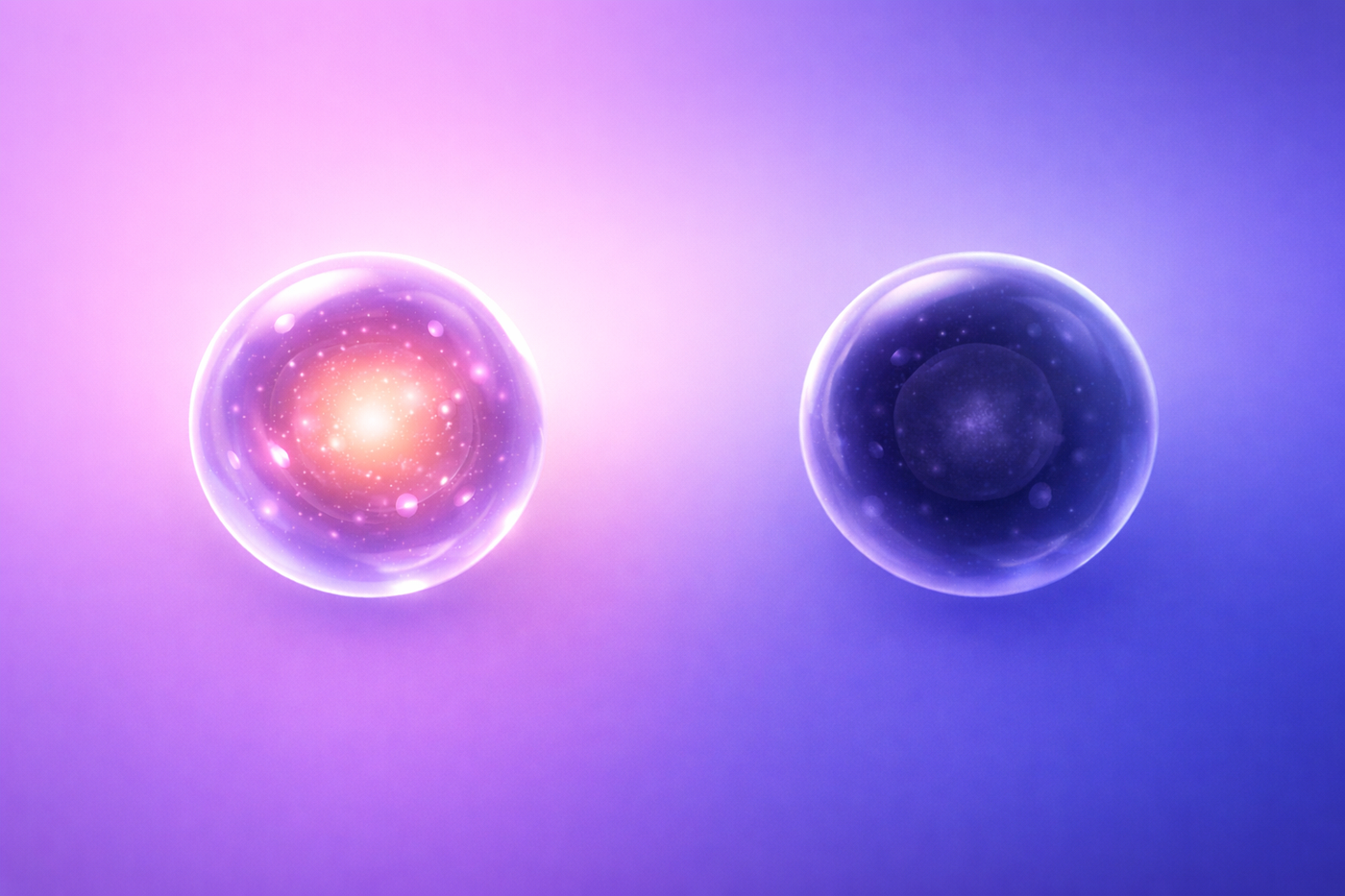
Skin aging is a form of functional aging
Skin aging begins with a decline in cellular function, not just the passage of time. This article explores how NAD⁺ decline disrupts mitochondrial activity and drives skin aging at the cellular level.
For over a century, scientists have studied NAD⁺. It is not a new molecule.
What is new is how we answer the question: Why do we age?
Today, aging is no longer seen simply as the passage of time. It is increasingly defined as the cumulative decline of cellular function. Cells remain alive, yet they gradually lose the ability to operate properly. To truly understand skin aging, we must look beyond the surface — and focus on what powers the cell from within.
Aging Begins with the Decline of Cellular Function
Conventional perspectives on aging have focused on the structural damage of cells and the extracellular matrix as the visible outcomes.
However, modern biology points to deeper underlying mechanisms.
Aging begins when cells lose their functional capacity:
- the ability to generate energy
- the ability to repair damage
- the ability to respond to stress
This shift reframes aging as a cellular function problem, not merely a structural one.

NAD⁺: The Common Denominator of Cellular Function
Because NAD⁺ is the common denominator across all critical cellular processes.
NAD⁺ is required for:
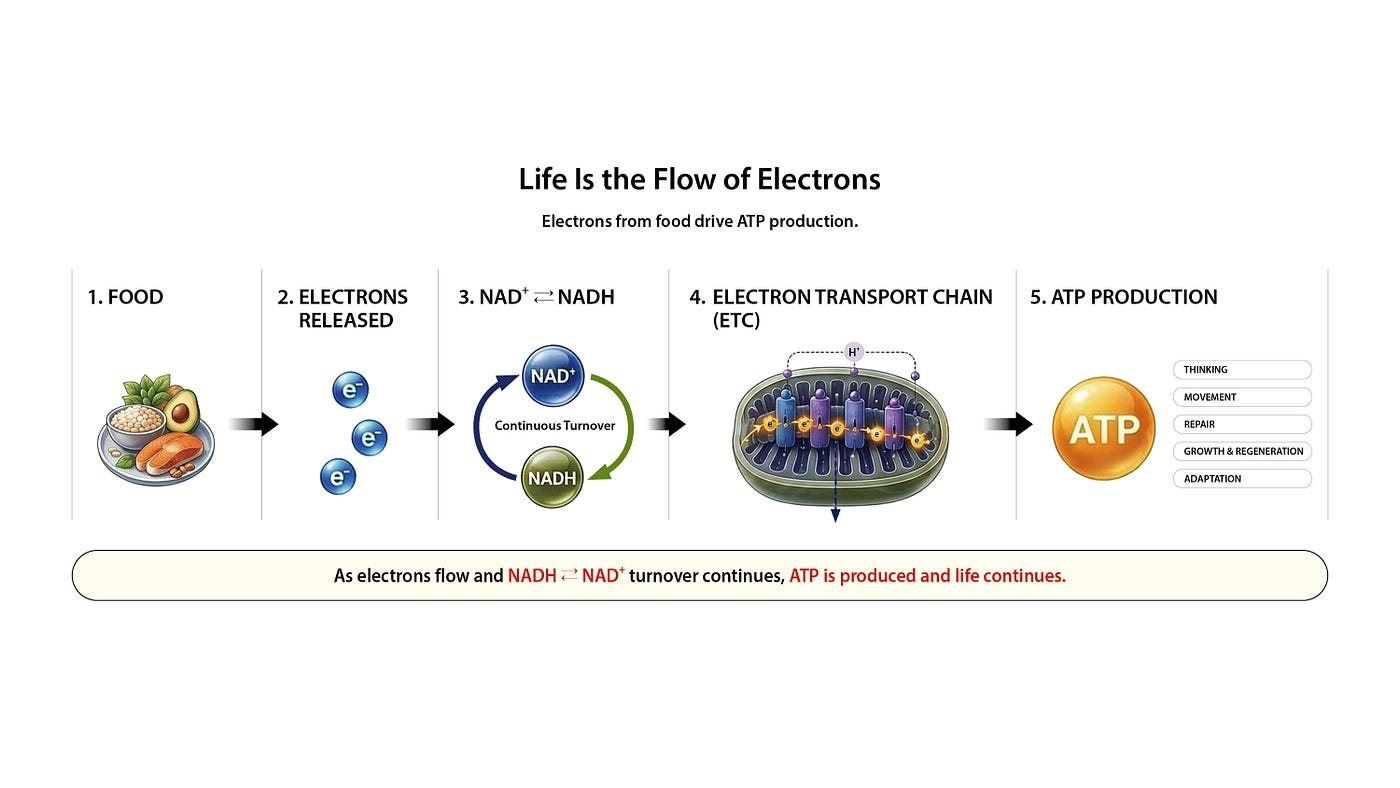
- Energy production (ATP synthesis in mitochondria)
- DNA repair and genomic stability
- Cellular stress response
- Intracellular signaling pathways
When NAD⁺ levels are sufficient, cells can function, adapt, and repair. When NAD⁺ declines, cellular systems begin to fail — even if the structure remains intact.
*“Aging is a disease that can be treated. Enhancing NAD⁺ is one of the key therapeutic strategies.” — David A. Sinclair*

When NAD⁺ Declines, the Cellular Engine Slows
NAD⁺ levels naturally decline with age.
As this happens:
- mitochondrial efficiency decreases
- cellular energy production slows
- accumulated damage is no longer properly repaired
The skin may still appear structurally present, but cellular function quietly shuts down.
The structure of the skin may remain intact for a while.
However, once cellular function ceases, the skin begins to age silently.
A structure without function eventually fails to sustain itself and collapses.
This is like a car that appears intact on the outside but has no fuel. At first, you might think it is simply stationary, but eventually, a car that cannot operate will gradually wither and fade away.
If the car’s exterior represents the skin, then:
- The engine is the mitochondria
- And NAD⁺ is the fuel that powers it.
Without restoring NAD⁺ at the cellular level, true functional recovery is impossible.
Why NAD⁺ Matters for Skin Aging
Superficial skin aging is merely a consequence.
Declining intracellular NAD⁺ leads to:
- reduced cellular vitality
- slower regeneration cycles
- impaired repair mechanisms
- visible aging over time
This is why focusing solely on visible results has its limits.
Skin aging is, fundamentally, a reflection of declining cellular function.
Conclusion
NAD⁺ is not new — but its role in aging is newly understood.
- Aging begins with the decline of cellular function.
- NAD⁺ is a key molecule that regulates energy, repair, and survival.
- A decline in NAD⁺ triggers mitochondrial dysfunction.
- Skin aging is the ultimate consequence of declining cellular performance.
Viewing aging through the lens of NAD⁺ shifts the perspective on skin aging from structural damage — a visible outcome — to the underlying biological mechanisms of cellular function.
ICM is not about supplementing the extracellular matrix (ECM), but a concept of intracellular functional molecules that reactivate cellular functions by restoring the intracellular NAD⁺ redox loop.
Next: Beyond Traditional Skin Boosters: Why the ICM Framework Supersedes the ECM
ICM concept, introduced in 2026
메타데이터
- post_id
- 03ce456eeaea
- slug
- the-science-of-functional-aging-the-critical-link-between-nad-and-cellular-performance-03ce456eeaea
- url
- https://medium.com/@covalttlab/the-science-of-functional-aging-the-critical-link-between-nad-and-cellular-performance-03ce456eeaea
- canonical_url
- https://medium.com/@covalttlab/the-science-of-functional-aging-the-critical-link-between-nad-and-cellular-performance-03ce456eeaea
- author_url
- https://medium.com/@covalttlab
- status
- ok
- fetched_at
- 2026-06-17 10:49:34