Why the Age of Mental Health Onset Just Dropped to 19
A 2026 Clinical Analysis of the Early Crisis and the Power of Intervention
Why the Age of Mental Health Onset Just Dropped to 19

Mental Health at 19: The Case for Early Intervention
A 2026 Clinical Analysis of the Early Crisis and the Power of Intervention
The year 2026 has brought a startling revelation to the forefront of global healthcare. For a long time, society viewed mental health struggles as problems that primarily affected adults in their mid-to-late twenties. However, the 77th Annual National Conference of the Indian Psychiatric Society (ANCIPS 2026) has released data that changes everything we thought we knew.
The latest clinical analysis shows that the median age for the onset of mental health conditions has dropped to 19. This shift indicates that the transition into adulthood is now the primary window where psychological challenges begin to surface.
The Data Behind the Shift
The findings from 2026 provide a detailed look at how mental health is affecting younger generations. It is no longer a hidden issue; it is a widespread reality. The data suggests that mental health conditions are developing much earlier than previous decades suggested.
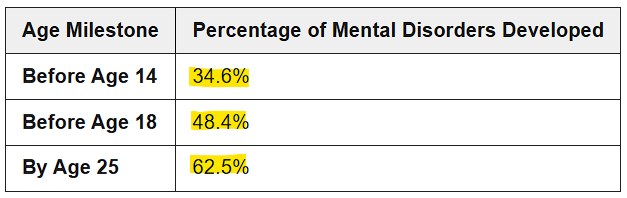
According to these reports, nearly 60 percent of all diagnosed mental health disorders now appear in individuals who are below the age of 35. With 19 being the median age, we are seeing a generation that is facing significant internal pressure at the exact moment they are expected to start their independent lives.
Why is 19 the Critical Age?
Experts at the 2026 conference pointed to several reasons why the age of onset has moved lower. It is a combination of biological timing and the modern environment.
- Neurological Maturity: The human brain is still developing until the mid-twenties. The area responsible for managing stress and emotions, the prefrontal cortex, is not fully mature at age 19. This makes young adults more vulnerable to the impact of trauma or high stress.
- The Digital Burden: Young adults today live in an “always-on” digital culture. Constant comparison on social media and the pressure to perform for a global audience can lead to deep feelings of inadequacy.
- The Post-Pandemic Ripple Effect: While the early 2020s feel like a lifetime ago, the social disruptions from that era have left a lasting mark on the developmental milestones of current 19-year-olds.
- Economic Pressure: The cost of education and the competitive nature of the 2026 job market create a heavy sense of “future anxiety.”
The Urgent Need for Early Professional Intervention
The most vital takeaway from this analysis is the importance of timing. Currently, there is a massive treatment gap. It is estimated that 70 to 80 percent of young people do not receive professional help when their symptoms first appear.
When a mental health condition starts at age 19 and remains untreated, it can affect a person for the rest of their life. It impacts their ability to finish school, maintain a job, and build healthy relationships.
Early professional intervention is not a sign of weakness; it is a strategic step for a healthy future. By addressing these issues at the median age of 19, we can provide young adults with the tools they need to build resilience. We must move away from the idea that someone should wait for a “crisis” before they see a therapist.
Moving Toward a Solution
We need to make mental health support as accessible as a general health check-up. Universities and workplaces must prioritise early intervention programs. If you are 19, or if you know someone who is, pay attention to the signs of persistent stress or withdrawal. Taking action today can change the trajectory of an entire life.
**Explore More About Mental Health**
Sources
- The Hindu — 60% of Mental Disorders Found in Patients Below 35: https://www.thehindu.com/sci-tech/health/60-of-mental-disorders-found-in-patients-below-35-years-indian-psychiatric-society/article70561575.ece
- Modern Shrines — Mental Health Crisis Strikes Early (2026 Analysis): https://modernshrines.in/2026/01/28/mental-health-crisis-strikes-early-60-of-disorders-found-in-people-below-35-experts-warn/
- World Health Organisation (WHO) — Adolescent Mental Health Fact Sheet: https://www.who.int/news-room/fact-sheets/detail/adolescent-mental-health
- The Zebra — Mental Health Statistics and Trends 2026: https://www.thezebra.com/resources/research/mental-health-statistics/
메타데이터
- post_id
- 03d8564cf022
- slug
- why-the-age-of-mental-health-onset-just-dropped-to-19-03d8564cf022
- url
- https://medium.com/@sksalman.skfgi/why-the-age-of-mental-health-onset-just-dropped-to-19-03d8564cf022
- canonical_url
- https://medium.com/@sksalman.skfgi/why-the-age-of-mental-health-onset-just-dropped-to-19-03d8564cf022
- author_url
- https://medium.com/@sksalman.skfgi
- status
- ok
- fetched_at
- 2026-07-17 15:34:10