SMT vs Through-Hole PCB Assembly: Choosing the Right Soldering Method for Modern Electronics
When PCB Decisions Start to Get Expensive
SMT vs Through-Hole PCB Assembly: Choosing the Right Soldering Method for Modern Electronics
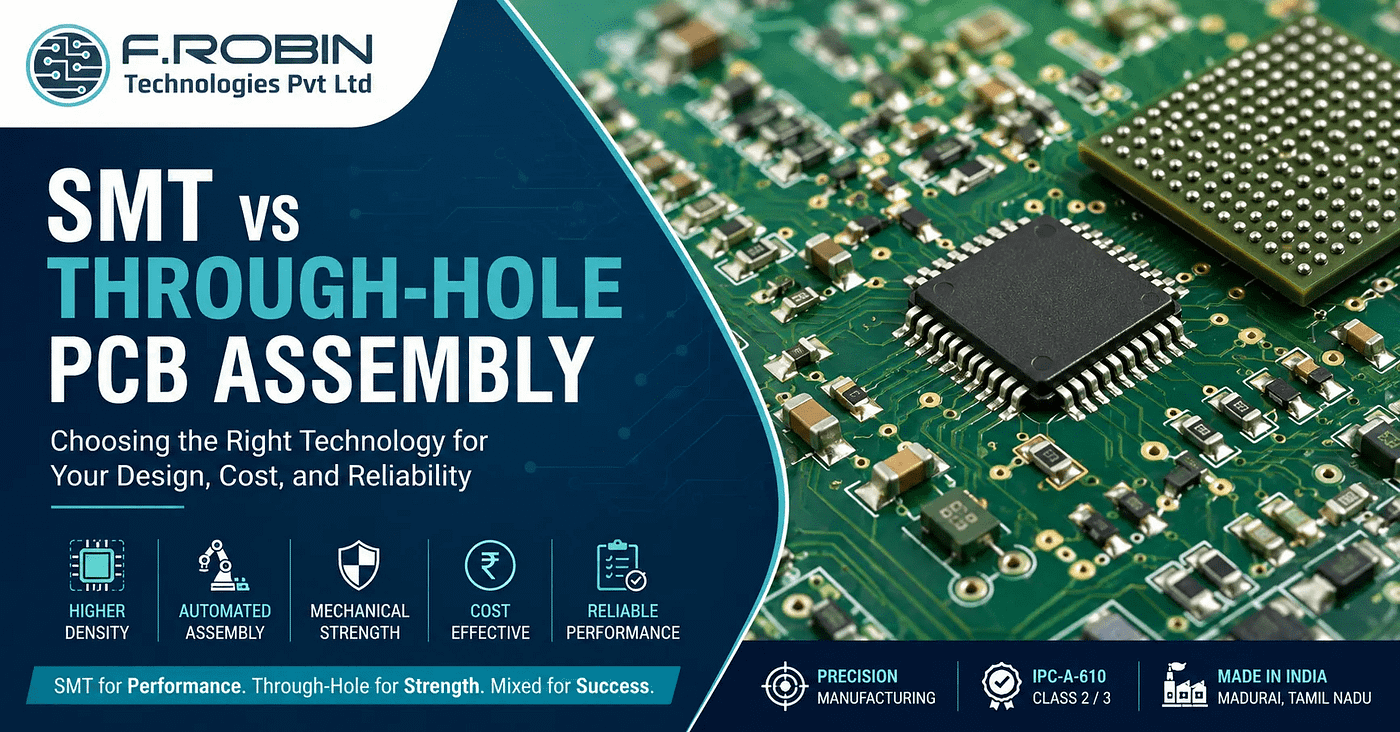
When PCB Decisions Start to Get Expensive
A PCB rarely fails because of one dramatic mistake. More often, it’s a series of small design decisions that quietly increase cost, reduce reliability, or slow down production.
One of the most critical among them is choosing between SMT (Surface Mount Technology) and through-hole assembly.
This decision is not just about packaging — it directly affects board density, mechanical durability, manufacturing speed, and long-term product stability.
👉 For a deeper technical breakdown, you can also explore the full engineering guide here: SMT vs Through-Hole Full Guide
SMT vs Through-Hole: What’s Really Different?
At a high level, the difference is simple:
- SMT components sit on the surface of the PCB
- Through-hole components pass leads through drilled holes and are soldered from the opposite side
But in real engineering terms, the trade-offs go much deeper.
SMT: Built for Density and Automation
SMT dominates modern electronics because it enables:
- Extremely compact layouts
- High-speed automated assembly
- Double-sided component placement
- Better suitability for high-frequency circuits
From smartphones to IoT sensors, SMT is the default for scalable production.
Through-Hole: Built for Strength and Stress
Through-hole technology still survives for one reason: mechanical reliability.
It is preferred when:
- Connectors face repeated plugging cycles
- Boards experience vibration or shock
- High current or high voltage is involved
- Repairability matters in the field
👉 You can compare real manufacturing capabilities here: PCB Manufacturing Capabilities
Why Engineers Still Get This Decision Wrong
In many design cycles, teams default to SMT because it feels modern — or through-hole because it feels “safer.”
Both instincts can be wrong.
Common real-world mistakes include:
- Using through-hole where SMT would reduce BOM cost significantly
- Overusing SMT connectors in mechanically stressed environments
- Ignoring assembly constraints like wave solder masking
- Designing without considering production volume scaling
The result? Higher manufacturing cost or premature field failures.
The Real Engineering Trade-Offs
Instead of thinking in “either/or,” engineers should evaluate based on function.
SMT is best when:
- Miniaturization matters
- Production volume is high
- RF or high-speed signals are involved
- Assembly needs full automation
Through-hole is best when:
- Mechanical anchoring is critical
- Heat or current loads are high
- The product is exposed to vibration
- Field repair is expected
In practice, most successful boards use a hybrid approach.
Mixed Technology: The Industry Standard
Modern PCBs rarely rely on just one method.
A typical production board uses:
- SMT for ICs, passives, and signal routing
- Through-hole for connectors, power stages, and rugged components
This combination balances:
- Performance (SMT)
- Durability (through-hole)
- Cost efficiency (automation)
Why This Decision Impacts Your Entire Product Lifecycle
Choosing SMT vs through-hole is not just a fabrication detail. It affects:
- Manufacturing cost per unit
- Time-to-market
- Mechanical failure rate
- Field service complexity
- Product size and industrial design
That’s why experienced hardware teams finalize assembly strategy early in the design cycle — not after layout.
Final Thought
SMT and through-hole are not competing technologies. They are complementary engineering tools.
The strongest PCB designs don’t choose one — they apply each where it makes technical sense.
If you want to understand how these choices impact manufacturability and cost optimization in real production environments, explore the full guide here: Complete SMT vs Through-Hole Engineering Guide
Or connect with our engineering team for design review support: Talk to PCB Experts
메타데이터
- post_id
- 03ff2ff01767
- slug
- smt-vs-through-hole-pcb-assembly-choosing-the-right-soldering-method-for-modern-electronics-03ff2ff01767
- url
- https://medium.com/@vijayfrobin/smt-vs-through-hole-pcb-assembly-choosing-the-right-soldering-method-for-modern-electronics-03ff2ff01767
- canonical_url
- https://medium.com/@vijayfrobin/smt-vs-through-hole-pcb-assembly-choosing-the-right-soldering-method-for-modern-electronics-03ff2ff01767
- author_url
- https://medium.com/@vijayfrobin
- status
- ok
- fetched_at
- 2026-06-13 12:55:53

