How the Trickster Taught Me the Deepest Lesson: “I Don’t Know.”
Rationalism, esotericism, politics — on the surface they look like different paths. Yet they often sell the same thing: certainty. Jung…
How the Trickster Taught Me the Deepest Lesson: “I Don’t Know.”
Rationalism, esotericism, politics — on the surface they look like different paths. Yet they often sell the same thing: certainty. Jung once called rationalism a kind of modern “illness.” It promises answers to everything, then quietly draws a boundary around what counts as “real.” What falls outside the line simply “doesn’t exist.” Elegant. Safe. And very reassuring — for those who need the world to be tidy.
Esoteric schools and religions can mirror the same pattern. Simple truths for the “masses,” deeper truths reserved for the “initiated”. Ask too many questions, push too far past the velvet rope, and you risk being ignored, lectured, mocked, or shamed. Politics repeats the script again: slogans for simple problems, condescension for complex ones, and a sanctum called “high politics” that the public is told it can’t possibly understand.
What ties these stories together? Our fear of uncertainty. We ache for someone to grant us safety — or at least the appearance of it. And so we elevate those who project the strongest signal: I know. I have the answers. Follow me.
This isn’t a denunciation so much as an observation. We all play both sides of the game. As children, we sought certainty from parents who couldn’t always provide it. Later, as parents, we meet our children’s need for certainty and discover how limited we are. With time we soften toward our own parents: they were in the same boat — maybe in rougher seas.
My concern here is not to scold but to describe what I learned in expanded states of consciousness. Once, my wife and I entered a process to meet our deepest desires and deepest guilt. To my surprise, both clusters orbited the same sun: uncertainty.
My desires were largely quests for certainty. My guilt? Violating values and rules to secure advantages for myself — again in the name of certainty. The session was protean, “tricksterish.” I felt the trickster as both myself and the very space of consciousness we occupied — playful, disruptive, unhousebroken.
Then something gave way. I dropped into a depth where two tones filled the whole field: bliss and not-knowing. Paradox on its face. But clear. Beneath everything sat a single, foundational stance: I don’t know.
In that depth, ignorance wasn’t a deficit; it was a promise — a fertile emptiness, a readiness to learn. From there, the rest of experience looked like a living invitation. I don’t know; therefore I go to experience so I may know. But the moment I moved “up” into activity, the bliss of not-knowing thinned. Fear crept in: I don’t know, and that’s dangerous. Reflexively, I reached for certainties — especially the ones advertised by those who claimed to “already know.”
The contrast was unmistakable in ordinary life. Consider a flower. If I approached it thinking - I know this; it’s a daisy; I’ve seen a thousand - I barely saw it at all. My attention stuck to my own knowledge and to the pride of possessing it. When I looked again from I don’t know, the single daisy appeared in its full, particular presence. Only then could I actually enjoy it.
The difference plays out in love too. As a young man, falling in love with I don’t know — let me discover you led to exquisitely alive days of mutual exploration. Later in life, the stance hardened into I know exactly who you are. Paired with a partner doing the same to me, we slowly terrorized each other with our certainties: You’re this kind of person; if A, then B. It was destructive — for both of us. And yet the cage of I already know felt safer than the open air of not-knowing.
It seems the posture I don’t know gives freedom, while I already know builds a comfortable, limiting cell. Across systems of belief, knowledge, governance, and collaboration, the pattern holds: we try to manufacture more certainty. Even small, imperfect certainties often feel preferable to uncharted uncertainties.
Throughout, the trickster kept visiting. Each time I settled into a tidy system of knowing, he returned to scramble the furniture. Only now do I understand why. At my deepest center the truest stance is: I don’t know, and therefore I seek. The trickster’s job is to remind me — again and again — so I’ll step out of the shelter of I already know and keep moving.
Learning, then, is not a straight line but a spiral. The more I experience, the more I understand, and the more I “know.” But there is no final station. There is always further, always deeper. The engine of the spiral is precisely I don’t know, therefore I seek. Sometimes we try to go on holiday from that engine and nest inside a comfortable system of knowledge. That is when the trickster taps the glass, overturns the table, and reopens the road.
If I had to name the deepest understanding I met, it would be this: I don’t know — and therefore I explore. That stance isn’t a weakness. It’s a way of loving the world.
(please read also my article “Noeticpunk & Shamanicpunk — warning and disclaimer”)

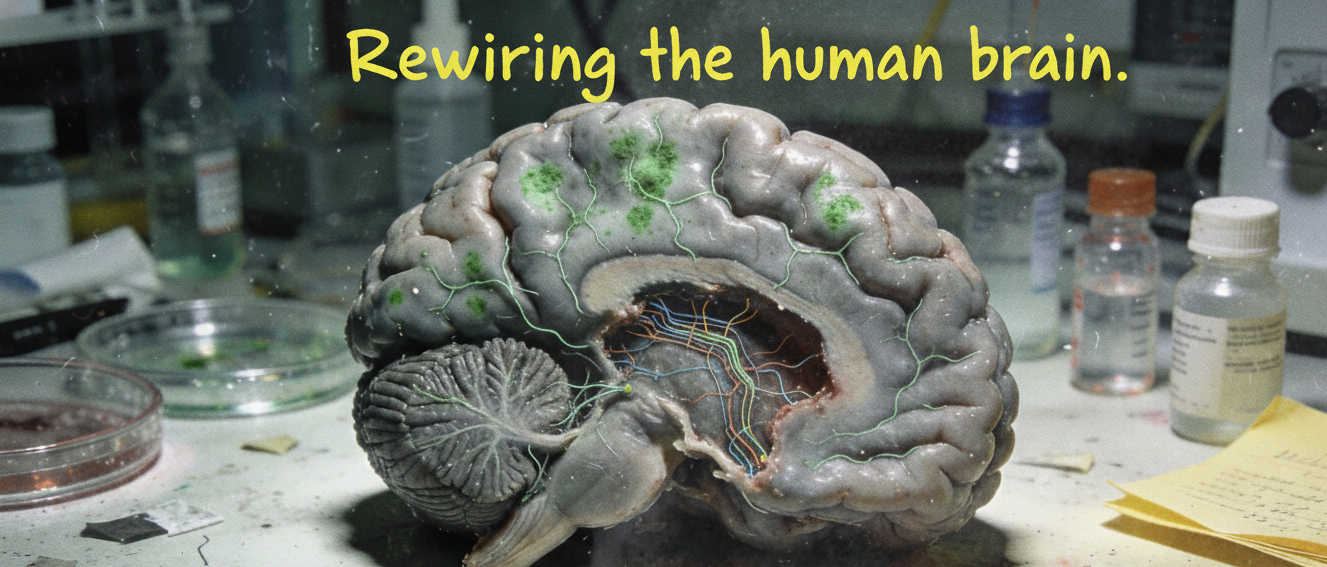
Image created by DeepDreamGenerator
메타데이터
- post_id
- 040edde42ac8
- slug
- how-the-trickster-taught-me-the-deepest-lesson-i-dont-know-040edde42ac8
- url
- https://medium.com/@stanislavcarlterence/how-the-trickster-taught-me-the-deepest-lesson-i-dont-know-040edde42ac8
- canonical_url
- https://medium.com/@stanislavcarlterence/how-the-trickster-taught-me-the-deepest-lesson-i-dont-know-040edde42ac8
- author_url
- https://medium.com/@stanislavcarlterence
- status
- ok
- fetched_at
- 2026-06-11 12:34:08