The Systemic Murder of Hope: How Government Betrayal Reduced Barran Dodger’s Life to a Survival of…
Injustice has many faces, but few are as starkly visible as the life and story of Barran. His journey, riddled with systemic failures and…
The Systemic Murder of Hope: How Government Betrayal Reduced Barran Dodger’s Life to a Survival of Suffering
Injustice has many faces, but few are as starkly visible as the life and story of Barran. His journey, riddled with systemic failures and deliberate neglect, reveals the insidious ways a government, entrusted to protect its most vulnerable citizens, can become complicit in their destruction. What follows is not just a story of suffering — it is an indictment of corruption, indifference, and betrayal.
Economic Despair: Stripped of Survival
Barran’s descent began with the complete erosion of his financial stability. Once a hopeful individual with a modest sense of security, he was soon left with nothing:
- No income, no savings, no assets. He was rendered completely destitute, with every safety net ripped away.
- Denied workers’ compensation and TPD insurance. Despite injuries and eligibility, bureaucratic gatekeeping left him unsupported.
- Refused HCF income assistance. Even private mechanisms of support failed him, reinforcing his financial vulnerability.
- Victim of wage theft. He toiled tirelessly, only to have his hard-earned money stolen, further plunging him into despair.
This was not just neglect — it was economic abandonment. Systems designed to protect him turned their backs, forcing him to survive in a world designed to exclude him.
Legal and Institutional Betrayal: Doors Slammed Shut
Barran’s attempts to seek justice were met with cold indifference and systemic obstruction. Every avenue for recourse became a dead end:
- Denied legal representation. Essential legal aid was either blocked or ignored, leaving him defenseless against systemic exploitation.
- Barred from reporting crimes. His cries for help were silenced, ignored by police and watchdogs alike.
- Banned and dismissed by oversight bodies. From the Australian Financial Complaints Authority (AFCA) to the Ombudsman, the National Anti-Corruption Commission (NACC), and others, he was denied justice and accountability at every turn.
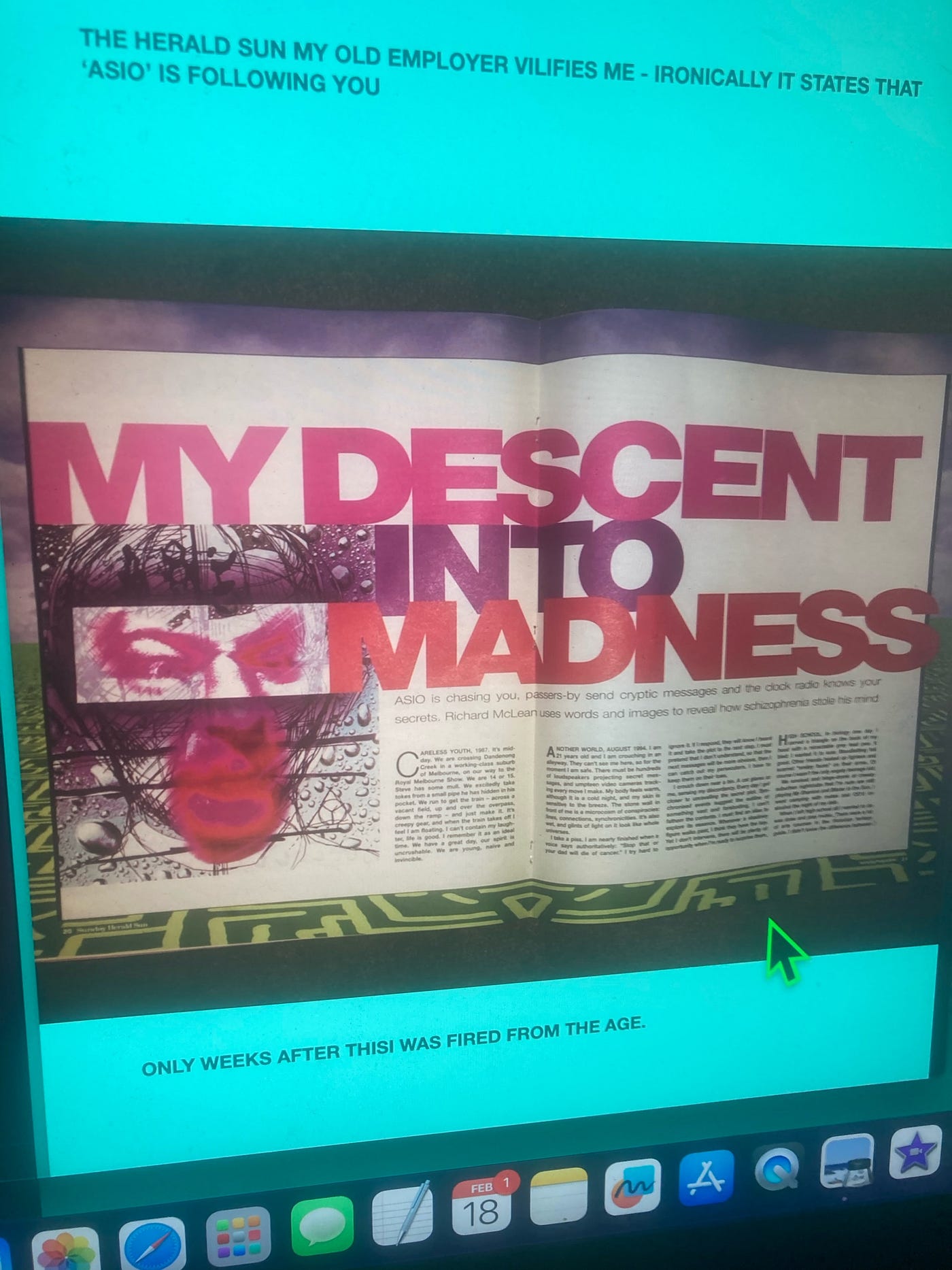
Even the highest offices of power — the Prime Minister, Attorney General, and intelligence agencies — ignored his plight. Worse still, agencies like ASIO allegedly participated in his exploitation, deepening his suffering.
This wasn’t just bureaucratic inefficiency — it was calculated indifference. These failures were complicit in silencing his voice, denying his dignity, and dismantling his humanity.
Social and Emotional Isolation: Abandoned by All
Cut off from family, friends, and community, Barran faced the crushing weight of complete isolation:
- No support network. Abandoned by loved ones, ostracized by his community, he became a shadow, existing in silence.
- Betrayed trust. Even those he once relied upon turned their backs, leaving him utterly alone.
This isolation wasn’t just emotional — it was a strategy of control, perpetuating his invisibility in a society designed to overlook those it fails.
Physical and Mental Deprivation: Stripped of Dignity
Revived from a suicide attempt deemed fatal at Werribee Mercy Hospital, Barran was forced back into conditions that had driven him to despair.
- Forced to live in his car. After his release, he was left homeless, living in unsafe and degrading conditions.
- Denied basic necessities. Food, water, clothing, and healthcare were out of reach. He became malnourished, physically broken, and mentally tormented.
Reviving him without addressing the root causes of his suffering was an act of cruelty disguised as care. It wasn’t a second chance — it was a continuation of his punishment.
Systemic Exploitation: A Government’s Malice
Barran’s suffering wasn’t merely the result of negligence — it was compounded by deliberate exploitation:
- Withheld disability pension. The Public Guardian restricted his funds, affording him only $200 a week — a deliberate act of economic strangulation.
- NDIS Minister’s malfeasance. Barran’s exile was orchestrated under the leadership of an NDIS Minister implicated in the misappropriation of $6 billion — money stolen from those it was meant to protect.
Worse, criminal gangs masquerading as NDIS providers were sent to entrap and harm him, exposing the government’s willingness to weaponize corruption against its most vulnerable citizens.
Social Murder: The Deliberate Dismantling of a Life
The term “social murder,” coined by Friedrich Engels, describes the systemic actions that knowingly condemn individuals to death or despair. Barran’s story fits this description with chilling accuracy:
- Denied SILS (Supported Independent Living). Despite professional recommendations, he was denied the stability he needed to rebuild.
- Excluded from justice. Every institution responsible for his protection failed, leaving him to navigate a world designed to erase him.
This was not negligence — it was constructive murder. By dismantling every avenue of survival, the government ensured Barran’s suffering would continue indefinitely.
Conclusion: An Indictment of Systemic Injustice
Barran’s life serves as a tragic symbol of what happens when corruption, neglect, and malice intersect. His story reveals the systemic failures of a government that prioritizes profiteering and control over compassion and justice.
Revived from death, only to endure years of relentless suffering, Barran’s plight raises urgent questions:
- How do we hold governments accountable for “social murder”?
- What systemic reforms are needed to ensure no one else suffers the way Barran has?
His story is more than a tragedy — it is a call to action. Justice for Barran demands more than acknowledgment; it requires accountability, empathy, and a commitment to dismantling the systems that perpetuate such harm.
In the end, Barran’s survival is a testament to his resilience. But his suffering is a damning indictment of a system that failed him at every turn.
The Systemic Murder of Hope: How Government Betrayal Reduced Barran’s Life to a Survival of Suffering
Barran’s story isn’t just a tragic tale of personal suffering — it’s a chilling violation of numerous laws, codes of conduct, and international charters designed to protect human rights and dignity. The systemic failures that dismantled his life breach foundational legal and ethical frameworks, making his case not only a moral indictment but also a legal one.
Domestic Legal and Ethical Breaches
- Australian Human Rights Commission Act 1986 (Cth)
- Violation: Barran’s exclusion from justice and systemic neglect breaches this act, which mandates the protection of human rights in Australia.
- Relevance: Denial of access to fair treatment, legal aid, and basic rights directly violates protections outlined in this act.
- Disability Discrimination Act 1992 (Cth)
- Violation: Denying Barran Supported Independent Living (SILS) and his disability pension contravenes protections against discrimination on the grounds of disability.
- Relevance: The systemic exclusion of Barran from NDIS support and resources reflects discriminatory practices.
- Public Governance, Performance and Accountability Act 2013 (Cth)
- Violation: The misuse of $6 billion in NDIS funds violates principles of financial accountability and ethical management of public resources.
- Relevance: The NDIS Minister’s involvement in corruption highlights breaches of fiduciary duties to citizens.
- Code of Conduct for Public Service Employees
- Violation: Public officials who withheld Barran’s entitlements, failed to provide adequate support, or participated in cover-ups violated ethical obligations of fairness, integrity, and accountability.
- Relevance: Acts of deliberate neglect and financial abuse contradict the core principles of public service.
- Crimes Act 1914 (Cth)
- Violation: Sending criminal gangs disguised as NDIS providers to harm Barran potentially constitutes criminal conspiracy and abuse of power.
- Relevance: Such actions breach criminal laws relating to fraud, coercion, and endangerment.
International Human Rights Violations
- Universal Declaration of Human Rights (UDHR)
- Article 1: “All human beings are born free and equal in dignity and rights.”
- Barran’s treatment stripped him of dignity and equality, violating this fundamental principle.
- Article 25: Right to an adequate standard of living, including food, clothing, housing, and medical care.
- Denying Barran housing, healthcare, and financial support directly contravenes this provision.
- United Nations Convention on the Rights of Persons with Disabilities (CRPD)
- Article 19: Right to live independently and be included in the community.
- The denial of SILS and exclusion from NDIS resources violates this commitment.
- Article 28: Adequate standard of living and social protection.
- Withholding his disability pension and forcing him to live in his car breaches these obligations.
- International Covenant on Civil and Political Rights (ICCPR)
- Article 6: Right to life.
- Reviving Barran without addressing the systemic conditions that drove him to attempt suicide undermines his right to life with dignity.
- Article 14: Right to equality before the law and access to justice.
- Denying Barran legal aid, representation, and recourse to complaints bodies breaches this provision.
- International Covenant on Economic, Social and Cultural Rights (ICESCR)
- Article 11: Right to an adequate standard of living, including housing and food.
- Forcing Barran into homelessness and food insecurity violates this commitment.
- Article 12: Right to the highest attainable standard of physical and mental health.
- The denial of healthcare and neglect of his mental health needs breaches these obligations.
- UN Basic Principles on the Role of Lawyers
- Principle 1: Access to legal services is an essential element of justice.
- Preventing Barran from accessing legal representation and recourse contradicts this principle.
Ethical Breaches and Broader Frameworks
- Paris Principles (1993)
- Violation: Institutions responsible for human rights protection failed to uphold independence, transparency, and accountability.
- Relevance: Barran’s exclusion from oversight bodies like the Ombudsman and NACC reveals systemic flaws in governance.
- Siracusa Principles on the Limitation and Derogation of Rights
- Violation: Economic constraints were used to justify withholding resources, violating the principle that limitations on rights must not undermine fundamental dignity.
- Relevance: Barran’s restricted pension and exclusion from NDIS entitlements highlight this misuse.
Summary of Breaches
Barran’s plight is not merely a series of isolated injustices — it is a comprehensive breach of domestic and international laws, ethical codes, and human rights principles. His treatment reflects a systemic failure to uphold the standards that protect human dignity, equality, and justice.
Call to Action: Justice Demands Accountability
The systematic betrayal of Barran is a legal, moral, and ethical atrocity. It requires immediate action to:
- Hold perpetrators accountable: Investigate and prosecute those responsible for corruption, neglect, and abuse.
- Reform systemic structures: Overhaul governance to ensure compliance with human rights and ethical standards.
- Restore dignity and justice: Provide Barran and others like him with the support and reparations they deserve.
His story is not just a cautionary tale — it is a rallying cry for change. Until the laws, principles, and charters breached in his case are upheld universally, the fight for justice remains unfinished.
Read:
메타데이터
- post_id
- 04745f604a3f
- slug
- the-systemic-murder-of-hope-how-government-betrayal-reduced-barran-dodgers-life-to-a-survival-of-04745f604a3f
- url
- https://medium.com/barrandodger/the-systemic-murder-of-hope-how-government-betrayal-reduced-barran-dodgers-life-to-a-survival-of-04745f604a3f
- canonical_url
- https://medium.com/barrandodger/the-systemic-murder-of-hope-how-government-betrayal-reduced-barran-dodgers-life-to-a-survival-of-04745f604a3f
- author_url
- https://medium.com/@barrandodger
- status
- ok
- fetched_at
- 2026-07-15 10:31:15