Things You Should Never Pour Down a Drain — Even If the Internet Says It’s Safe
Your drains handle a lot every day, but they are not designed to accept everything that can be poured down them. Many popular DIY tips…
Things You Should Never Pour Down a Drain — Even If the Internet Says It’s Safe
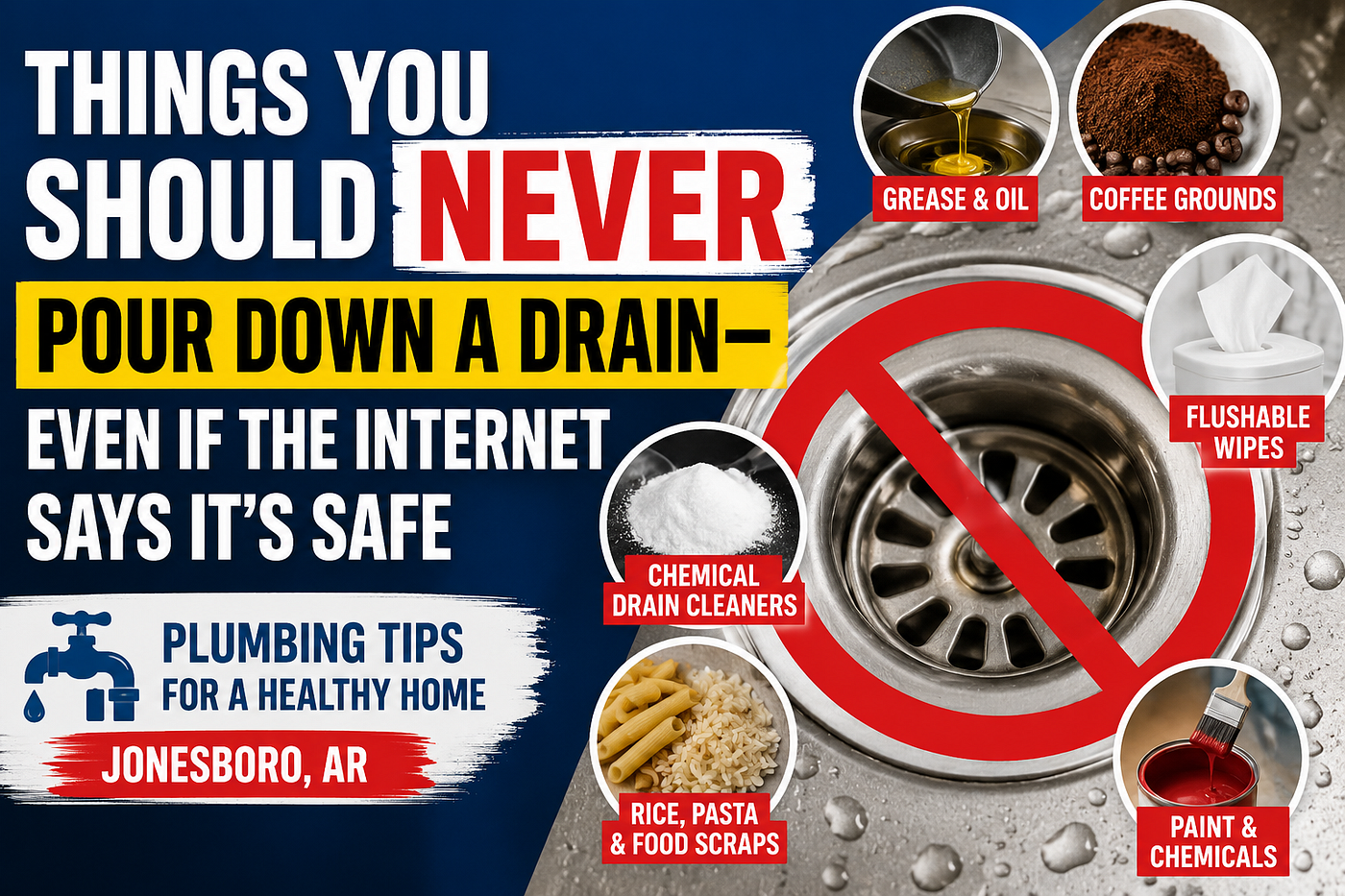
Things You Should Never Pour Down a Drain — Even If the Internet Says It’s Safe
Your drains handle a lot every day, but they are not designed to accept everything that can be poured down them. Many popular DIY tips claim that common household ingredients can clean, unclog, or freshen drains. Unfortunately, some of these “hacks” can cause buildup, damage pipes, or turn a minor clog into a more expensive plumbing problem.
For homeowners looking for reliable Plumbing Jonesboro AR services, understanding what should — and should not — go down your drains is one of the simplest ways to prevent plumbing problems.
1. Grease, Fat, and Cooking Oil
It may be liquid when hot, but grease and cooking oil can solidify as they cool inside your pipes. Over time, the buildup can restrict water flow and contribute to stubborn drain clogs.
Better option: Let cooking grease cool and dispose of it in the trash according to local waste guidelines.
2. Coffee Grounds
Coffee grounds are often recommended online as a way to eliminate odors or “scrub” a drain. In reality, they can collect inside pipes and combine with grease and other debris, increasing the risk of a blockage.
A better approach is to dispose of used coffee grounds in the trash or compost them when appropriate.
3. Flour and Dough
Flour can become a sticky paste when mixed with water. Dough can expand and cling to surfaces inside your plumbing, potentially creating difficult blockages.
Keep flour, batter, and leftover dough out of your kitchen drain.
4. Eggshells
Another popular myth suggests that eggshells help sharpen garbage disposal blades or clean drains. Small pieces can instead collect with other debris and contribute to buildup.
Dispose of eggshells through your regular waste or composting system when suitable.
5. Rice and Pasta
Rice and pasta absorb water and can expand after entering your plumbing. Even small amounts can accumulate with other food debris and create restrictions.
Always scrape leftover rice and pasta into the trash or compost rather than washing them down the sink.
6. Paint and Harsh Chemicals
Paint, solvents, and other chemicals should not automatically be poured down household drains. Some substances can damage plumbing components, contaminate wastewater, or create hazardous conditions.
Follow the product’s disposal instructions and use appropriate hazardous-waste disposal options when necessary.
7. Chemical Drain Cleaners
This is one of the biggest misconceptions about maintaining a drain.
A chemical drain cleaner may appear to solve a clog quickly, but repeated use can be harsh on plumbing materials. It also does not address the underlying reason for recurring blockages.
If a drain repeatedly becomes clogged, having the plumbing professionally inspected can be a better long-term solution.
8. Flushable Wipes
Despite being marketed as “flushable,” many wipes do not break down as quickly as toilet paper. They can contribute to blockages in household plumbing and sewer systems.
Simple rule: Flush toilet paper and human waste. Put wipes in the trash unless your local wastewater guidance specifically says otherwise.
9. Cat Litter
Cat litter is designed to absorb moisture and, depending on the type, may expand or clump when exposed to water. That makes it a poor choice for drains and toilets.
Dispose of used litter according to the manufacturer’s instructions.
10. Hair
Hair is one of the most common contributors to bathroom drain blockages. It can combine with soap residue and other debris, creating a dense mass inside the drain.
A drain strainer can help catch hair before it enters the plumbing.
What About Baking Soda and Vinegar?
This is where internet plumbing advice can become confusing.
Baking soda and vinegar are commonly promoted as a natural drain-cleaning solution. While the combination can create a foaming reaction and may help with minor surface residue or odors, it should not be treated as a universal solution for serious or recurring clogs.
If your drain repeatedly slows down, the issue may be deeper in the plumbing system.
Instead of repeatedly trying DIY solutions, homeowners can have a professional Plumber Jonesboro AR inspect the drain and determine what is actually causing the problem.
What Should You Put Down Your Drain?
A good rule is surprisingly simple:
If you would not normally expect the material to dissolve completely in water, don’t pour or wash it down the drain.
For kitchen sinks, use strainers and dispose of food waste properly. In bathrooms, use hair catchers and avoid flushing wipes or other non-toilet-paper products.
Small preventive habits can help reduce the frequency of drain problems and protect your plumbing system.
When Should You Call a Professional Plumber?
Not every slow drain requires an emergency plumbing visit. However, certain warning signs indicate that the problem may be more than a simple surface clog.
Contact a professional if you notice:
- A drain that repeatedly becomes clogged
- Multiple slow drains throughout the house
- Gurgling sounds from drains or toilets
- Sewage odors
- Water backing up into sinks, tubs, or showers
- A toilet bubbling when another fixture is running
- A clog that returns shortly after DIY treatment
These symptoms can sometimes indicate a deeper drainage or sewer problem.
Professional plumbing services can help identify the source rather than simply treating the visible symptom.
Planning a Remodel? Think About Your Drains Too
Drain problems are not the only reason homeowners should think carefully about their plumbing.
If you’re planning Remodels Jonesboro AR, plumbing should be considered during the design stage — not after the walls are opened or fixtures are installed.
Moving a sink, adding a bathroom, changing a shower location, or upgrading a kitchen can affect existing water and drainage lines. Planning the plumbing layout early can help prevent unnecessary modifications and unexpected costs later.
A professional plumber can evaluate the existing system and help determine what needs to be updated as part of the remodeling project.
Frequently Asked Questions
Can I pour grease down the kitchen drain if I use hot water?
No. Hot water may temporarily keep grease moving, but the grease can cool farther down the plumbing and stick to pipe walls. Collecting grease and disposing of it properly is safer for your drains.
Is baking soda and vinegar safe for drains?
Small amounts are generally used as a household cleaning method, but they are not a reliable solution for serious or recurring clogs. Persistent drainage problems should be professionally evaluated.
Are coffee grounds really bad for drains?
Yes. Coffee grounds do not dissolve in water and can accumulate inside plumbing, particularly when combined with grease and other debris.
Can I flush “flushable” wipes?
It’s best to follow local wastewater guidance, but toilet paper is specifically designed to break down quickly in sewer systems. Many wipes can contribute to blockages even when labeled flushable.
Why does my drain keep clogging after I use drain cleaner?
A chemical drain cleaner may temporarily clear an opening without removing the underlying obstruction. Recurring clogs can indicate buildup, pipe problems, or a deeper drainage issue.
What should I do if multiple drains are clogged?
Multiple clogged fixtures can indicate a problem farther down the drainage system rather than separate individual clogs. Avoid repeatedly pouring chemicals into the drains and consider calling a professional Plumber Jonesboro AR.
How can I prevent kitchen drain clogs?
Use a sink strainer, keep grease and food scraps out of the drain, and avoid washing materials such as coffee grounds, rice, pasta, and flour into the sink.
When should I call a plumber for a slow drain?
If the drain is repeatedly slow, produces sewage odors, makes unusual sounds, or backs up after cleaning attempts, professional inspection is recommended.
Protect Your Plumbing Before a Small Problem Becomes a Big One
The internet is full of quick plumbing hacks, but not every tip is appropriate for every plumbing system. What seems like an easy DIY solution can sometimes push a problem deeper into the pipes.
Knowing what belongs in your drains — and what doesn’t — is a simple first step toward protecting your home.
If you’re dealing with recurring drainage problems or planning Remodels Jonesboro AR, professional plumbing guidance can help you find a solution that addresses the underlying issue rather than just the symptom.
For dependable Plumbing Jonesboro AR services, Chris West Plumbing can help homeowners identify plumbing problems and determine the right solution for their home.
메타데이터
- post_id
- 047d0a01fe42
- slug
- things-you-should-never-pour-down-a-drain-even-if-the-internet-says-its-safe-047d0a01fe42
- url
- https://medium.com/@plumbingchriswest/things-you-should-never-pour-down-a-drain-even-if-the-internet-says-its-safe-047d0a01fe42
- canonical_url
- https://medium.com/@plumbingchriswest/things-you-should-never-pour-down-a-drain-even-if-the-internet-says-its-safe-047d0a01fe42
- author_url
- https://medium.com/@plumbingchriswest
- status
- ok
- fetched_at
- 2026-08-16 11:04:48