The role of digital as-builts in modernizing public buildings across Maryland
Introduction:
The role of digital as-builts in modernizing public buildings across Maryland
Introduction:
A State Built on History
Maryland stands as a testament to America’s evolving architectural journey, from colonial brick
courthouses and Georgian-style town halls to mid-century public libraries and civic centers. Each public building across the state echoes its era, reflecting not only architectural trends but also the social and civic aspirations of its time. These structures aren’t just functional; they’re deeply woven into the state’s identity and collective memory.
Yet, as time progresses, so do the needs of the communities these buildings serve. Preserving their historical and cultural value while adapting them for modern requirements is no small task. Accessibility upgrades, energy efficiency improvements, and safety compliance must be integrated with respect for architectural authenticity. It’s not just about maintenance; it’s about meaningful modernization. This careful balance between preservation and progress is where the role of digital documentation becomes not just valuable, but vital.
The Risk of Poor Documentation

Many of Maryland’s public buildings were constructed long before digital records became the norm. Over decades, original blueprints have been lost, altered, or replaced by outdated paper sketches, often without proper updates. What was once a symbol of civic pride can quickly become a logistical headache when reliable documentation is missing.
The consequences of poor records are far-reaching. Without accurate **as built drawings in construction** face a guessing game during renovations. Walls may conceal unexpected electrical panels, undocumented piping may run through key structural elements, or historical features may be damaged unintentionally, all resulting in costly delays, budget overruns, and even safety hazards.
Retrofits become riskier when there’s no clear picture of what lies beneath the surface. Achieving code compliance, especially with updated fire, seismic, or accessibility standards, is incredibly difficult without verified data. In emergency situations, such as fires or natural disasters, outdated records can hinder first responders and facility managers from acting swiftly and safely.
Ultimately, missing or inaccurate documentation transforms a place of civic pride into a potential liability. And in a state like Maryland, where history is embedded in the very walls of public institutions, the stakes are simply too high to ignore.
Digital As-Builts Can be Maryland’s Modern Solution
To meet the demands of modern renovations while honoring historic integrity, Maryland is turning to a powerful tool: digital as-built documentation. These are not just updated versions of old blueprints, they are comprehensive, data-rich digital representations of a building’s current, real-world condition.
So, what exactly are digital as-builts?
Digital as-builts capture every architectural, structural, and **MEP (Mechanical, Electrical, Plumbing)** element of a building as it physically exists today. Unlike traditional hand-marked plans that rely on memory or outdated files, digital as-builts are precise, measurable, and accessible. They offer a holistic snapshot of a building, right down to the millimeter.
What sets them apart from traditional blueprints?
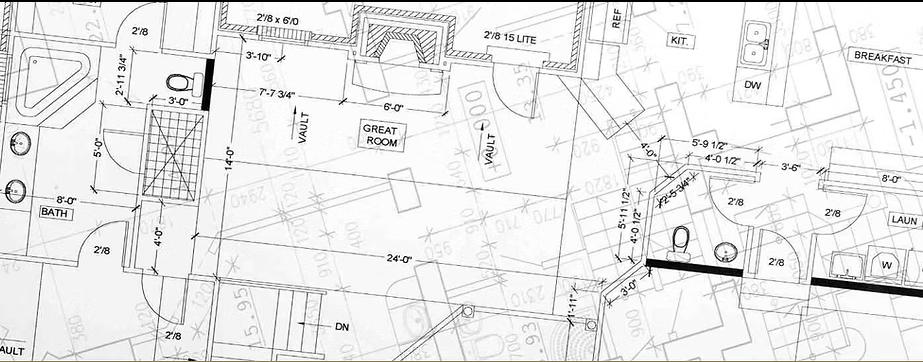
Paper drawings often represent design intent rather than the actual constructed reality. They lack detail, are prone to manual error, and are difficult to update over time. Digital as-builts, on the other hand, are interactive models that allow architects, engineers, contractors, and facility managers to visualize and analyze every aspect of a structure. They’re scalable, cloud-based, and built for collaboration.
How are they created?

Digital as-builts are developed using advanced technologies like:
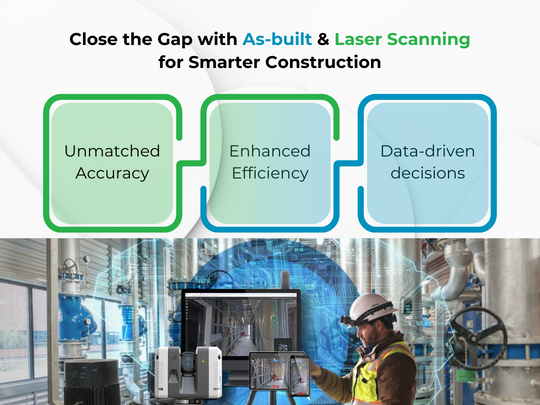
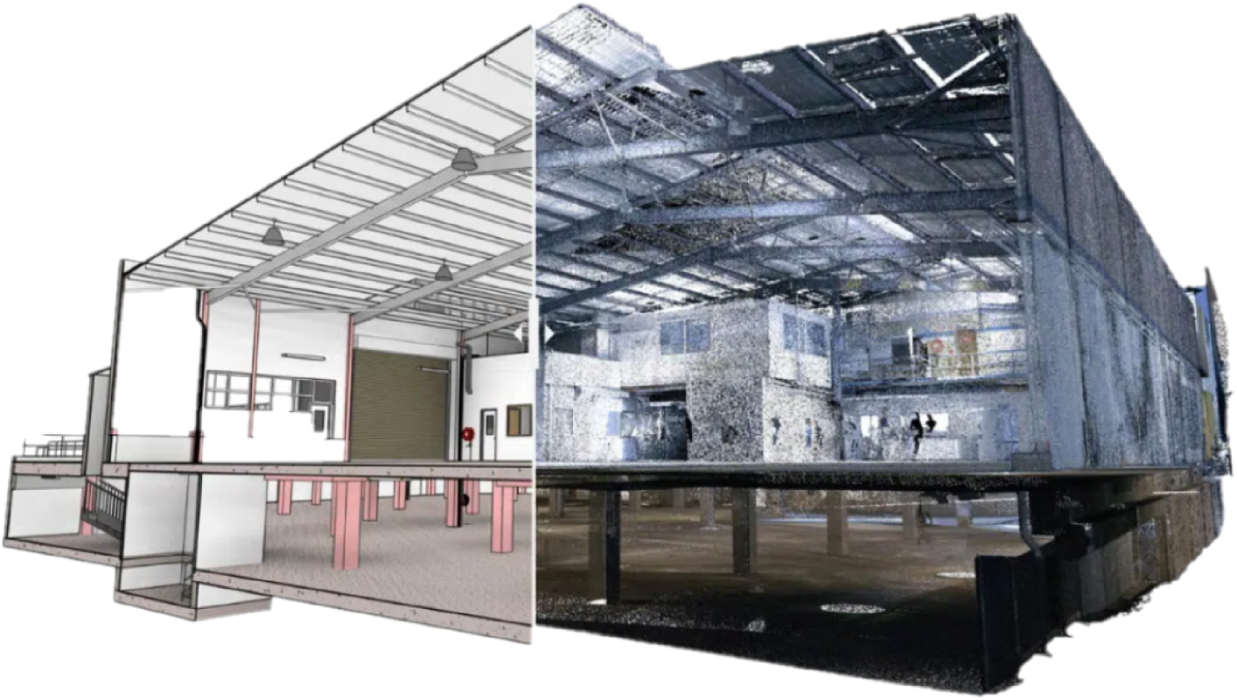
- **3D Laser Scanning**: Uses LiDAR technology for heritage conservation to capture millions of data points, forming a highly accurate point cloud of a building’s geometry.
- **Photogrammetry**: Converts high-resolution photographs into measurable 3D models, capturing surface textures and intricate details.
- BIM Integration: Merges all this spatial and system data into a coordinated Building Information Model. **3D scan-to- BIM **technology enables smarter decision-making for renovations, retrofits, and ongoing operations.
For Maryland’s public buildings, many of which are steeped in history, digital as-builts offer the precision and perspective needed to build forward while preserving the past.
Beyond the Scan: What Digital As-Builts Deliver
Digital as-builts offer more than a visual update, they deliver actionable data that empowers
better planning, renovation, and operation of Maryland’s public buildings.
- Complete Building Insight
Accurate floor plans, MEP layouts, and structural details for safer, smarter decisions.
- Preserve & Comply
Maintain historical elements while aligning with modern codes like ADA and energy standards.
- Anytime Access
Cloud-based models allow facility teams to collaborate in real time, making as-built documentation for facility management more accessible and actionable.
- Built for the Future
Enables digital twins and smart infrastructure integration for long-term building performance
Why Now: Maryland’s Urgent Need for Digital As-Builts
As Maryland accelerates efforts toward sustainable development and smarter infrastructure, the time to digitize its public buildings is now.
With a growing emphasis on sustainability, modernization, and resilience, public agencies must ensure that facilities are energy-efficient, structurally sound, and ready to adapt to changing needs. Digital as-builts provide the clarity and control required to plan meaningful upgrades without disrupting the building’s integrity.
Maryland’s state and local infrastructure improvement programs, including revitalization initiatives, capital improvement plans, and federal grant-backed projects, demand accurate documentation and long-term accountability. Digital as-builts help meet these expectations while keeping budgets and timelines in check.
More importantly, digitizing these buildings is about bridging history with technology. It’s about
preserving the past not just as a memory, but as a functional, living part of the community. Digital tools empower us to honor legacy while preparing for what’s next.
Conclusion: Scanning Forward into Maryland’s Future
To build a smarter, safer Maryland, we must first understand our buildings, and that starts with digitization. Tejjy Inc. calls on public agencies, architects, planners, and preservationists to embrace digital as-builts as a foundational step in reimagining civic spaces. It’s not just about better construction, it’s about building more responsibly, sustainably, and respectfully.
The future of Maryland’s public architecture lies not in dusty basements of forgotten
blueprints, but in data-rich, dynamic models that serve both people and purpose.
Let’s scan forward, together.
Suggested article to read:
**Architectural BIM Modeling for As-Built Accuracy in Restoration Projects**
**How As-Built Surveys Enhance Accuracy in Building Renovation**
**How Architectural As-Builts Ensure Compliance and Accuracy in Real Estate Projects**
메타데이터
- post_id
- 04b3bf3dc64a
- slug
- the-role-of-digital-as-builts-in-modernizing-public-buildings-across-maryland-04b3bf3dc64a
- url
- https://medium.com/@sarahmerget/the-role-of-digital-as-builts-in-modernizing-public-buildings-across-maryland-04b3bf3dc64a
- canonical_url
- https://medium.com/@sarahmerget/the-role-of-digital-as-builts-in-modernizing-public-buildings-across-maryland-04b3bf3dc64a
- author_url
- https://medium.com/@sarahmerget
- status
- ok
- fetched_at
- 2026-07-21 11:16:06