We’re all trying here… or are we?
Gritty realism that blurs a line where it shouldn’t — ⚠︎ Content Warning: Themes on mental health and suicide ideation below ⚠︎
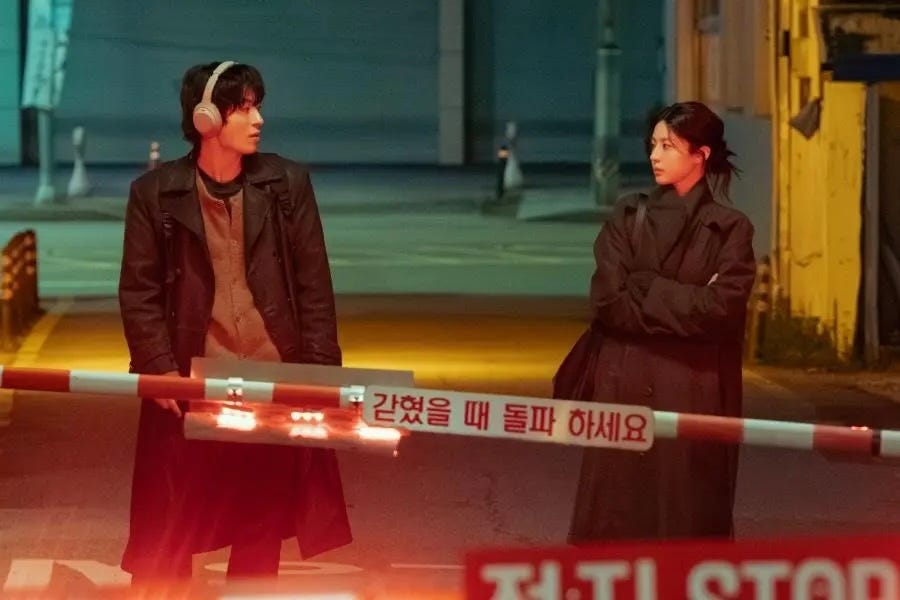
We’re all trying here… or are we?
Gritty realism that blurs a line where it shouldn’t — ⚠︎ Content Warning: Themes on mental health and suicide ideation below ⚠︎
The Premise
The series promises a series of genre’s that when well executed make for a good watch. It gives us a taste of gritty realism mixed with black humor and psychological stakes of a struggling writer who’s been stuck with a play for 20 years.
His inadequacy stems from a place of worthlessness and so it turns him into a raging bull in a cut throat manner towards everyone around him.
While an engaging series for most of the run because it confronts people with a reality of life vicissitudes for the different characters present. It is clear it goes beyond just regular life struggles and touches a sensitive spot that for those with a level of awareness, can completely identify as mild to severe symptoms of possible mental illness…
The contrarianism lies in that while it aims to hook us with realism over people’s real struggles as defined by his name “We are all trying here” breaks from this contract with it’s audience by blurring lines on topics that should be addressed rather than be left hanging.
However the show never gets diagnosis out in the open, and instead goes showing some scenes in which one character goes to therapy to handle trauma, another depends entirely on dissociative patterns to cope with his own perception of failure, while another clearly suffers from severe depression to the point of suicide ideation and attempts to take his life…
The rest of the cast struggle with issues of similar dilemmas, but to a lesser degree, not necessarily to be taken lightly. Ego’s hurt in an overwhelming competitive industry and even marital issues, along with a sense of burn-out, ranging from high standards of maintaining a persona and the sense of being soiled and discarded.
We are all trying here relies heavily on poetic monologues as part of the narrative being told by the inner self of mostly the main leads (Eun-a and Dong hwan). This creative choice do relieve ever so slightly the harsher parts of the story that show an otherwise uncouth truth of how many people confront their own selves.
It highlights to an extent how it takes a village, although not quite literally, on how having a support system or a person who cares regardless of family, friend or a stranger met by pure accidental beta testing on an emotions watch, and how that connection pulls them away even if just for a bit from their own misery and despair.
The Problem
While it filled the series with heavy topics, resolution is left to the audience.
Yes, it is a technique that sometimes feels refreshing when presented with a compromise to the audience, in which it leaves room for interpretation over how these character’s lives could go forth. But, and here’s the biggest issue, for a series whose entire premise over many episodes, showcases realism to a degree in which once you reach the ending the gap is so wide that it feels lacking rather than providing open-ended closure for viewers.
Without touching spoilers territory, if you intend to watch or if you have already, (cheers on completing the quest). The story creates several pipelines that are poorly constructed to the point where you are left thinking: Oh! So this is a dramatic shortcut to elevate tension and stakes over the course of 12 episodes.
The writer/director shields himself with a philosophical take, as if that is enough to make up for the untouched resolutions. The intention, presumably is to be the better person, while wishy-washing themes of ethics that stems from perceived values and morals in certain characters.
And while it is appreciated that it shows a peek as to how close knit and sometimes cruel the entertainment industry — particularly filmmaking — can be. It hides the complexities of navigating realistically certain plots, that come off as not worth enough.
To elaborate
Some of our characters have it slightly more rough than others, one who was in a toxic relationship and allowed herself to be plagiarized in order to avoid confrontation (and dealing with all she is grappling with, can be understood), but it never fully addresses the legal implications of that story line, and that’s why it was not pursued in full as it would veer off from the main story too much.
So it resolves with an under the table deal, that feels like a betrayal, heavily uncalled for berating of our main female lead Eun-a. And at the same time it jeopardizes her newfound path to recovery by the intervention of her trauma in the most cynical way.
Another character on an assumed — since it is never explicitly mentioned — breakdown, goes away from his family and his divorced wife then goes on to put their child up for adoption. Now, legally this is a delicate matter, and South Korean laws do have exceptions for when this can and how to be done, and all we got was a 2 minute screen of explanation on how the outcome ended up the way it was.
No disclosure on how the breakdown went on, except that it was after he became sort of famous when he was a published poetry author, no mention of any attempts for procedural except a line that says “at the time the father whereabouts were unknown and that was enough.”
Legally there’s an exception for this and it is possible to go forth, however, there’s no flashback on how, when and where we ended up with a child being put up for adoption with an overseas family solely by the mother “inability” to care for the child. And so our main lead’s brother — Jin-man — ends up losing his child, depressed and turned alcoholic.
The ending
Blurred entirely from an actual end. It showcases an apparent major breakdown for our main male lead Dong-hwan and shifts this as a complete resolution of a happy ending for him. Finding success in his debut film and even winning an award; all relationships fully mended as if nothing happened over the past 11 episodes; his brother almost fully recovered just by knowing his lost child is alive and finding his way back to poetry without disdain.
Eun-a, completely turned into a heavenly saint who puts the other cheek but refuses at the same time to let it destroy her, without fully acknowledging what it may have taken for her to completely move forward, except perhaps a few lines during the few therapy sessions she is shown to have pursued.
For a show boasting realism, it skips the steps it takes to actually overcome the heavy topic of possible mental disorders already in full swing by the time the show starts. And it leaves the audience with only two extremes to grasp from: Fantasy land or complete fall after a major breakdown into a complete dissociative state by Dong-hwan.
For an ending to serve the purpose it intends — by leaving it to the audience — it is necessary that the gaps aren’t too wide, because what we’re left with is simply believing that reality will shift suddenly by our willpower and we will all achieve our dreams, or life is just a hole that keeps digging itself underneath us until we are left with nothing but to vanish to a place in our minds that gives us temporary comfort.
It completely obliterates that life isn’t a straight line and sometimes we gotta live in the middle in order to fully have a stable functioning life.
**We are all trying here is currently streaming on Netflix
메타데이터
- post_id
- 04b7e2d0efaa
- slug
- were-all-trying-here-or-are-we-04b7e2d0efaa
- url
- https://medium.com/@caliper84galette/were-all-trying-here-or-are-we-04b7e2d0efaa
- canonical_url
- https://medium.com/@caliper84galette/were-all-trying-here-or-are-we-04b7e2d0efaa
- author_url
- https://medium.com/@caliper84galette
- status
- ok
- fetched_at
- 2026-06-27 07:40:21