Stop…What’s That Sound?
CSNY’s Four Way Street
Live Album Challenge
Stop…What’s That Sound?
CSNY’s Four Way Street
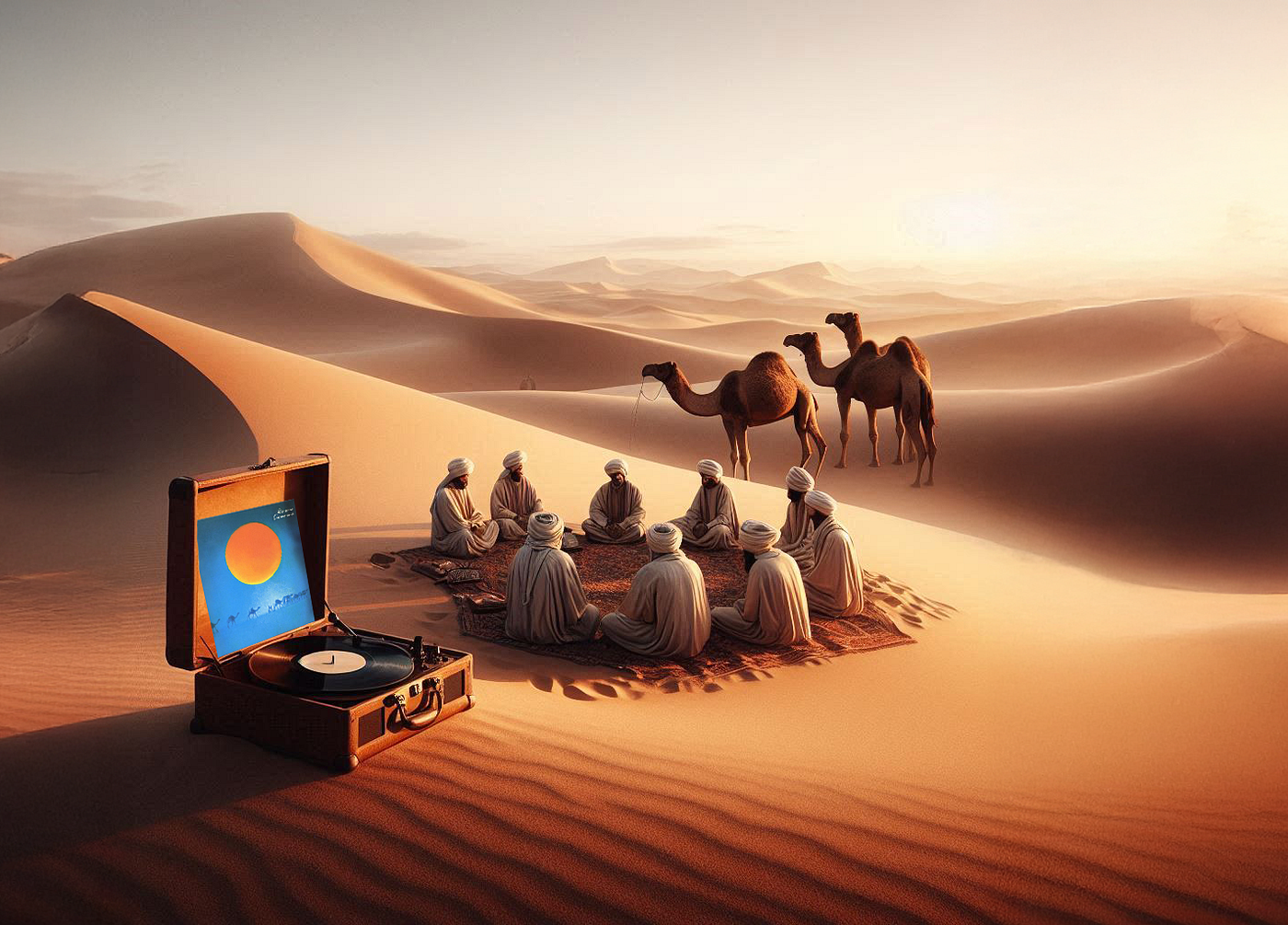
Photo by Simon L on Unsplash
Supergroups abounded in the changing 60s-70s borderline. From Cream to Blind Faith to even Emerson, Lake, and Palmer, it was both exciting and exasperating to find a new band made up of old parts. Sometimes they cohered, other times they congealed, and still other times they did both.
Anyone who knows me will find it familiar and even stale that when it comes to Crosby, Stills, Nash, and Young, who came together in 1969 originally as just Crosby, Stills, and Nash, I prefer my coffee with heavy dollops of Young, though on occasion I’ll opt for the more caloric mocha foursome.
That’s just to say that I have over thirty Neil Young solo albums, a combined two of the other three members of the act, and when I listen to any CSNY album or iteration of that whole— like The Stills-Young Band, but never David and Graham’s duo work — it’s mainly the Young tunes I track, the Neil songs I know by heart. And when I die, when I’m dead, dead and gone, there’ll be one or two Neil Young albums I’ll want buried or cremated with me to carry on.
It feels like after all these decades that CSNY’s first album as a foursome, Deja Vu, was followed almost immediately by their first live album, Four Way Street. I bought the former rather quickly, for it cost only $3.59 at my local K-Mart. But the live album, Four Way Street, cost almost $8.00, and my budget at age fourteen had already exploded for the year. So forgive me if I don’t remember how I managed to acquire it, and no, it wasn’t a five-finger discount, though I wasn’t above that once.
Even with Deja Vu, though I listened to it almost non-stop in the first week I bought it, while “Carry On” got the blood pumping and “Teach Your Children” was the best to harmonize to, it was those two Young tracks — “Helpless” and “Country Girl” — that I kept replaying. I don’t know that I had fully listened to and definitely hadn’t comprehended what Neil Young was offering before that time. That he and Steve Stills were members of Buffalo Springfield hadn’t hit me yet, and so I didn’t know “Broken Arrow” or even the Springfield tune on Four Way Street by Young that is the album’s first full track, “On the Way Home,” which from that moment I first heard it has been one of my top five favorite Young-written songs.
I know that I gave the other band members some chance but maybe not enough, because today, I appreciate David Crosby (originally an original Byrd), so much more — his voice soothed me even back then, but his angsty “Almost Cut My Hair” on Deja Vu made me and many of my friends laugh and then go into mocking mode.
All apologies friends, because listening to Four Way Street after so much has happened makes me appreciate even more that this super-foursome played on the cusp of country, pop, rock, and blues about as well and clearly better than most of the acts trying such back then.
I’ve never been a big fan of extended jam songs, so even today, I tend to fade away a bit in the second album of this two-record set. If you have downloaded the album on Apple Music as I have, you’ll get even more tunes, so I want to stay with the original vinyl copy I somehow bought back in early 1971. Those extended jams on Neil’s “Southern Man” and Steve’s “Carry On” still don’t have me riveted to my speakers, though of course I appreciate the ways they improvise and then find the main theme again at the end. Really, though, I played the second disc only occasionally. After all the songs on disc one, you see, my mind was full of dreams and legends and protests, and, of course, that elusive cowgirl that is one of Neil’s archetypal touchstones.
Side one of disc one begins with the ending of CS&N’s second single, “Suite: Judy Blue Eyes.” I’ve never known or looked into why they chose to begin with an ending, but artistic decisions should have their own integrity and who am I to argue? From there, the old Springfield tune I mentioned earlier, “On the Way Home” follows after Nash (the former Hollie) introduces “our friend Neil Young” to the audience. This song was the first one on Springfield’s final LP, Last Time Around, an album released after Young had already quit the band. As with several Young songs in the Springfield days, Young doesn’t sing this one himself on Last Time Around, something I found hard to understand. His voice, even at the end, didn’t always mesh or feel right to those making the hard album cut decisions.
In any case, as he sings about dreaming with his eyes closed, leaving something real for something imagined, I remember sitting alone on my bedroom floor staring at the console system my parents had given me and believing that no song would ever be this good and I might live till my 70’s and believe it so.
I’m almost 70 now, and while I love so much music, whenever I play “On the Way Home” whatever is weighing me down into the depression that is at this point just another old friend of mine, fades into hopefulness for those three minutes and in them I know I can still do and face whatever’s bringing me down and that I’m strong enough still.
The song list comes in waves after this. Nash’s “Teach Your Children” makes everyone feel lite again, but in the next few moments, David Crosby takes over with “Triad” and “The Lea Shore.” The former was first found on Jefferson Airplane’s Crown of Creation, and at age fourteen, since I had never even come close to a “duo-ad” or had been properly kissed by a girl, hearing and wondering about three who love or want each other felt as distant as Woodstock truly was. In those days I preferred “The Lea Shore” if I had to pick between David’s songs. I still love it, too, but it’s too wistful in the end.
Side one ends with Nash’s protest anthem, “Chicago,” which was a single and which I like, but it’s so funny that his protest compared to Neil’s “Ohio” exactly shows the difference between the songs and the two artists. People clap along to “Chicago” and it is certainly jaunty and that’s fine if you want to sing and clap along to what is accounted from the windy city circa the Democratic National Convention, 1968. “Ohio,” though pierces the core of killing innocent protesters just because the National guard could. Nothing to clap to or even sing with. It lies deep into disc two, and I’ve wondered if that’s saving the heavier one for the end, or hoping it won’t be as noticed.
Side two opens with Nash’s “Right Between the Eyes,” a nice message about manhood, but I like it mainly because it leads right into two Neil songs, the second of which “Don’t Let it Bring You Down,” from After the Gold Rush, was a choice I always wondered about. I don’t know why he didn’t choose the title song to ATGR whose poetry, I think, is the height of that record. Still,
“Don’t let it bring you down It’s only castles burning Just find someone that’s turning And you will come around.”
I’ve thought about those lines for so long, and I know they mean whatever you want them to. For me, it’s all about not giving up in the face of disaster or high tariffs, and in my own life, I have found someone who was turning, for sure: countries, continents, from one world to the other. So good, and I wouldn’t have another song following…
“Cowgirl in the Sand.”
As Neil tunes into it, he’s not announced again, and at that point in my life, I already knew “Cowgirl” but only in the ten-minute electrified version from Young’s second album, Everybody Knows this Is Nowhere (one of the albums going with me to the burning castles of beyond). So different, this version: quiet, longing, sad. I don’t know if this is my favorite song in the world, but if it isn’t, I just can’t tell you what is:
“Old enough now to change your name When so many love you, is it the same? It’s the woman in you that makes you want to play this game.”
[embed]
In the end, I don’t like the acoustic version better than the electric, but that’s kind of like saying I don’t like The Sound and the Fury as much as I like Absalom, Absalom!
Side two ends with two Steve Stills numbers, “49 Bye-Byes/America’s Children” and “Love the One You’re With.” Since at that time I didn’t own CS&N’s first record, I didn’t know “49 Bye-Byes.” I think it shows Stills’ soulful voice so well, and though “America’s Children” gets a little fervid, it does bring in the haunting lines of “For What It’s Worth” and remembering that the album was recorded at the Fillmore East in July of 1970 when tin soldiers and Nixon were still with us and in the Alabama of my time, when George Wallace was still the man and hippies were still the greatest scourge known to the Man (along with the entire Civil Rights Movement), then “looking at what’s going down” wasn’t simply an exercise in bystanding.
I make no claim about “Love the One You’re With.” It was a big hit and it has its charm. And it refrains the refrain from “Suite: Judy Blue Eyes.” It was a counterweight to “Triad” I thought then. And maybe if I had had a cowgirl with me, I’d have bought it all.
The second record’s highlights for me are, again, Young’s “Ohio” and the final song on Side four, “Find the Cost of Freedom,” more “wooden music” as they call it. When it ends, so does the album and there is total silence.
[embed]
The first time this happened to me, I know I sat there thinking. So much was in the air, including all the music of that era that was pulling us together and apart. What was/is the cost of freedom when most of us kept being shouted at or simply put down for expressing ourselves freely, including with the long hair that we almost never cut?
As the last note fades, you hear Nash’s voice saying “Goodnight.” And there you sat in your cozy bedroom wondering why it, or anything else you loved, had to end.
Thanks to Buddy Gott and The Album Cafe for the April live album challenge and for publishing.
메타데이터
- post_id
- 04bb917a26eb
- slug
- stop-whats-that-sound-04bb917a26eb
- url
- https://medium.com/the-album-cafe/stop-whats-that-sound-04bb917a26eb
- canonical_url
- https://medium.com/the-album-cafe/stop-whats-that-sound-04bb917a26eb
- author_url
- https://medium.com/@terrybarr
- status
- ok
- fetched_at
- 2026-07-20 10:29:32