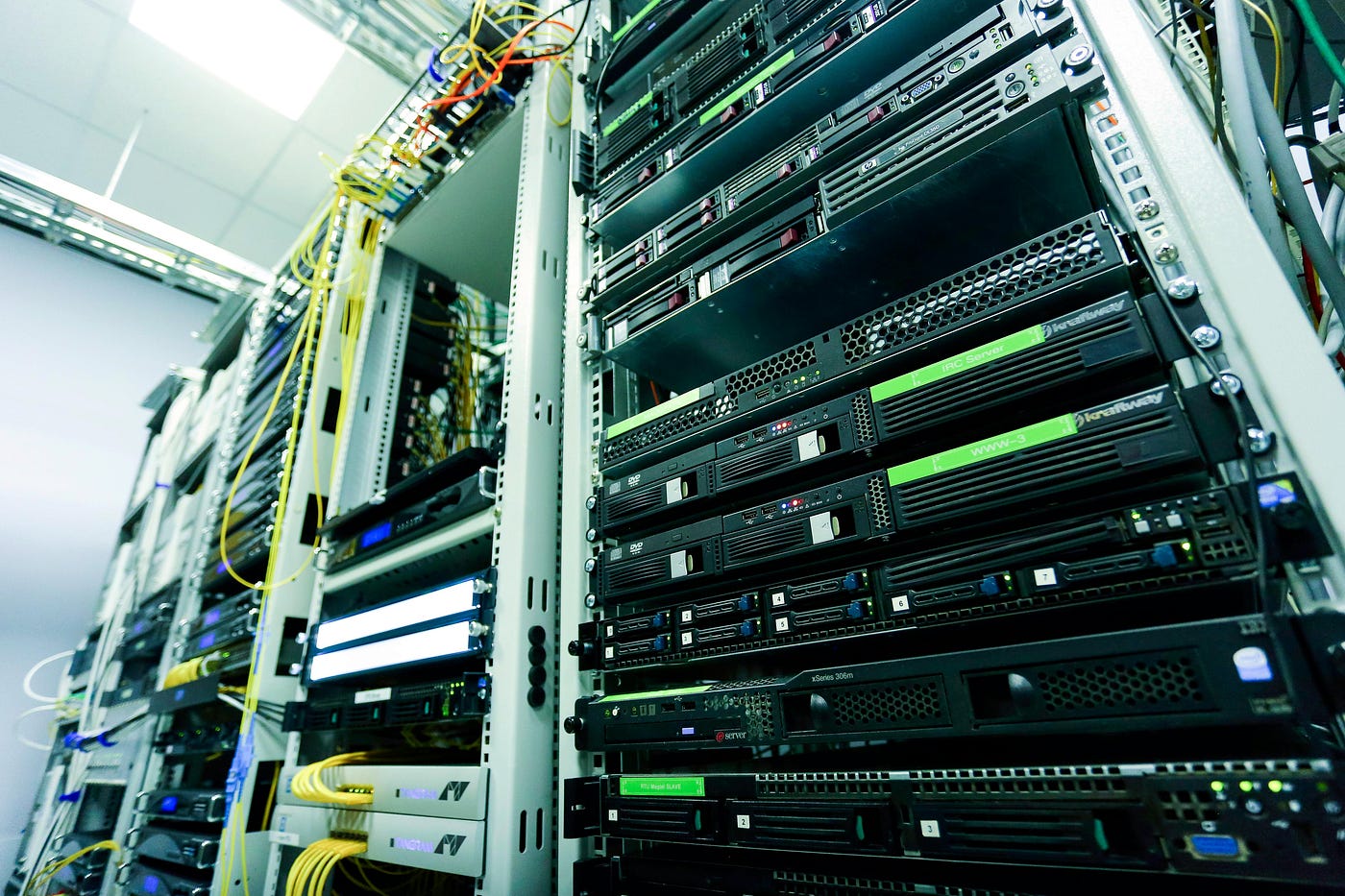
How HPC Clusters Work: Nodes, Networking, and Parallel Processing
High Performance Computing (HPC) is transforming the way organizations solve complex problems. From Artificial Intelligence and scientific…
How HPC Clusters Work: Nodes, Networking, and Parallel Processing
High Performance Computing (HPC) is transforming the way organizations solve complex problems. From Artificial Intelligence and scientific research to weather forecasting and big data analytics, HPC clusters help process massive workloads at incredible speed.
But how do these systems actually work behind the scenes?
In this article, we’ll explore how HPC clusters use nodes, high-speed networking, and parallel processing to deliver powerful computing performance.
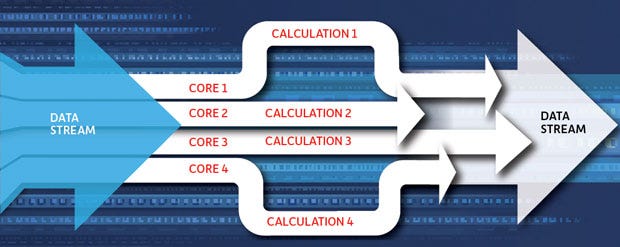
HPC Parallel Processing
How HPC Clusters Work: Nodes, Networking, and Parallel Processing
High Performance Computing (HPC) powers some of the world’s most advanced technologies — from Artificial Intelligence and weather forecasting to scientific simulations and medical research.
But have you ever wondered how HPC systems actually work behind the scenes?
Unlike a normal computer, an HPC cluster combines multiple powerful machines that work together as a single system. This allows organizations to solve extremely large and complex problems much faster than traditional computers.
In this article, we’ll understand the basics of HPC clusters, including nodes, networking, and parallel processing.
What is an HPC Cluster?
An HPC cluster is a group of connected computers that work together to perform high-speed computations.
Instead of relying on one machine, HPC distributes workloads across many systems to increase performance, speed, and efficiency.
These clusters are commonly used in:
- Artificial Intelligence (AI)
- Machine Learning (ML)
- Weather forecasting
- Financial modeling
- Scientific research
- Animation and rendering
- Genomics and healthcare
You can think of an HPC cluster like a team working on the same project together instead of one person doing all the work alone.
Main Components of an HPC Cluster
1. Head Node
The head node acts as the control center of the cluster.
Its responsibilities include:
- Managing jobs
- Monitoring resources
- Scheduling workloads
- Handling user access
- Communicating with compute nodes
Users usually connect to the head node first before running applications on the cluster.
2. Compute Nodes
Compute nodes are the machines that actually perform the heavy computations.
Each compute node may contain:
- CPUs
- GPUs
- Memory (RAM)
- Storage
- Operating system
When a job is submitted, the workload is distributed across multiple compute nodes to process data faster.
The more compute nodes available, the greater the computing power.
3. Storage Nodes
Storage systems are responsible for storing:
- Datasets
- Simulation results
- AI models
- User files
- Application data
HPC environments often use high-speed parallel storage systems to ensure fast data access across all nodes.
Popular storage technologies include:
- Lustre
- BeeGFS
- GPFS
Networking in HPC Clusters
One of the most important parts of an HPC cluster is networking.
Since many nodes work together simultaneously, they must communicate extremely fast with minimal delay.
High-speed networking helps:
- Transfer data between nodes
- Synchronize workloads
- Reduce latency
- Improve overall cluster performance
Common HPC networking technologies include:
- InfiniBand
- High-speed Ethernet
- Omni-Path
Without fast networking, even powerful compute nodes can become slow because they spend too much time waiting for data.
Understanding Parallel Processing
Parallel processing is the core idea behind HPC.
Instead of solving a task sequentially on one processor, HPC breaks large problems into smaller tasks and processes them simultaneously across multiple nodes.
For example:
Imagine processing 1 million images.
- A normal computer processes them one by one.
- An HPC cluster distributes them across hundreds of nodes at the same time.
This dramatically reduces processing time.
Types of Parallel Processing
1. Task Parallelism
Different tasks run simultaneously on different processors.
Example:
- One node processes images
- Another trains an AI model
- Another handles data analysis
2. Data Parallelism
The same task is performed on different parts of the data simultaneously.
Example:
- Large datasets split across multiple nodes
- Each node processes a smaller chunk of data
This is commonly used in AI and scientific computing.
Role of GPUs in HPC Clusters
Modern HPC clusters often include GPUs alongside CPUs.
GPUs are highly efficient at handling:
- AI training
- Deep learning
- Scientific simulations
- Large matrix calculations
- Parallel workloads
Because GPUs can process thousands of operations simultaneously, they significantly accelerate HPC applications.
This is why GPUs have become essential in modern supercomputing environments.
Job Scheduling in HPC
In shared HPC environments, multiple users may submit jobs at the same time.
A job scheduler manages:
- Resource allocation
- Queue management
- Workload balancing
- Job priorities
Popular HPC schedulers include:
- SLURM
- PBS
- Kubernetes
- Torque
The scheduler decides:
- Which node should run the job
- How many CPUs or GPUs are required
- When the job should start
Real-World Example of HPC Usage
Here’s how HPC works in real life:
Weather Forecasting
Weather simulations process massive amounts of atmospheric data using parallel processing across thousands of nodes.
AI Model Training
Large AI models require GPUs and distributed computing to train efficiently.
Scientific Research
Researchers use HPC clusters for:
- Protein simulations
- Space research
- Climate modeling
- Physics calculations
Challenges in HPC Clusters
Although HPC is powerful, managing clusters can be complex.
Common challenges include:
- Resource management
- Cooling and power consumption
- Network bottlenecks
- Storage performance
- Cluster monitoring
- Security and access control
This is why organizations use HPC management and monitoring tools to optimize cluster performance.
Previous Article in This Series
The Role of GPUs in High Performance Computing (HPC)
Conclusion
HPC clusters are designed to solve problems that traditional computers cannot handle efficiently.
By combining:
- Compute nodes
- High-speed networking
- Parallel processing
- GPUs
- Distributed storage
HPC systems can process enormous workloads at incredible speed.
As technologies like AI, machine learning, and scientific computing continue to grow, HPC will become even more important in the future.
Understanding how HPC clusters work is the first step toward exploring the world of supercomputing and large-scale computing infrastructure.
AETPL is an end-to-end IT solutions company providing HPC, AMC/CAMC, hardware supply, website development, PostgreSQL services, and more.
🌐 https://aetpl.org/ 📧 aetpl@aetpl.org
메타데이터
- post_id
- 0512c1282281
- slug
- how-hpc-clusters-work-nodes-networking-and-parallel-processing-0512c1282281
- url
- https://medium.com/@aetpl/how-hpc-clusters-work-nodes-networking-and-parallel-processing-0512c1282281
- canonical_url
- https://medium.com/@aetpl/how-hpc-clusters-work-nodes-networking-and-parallel-processing-0512c1282281
- author_url
- https://medium.com/@aetpl
- status
- ok
- fetched_at
- 2026-06-10 08:17:25