PNY RTX 5060 8 GB Overclocked Dual Fan Beginner Guide
The PNY GeForce RTX 5060 8 GB Overclocked Dual Fan is a compact, budget-friendly graphics card that fits easily into a wide range of…
PNY RTX 5060 8 GB Overclocked Dual Fan Beginner Guide
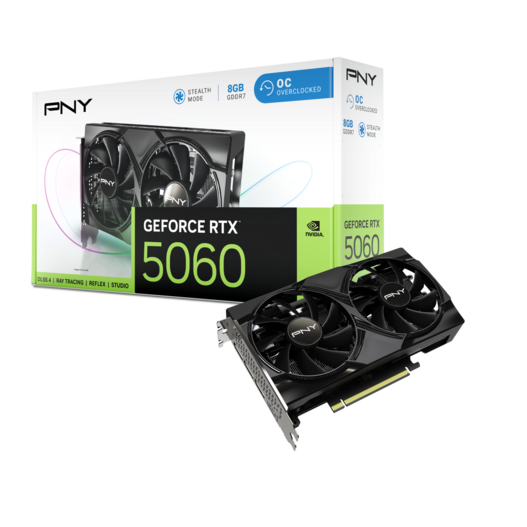
The PNY GeForce RTX 5060 8 GB Overclocked Dual Fan is a compact, budget-friendly graphics card that fits easily into a wide range of computer builds while offering a bit more cooling headroom than the single-fan version, but less than the three-fan model. If you’re not deep into tech or just want a clear explanation of what this card actually does without it being overcomplicated, this guide is for you. We’ll go through the specs one by one and explain what they mean in simple terms. You won’t need to know every technical keyword to follow along. I made this to help anyone learn without feeling overwhelmed, while still being thorough. Price and availability tend to change often with graphics cards, so we won’t be focusing on that here, but the MSRP for the standard model is $299 for reference.
Note: This guide covers the PNY factory-overclocked version of this card and shouldn’t be confused with the standard non-overclocked model that shares a similar design. If you’re looking for the non-overclocked version, I have a separate guide for that here.
Hardware Specs and Architecture
This card is based on NVIDIA’s new Blackwell GPU design, which brings updated features and better performance for modern games and apps. The PNY dual fan version keeps things compact and easy to power while giving you a little more cooling headroom. Let’s go through what’s on the card and how each piece fits together.
Blackwell Architecture Basics
Blackwell is the next step after NVIDIA’s previous Ada design. One of the main upgrades is a new version of their AI-focused Tensor Cores, now in their fifth generation. These are small parts inside the GPU that handle tasks related to machine learning, including features like DLSS, which helps your games run faster by using AI to fill in extra frames. This version includes special support for lower-precision math (called FP4), which is better suited for those AI features and helps speed them up.
Ray tracing, which adds more realistic lighting and reflections in supported games, also gets a boost. The dedicated cores that handle this effect are now in their fourth generation. They’re better at processing large, complex 3D scenes, particularly when the geometry has lots of detail. This means newer games that use ray tracing will look smoother and run more efficiently than they did on older cards.
Core Counts and Clocks
The RTX 5060 comes with 3,840 CUDA cores. These are the parts of the chip that handle most of the general processing, especially when running games or creative apps. CUDA cores work together in large groups, taking small pieces of a task and running them all at once. The number gives a sense of how much raw computing power the card has.
As for speed, the card runs at a base clock of 2,280 megahertz and can boost up to 2,535 megahertz when needed. That’s a small bump over the non-overclocked version, which tops out at 2,497 megahertz. The difference isn’t huge in real-world use, but it gives the card a little more breathing room during heavier loads or longer sessions. Boost clocks are the faster speeds your card can reach when it’s not running too hot and still has room in its power budget. This boost happens automatically, depending on the current workload and temperature.
Memory and Bandwidth
This card uses 8 gigabytes of GDDR7 memory. That’s the latest generation of graphics memory, and it runs faster than the GDDR6 found in most earlier cards. That speed helps the GPU move textures, geometry data, and visual effects quickly in and out of memory while it’s processing frames. When memory moves faster, the card has an easier time keeping up with everything it needs to show on screen. This memory is called VRAM, which stands for video RAM. It’s where the graphics card stores things like game assets, background textures, lighting details, and other visual data while it’s working. The more VRAM a card has, the more it can keep ready to go without needing to pull from slower system memory. That makes a difference when scenes get more complex or when settings are turned up.
The RTX 5060 connects to its memory over a 128-bit path. Think of that as the width of the lane the data travels through. A wider lane and faster memory together give the card a total memory bandwidth of 448 gigabytes per second. That’s the amount of data it can move every second, and it helps reduce wait times when large amounts of visual content need to be processed all at once.
While 8 GB is still enough for a lot of common tasks, it’s starting to fall behind in terms of what’s becoming standard. Many newer mid-range cards are coming with 12 or even 16 GB, and more games and software are beginning to take advantage of that extra room. The RTX 5060 doesn’t offer other memory options, so if you’re planning to stretch this card over several years or work with high-memory tasks later on, that’s something to keep in mind. But for now, the 8 GB here is fast and can handle basic workloads as long as memory use stays within that limit.
Power and Cooling Design
This card uses up to 145 watts when it’s under full load, which puts it in a comfortable range for a mid-range GPU. That amount of power draw means most modern power supplies can handle it without any trouble. It connects with a single 8-pin power cable, which is one of the most common plugs found in gaming power supplies, so there’s usually no need to change anything to get it running.
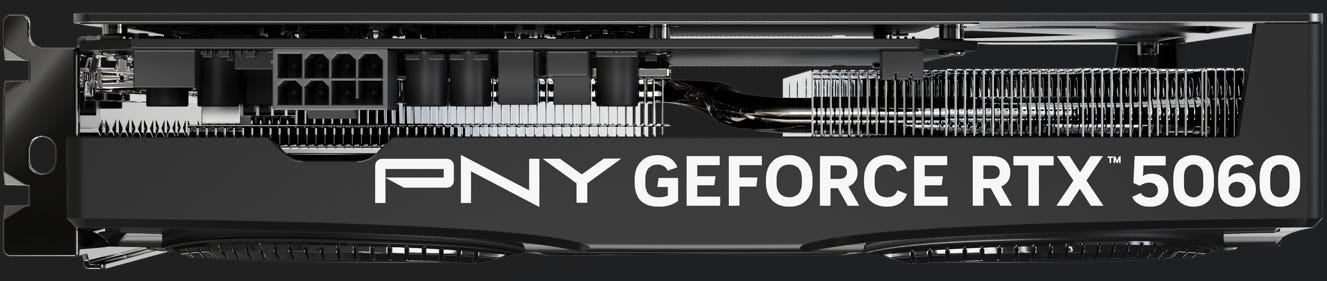
You can see the 8‑pin power connector to the upper left.
Cooling is handled by two fans mounted directly on the card. They work together to push air across a larger heatsink, which spreads heat out across a metal surface, helping it cool down more evenly before the air exits the card. The fans adjust their speed based on temperature, and having two of them helps keep noise lower since each one doesn’t have to work as hard to manage heat.
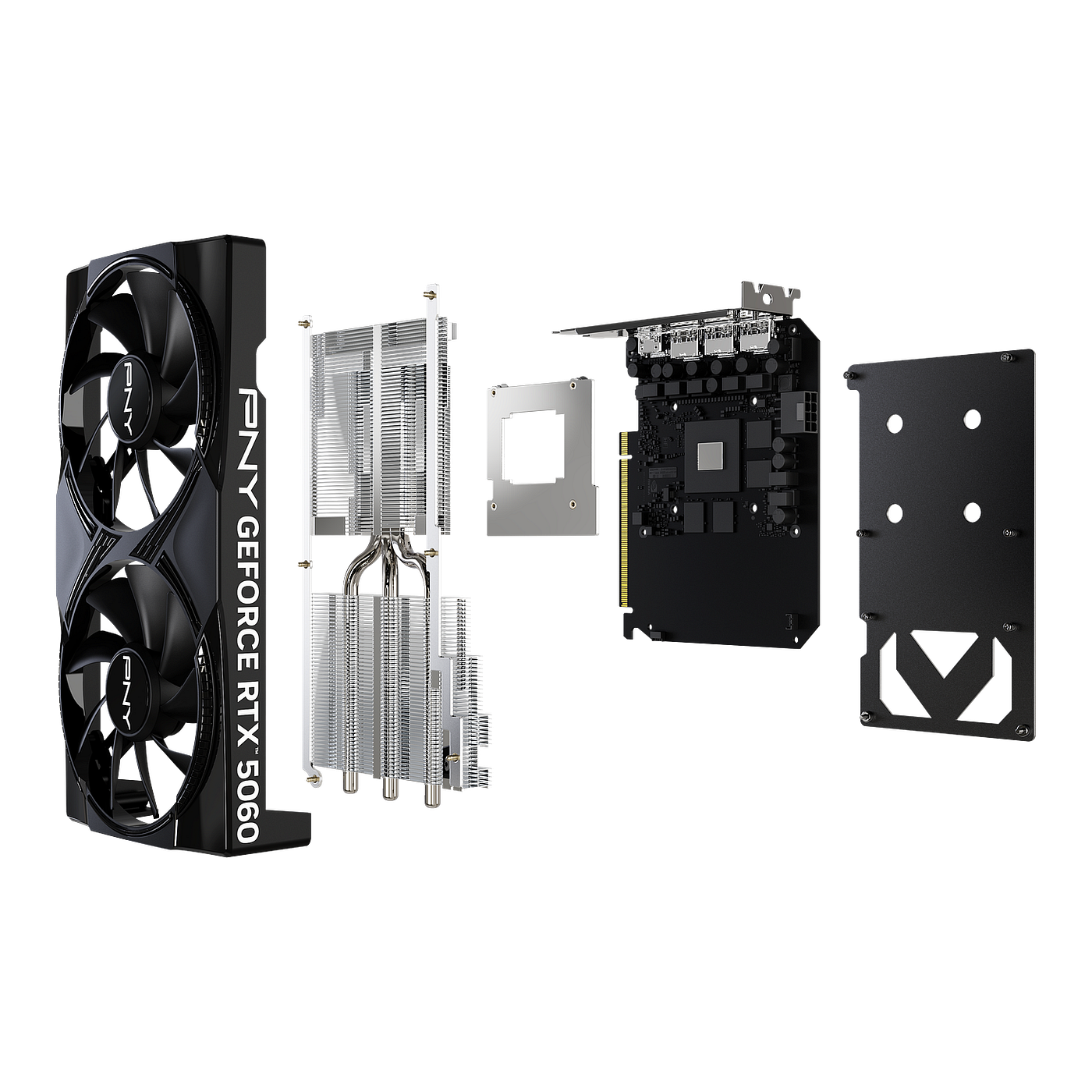
This shows the internals, including the heatsink and fans.
Because of the dual-fan design, heat is moved away from the card more efficiently than with single-fan models. That’s useful during longer gaming sessions or heavier workloads where temperatures stay higher for extended periods. The added cooling also helps the card maintain its boost speeds more consistently. The tradeoff is a slightly larger size, with the card measuring around 200 millimeters in length, but it still fits in most cases without much trouble.
There’s also a triple-fan version of the PNY RTX 5060, which offers even more thermal headroom for users planning to push the card harder or keep it running at high load for extended periods. Compared to that, the dual-fan model balances size and cooling better for standard cases and everyday use.
Software and Warranty
PNY includes its VelocityX software with the card, which gives you a simple way to adjust fan speeds, monitor temperatures, and fine-tune performance. It’s helpful if you want to control how the card behaves without needing to install third-party tools. On top of that, this model comes with a 3-year limited warranty through PNY, which gives you a bit of extra peace of mind if you’re planning to keep the card in your system for a while, just remember to register.
Building and Everyday Use
The PNY RTX 5060 8 GB Overclocked Dual Fan version is built to handle common tasks that most PC users care about, whether that’s gaming, light content creation, or building a system that stays cool without being oversized. It leans toward users who want something modern but don’t need high-end performance or large-scale workloads. Everything on the card is geared toward staying efficient, quiet, and reasonably fast for its class and price.
Game Performance Expectations
This card is made for 1080p gaming and handles that resolution well, especially with the small bump in boost speed from the factory overclock. Most modern games will run at high settings and still give smooth frame rates, with help from DLSS 4. DLSS stands for Deep Learning Super Sampling. It’s a feature that uses AI to fill in extra frames between the ones your system actually draws. That lets you get more frames per second without needing as much raw power from the card itself. Some newer titles with higher-than-average demands can push the card to its limits, particularly when they’re built with ultra-detailed environments or larger memory needs. In those cases, turning a few settings down can help keep the experience steady without losing too much visual quality.
At 1440p, the card can still run a fair number of games, but this is where its limits start to show. Some settings may need to be turned down, depending on how demanding the game is. Titles with high-resolution textures, heavy effects, or larger environments can get close to the 8 GB memory cap, which may lead to lower frame rates or short stutters during play. That kind of load is less of an issue at 1080p, where the card has more breathing room. Older games or ones that don’t rely on the latest graphics features continue to run well without much trouble.
This card isn’t built for 4K or very high frame rates in demanding games, but it performs decently for players who want a steady experience at 1080p. You can expect a smooth 60 frames per second in many titles, with some going higher depending on the game and settings. With Reflex 2 helping cut down input delay, games that rely on quick reactions still feel responsive and sharp.
Content Creation with NVIDIA Studio
The RTX 5060 works with the NVIDIA Studio platform, which brings added support for creative software. That includes tools for editing photos, cutting videos, doing basic 3D modeling, and working with AI-based filters. The fifth-generation Tensor Cores improve the speed of effects that rely on AI, like background removal or voice filters in real-time video. The newer ray tracing cores also help speed up lighting previews in apps that support it.
For users doing casual to moderate creative work, the card holds up well. The GDDR7 memory is quick enough to handle high-resolution video timelines and preview changes without long delays. It’s a budget-friendly option that makes newer tools more accessible without jumping to a higher-end card. And with the dual-fan cooler, the card handles heavier loads more comfortably than the single-fan version. It’s less likely to hit thermal limits during longer rendering sessions or demanding video work.
The card also supports NVIDIA Broadcast, which gives you extra tools like noise removal, virtual backgrounds, and camera framing. These can be helpful if you’re doing live streams or recording content from home without needing extra gear.
System Power and Slot Requirements
Power requirements for the RTX 5060 are fairly modest, which makes installation less stressful for people building or upgrading a system. It draws up to 145 watts and runs off a single 8-pin power cable, which is standard on most gaming power supplies. That keeps things simple and avoids needing extra adapters or special plugs.
The card fits into a regular PCIe slot and uses the PCIe 5.0 standard, though it’s still fully compatible with older PCIe 4.0 or 3.0 slots. It connects over 8 lanes instead of the full 16, but that doesn’t affect performance much with this kind of GPU. The smaller lane count helps save space on compact motherboards and leaves room for other expansion cards.
You don’t need a high-wattage supply to run this card, and most systems with at least a 550-watt power supply should be fine. That gives it flexibility for prebuilt systems or upgrades where you don’t want to replace too many parts at once.
Compact Build Potential and Display Output
This version of the RTX 5060 stays compact while having good cooling performance. It measures about 200 millimeters in length, which gives the dual-fan heatsink more room to spread heat while still fitting into most mid-size or smaller cases. It takes up two slots, meaning it covers the space of two expansion slots on the back of your case without blocking nearby components or drive bays. Compared to the single-fan model, this one runs cooler and more quietly under load while still keeping a small footprint. It’s a good fit for builds where space is limited but cooling still matters, like compact ATX setups or airflow-restricted enclosures. It also avoids the extra size of the triple-fan version, which offers more headroom but may not fit as easily into tighter builds.
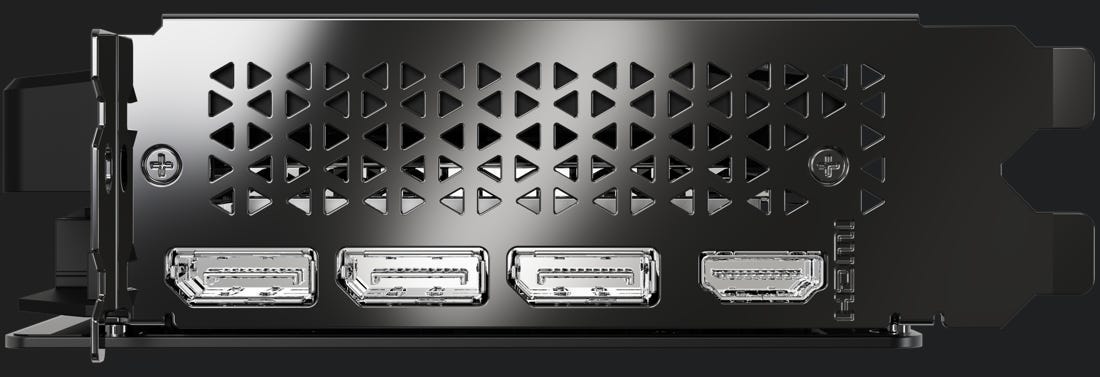
This shows the two-slot design, with three DisplayPorts and a single HDMI port on the right.
It comes with three DisplayPort 2.1 outputs and one HDMI 2.1 port, which gives you plenty of options if you’re running multiple monitors or connecting to a capture setup.
If you’re building in a case that doesn’t have room for oversized graphics cards or you just want something easier to install and manage, this version balances size, performance, and thermal control better than the shorter single-fan model.
Comparing with AMD RX 9060 XT
The closest competitor to the RTX 5060 is the AMD RX 9060 XT. Both cards sit around the $300 range and target the same type of use, which is 1080p gaming, support for modern features, and enough performance to handle some creative workloads without going overboard.
What Sets Them Apart
At 1080p, both cards deliver good results, and the difference in game performance depends a lot on how the game is built. The RTX 5060 uses DLSS 4, which helps boost frame rates by using AI to generate extra frames. AMD cards use FSR, a similar tool for upscaling, though it works differently. In many cases, performance will feel about the same unless you’re looking closely at numbers.
The RX 9060 XT can pull ahead at 1440p, mostly because it has a wider memory bus and is available in both 8 GB and 16 GB models. Games that rely on higher memory capacity or that stream a lot of data while you play tend to benefit from that extra headroom. It also has an edge in some non-gaming tasks like 3D rendering or working with larger video timelines, where the extra memory and raw performance come into play. On the RTX 5060, you’re limited to 8 GB, which can start to feel a bit tight in performance.
Cooling and Memory Choices
Many RX 9060 XT models come with dual- or triple-fan coolers and larger heatsinks, which help keep temperatures lower and noise down during long sessions. It currently doesn’t come in a single-fan version. The RTX 5060 Dual Fan model strikes a middle ground being both cooler and quieter than the single-fan version, but still smaller and easier to fit into compact builds than a triple-fan card. Its dual-fan setup spreads heat more evenly across the heatsink and does a decent job staying quiet under load, particularly during extended gaming or creative work.
The RTX 5060 is more compact and more power-efficient, while the RX 9060 XT leans toward higher performance and longer-term memory flexibility options. Both have strengths depending on what you’re building for.
Conclusion
The PNY RTX 5060 8 GB Overclocked Dual Fan GPU brings together updated architecture, faster memory, and practical design choices in a compact card that fits where larger models may not. It runs cool enough under basic to moderate use, handles modern games well at 1080p, and supports creative tools with features that speed up AI and video workflows. With two fans and 8 GB of VRAM, it’s a card built more for everyday needs than for pushing limits, but the hardware holds up well for its size and price.
If you want to see how this version stacks up against the rest of the lineup, I’ve got a full comparison of all four PNY RTX 5060 8 GB models: All PNY RTX 5060 8GB Models Compared for Beginners
- *PNY RTX 5060 Overclocked Dual Fan Product Page*
- *PNY VelocityX Software*
- *NVIDIA Blackwell Architecture Overview*
- *NVIDIA DLSS 4 Developer Guide*
- *NVIDIA Studio Support and Setup*
- *PNY Product Registration*
You can reach me at alexander.obregon47@gmail.com for sponsorships, collaboration requests, or other professional opportunities.
메타데이터
- post_id
- 05cbdc03e8a5
- slug
- pny-rtx-5060-8-gb-overclocked-dual-fan-beginner-guide-05cbdc03e8a5
- url
- https://medium.com/@AlexanderObregon/pny-rtx-5060-8-gb-overclocked-dual-fan-beginner-guide-05cbdc03e8a5
- canonical_url
- https://medium.com/@AlexanderObregon/pny-rtx-5060-8-gb-overclocked-dual-fan-beginner-guide-05cbdc03e8a5
- author_url
- https://medium.com/@AlexanderObregon
- status
- ok
- fetched_at
- 2026-06-25 07:00:49