Forgiveness Urgency
Part 1, The Fallacy of Idealistic Distortion
Forgiveness Urgency
Part 1, The Fallacy of Idealistic Distortion
What is Idealistic Distortion? The tendency of individuals to answer personal questions in a socially desirable manner. It measures the extent to which a person distorts situations to preserve a positive appearance. AKA, “Wearing rose-colored glasses.”
Photo by Alex Shute on Unsplash
Forgiveness Resets Damaged Relationships
-
Community disorder, civility threatened
-
Marriage at risk
-
Friendship risk
-
Personal sanity at risk
The challenge of forgiveness has been particularly confounded by the subjective 21st century doctrine of “niceness.” I would go as far as calling the process “cursed” by the infringement of Sentimentalism. I suppose those advocating such nice feelings mean well, but I would classify them as peddlers, not lifted counselors or mediators. Advocating warm fuzzy feelings might be a worthy goal among school children, but in the adult world the issues tend to be a bit more complicated than “Suzy touched me” or the dreaded “Jimmy won’t share.”
Parents mean well, although sometimes they might want to appeases their own anxiety in the matter with a quick and tidy win. They are to be commended for their efforts as peacemakers. Jesus notes their reward, “for they will be called children of God” (Matthew 5:9), and their task is truly appreciated. But they can’t resist a little moral topspin by adding such unnatural tasks as,
“Kiss and make up”
“Smile”
“Fake it till you mean it”
Or the grand fatum delicti (“fate of failure”),
“Forgive and Forget”
None of these have any Biblical roots. Tracing back the sources I believe they derive from the most popular source of Western Philosophy; Television.
All nice goals, and the subjects (AKA, “victims”) of these counsels may seem to comply, and truly blessed if they succeed, but its the wounds themselves that remain. Children will move along with the efforts, and Suzy will get her comeuppance with a “timeout” penalty.
But when we become adults those offenses which divide us tend to be a bit more severe, though not always. Unresolved conflict potentially upsets community health as well personally driving us into irrational pouting and magnified urges of revenge. Mom or Dad won’t be there as referees to mend our emotional bruises. Worse, our wounds somehow trigger our intrusive Ego to demand retribution. Those Dirty Harry movies don’t help.
Hollywood guarantees big profits on the theme of “Revenge.” Humans shell out lots of money to fantasize extraordinary compensation schemes. “Go ahead, make my day” gets eager fans no matter how many times we hear it.
Little wonder that Jesus counsel finds resistance when he advocates,
“But if you do not forgive others their sins, your Father will not forgive your sins.” — Matthew 6:15
Just try casting Uma Thurman (Kill Bill 1 and 2), Charles Bronson (Death Wish 1, 2, etc.), Keanu Reeves (John Wick, etc.) or Liam Neeson (Taken 1, 2 and 3 — the guy has some parental neglect issues) on that forgiveness theme.
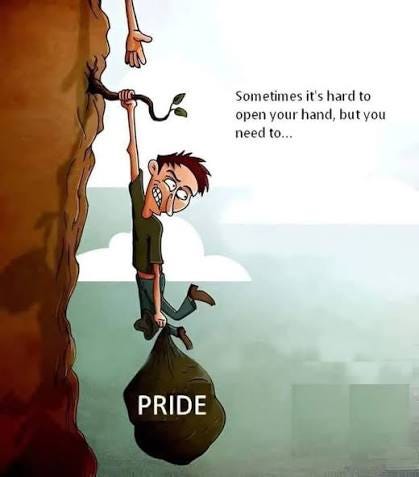
Forgiveness is a great restoring goal for all of us; personally, socially and for the preservation of our planet. But achieving it is not that simple. If it was, such articles as this one, nor the thousands of others, would not be necessary. Humans have trouble with forgiving. We all feel the need but that requirement of the other side forgiving first tends to doom the efforts. How do we get started on the road of social relationship healing.
First, let’s finally admit that our entire record of human history shows that forgiveness has never been easy. It takes more than simply saying just do it. As though the solution to sleep deprivation is to get more sleep or the secret to getting out of debt is to make more money. Yeah, we already guessed those points. But the urgent question is HOW can we get there, beyond superficial niceties?
Forgiveness is not really as easy, nice or tidy as you may have been told. The real work of forgiving requires draining effort, messy efforts, three-steps-forward-two-steps-back progress (that totals one positive advance step).
If we calculate the process by percentages, you’ll be lucky to get into 90% range of forgiveness, never 100% done and over. It’s not logical to assume an extreme 100% good or bad anything; at least not on this planet of fallible humans. You’ll never achieve perfect forgiveness, at least not in this lifetime.
God may leave you a thorn in the flesh” like he did with Paul (2 Corinthians 12:7) or a limp like he did with Jacob (Genesis 32:25, 31–32). God will heal your wounds, but he’s quite the opportunist. Prepare for greater lessons than what is immediately before you. His ultimate goal for you is maturity, not just band-aids.
“God loves us just as we are, But he loves us too much to allow us to remain as we are.”
Be sure of this, you won’t be the same person you were before. You’ll be smarter, braver and noticeably maturer.
…
Forgiveness and Revenge
“In this respect, forgiveness is the exact opposite of vengeance, which acts in the form of re-acting against an original trespassing, whereby far from putting an end to the consequences of the first misdeed, everybody remains bound to the process, permitting the chain reaction contained in every action to take its unhindered course. In contrast to revenge, which is the natural, automatic reaction to transgression and which because of the irreversibility of the action process can be expected and even calculated, the act of forgiving can never be predicted; it is the only reaction that acts in an unexpected way and thus retains, though being a reaction, something of the original character of action. Forgiving, in other words, is the only reaction which does not merely re-act but acts anew and unexpectedly, unconditioned by the act which provoked it and therefore freeing from its consequences both the one who forgives and the one who is forgiven. The freedom contained in Jesus’ teachings of forgiveness is the freedom from vengeance, which incloses both doer and sufferer in the relentless automatism of the action process, which by itself need never come to an end.”
— Hannah Arendt, “The Human Condition” (1958)
..
메타데이터
- post_id
- 05df2a8fa984
- slug
- forgiveness-urgency-05df2a8fa984
- url
- https://medium.com/@sminoraz/forgiveness-urgency-05df2a8fa984
- canonical_url
- https://medium.com/@sminoraz/forgiveness-urgency-05df2a8fa984
- author_url
- https://medium.com/@sminoraz
- status
- ok
- fetched_at
- 2026-07-09 13:13:48