Woman Interrupted by the Gaze
Existing under observation
Woman Interrupted by the Gaze
Existing under observation

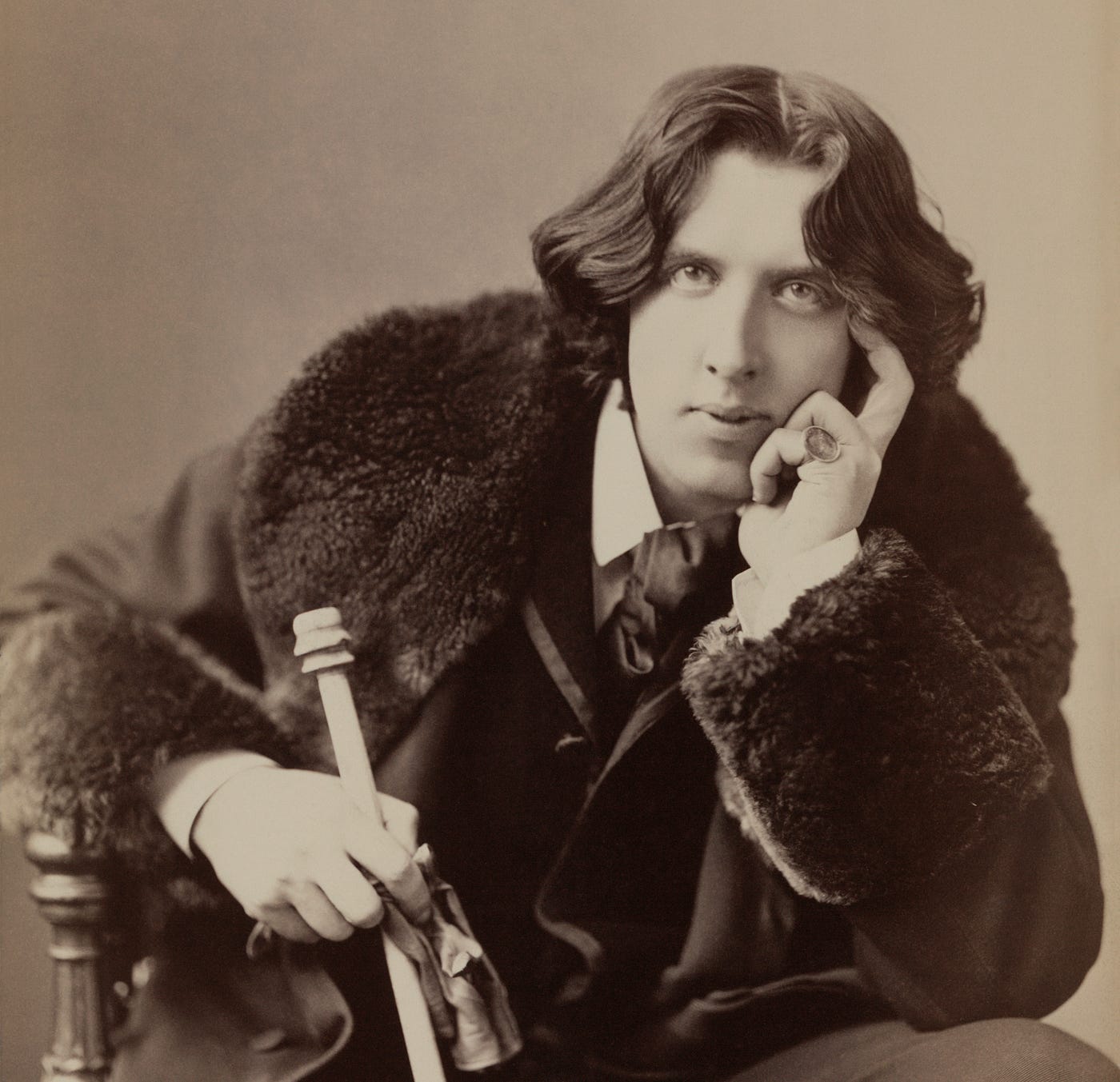
Painting titled “Male Gaze” by artist Barbara Johansen, modified by author.
Note: Some artworks featured contain nudity in an artistic and academic context.
To be born woman is to be sentenced to a lifetime of self-surveillance, beginning with the very first glance in a mirror.
Not long ago, I read Ways of Seeing, the seminal 1972 book and BBC television series by John Berger. The work explores how cultural, political, and historical assumptions shape the way we interpret visual art, arguing that images are never neutral. They carry ideology. They teach us how to look — and, more disturbingly, how to look at ourselves.
Berger’s analysis of how women are portrayed in art and advertising felt disturbingly familiar, because it reflects real life with uncomfortable accuracy..
“Men look at women. Women watch themselves being looked at.”
This is not merely an observation about social interaction. It is a diagnosis of a structural imbalance , one that shapes identity itself under patriarchy.
Berger argues that a man’s presence is traditionally tied to the promise of power he embodies. If he is strong, wealthy, influential, or authoritative, he is seen as someone capable of acting upon the world.
A woman, meanwhile, is taught that her presence depends upon how she appears to others.
Because women were historically denied agency in the public sphere, their social value became tied to perception. To be seen correctly became a form of survival. And so a fracture develops within female consciousness:
The Surveyor — the part of the woman that watches herself.
The Surveyed — the part that is constantly being watched.
“The surveyor of woman in herself is male, the surveyed female.”
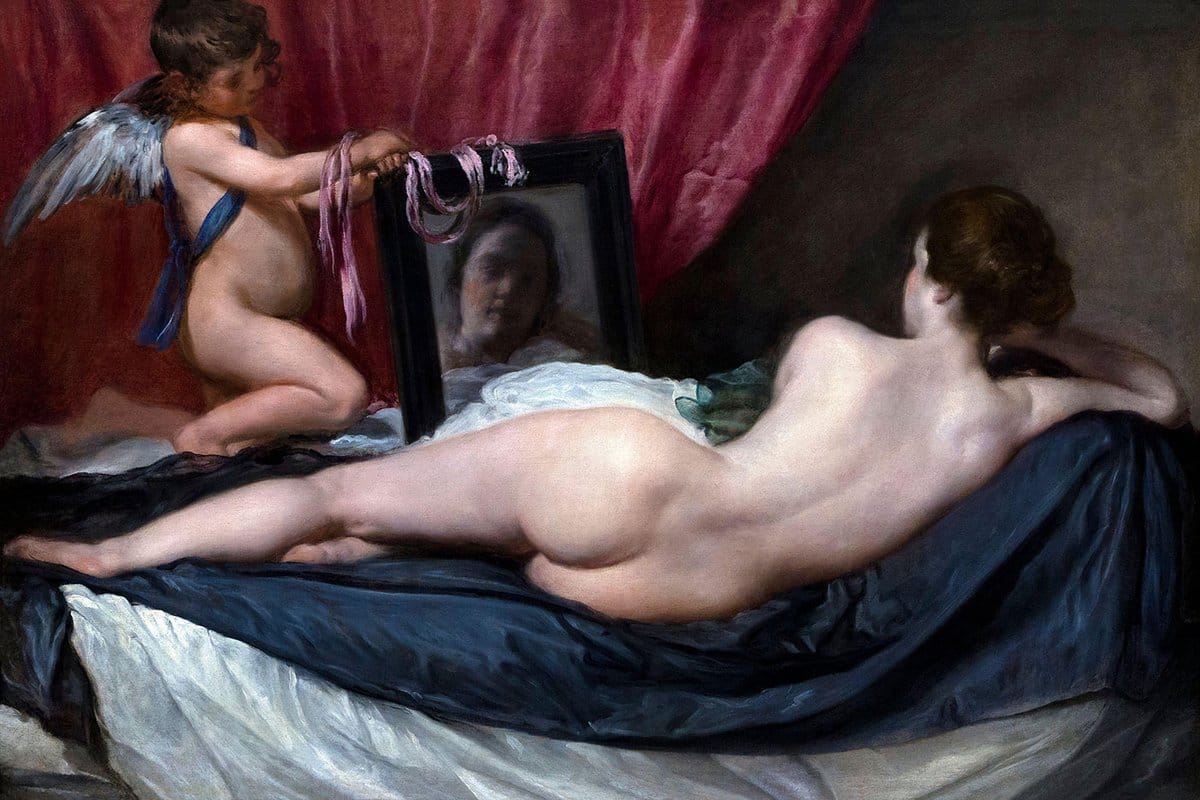
A woman divided in two, the person existing, and the person evaluating how she appears. Venus of Urbino — painted by Titian, c. 1534.
As Berger writes:
“A woman must continually watch herself. She is almost continually accompanied by her own image of herself... she has to survey everything she is and everything she does because how she appears to others, and ultimately how she appears to men, is of crucial importance for what is normally thought of as the success of her life.”
The tragedy is that this surveillance eventually becomes internal. The observer moves inside the body. A woman learns to monitor herself even when nobody is looking.
She adjusts the way she sits. Laughs. Eats. Walks. Ages. Speaks.
Not because she is vain, but because she has been taught that visibility is consequence.
One of Berger’s most unsettling arguments is the distinction he draws between being naked and being nude.
To be naked is to exist in your own body. To be nude is to be arranged for someone else’s consumption. Nakedness belongs to the person. Nudity belongs to the spectator. A naked person is. A nude person is displayed.
Nakedness belongs to the person. Nudity belongs to the spectator.
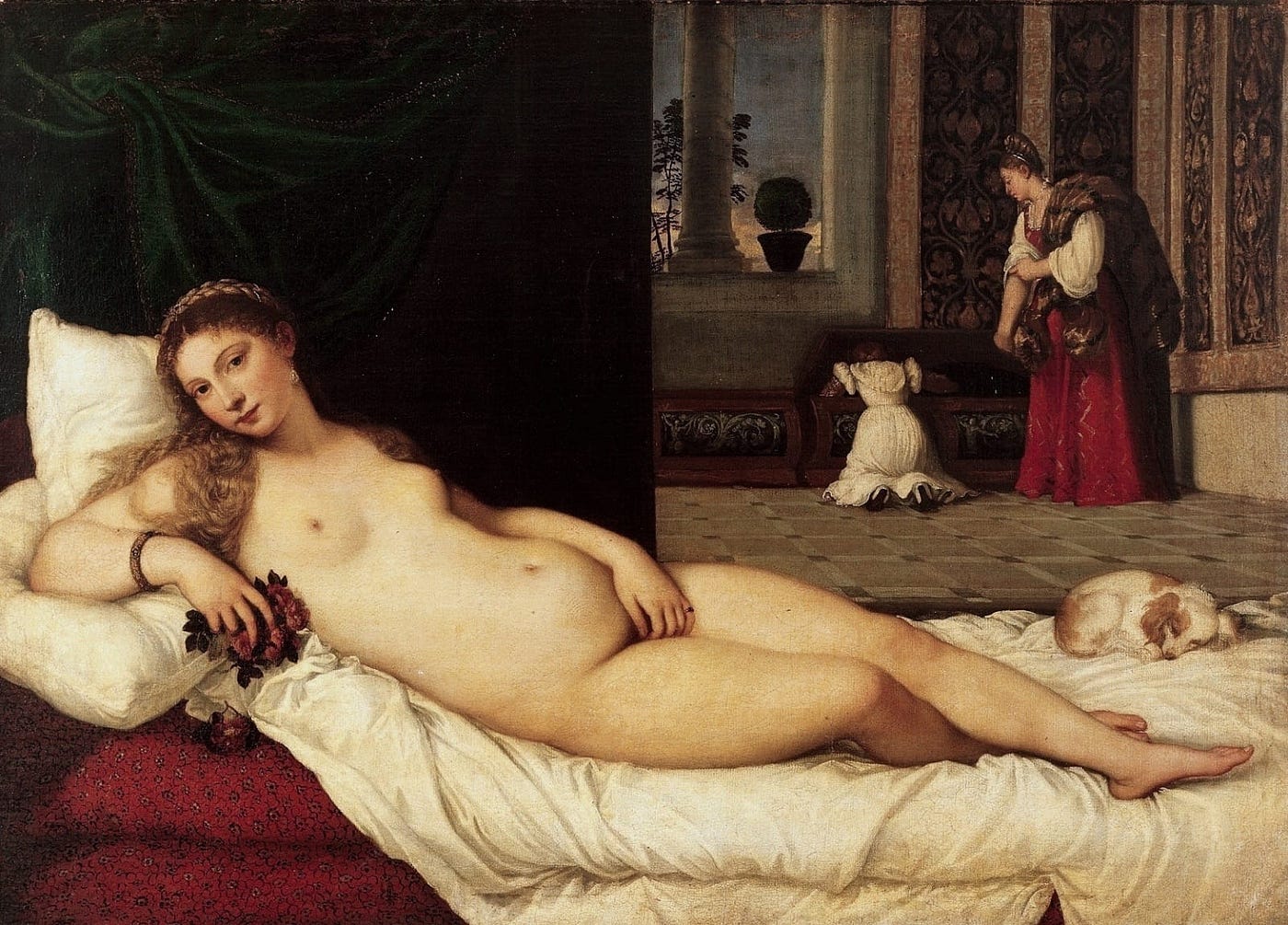
The nude is carefully arranged, not to express the woman’s inner life but to satisfy the spectator’s eye. The Rokeby Venus — painted by Diego Velázquez, c. 1647–1651
Centuries of Western painting encoded this distinction into what we understand as beauty itself. Women in these paintings were rarely depicted as they were — they were staged. Softened. Offered.
Even in paintings staged as intimate or sensual, the woman frequently looks outward, toward the viewer, confirming that her body exists not for her own experience but for others to witness. Her expression is not pleasure. It is availability.
What Berger identified in oil painting, advertising inherited wholesale. The same grammar. The same staging. The same implication that a woman’s body is first a visual object, and second, if we’re generous, a person.

Advertising learned long ago that women’s bodies attract attention faster than the product itself. Vintage Bacardi Rum advertisement from 1949.
Fragmented women sell everything — cars, liquor, perfume, real estate. Not women as full people with interiority and agency, but pieces of women, legs, lips, necks, waists. The woman disappears. What remains is the consumable.

Even in modern ads, the female body is often treated as visual flavoring for the product. The “Aamsutra” campaign
Cars are sold with women’s legs. Perfume is sold through female seduction. Burgers, alcohol, real estate — somehow, everything becomes more marketable when fragments of women’s bodies are attached to it.
Advertising does not merely sell products. It sells aspiration. And for women, aspiration has too often meant becoming desirable enough to survive attention.

The perfume is called “Scandal,” but the real scandal is how effortlessly advertising still turns women into atmosphere. Image source: Scandal perfume advertising campaign
Berger ultimately showed me how frequently women are denied the basic freedom of simply existing without being watched.
To move through the world without calculating appearance. Without anticipating judgment. Without translating yourself into something visually acceptable before speaking.
The critique of the male gaze eventually produced a counter-demand: cover yourself.
But modesty as a system — as something demanded of women, policed by communities, used to regulate female movement and visibility, is not the opposite of the male gaze. It is the male gaze itself.
Both frameworks show yourself to be desired and cover yourself to be respectable position women’s bodies as the central problem that must be managed. The modesty framework goes one step further by assigning moral weight to compliance. A visible woman is not just aesthetically wrong…she is sinful, asking for it, lacking dignity.
And that is why Ways of Seeing still feels revolutionary decades later. Once you recognize the gaze, you begin to see its imprint everywhere.
You notice how many girls are raised to treat their reflection like an evaluation. How confidence is applauded only when it remains beautiful, controlled, and palatable. How women are taught to love themselves, but only in ways that are still desirable to others.
The most insidious part is how self-surveillance starts disguising itself as identity. Women are told that this constant monitoring is self-care, discipline, modesty, and femininity.
But there is nothing freeing about living as both the observer and the observed.
All visual materials featured are used either from public-domain sources or under fair-use principles for critical and educational discussion.
메타데이터
- post_id
- 05e86ab7e834
- slug
- woman-interrupted-by-the-gaze-05e86ab7e834
- url
- https://medium.com/reflections-and-realities/woman-interrupted-by-the-gaze-05e86ab7e834
- canonical_url
- https://medium.com/reflections-and-realities/woman-interrupted-by-the-gaze-05e86ab7e834
- author_url
- https://medium.com/@maniisay
- status
- ok
- fetched_at
- 2026-06-23 03:48:11