From “We Don’t Have Time for AI” to Shipping an AI Assistant to Millions in 5 Weeks
If you had asked at Vipps MobilePay at the beginning of 2025 whether we had time to build AI-powered products, the answer was simple:
From “We Don’t Have Time for AI” to Shipping an AI Assistant to Millions in 5 Weeks
If you had asked at Vipps MobilePay at the beginning of 2025 whether we had time to build AI-powered products, the answer was simple:
“We don’t have time.”
We were scaling our one common platform across the Nordics and launching the world’s first Tap-to-Pay wallet. AI felt like something for later.
The personal AI spark
I started experimenting when ChatGPT launched at the end of 2022. I quickly discovered the value and became a regular user, but it was not until early 2024, when we launched our “one common platform” in Finland, that I had the real wow moment.
I remember walking into our Oslo office and seeing colleagues manually translating hundreds of Finnish emails with Google Translate.
Open mail. Select text. Copy. Paste. Translate. Document. Repeat.
I thought there had to be a better way, and that my trusty ChatGPT assistant might be able to help. Before I knew it, I was writing my first Python script to gather all emails and extract the text in an anonymous way to preserve privacy.
Once I had all the feedback in a text document, I could feed it to a GPTs that I instructed to act as expert user feedback analysts. Now everyone could get a quick overview of what was going on and dive deeper into topics that were relevant to their team or role.

For the first time, as a product and design person, I felt I could build anything. If I could dream it, I could build it.
But then the real question came. If AI changes how we work… what does it do to our products?
From tool to product
During our annual Wallet App Strategy process in 2025 (read about the 2024 process here), something became clear:
AI is a simplification engine. It helps us remove friction at a whole new level. We can simplify things that used to be hard, and even make the impossible possible.
With that as a starting point, how do we build the simplest wallet in the world?

We did a summer revision of our 2025 Wallet App Strategy to help the whole company understand how we could quickly learn to create real value with AI in our app.
We talked with teams across the company, and it quickly became apparent that there was no shortage of ideas. To make it concrete and actionable, we built a concept prototype of how this could be experienced by our users.

AI concept prototype showing how it could fit throughout our app
We presented the prototype internally, to the board and our partner banks. The presentation sessions were really good, with lots of excitement and engagement, and people started to dream bigger.
Then reality hit. We started asking teams and developers what it would take to turn the concept into a real product. We were immediately faced with a brick wall, with variations of “We don’t have time” or “It will take months.”
Usually an initiative would end at this point, but at the back of my mind I remembered my earlier AI wow moment.
I had 30 minutes between two meetings. I built a rough proof of concept. Scan anything. Turn it into structured data. Render it in the wallet.
That was the turning point. This was not an idea problem. It was a start-building-and-learning problem.
Stop talking. Start building.
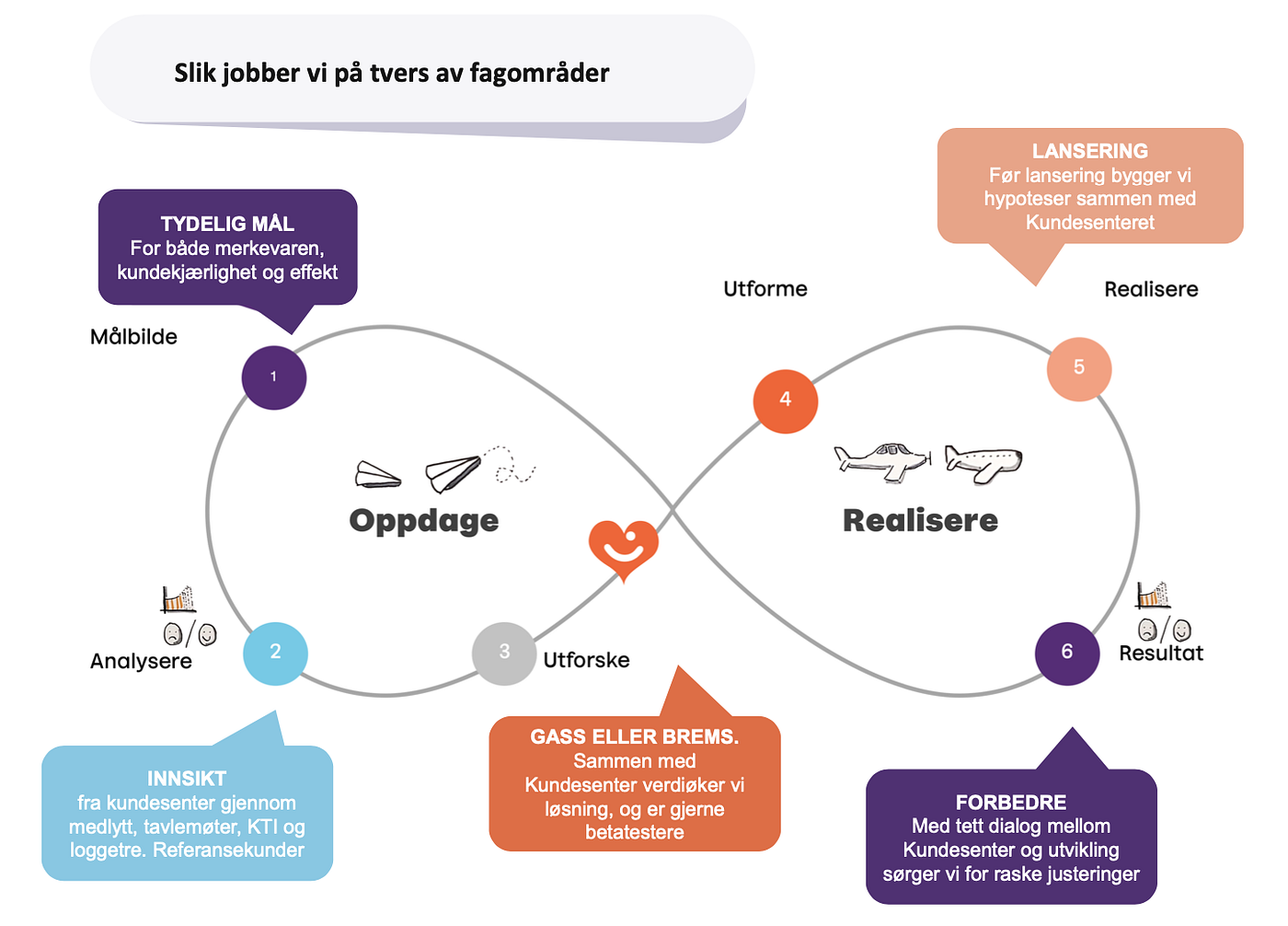
After the summer, we formed a small team. Four to five people working between other initiatives. We had one goal. To build a proof of concept to show that we could build an AI chat into our Vipps MobilePay app that would leverage an MCP (Model Context Protocol) setup to tie multiple functions into one assistant. Not perfect. Not pretty. But real.

The first scope: shopping assistant, customer support, gift card and ticket scanner.
On October 20, to everyone’s surprise, we launched it internally. A common response was, “How did you do it this fast?” People started paying attention, and we could feel that something started to shift.
At this point, the company was setting up Action Teams to quickly execute on strategic initiatives. Bringing AI into our app was one of them, and our internal proof of concept was an early proof that it could actually be done. There was one problem. There was no product manager available to lead the initiative. I thought back to my earlier AI wow moments. Why couldn’t a Head of Design like me do it? I offered to take responsibility. I got the mandate.
At the same time, the market was moving fast. Looking at AI progress in 2025, we could see two clear waves. The MCP wave at the beginning of the year, and the second wave of AP2 (Agentic Payment Protocol) and ACP (Agentic Commerce Protocol) that was about to start. After missing the first wave, we were determined to become a leader in the second.
Black Week bet
At this point the industry was moving fast, and we had to make a huge shift in ambition, speed, and vision. We set a new end-state ambition that gave us a clear goal to reach.

End state ambition for our agentic wallet
But we needed more than an end state ambition. We needed a concrete user and merchant pain point, and some kind of moment to tie it to in order to run a pilot experiment with real users at scale. What could it be…
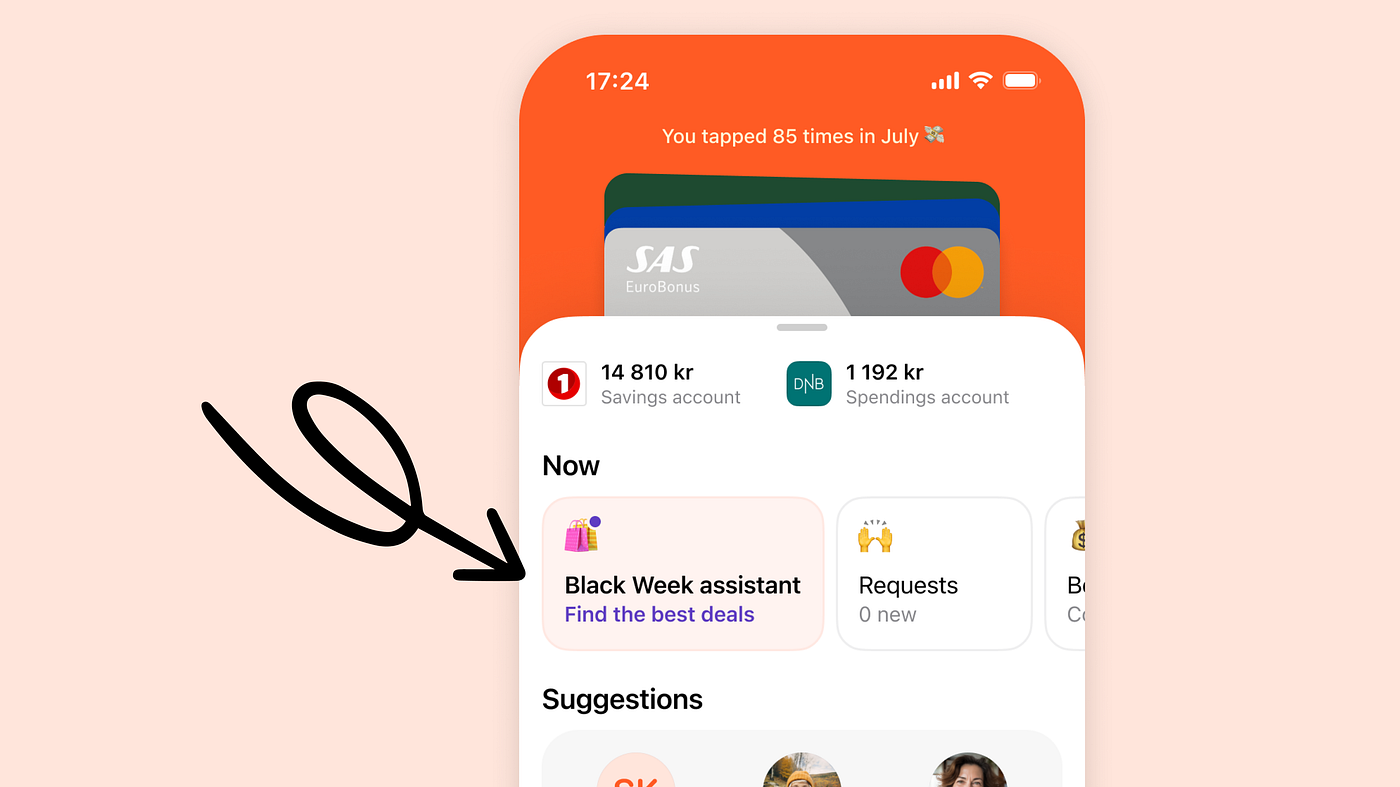
Then we saw it. Black Week was five weeks away. If we were serious about AI, this was our moment. It was the perfect event to tie end user and merchant needs together and test if we could build a compelling shopping experience.
The only problem was that we had just five weeks to do it, and my action team had no dedicated resources at that point. Still, we went for it. We quickly put together a small team. We set short deadlines with bold but clear goals that we chased together every single week. No meetings except two 30 minute sessions to sync and set goals.
The key to making it happen on such a short timeline was strict product scoping. We reused existing infrastructure. No personal data. No payments. No chat memory. Everything was designed to limit risk and streamline the approval process with risk and compliance. We had a hard line: nothing could damage user trust or safety in our role as a payment provider, while still remaining flexible enough to move at startup speed.
This was not about building the perfect AI product. It was about proving that we could ship AI safely at national scale.
Designing behavior, not just UI

The main screens of the experiment were quickly designed and reused a lot of existing infrastructure.
Most of the product work did not happen in Figma. It happened in the system prompt. Cursor quickly became one of my new favorite tools. How many products should we show? How many follow-ups? How fast should it respond? How detailed should it be? This was product design in a new form. Designing behavior, not just screens.
We added Finn Nybrukt as a source, making it possible to suggest used alternatives. AI gave us a way to start testing how to nudge users toward more sustainable choices in a natural way.

Snapshot of the system prompt in Cursor.
In the beginning, we did a lot of quality testing manually, but it quickly became clear that we needed an automated evaluation setup where the AI could test itself. This way, we could consistently measure whether we were making progress. This was another key part of the process, as we set ambitious quality goals every week to reach our Black Week deadline and quality threshold.
As usual, we had a Mixpanel board to measure usage, conversions, and interactions. But the really cool part was that the team built a dashboard powered by an AI judge that gave us a totally new kind of insight. In a fully anonymous way, we could track things like sentiment, what kind of tasks users were asking for, shopping categories, and more.

Snapshot of the dashboard powered by an AI judge.
Internal testers and the critical feedback cycle
During the whole process, we had a live version of the shopping assistant available for internal employees to test and give feedback. Two things surprised us. First, how many employees were testing and kept on testing. Second, how much negative feedback we got in the Slack feedback channel and around the coffee machine. “It’s fun that you are testing… but there is no way you are shipping this… right?”. I often caught myself thinking, “What have we gotten ourselves into…”

On the other hand, this was super valuable feedback and the only way we could learn fast enough, close security holes, and improve the quality. We addressed the internal feedback one issue at a time, and every week the quality improved dramatically.

Example of a particularly difficult case that we finally nailed after a lot of trial and error
Internal feedback is good but never enough. We had to test with real users. Now that we had a real working version, we could start testing in the real world in ways we had never been able to with static prototypes.
We did rapid guerrilla tests and were surprised by the findings. No one reacted negatively to Vipps MobilePay adding an AI assistant to the app. They expected us to do it, and even some skeptics were impressed by what it could do. “Oh! I did not know that it could understand curls!”
The other big discovery was that users had a whole new expectation about data usage and what the assistant should know about you as a user.
The NO-GO/GO moment
One week before Black Week, we had the big GO/NO-GO meeting with our CEO and his leadership team. Internally, feedback was still chaotic. As a team we had defined a quality threshold. If we hit it, we would recommend GO.

This was one of the key slides in the NO-GO/GO meeting
We hit the quality threshold. To the surprise of the whole company, leadership said yes. We were in shock.
Going live in Norway
We launched the assistant gradually to all adults in Norway. We were nervous. Would customers complain? Would merchants react negatively? Would capacity collapse?
The result: We exceeded our baseline usage goal and outperformed similar launches. We saw strong click-through rates, showing that we generated new traffic for merchants. There were no user complaints to our customer center, and several merchants reached out to collaborate.
During peak hours, traffic was so high that we had to double our PTU capacity. We learned a lot about scaling capacity and optimizing efficiency.
The internal transformation

But the biggest impact was internal.
Before launch: “No time.”, “Too risky.”, “Not good enough.”
After launch: “Should we do Christmas?”, “What’s next?”, “How do we scale this?”
We proved we can ship AI at national scale without compromising trust. Merchants wanted in. We moved faster than ever before.
Building a Christmas helper in two weeks
Now that we had newfound confidence, the team decided to transform the Black Week assistant into a Christmas Helper to help users find gifts for friends, family, or themselves. Using our MCP-based setup, we rapidly launched features like millions of FixFerdig Finn second-hand items, gifts that make a difference by supporting charities, good deal tags, and full wishlist integration.

The Nordic question
If agentic commerce becomes the new interface for shopping and payments, someone will own that layer. It should not be a given that international tech companies define how agentic commerce and payments work in our markets.
We believe Nordic players should and can play a real role in shaping it. But only if we act. Only if we partner. It will not be built by one company alone. It will be built by banks, merchants, fintechs, and technology partners who believe the Nordic model matters in the age of AI.
We thought we didn’t have time for AI. It turned out we didn’t have time not to.
메타데이터
- post_id
- 06a52d58a2a3
- slug
- from-we-dont-have-time-for-ai-to-shipping-an-ai-assistant-to-millions-in-5-weeks-06a52d58a2a3
- url
- https://medium.com/vipps/from-we-dont-have-time-for-ai-to-shipping-an-ai-assistant-to-millions-in-5-weeks-06a52d58a2a3
- canonical_url
- https://medium.com/vipps/from-we-dont-have-time-for-ai-to-shipping-an-ai-assistant-to-millions-in-5-weeks-06a52d58a2a3
- author_url
- https://medium.com/@MaxSchroder
- status
- ok
- fetched_at
- 2026-06-10 08:34:46