Spartacus: The Slave Who Made Rome Tremble
How one escaped gladiator turned 70 kitchen knives into the most terrifying rebellion Rome ever faced
Spartacus: The Slave Who Made Rome Tremble
How one escaped gladiator turned 70 kitchen knives into the most terrifying rebellion Rome ever faced
Rome built its empire on the backs of slaves. Millions of them — working its mines, tending its estates, dying in its arenas. The system was considered as natural and permanent as the hills surrounding the city. Nobody seriously thought it could be challenged.
Spartacus challenged it. And for nearly three years, he came closer to destroying Rome from within than any foreign enemy ever had.
This is the story of a Thracian gladiator, a breakout with kitchen utensils, and a slave rebellion that still haunts Western history more than two thousand years later.
From Soldier to Slave to Gladiator
Spartacus wasn’t born into chains. He was Thracian — a warrior from a region north of Greece — who was forced into the Roman army before being enslaved. Rome eventually sent him to a gladiatorial school in Capua, where men were trained to kill each other for public entertainment.
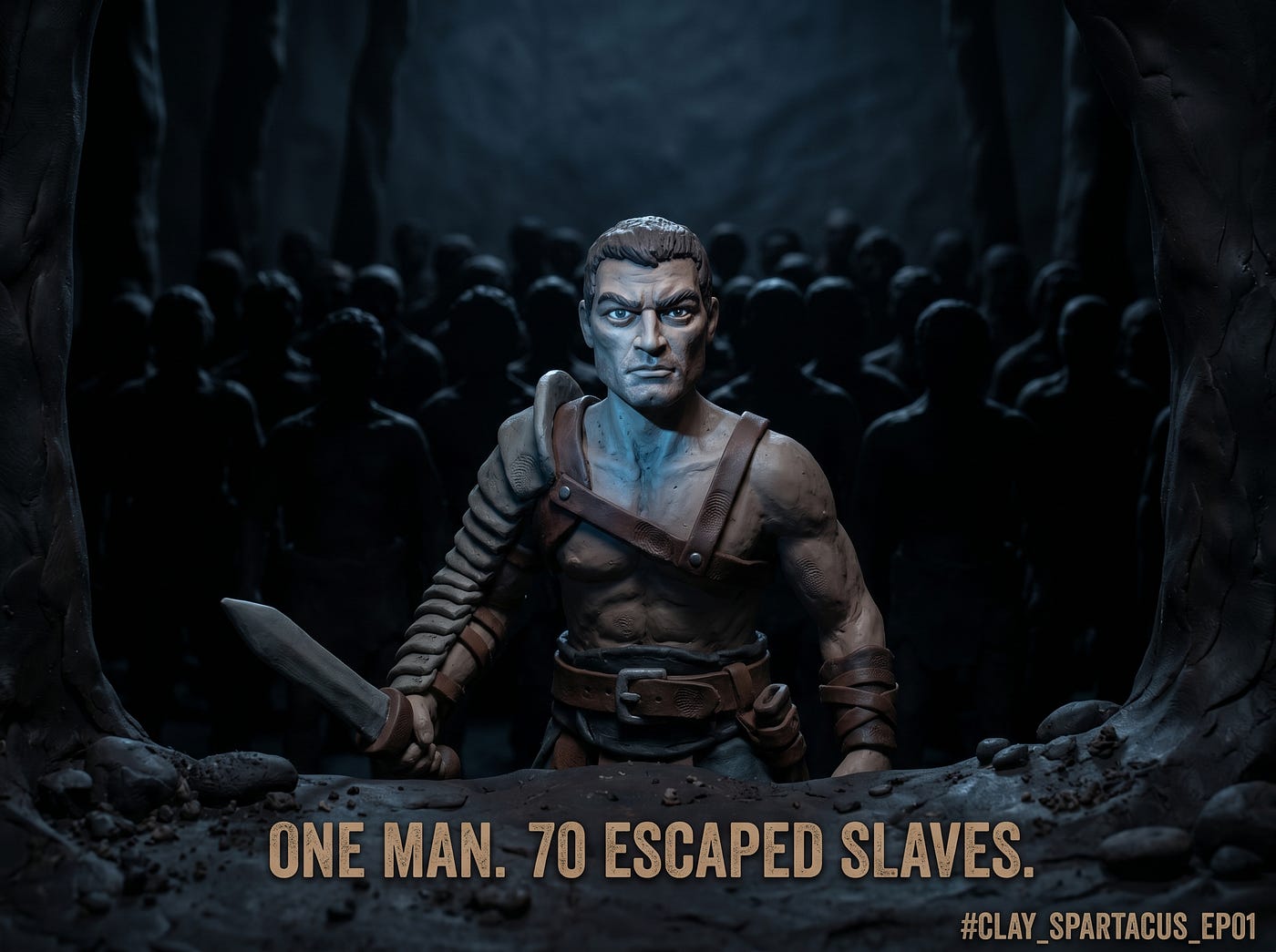
It was there, in 73 BC, that Spartacus made his first move. He and approximately 70 others escaped the school armed with whatever they could grab from the kitchen. Not swords. Not shields. Kitchen knives.
That detail matters. It tells you something about the conditions that produced the rebellion — and something about the determination of the people who started it.
70 Men. Then 70,000.
Word of the escape spread fast across Italy. Slaves working the fields and mines, slaves in the houses of wealthy Romans — they heard what had happened and ran toward it.
Within months, 70 men became 70,000. The number eventually swelled to around 120,000.
This was no longer a jailbreak. It was a war.
Spartacus proved to be a military commander of genuine ability. Rome sent armies to crush him. He destroyed them — not once, but repeatedly. Two consuls defeated. Multiple praetors routed. Eight Roman armies put to flight. The Senate, accustomed to projecting invincible power, was humiliated.
The Moment Rome Almost Fell
At the height of the rebellion, Spartacus marched his forces toward Rome itself.
The city panicked. Senators prepared to flee. Citizens braced for the unthinkable: a slave army at the gates.
He was within striking distance of ending the Roman Republic forever.
That sentence deserves to sit alone for a moment. The man had gone from kitchen-knife escapee to existential threat to the most powerful state on earth. In under two years.
The Fatal Split — and Rome’s Revenge
The rebellion broke itself before Rome could break it.
A faction within Spartacus’s army splintered off, refusing to follow his strategy. Rome saw its opening. The breakaway group was surrounded and destroyed. Then the full weight of Roman military power turned on Spartacus.
He died in battle in 71 BC. His body was never recovered from the field — a detail that kept his legend alive for generations.
Rome’s retribution was methodical and theatrical. Six thousand of his followers were crucified along the Appian Way, the main road into the city, one cross every 40 metres. The message to every slave in Italy was unmistakable.
What Spartacus Actually Won
He never freed Rome’s slaves. The institution survived him by centuries.
But he changed something harder to measure. Spartacus made Rome afraid of its own slaves — and that fear never fully left. Roman slaveholders after 71 BC lived with a new awareness of what was underneath them. That awareness shaped how they governed, how they treated their enslaved people, and how nervously they watched whenever groups of slaves gathered.
The rebellion also echoes loudly through later history. Karl Marx named Spartacus the greatest hero of the ancient world. Voltaire called his war the only just war in all of history. His name became shorthand for defiance against overwhelming power — invoked by revolutionaries, abolitionists, and freedom movements across centuries.
video on my youtube channel https://youtube.com/@moldedquest?si=ks93VVjEVK_SOTSf
메타데이터
- post_id
- 06b8e7e1f660
- slug
- spartacus-the-slave-who-made-rome-tremble-06b8e7e1f660
- url
- https://medium.com/@Moldedquest/spartacus-the-slave-who-made-rome-tremble-06b8e7e1f660
- canonical_url
- https://medium.com/@Moldedquest/spartacus-the-slave-who-made-rome-tremble-06b8e7e1f660
- author_url
- https://medium.com/@Moldedquest
- status
- ok
- fetched_at
- 2026-06-26 03:39:16