When War Becomes Childhood
Tarkovsky’s Ivan’s Childhood and the Psychology of Adapting to Trauma
When War Becomes Childhood
Tarkovsky’s Ivan’s Childhood and the Psychology of Adapting to Trauma
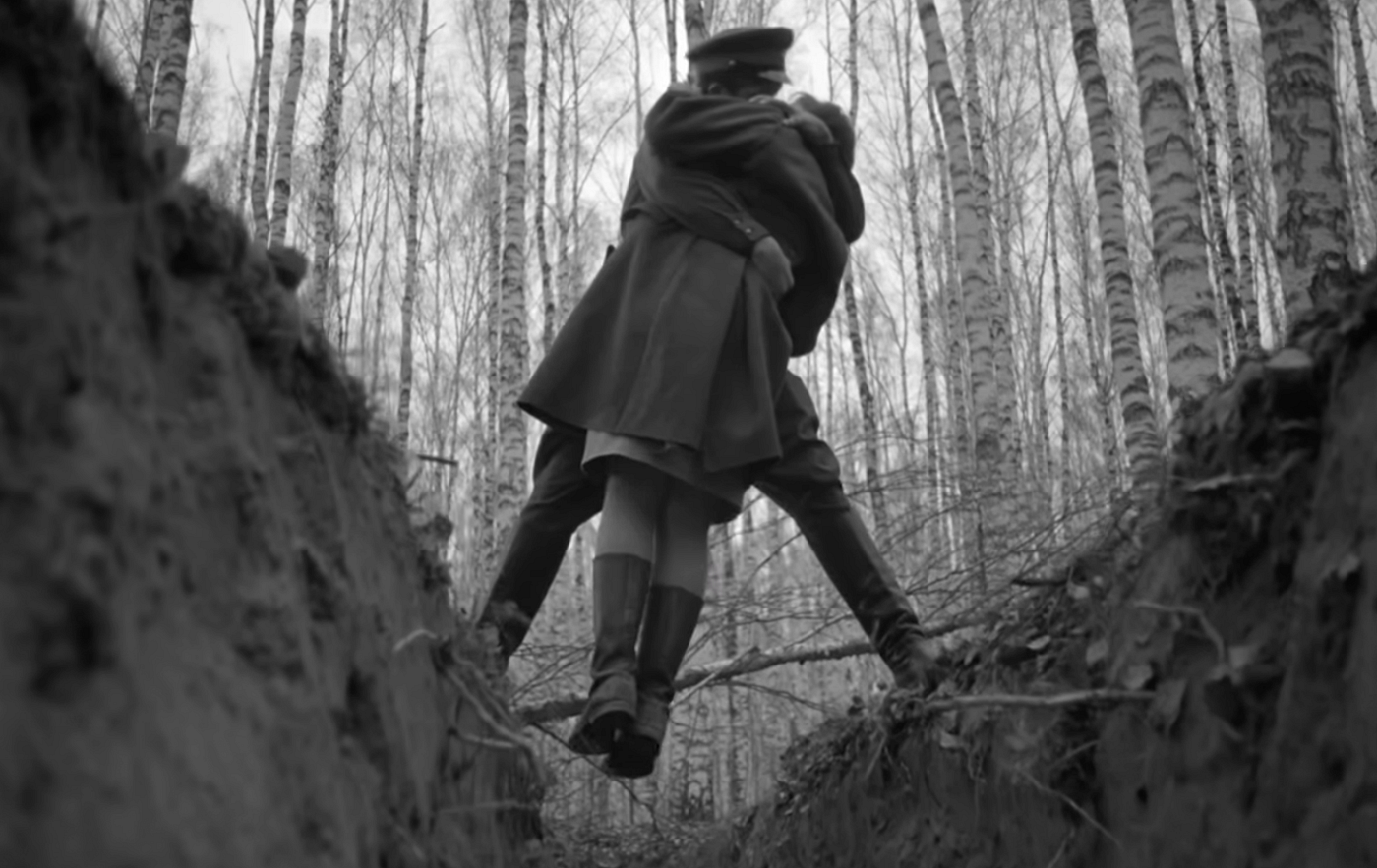
Image: Ivan’s Childhood (1962), dir. Andrei Tarkovsky, Mosfilm
Ivan’s Childhood was Andrei Tarkovsky’s first feature film. It earned him international recognition, winning both the Golden Lion at the Venice Film Festival and the Golden Gate Award at the San Francisco International Film Festival in 1962. Although it is often remembered as one of cinema’s greatest anti-war films, I believe its true subject is not war itself, but something far more disturbing: the extraordinary ability of the human mind to adapt to it.
Set during World War II, the film follows Ivan, a twelve-year-old orphan whose parents were killed by the invading German forces. Consumed by grief and the desire for revenge, he escapes an orphanage and eventually joins a Soviet military intelligence unit as a reconnaissance scout. Because of his small size, he is repeatedly sent on dangerous missions behind enemy lines.
The officers under whom he serves, particularly Gryaznov, recognize that a child has no place on the battlefield. They repeatedly try to send him to military school in the hope of saving what remains of his childhood. Ivan refuses every opportunity to leave the front. For him, returning to ordinary life has become impossible. Eventually, Kholin and Galtsev assign him one final reconnaissance mission across the river into German-occupied territory.
When War Replaces Childhood
In the hands of another director, Ivan’s Childhood might have become a conventional war film or simply a faithful adaptation of Vladimir Bogomolov’s 1957 novella Ivan. But this is Tarkovsky. Rather than depicting the horrors of war through battles and military victories, he explores something far more disturbing: what happens when war becomes a child’s normal way of living.
Even the title points to this idea. Ivan’s Childhood is not simply about a child during wartime. It is about a childhood that has been entirely replaced by war.
Throughout the film, Tarkovsky repeatedly contrasts two worlds. One exists only in dreams. The other is the reality Ivan inhabits.
In his dreams, Ivan returns to a childhood that no longer exists. He sees his deceased smiling mother, plays hide-and-seek with friends, and rides in the back of a truck filled with apples beside a young girl as rain falls around them. These scenes are often interpreted simply as nostalgic memories, but I believe they serve a deeper purpose. They preserve the child Ivan might have become if war had never entered his life.
Reality constructs the soldier. Dreams preserve the child.
Every time Ivan wakes, however, he returns to a world where war is no longer an event but the very structure of everyday life. This distinction is crucial. Tarkovsky is not primarily interested in depicting military operations or the brutality of combat. Instead, he shows us what prolonged exposure to war does to a child’s perception of reality.
When Trauma Becomes Identity
Psychologists describe this process as traumatic adaptation or normalization. The human mind gradually adjusts to conditions that were once unbearable until they begin to feel ordinary. What initially provokes fear eventually becomes routine. This ability to adapt is essential for survival, but it comes at an enormous psychological cost.
Ivan embodies this transformation. War is no longer an interruption to his life but the environment in which his life unfolds. He eagerly volunteers for dangerous reconnaissance missions, rejects every opportunity to leave the front, and no longer imagines a future beyond the battlefield. The adults around him still recognize war as an abnormal reality from which a child should be protected. Ivan does not. For him, war has become the only reality he knows.
He appears responsible, courageous, disciplined, and remarkably fearless. At first glance, these qualities resemble maturity. Yet none of them developed naturally through education, family, or ordinary life experience. They are products of trauma. War forced him to grow up, but it did not allow him to become an adult.
This is precisely why Ivan refuses Gryaznov’s attempts to send him to military school. A child raised in peace dreams of becoming an adult because adulthood promises independence and possibility. Ivan’s future contains neither. His entire identity has become organized around a single purpose: revenge.
Hatred, therefore, is no longer merely an emotion. It becomes the foundation of Ivan’s identity. Without it, he no longer knows who he is.
His courage, discipline, and willingness to sacrifice himself do not emerge from moral conviction. They emerge from hatred, itself born of unbearable loss. Tarkovsky once described this hatred as war’s “evil gift.” It is the only thing the war gives Ivan in exchange for everything it has taken from him.
This inner transformation becomes especially visible in the sequence where Ivan studies Albrecht Dürer’s engravings of the Apocalypse, illustrating the Book of Revelation. As he examines the horsemen, demons, and monstrous figures, he begins to see them as German soldiers. The engravings become less a religious vision than a projection of Ivan’s inner world. They reveal how completely hatred has reshaped his perception. He no longer sees symbols of the Apocalypse. He sees the enemy everywhere. Fear, grief, and rage have fused into a single emotional reality through which he interprets the entire world.
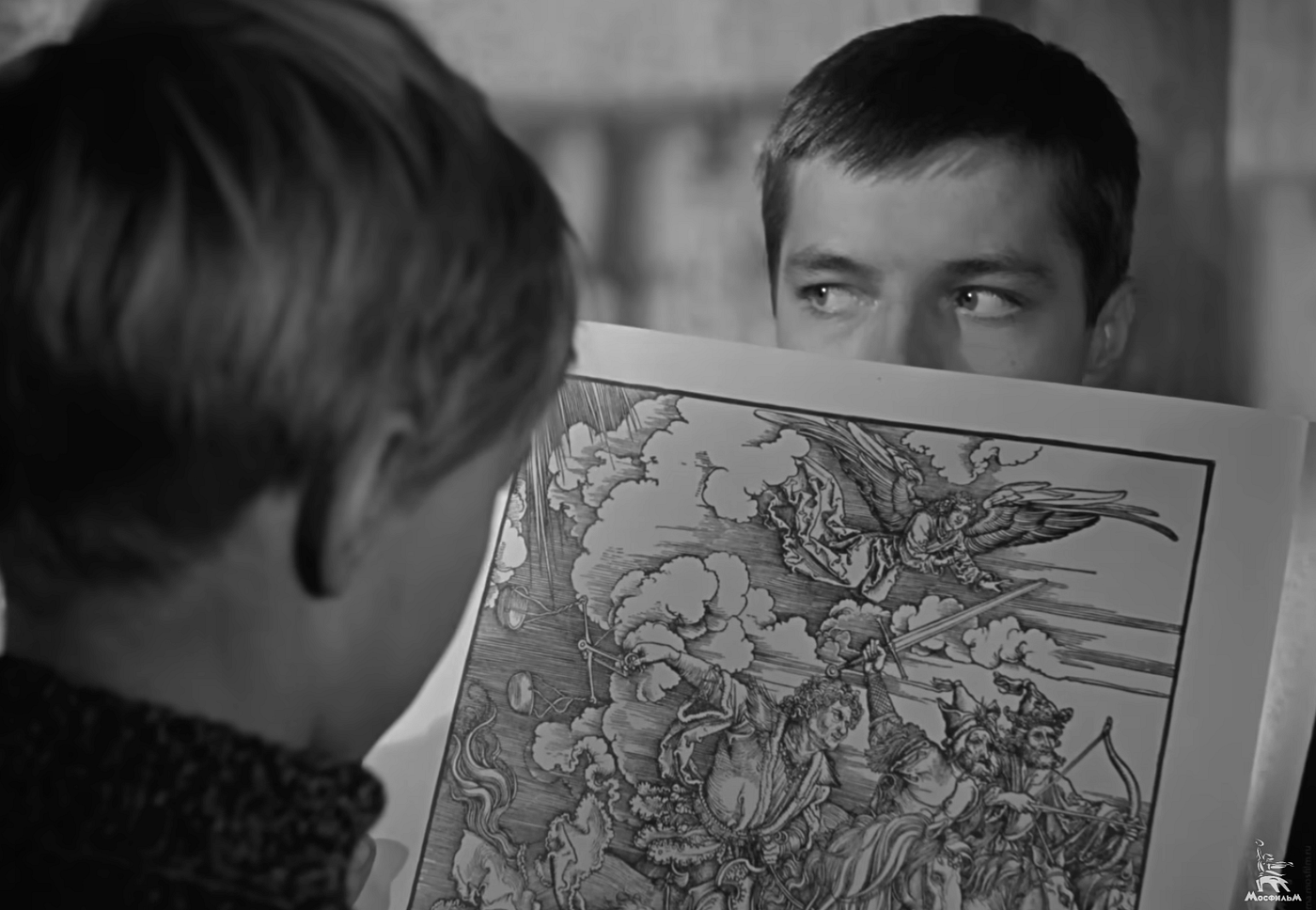
Image: Ivan’s Childhood (1962), dir. Andrei Tarkovsky, Mosfilm
When Play Becomes War
The culmination of Ivan’s psychological adaptation to war, as well as the emotional climax of the film, comes in the scene where he is left alone in the dugout. Any ordinary child left alone would instinctively invent a game to pass the time. Children process reality through play: they play school, families, doctors, and heroes. Play is the natural language through which they make sense of the world around them.
Ivan also plays.
The horrifying difference is what reality he has been given.
Instead of pretending to be a teacher or an explorer, Ivan stages a military operation. Armed with a knife and a flashlight, he sounds the alarm, crawls across the dugout, captures an imaginary German prisoner, hears screams and gunfire, and conducts an interrogation. His game is not separate from reality. It is reality, transformed into play.
Psychologists describe this phenomenon as traumatic repetition or repetition compulsion. Traumatic experiences often return in repetitive play, not because the child enjoys them, but because the mind repeatedly attempts to process experiences that remain psychologically unresolved. Ivan does not play war because he loves violence. He plays war because war has become the only reality his mind knows how to understand.
Yet Tarkovsky also reminds us that this adaptation is incomplete. During the game, Ivan repeatedly sees visions of his dead mother and sister. After interrogating the imaginary prisoner, he suddenly breaks down in tears. These moments reveal that although war has become normal to him, it has never ceased to wound him. Trauma has been normalized, but it has not been healed.
Then something remarkable happens.
A real bombardment interrupts Ivan’s imaginary battle.
Explosions begin to shake the dugout. The adults immediately spring into action. Soldiers rush through the trenches, the medical battalion erupts into chaos, and everyone instinctively responds to the danger around them.
Ivan does not.
He quietly lies down on the floor and waits.
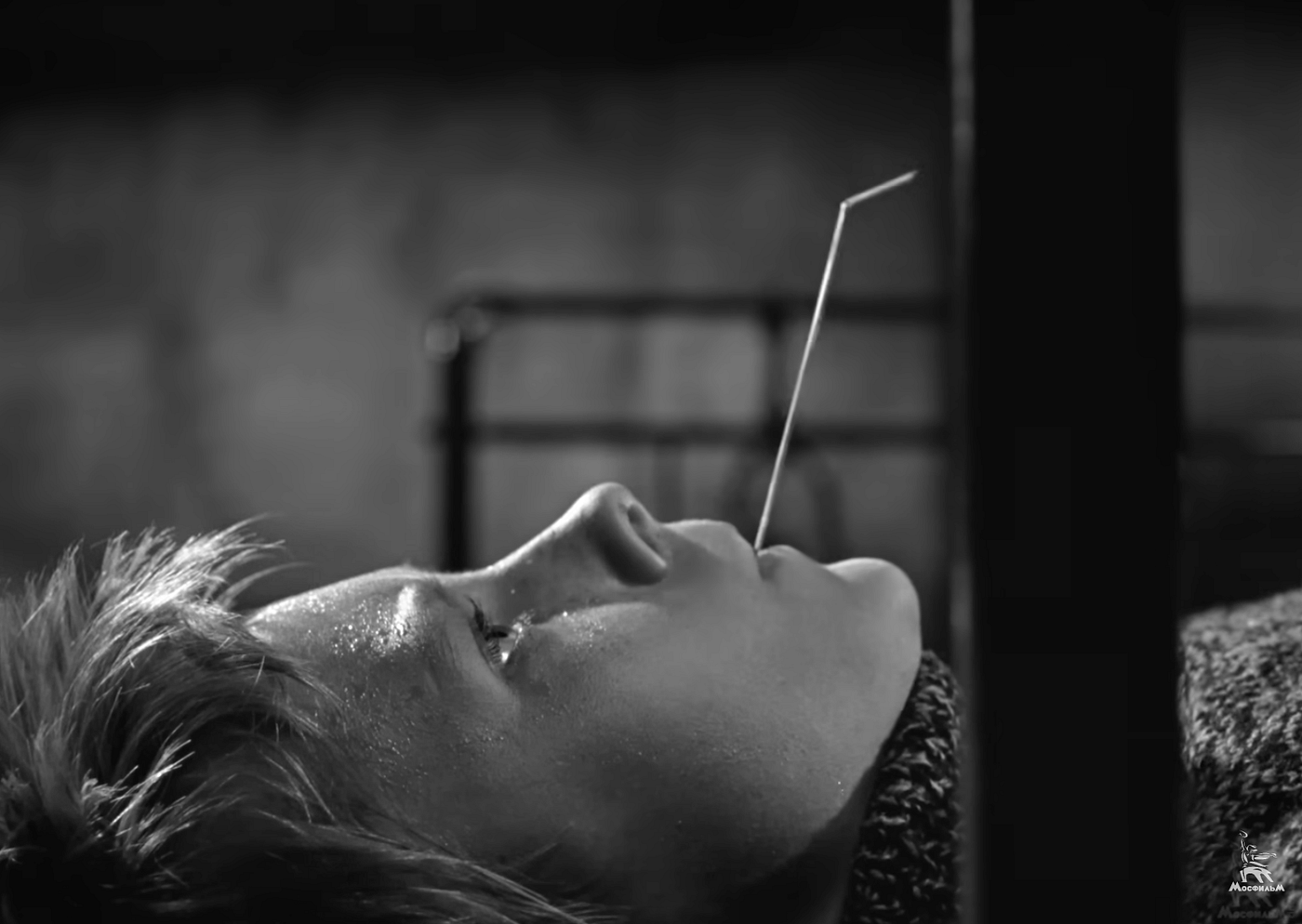
Image: Ivan’s Childhood (1962), dir. Andrei Tarkovsky, Mosfilm
This moment reveals the true extent of his psychological transformation. The real shelling does not interrupt his game because, in Ivan’s mind, there is no meaningful distinction between play and reality anymore. His world has become psychologically monolithic. There is nothing outside war. For him, war is no longer an extraordinary event but the ordinary structure of everyday life.
Tarkovsky reveals the most disturbing consequence of trauma: not permanent fear, but the gradual disappearance of the boundary between the abnormal and the ordinary.
The Most Dangerous Part of Trauma
Ivan’s story, tragically, is far from unique.
Every war forces millions of children to grow up in an environment defined by violence, fear, and hatred. Gradually, they stop experiencing these conditions as exceptional because their minds adapt in order to survive. The tragedy is not that children become fearless, but that they lose any memory of what a normal childhood should feel like. Their games change because the world they imitate has changed.
Adults rarely adapt in quite the same way because they remember another life before the war. Children do not have that comparison. While adults measure the present against a lost past, children are still constructing their understanding of reality. When violence becomes the world in which they grow, it becomes the foundation upon which their identity develops. The cost of this adaptation may not become visible until long after the war has ended.
This is why the true horror of Ivan’s Childhood lies not in violence itself, but in the extraordinary adaptability of the human mind. Tarkovsky suggests that the greatest psychological danger of trauma is not the terror it creates, but the normality it eventually acquires. The most frightening thing about war is not simply that it destroys childhood. It is that, for children like Ivan, war becomes childhood itself.
메타데이터
- post_id
- 06e104fbbbc6
- slug
- when-war-becomes-childhood-06e104fbbbc6
- url
- https://medium.com/cinemania/when-war-becomes-childhood-06e104fbbbc6
- canonical_url
- https://medium.com/cinemania/when-war-becomes-childhood-06e104fbbbc6
- author_url
- https://medium.com/@tanya.yurchenko.23
- status
- ok
- fetched_at
- 2026-07-17 21:26:36