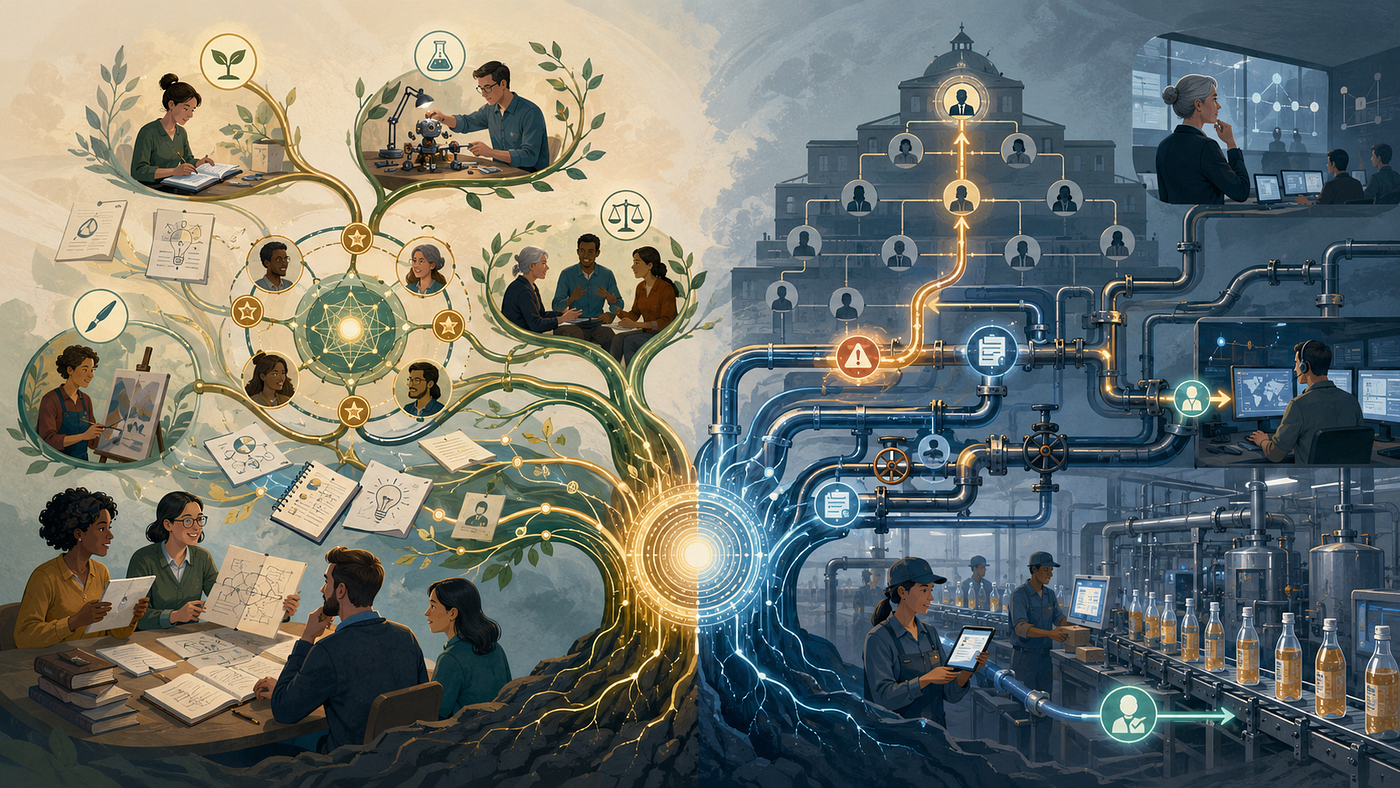
Artificial Intelligences Need the World’s Manuals
Artificial intelligence does not only need more powerful models. It needs reliable, complete, and up-to-date access to the world’s…
Artificial Intelligences Need the World’s Manuals
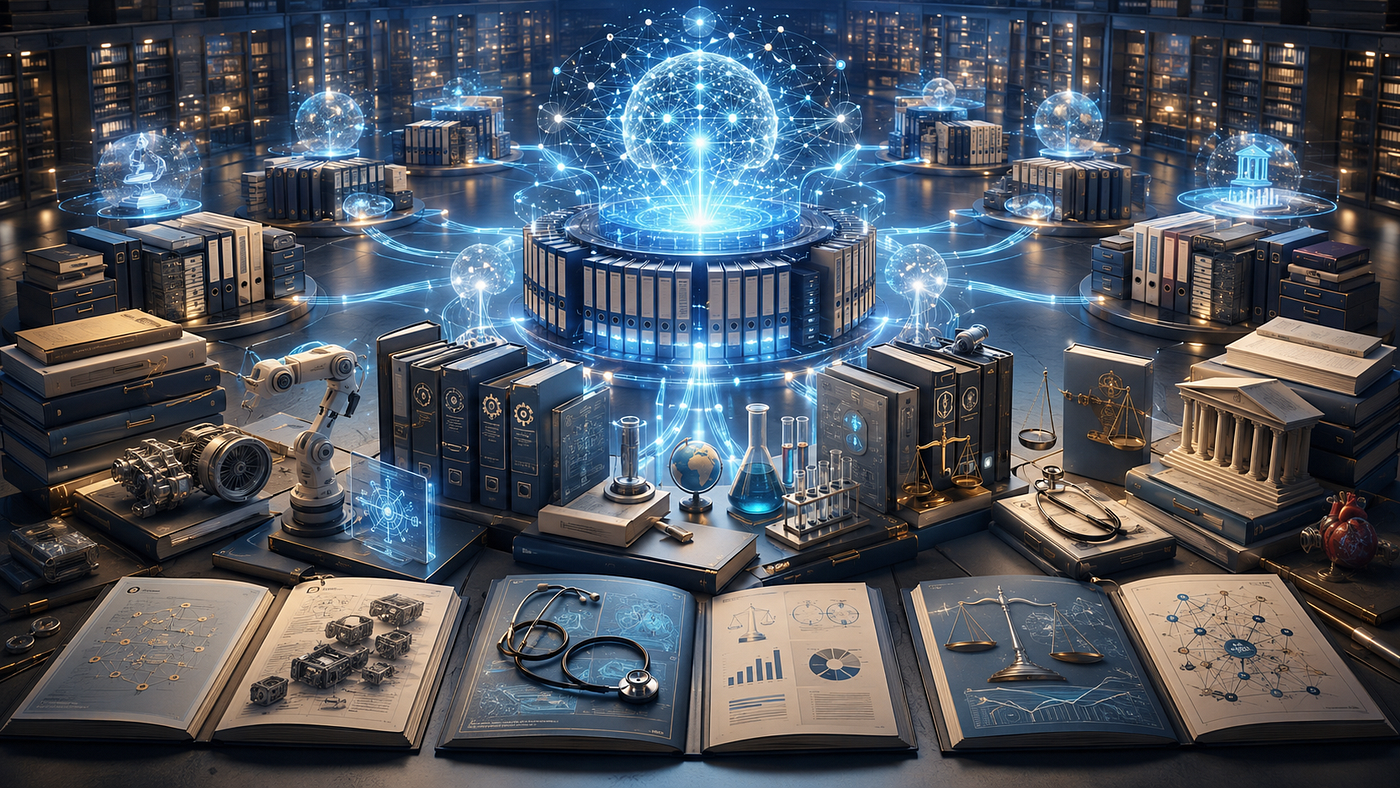
Artificial intelligence does not only need more powerful models. It needs reliable, complete, and up-to-date access to the world’s instructions.
An AI model may have been trained on an enormous quantity of text: books, websites, forums, technical documentation, scientific articles, manuals, code examples, and public archives. It can therefore explain, summarize, compare, program, translate, and reason across many domains.
But training does not automatically provide direct, complete, and current access to the precise instructions for a piece of software, a machine, a medical protocol, an engineering standard, a law, a public policy, or a professional manual.
This distinction is essential.
Training gives AI a general capability. A documentary library gives it precise access to reality.
The Problem: An AI Can Know a Lot Without Having the Right Manual
When an AI answers a question, it uses what it has learned, what it is given in context, and sometimes the sources it can access. But if it does not have the right documentation, it can produce an answer that sounds plausible without being accurate.
It can invent a command. Confuse two versions of a software tool. Ignore an update. Apply a rule in the wrong country. Cite an outdated procedure. Omit an important exception. Present a hypothesis as an instruction.
In creative software, this may simply waste time. In an industrial, medical, financial, legal, or administrative system, the consequences can become much more serious.
The problem is not limited to software. It concerns every form of operational knowledge: machine manuals, API documentation, medical manuals, engineering standards, emergency procedures, legal texts, economic policies, ethical rules, scientific protocols, and internal organizational processes.
An AI can be very intelligent, but without the right manual, it remains partially blind.
The Proposal: A Global Library of Operational Knowledge
We need to imagine a new infrastructure: a global library of complete, structured, verifiable documents that can be used by artificial intelligences.
Every software tool could have its AI manual. Every machine could have its structured documentation. Every API could publish its instructions in an easily searchable format. Every hospital could maintain its validated protocols. Every government could make its laws and procedures accessible to agents. Every profession could create libraries of standards, practices, and limits.
This library would not be a collection of summaries. On the contrary, it should preserve the depth of knowledge.
An AI does not only need an introduction. It needs parameters, exceptions, warnings, versions, dependencies, examples, limits, edge cases, conditions of application, and authoritative sources.
The formula is simple:
complete content, clear structure, reliable access.
Complete Documents, but Better Structured
A large part of human knowledge already exists. The problem is that it is often difficult for AI systems to use directly.
It is found in heavy PDFs, fragmented web pages, closed portals, poorly indexed documents, ambiguous tables, screenshots, menus, scripts, ads, visual styles, and formats designed primarily for human reading.
The solution is not to replace all existing formats. It is to produce complementary versions that are clean, structured, complete, and easy to query.
Formats such as Markdown or JSON can be useful. Markdown can represent long documents with headings, sections, tables, lists, code examples, and warnings. JSON can structure metadata, parameters, versions, dependencies, or relationships between elements.
But the format is not the core of the idea. It is only a means.
The real objective is to make documents easier to store, search, cite, compare, synchronize, audit, and update. Other open formats, document databases, knowledge graphs, specialized indexes, or metadata systems could also play this role.
A manual can be very complete while remaining lightweight if it is published in a clean textual format. A library can contain thousands of pages and still remain portable, synchronizable, and usable locally.
The goal is not to reduce knowledge. The goal is to remove the noise around knowledge.
A Central Library, but Not a Central Dependency
A central library would be useful for discovering documents, indexing sources, tracking versions, comparing updates, and organizing knowledge by domain, tool, profession, jurisdiction, or risk level.
But this infrastructure should not depend on a single center.
Users and organizations should be able to download, synchronize, and locally preserve the libraries they need. A developer could keep the documentation for their technical environment. A factory could store the manuals for its machines. A hospital could maintain a local base of validated protocols. A municipality could publish its procedures in a searchable format.
Local access reduces network dependency, saves bandwidth, improves resilience, protects sensitive environments, and gives users more control.
The ideal would be a network of synchronized libraries: central registries for discovery, distributed mirrors for resilience, and local copies for everyday use.
AI would no longer consult only “the Internet.” It would consult selected, versioned libraries adapted to its task.
The Web Is Already Becoming Readable by AI
The web was first designed for humans. Then it was optimized for search engines. Now it is beginning to become readable by intelligent agents.
Some websites already publish files designed to make consultation easier for language models. Documentation is being converted into cleaner versions. Companies are beginning to think about content not only for human visitors, but also for AI assistants capable of reading, comparing, summarizing, and applying instructions.
This movement is still young. But it points in an important direction: tomorrow, organizations will not only publish web pages. They will also publish documentary layers intended for intelligent systems.
The next step will not simply be to place isolated files online. We will need indexes, registries, versioning systems, signatures, metadata, certification mechanisms, archives, and tools that make it possible to distinguish reliable sources from weak ones.
The issue is not only readability. The issue is trust.
Trust Is as Important as Information
A library for AI cannot be a simple warehouse of documents. It must make it possible to know where information comes from, what it applies to, and under what limits it can be used.
Each document should ideally specify:
- its source;
- its author or institution;
- its publication date;
- its update date;
- its version;
- its official or unofficial status;
- its domain of application;
- its jurisdiction, if necessary;
- its risk level;
- its usage limits;
- its dependencies;
- its modification history.
An AI should not treat a blog post, official documentation, a professional standard, a medical protocol, a legal text, or a validated internal procedure in the same way.
In medicine, it must distinguish popular explanation from clinical protocol. In law, it must distinguish general explanation from law currently in force. In engineering, it must know the standard, the version, the territory, and the conditions of application. In economics, it must separate theoretical models, empirical data, forecasts, and adopted policies. In ethics and public policy, it must distinguish values, opinions, recommendations, and official decisions.
An AI must not only read. It must know what kind of source it is reading.
A Hierarchy of Uses
Not all documents carry the same level of risk. A serious AI library should recognize this difference.
At the first level, there are educational materials: introductions, guides, tutorials, and general explanations. AI can use them to help people understand.
At the second level, there is official documentation for software, machines, tools, APIs, and services. AI can use it to guide a user within a precise framework.
At the third level, there are professional standards, technical standards, and specialized procedures. AI can consult them, but it must indicate conditions, limits, and uncertainties.
At the fourth level, there are high-risk medical, legal, industrial, financial, or administrative protocols. AI can assist, summarize, prepare, verify, and compare, but decisions must remain supervised by responsible professionals.
At the fifth level, there are critical systems: health, transportation, energy, defense, infrastructure, industrial safety, and emergency response. In these contexts, the library must not only inform the AI. It must also help constrain it.
A good library should not only increase an AI’s power. It should also increase its caution.
Training Looks at the Past. The Library Maintains the Present.
An artificial intelligence model is trained on historical data. Even when it is highly capable, its internal knowledge depends on what was available at the time of training, what was included, and what it was able to extract.
A living library, however, can be updated continuously.
If an API changes, the documentation can be modified. If a law is adopted, a new version can be published. If an industrial standard evolves, the old version can be archived. If a medical protocol is corrected, the library can signal the update. If an internal procedure is replaced, the agent can stop using the old version.
The model provides the ability to understand. The library provides the exact content to understand.
The future of AI will therefore not depend only on more powerful models. It will also depend on the libraries those models can access.
A New Documentary Layer of the World
This infrastructure could become a new layer of the web and of organizations.
Every manufacturer could publish AI-usable manuals. Every software publisher could offer complete and searchable documentation. Every government could make its laws, regulations, policies, and procedures more accessible to agents. Every profession could build its validated corpora. Every company could maintain an internal library of processes, policies, training materials, standards, and decisions.
This layer would not replace humans, books, websites, or traditional documents. It would complement them.
It would serve as an interface between human knowledge and intelligent machines.
The Economic and Social Potential
Such an infrastructure could create a new ecosystem.
Companies could offer specialized libraries for medicine, law, construction, cybersecurity, education, finance, agriculture, robotics, energy, or public administration.
Publishers could adapt their manuals. Developers could publish complete documentation for their tools. Institutions could certify certain corpora. Open-source communities could maintain free libraries for software, standards, and public knowledge.
We can even imagine library managers for AI. Just as we install software dependencies in a project today, we could install documentary corpora into an assistant.
An architect could add the relevant local standards. A programmer could load the complete documentation for their technical environment. A physician could query a corpus validated by their institution. A citizen could consult the administrative procedures of their city. A company could maintain its own internal library.
The question would no longer be only:
Which AI model do you use?
It would become:
Which libraries does your AI have access to?
The Risks
A library for AI can also amplify errors.
A bad source can make an AI more convincing, but not more reliable. False, outdated, poorly classified, or out-of-context information can be repeated with confidence. An unofficial document can be treated as an authority. A local procedure can be applied in the wrong country. An expired standard can be used without warning.
We will therefore need mechanisms for verification, signatures, reputation, auditing, source comparison, and version archiving.
We will also need to avoid excessive centralization. A single global library controlled by a few actors would create problems of power, dependency, censorship, bias, and sovereignty.
The ideal would be a distributed infrastructure: registries for discovery, repositories for publication, mirrors for preservation, local copies for use, and open mechanisms for verification.
The AI library must not become a single authority on truth. It must become a network of traceable, comparable, and auditable sources.
Conclusion: The Living Manuals of Artificial Intelligence
Artificial intelligence does not only need better models. It needs better access to knowledge.
It needs complete manuals, reliable documentation, up-to-date standards, verifiable protocols, clear metadata, and libraries capable of evolving with the real world.
These libraries will not simply be digitized books. They will be living sets of structured, versioned, synchronizable, and searchable documents.
They may use lightweight formats when useful. But their main value will not come from any specific format. It will come from the quality, completeness, reliability, governance, and accessibility of the knowledge they contain.
Training gives AI a memory of the world. The library gives it organized access to the present.
The next major advance in artificial intelligence may not only be a new model. It may be the documentary infrastructure that allows all models to better understand tools, machines, rules, procedures, and specialized domains.
A global library of operational knowledge. Living manuals for artificial intelligences. The world’s instructions, finally ready to be consulted by machines.
메타데이터
- post_id
- 06e8b53dff3e
- slug
- artificial-intelligences-need-the-worlds-manuals-06e8b53dff3e
- url
- https://medium.com/@boatbuilder610/artificial-intelligences-need-the-worlds-manuals-06e8b53dff3e
- canonical_url
- https://medium.com/@boatbuilder610/artificial-intelligences-need-the-worlds-manuals-06e8b53dff3e
- author_url
- https://medium.com/@boatbuilder610
- status
- ok
- fetched_at
- 2026-06-15 20:49:13