The Mysore Masala Dosa Most Home Cooks Get Almost Right
You can usually spot a Mysore Masala Dosa before it reaches the table.
The Mysore Masala Dosa Most Home Cooks Get Almost Right
You can usually spot a Mysore Masala Dosa before it reaches the table.
Not because of the size.
Not even because of the colour.
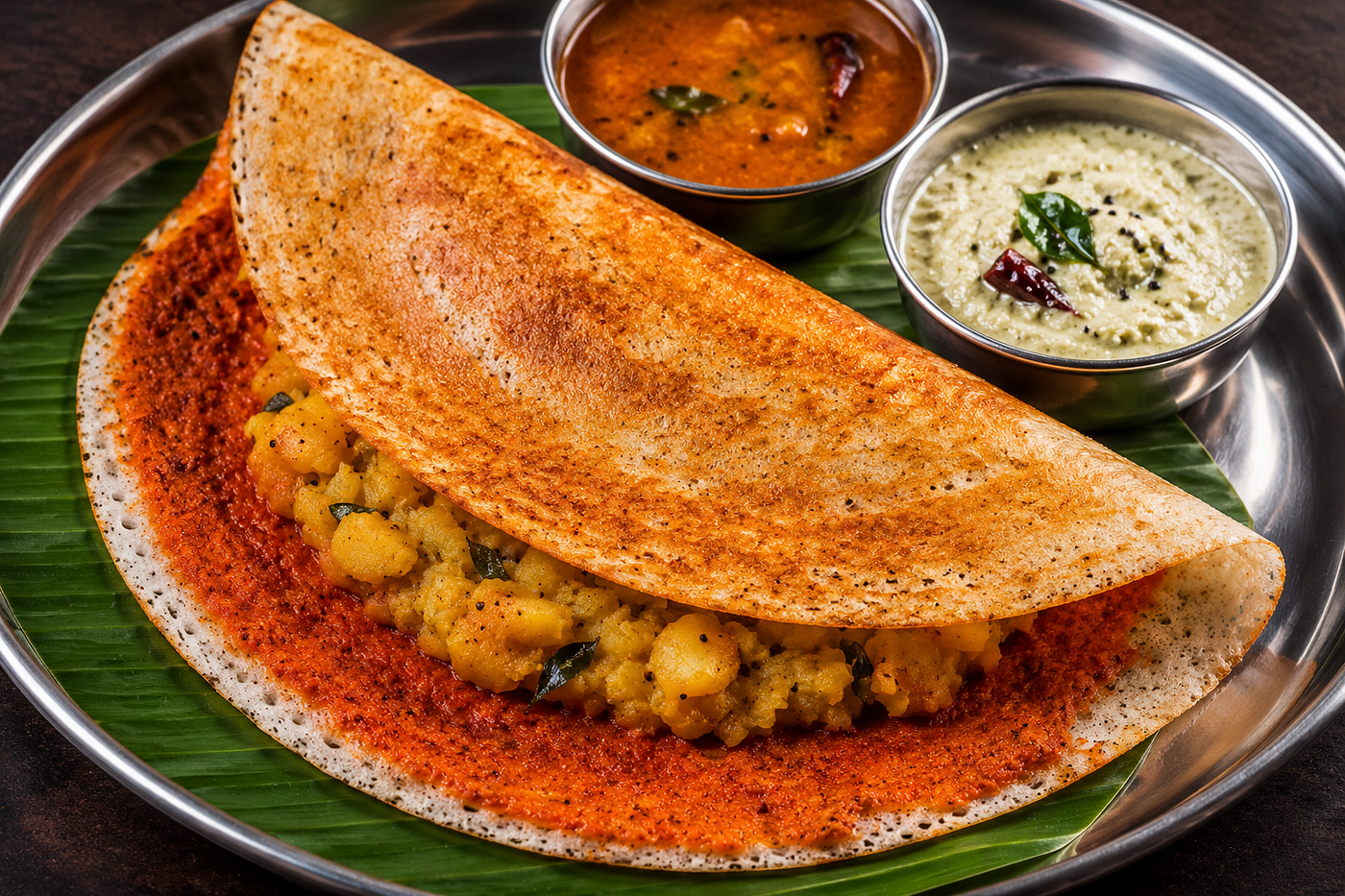
But because somewhere behind the counter, a dosa cook has just taken the back of a steel ladle and aggressively smeared bright-red chutney across a sizzling dosa before the potato filling even touched the pan.
That moment matters.
Because Mysore Masala Dosa is not just: “plain dosa plus potato.”
It’s layered.
Sharp red chutney. Soft turmeric-yellow palya. Crisp dosa edges. Slightly soft centre.
And honestly, most home versions get about 80% of the way there before something quietly goes wrong.
The chutney tastes flat.
The dosa loses crispness.
The potato filling tastes like generic aloo sabzi instead of proper tiffin-centre palya.
Which is frustrating, because none of the individual components are difficult.
The order is the hard part.
Especially in summer, when dosa batter ferments beautifully and lighter South Indian breakfasts quietly return to rotation.
What Actually Makes A Mysore Masala Dosa “Mysore”
The red chutney is not optional.
It is the dish.
Without it, you simply have masala dosa.
Good mysore masala dosa recipe versions depend on contrast:
- spicy chutney
- mellow potato filling
- fermented tang from the dosa batter
- crisp edges against soft centre
The dish originated around Mysore and slowly spread through Karnataka before becoming a permanent fixture at South Indian tiffin joints everywhere.
And honestly, the genius of it is balance.
Nothing dominates completely.
The chutney wakes the dosa up.
The potato filling calms it back down.
That push-and-pull is what makes restaurant Mysore dosa taste dramatically more interesting than plain masala dosa.
If you want the simpler cousin first, try **the plain masala dosa version** before graduating fully into Mysore territory.
The Red Chutney — What Goes In, And What Does Not
This is where most home cooks accidentally sabotage the dish.
Because the chutney cannot just taste spicy.
It needs:
- depth
- smokiness
- slight tang
- garlic sharpness
The backbone is simple:
- dry red chillies
- garlic
- chana dal
- tamarind
Some versions add onion.
Some don’t.
But the real mistake is usually removing either:
- garlic
- or chana dal
Garlic gives Mysore dosa its aggressive edge.
Chana dal gives body and nuttiness.
Without those two, the chutney tastes thin and oddly one-dimensional.
The texture matters too.
This should not become smooth restaurant sauce.
Slight graininess actually helps the dosa hold the chutney better on the tawa.
And honestly, this red layer explains almost the entire difference between: “nice homemade dosa” and “wait, this tastes like a real tiffin centre.”
The Potato Sabzi (Palya) Matters More Than People Think
The potato filling should feel soft.
Not mashed like baby food.
Not dry like stuffing.
Soft.
Slightly chunky.
Turmeric-yellow.
The potatoes themselves are almost secondary.
Because the flavour actually comes from the tempering:
- mustard seeds
- curry leaves
- green chilli
- chana dal
- onions
That tiny crunch from chana dal in the palya quietly changes everything.
And the onions should soften fully before potatoes enter.
That sweetness balances the red chutney beautifully later.
The biggest mistake? Over-mashing.
Good dosa palya should still have visible potato texture.
The filling melts slightly into the dosa while eating instead of sitting there like a compact potato block.
And honestly, once curry leaves hit hot oil in a potato masala, the kitchen immediately smells like an Udupi restaurant at 8 AM.
The Dosa Itself
The dosa matters just as much as the fillings.
Especially texture.
Mysore Masala Dosa needs:
- crisp outer edge
- soft flexible middle
- enough strength to hold filling without tearing
Summer fermentation helps enormously.
During May and June, batter ferments faster and lighter because of the heat.
Which means shorter fermentation windows often work better than winter timings.
The classic ratio still matters: rice, urad dal, small amount of methi.
And honestly, the same fermentation logic applies to **the same fermented batter logic applies to idli** too.
The tawa heat matters equally.
Too cold: the dosa turns pale and rubbery.
Too hot: the batter cooks before spreading properly.
And yes — ghee matters.
Especially around the edges.
That final lace-like crispness most people associate with restaurant dosa usually comes from: properly heated tawa + enough fat + patience.
Not expensive equipment.
Assembly — The Order Is Everything
The dosa spreads first.
Then cooks slightly.
Only then comes the red chutney.
Directly on the tawa.
While the dosa still cooks underneath.
Then the potato filling.
Then more crisping time.
This part matters enormously: don’t fold too early.
If you trap steam immediately, the dosa softens before serving.
The best Mysore dosas get an extra moment on the tawa after filling.
That final crisping stage is what creates the contrast between:
- crisp shell
- soft centre
- creamy filling
And honestly, once you understand the timing, the whole dish suddenly becomes much easier to control.
What To Serve With It
Mysore Masala Dosa already carries strong flavour, so sides should support rather than compete.
Coconut Chutney
Still the classic.
Cooling against the spicy chutney layer.
Sambar
Especially thinner tiffin-centre style sambar.
Tomato Chutney
If you want something sharper, try **a quick tomato chutney that pairs well** too.
Because dosa breakfasts quietly become addictive once multiple chutneys enter the picture.
Why Restaurant Versions Feel Better
Honestly? Repetition.
Restaurant dosa cooks make hundreds every morning.
Which means:
- exact tawa heat becomes instinct
- chutney spreading becomes muscle memory
- folding timing becomes automatic
But home cooks actually have one advantage: time.
Restaurants rush.
At home, you can:
- let tomatoes cook longer
- ferment batter properly
- crisp the dosa patiently
And surprisingly often, that creates better flavour.
Final Thought
Mysore Masala Dosa is one of those dishes where nothing individually feels difficult.
But the order changes everything.
The chutney timing. The potato texture. The batter fermentation. The final crisping before folding.
Get those right, and suddenly the dosa tastes startlingly close to the one from your favourite tiffin place.
Which honestly feels deeply satisfying for something made from rice, dal, potatoes, and patience.
Get the full recipe with exact measurements here → https://fullmeals.com/recipe/mysore-masala-dosa
And honestly, I mostly keep recipes like this saved in the Sweet’N’Spicy app because dosa-making already demands enough attention without constantly unlocking a phone screen with batter-covered fingers.
메타데이터
- post_id
- 0700628e3feb
- slug
- the-mysore-masala-dosa-most-home-cooks-get-almost-right-0700628e3feb
- url
- https://medium.com/@sweetnspicy/the-mysore-masala-dosa-most-home-cooks-get-almost-right-0700628e3feb
- canonical_url
- https://medium.com/@sweetnspicy/the-mysore-masala-dosa-most-home-cooks-get-almost-right-0700628e3feb
- author_url
- https://medium.com/@sweetnspicy
- status
- ok
- fetched_at
- 2026-07-17 18:22:04