7 Python Tricks That Instantly Made My Code Cleaner
When I first started learning Python, my focus was simple: write code that works. Over time, I realized that working code isn’t always good…
7 Python Tricks That Instantly Made My Code Cleaner
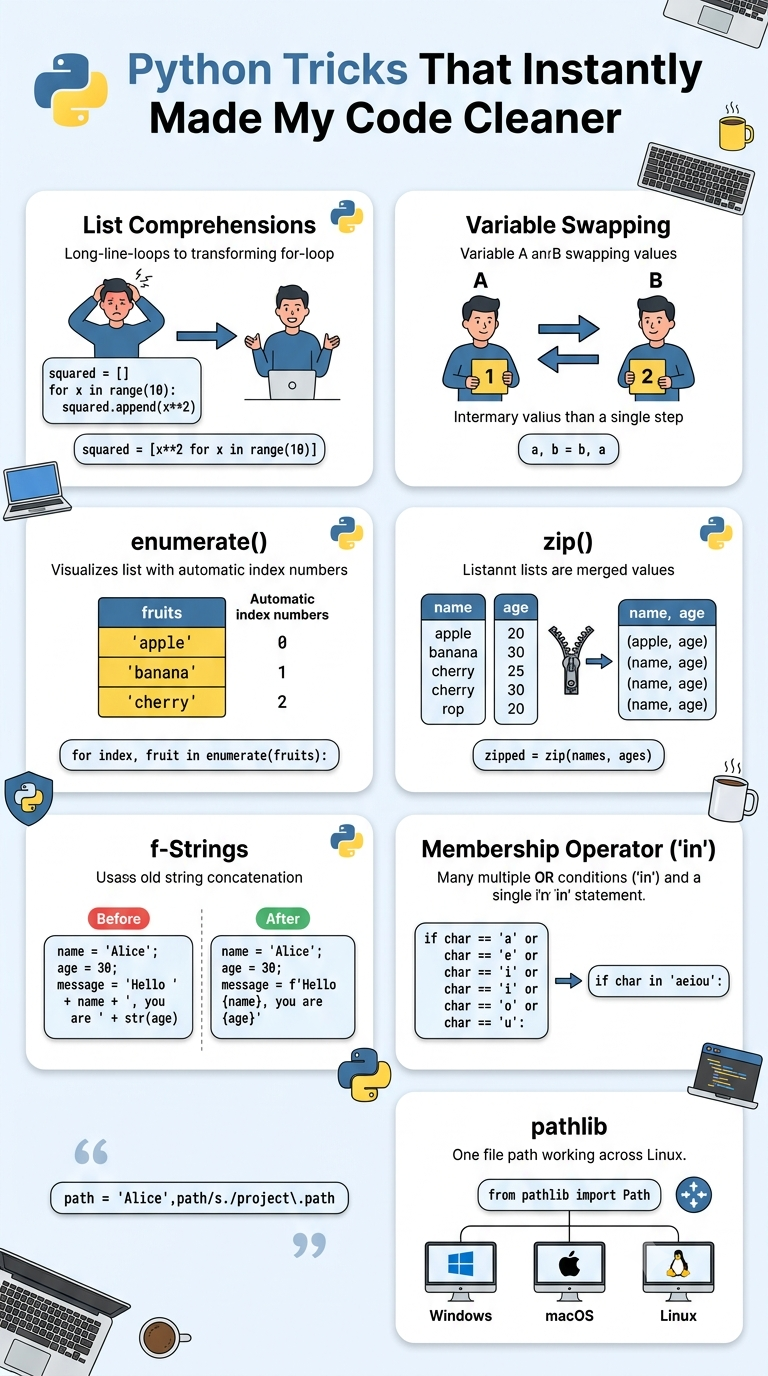
When I first started learning Python, my focus was simple: write code that works. Over time, I realized that working code isn’t always good code. Clean, readable code is easier to debug, maintain, and share with others.
Here are seven Python tricks that genuinely improved the way I write code.
1. Use List Comprehensions
Instead of writing:
numbers = []
for i in range(10):
    numbers.append(i * 2)
Write:
numbers = [i * 2 for i in range(10)]It’s shorter, cleaner, and easier to read once you’re familiar with the syntax.
2. Swap Variables Without a Temporary Variable
Instead of:
temp = a
a = b
b = temp
Simply write:
a, b = b, aPython makes swapping values effortless.
3. Use enumerate() Instead of Manual Counters
Rather than keeping track of an index yourself:
index = 0
for fruit in fruits:
    print(index, fruit)
    index += 1
Use:
for index, fruit in enumerate(fruits):
    print(index, fruit)
It’s cleaner and less error-prone.
4. Use zip() to Iterate Over Multiple Lists
If two lists are related, iterate over them together.
names = ["Alice", "Bob"]
scores = [90, 95]
for name, score in zip(names, scores):
print(name, score)This avoids unnecessary indexing.
5. Use f-Strings
Instead of:
print("Hello " + name)Write:
print(f"Hello {name}")f-Strings are easier to read and support expressions directly.
6. Check Membership with in
Instead of writing multiple comparisons:
if color == "red" or color == "blue":Write:
if color in ("red", "blue"):This is both cleaner and easier to extend.
7. Use pathlib for File Paths
Instead of manually joining paths with strings, use pathlib.
from pathlib import Pathfile = Path("data") / "students.csv"It works across operating systems and makes file handling much simpler.
Final Thoughts
Clean code isn’t about writing fewer lines — it’s about writing code that’s easy to understand six months later, whether by you or someone else. Small improvements like these can make a noticeable difference in your coding style over time.
Which Python trick has improved your code the most? I’d love to hear your favorite in the comments.
메타데이터
- post_id
- 072c7bef7ae9
- slug
- 7-python-tricks-that-instantly-made-my-code-cleaner-072c7bef7ae9
- url
- https://medium.com/@24211a05m5/7-python-tricks-that-instantly-made-my-code-cleaner-072c7bef7ae9
- canonical_url
- https://medium.com/@24211a05m5/7-python-tricks-that-instantly-made-my-code-cleaner-072c7bef7ae9
- author_url
- https://medium.com/@24211a05m5
- status
- ok
- fetched_at
- 2026-08-06 20:16:35




