DXF and a Childhood Jacket
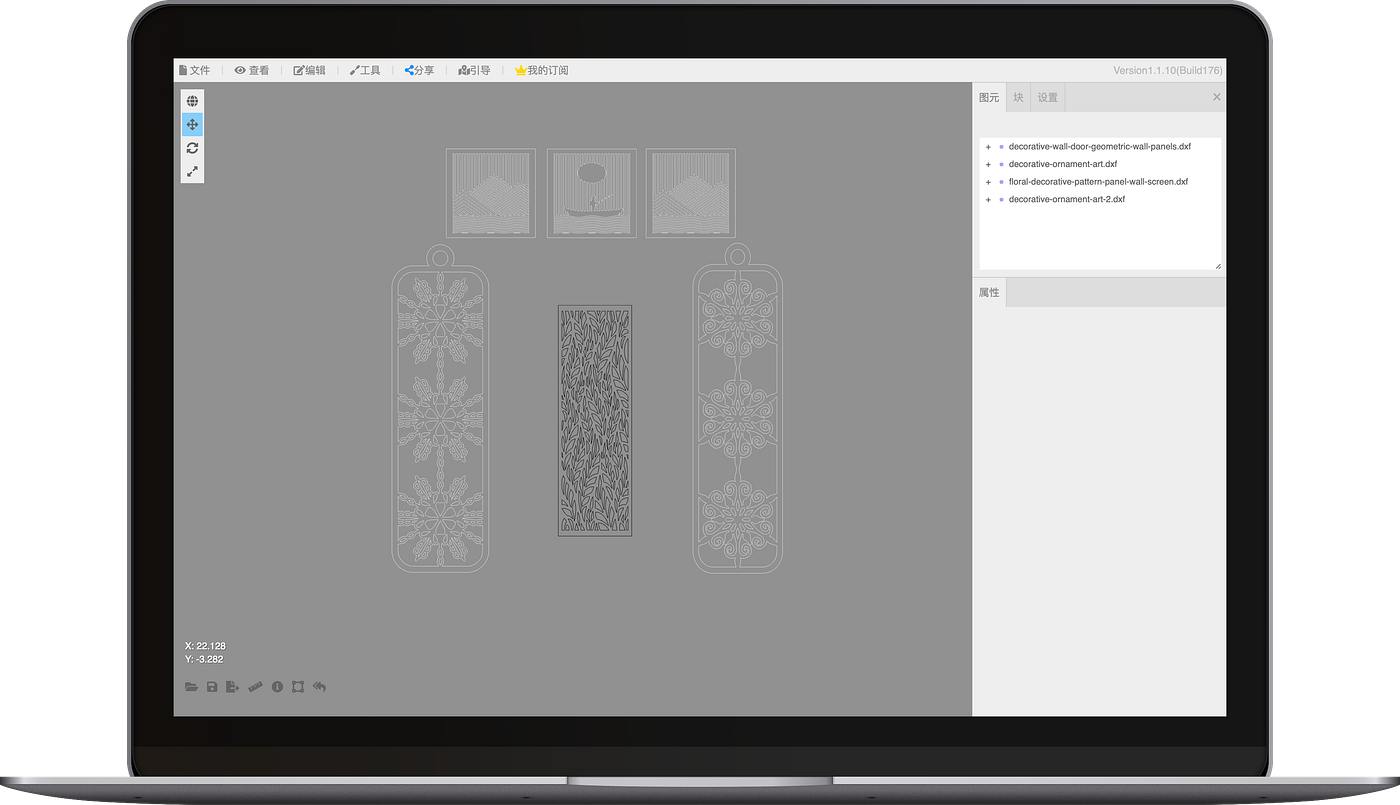
While developing DXF Assistant and diving deep into the DXF specification (see: DXF Assistant: A Practical Summary of Developing a Custom…
DXF and a Childhood Jacket
While developing **DXF Assistant** and diving deep into the DXF specification (see: DXF Assistant: A Practical Summary of Developing a Custom CAD App), an old memory surfaced — something simple but vivid: a childhood jacket.
DXF and a Childhood Jacket
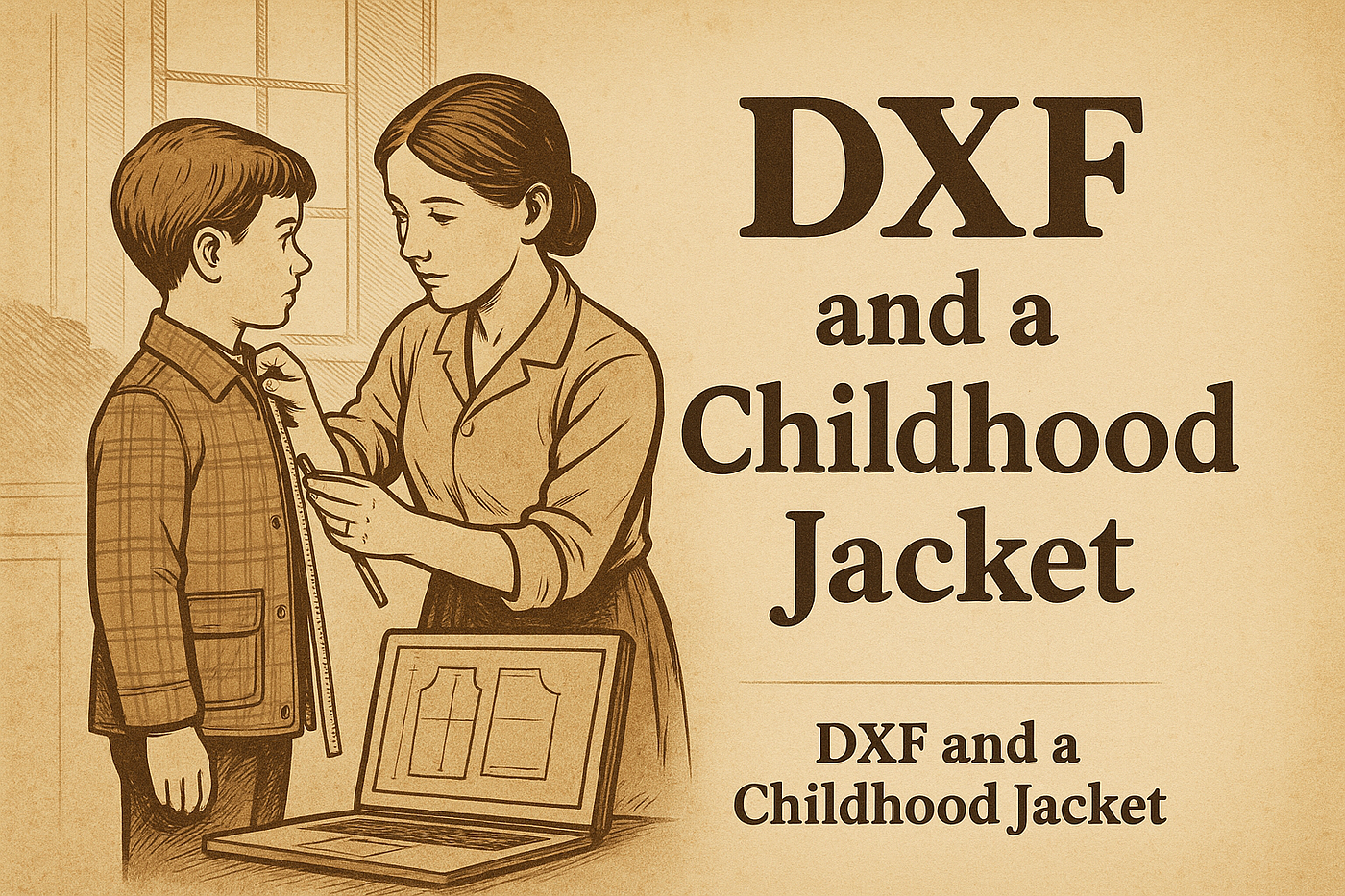
It must’ve been before I turned ten, though I can’t say exactly how young. It was probably autumn. My mother took me to a house in our village to have a jacket custom-made. The daughter there had just finished her tailoring training. I remember standing near the window in their home, while the young seamstress circled me with a wooden ruler and a tape measure, checking my shoulders, waist — measuring up and down, side to side. She asked me to turn and pause, turn and pause again. Occasionally, she made chalk marks on the fabric, quietly working.
She and my mother later discussed fabrics, pickup time… I remember thinking it took forever just to make one jacket. To a kid, the whole process felt long, complicated, and mysterious.
Strangely, I have no memory of how the jacket actually looked. But the act of measuring — that stands out. Sometimes, small fragments like this resurface with uncanny clarity, pulling you momentarily through time.
Why did DXF stir that memory?
Until this year, I knew very little about DXF. I was surprised to learn it’s widely used in the apparel industry — deeply so — and has been before the internet. While the American garment industry was building its CAD standard, AAMA-DXF (in the late ’80s to early ’90s), I was a kid in a rural village having my first (and possibly only) custom-fitted garment made.
The world used to feel enormous. Now, technology has shrunk it to something that fits in your palm — small, like that village. Back then, a newly trained village seamstress could become known throughout her small village. Today, a president’s outburst can echo across the globe village in seconds.
AAMA-DXF, the American Apparel Manufacturers Association’s data exchange format, isn’t an official international standard. But due to its practicality and low barrier to adoption, it became a de facto industry standard. It’s still widely used across China, Southeast Asia, and other garment-producing regions — especially in the 2D CAD software space.
Yet, apparel CAD based on AAMA-DXF often stretches beyond the DXF standard. Features like notches and grading data aren’t stored in the DXF itself but in auxiliary .rul and .gra files.
China’s once-thriving garment industry gave birth to many domestic CAD systems. While I had always heard about architectural CAD tools, these apparel-specific ones had escaped my radar. Here are a few:
-
Richpeace — Market leader in China, full-featured, supports AAMA-DXF import/export.
-
Boke — Interoperable with other CADs, AAMA-DXF compatible, supports cloud collaboration.
-
PAD — Strong AAMA-DXF support, specializes in suits and dresses, focused on high-end tailoring.
-
SilkRoad — A newer tool supporting both AAMA-DXF and ASTM standards, tailored for export-oriented manufacturers.
Despite their features, screenshots of these apps online reveal dated interfaces: dull gray windows with stacked boxes, as if time forgot them. Even demos running on modern Macs look like Windows XP relics pasted into new shells.
In 2001, the ASTM D6673 standard was introduced by the American Society for Testing and Materials — an official, international upgrade of AAMA-DXF. It addressed structural, semantic, and compatibility issues. Unlike the scattered .rul and .gra files, it embedded all data cleanly into the DXF file, offering a unified, structured approach.
However, ASTM D6673’s complexity and slow vendor adoption limited its spread. It never gained the traction of AAMA-DXF, especially for 2D workflows. But in the world of 3D CAD — modeling, simulation, and visualization — it quietly became an important compatibility standard, supported by many mainstream tools, though not the dominant format itself:
-
Optitex (Israel) — Seamless 2D-to-3D workflow, dynamic fabric simulation. Popular among major fashion brands and ODMs.
-
Gerber AccuMark (USA) — Includes 3D try-on and fabric draping simulations, tightly integrated with Gerber Z1 automatic cutting machines. A global industry benchmark used by giants like Nike and Adidas.
-
Lectra Modaris (France) — Excels in material optimization and rapid 3D prototyping. Favored by luxury brands like Dior and Chanel for high-end, bespoke garments.
While researching DXF in the fashion world, I stumbled on the most expensive file format converter I’ve ever seen: $449.99 for a single conversion. It felt absurdly pricey — like the haute couture of file utilities.

Expensive DXF file conversion
So yes, DXF and that jacket from long ago — they’re linked by more than memory. They’re both about shaping cloth, fitting forms, and translating intent into precision. One, through chalk and tape. The other, through code and spec.
메타데이터
- post_id
- 079b3fb04fce
- slug
- dxf-and-a-childhood-jacket-079b3fb04fce
- url
- https://medium.com/@aceway2024/dxf-and-a-childhood-jacket-079b3fb04fce
- canonical_url
- https://medium.com/@aceway2024/dxf-and-a-childhood-jacket-079b3fb04fce
- author_url
- https://medium.com/@aceway2024
- status
- ok
- fetched_at
- 2026-06-11 05:11:55