Designing Human-in-the-Loop for Agentic Workflows
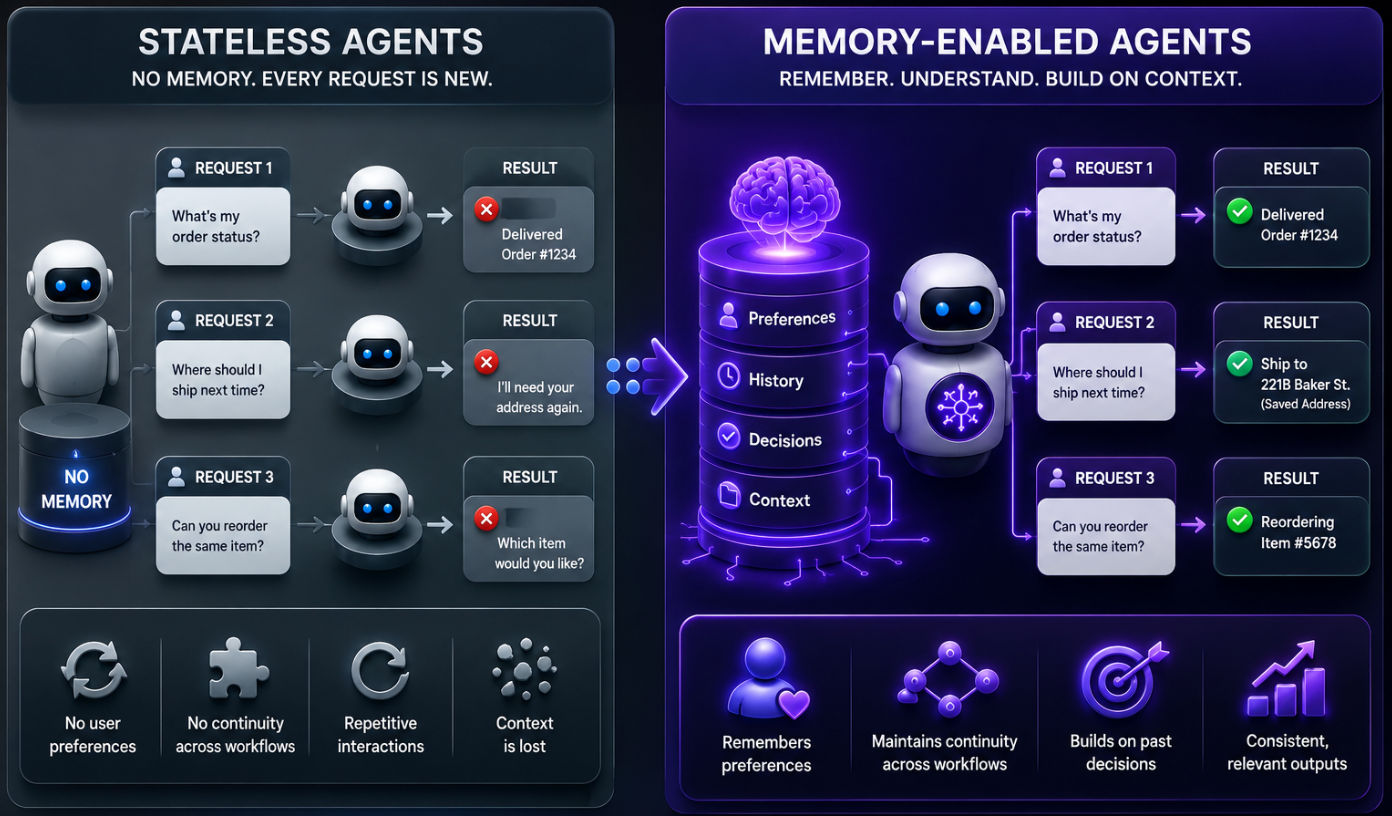
The promise of AI agents is autonomy: systems that reason, decide, and act without constant human supervision.
Designing Human-in-the-Loop for Agentic Workflows
The promise of AI agents is autonomy: systems that reason, decide, and act without constant human supervision.
The reality of production deployment is more nuanced.
Most enterprises discover that full autonomy isn’t the goal. The goal is controlled autonomy — agents that operate independently within defined boundaries, escalate when necessary, and integrate human judgment where it adds the most value.
The challenge isn’t whether to include humans in the loop. It’s where, when, and how to do it without turning automation into a review queue.
Get this wrong, and agents become expensive assistants that require more oversight than they save. Get it right, and humans amplify what agents can’t do alone — while agents handle what humans shouldn’t have to.
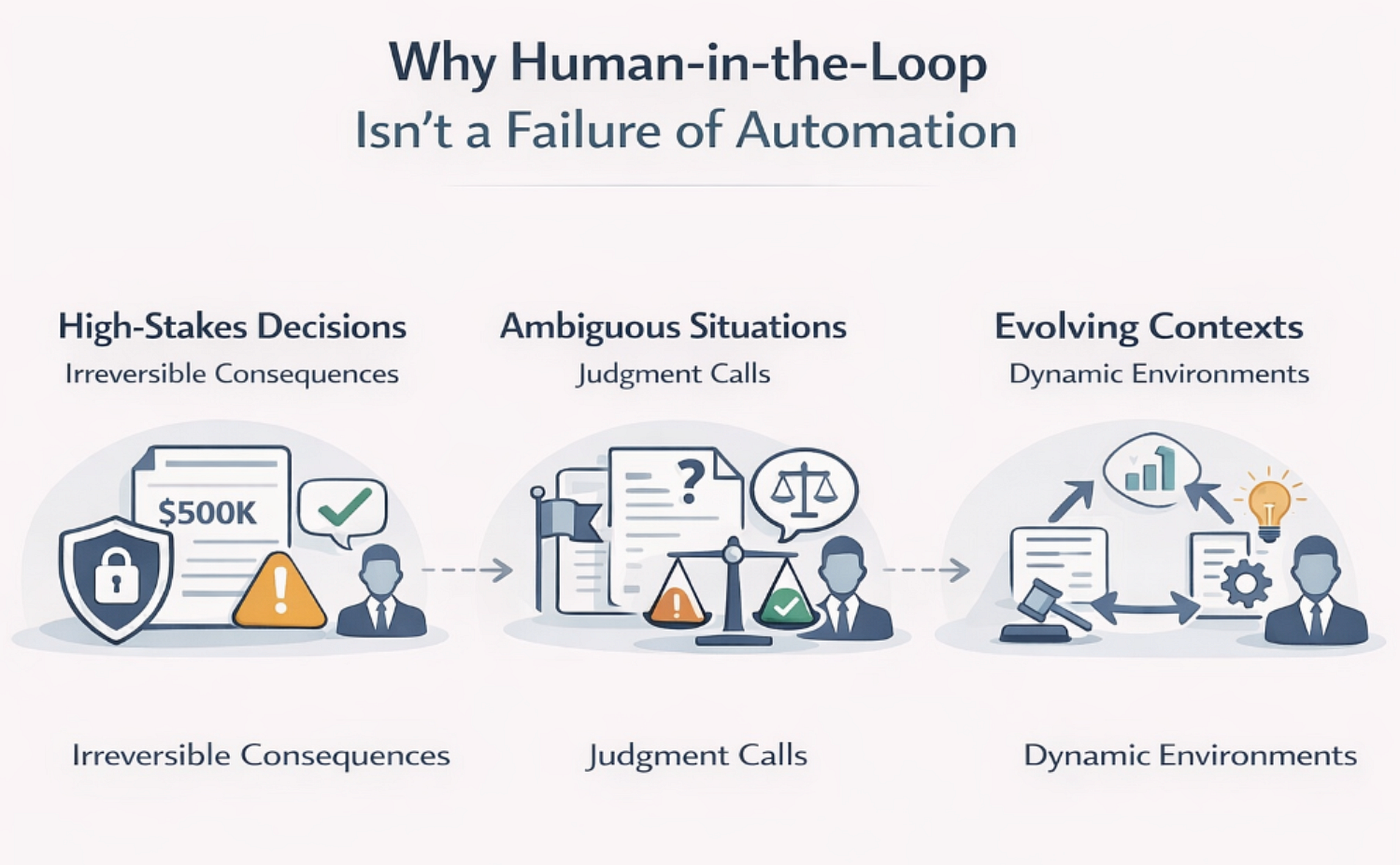
Why Human-in-the-Loop Isn’t a Failure of Automation
There’s a common misconception that needing human involvement means the agent isn’t good enough yet.
That’s backward.
Human-in-the-loop isn’t a workaround for immature technology. It’s a design pattern for systems operating in environments where perfect automation is neither possible nor desirable.
Consider three scenarios:
- High-stakes decisions with irreversible consequences: An agent recommends approving a $500K contract based on risk analysis. The analysis is sound, but final approval requires human accountability.
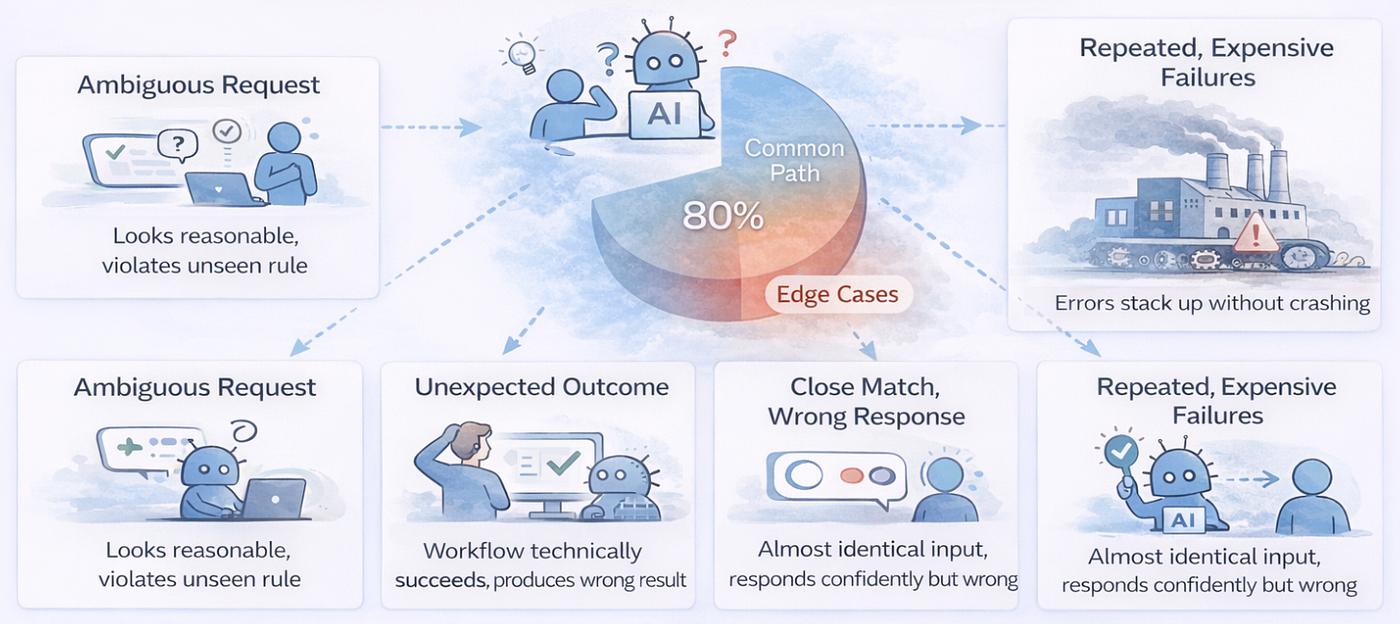
- Ambiguous situations requiring judgment calls: A customer request is technically outside policy but contextually reasonable. The agent flags it. A human decides whether to make an exception.
- Evolving contexts that agents can’t fully model: Market conditions shift. Regulatory requirements change. Internal priorities realign. Agents operate on learned patterns. Humans adapt to what’s changed.
In each case, the agent adds value by doing the analysis, surfacing the decision, and providing context. The human adds value by applying judgment, accepting accountability, and integrating knowledge the agent doesn’t have.
This isn’t a gap to eliminate. It’s a division of labor to optimise.
The Failure Mode: Humans as Validators, Not Decision Makers
The most common mistake in human-in-the-loop design is turning humans into quality assurance checkers.
The pattern looks like this:
- Agent generates an output
- Human reviews the output
- Human approves or rejects
- Process repeats
On the surface, this seems reasonable. In practice, it collapses under production load.
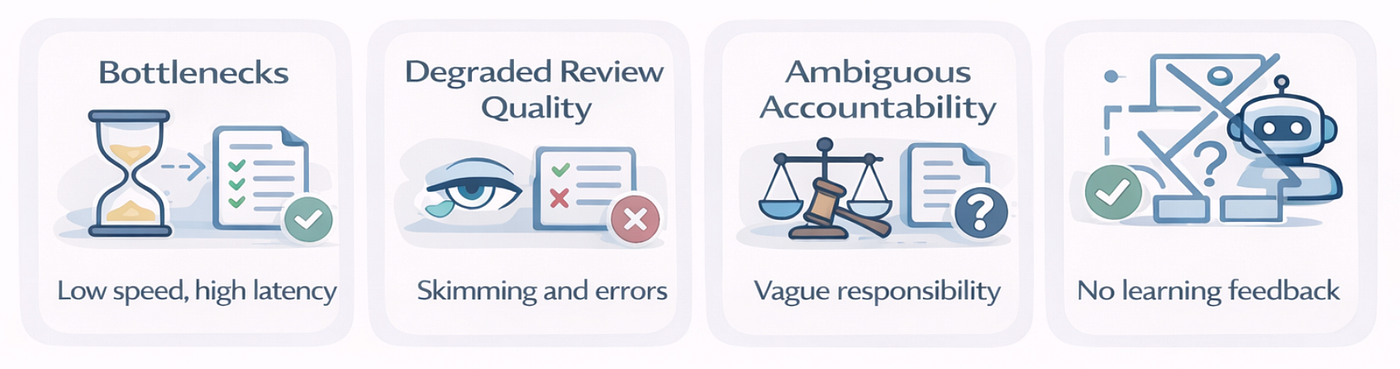
Humans become bottlenecks
Every agent action waits for review. Throughput drops. Latency increases.
Review quality degrades
Humans asked to validate dozens of agent outputs per day start skimming. Errors slip through.
Accountability becomes ambiguous
Who’s responsible when a reviewed output is wrong? The agent? The reviewer? Both?
Agents don’t improve
Approval/rejection signals don’t feed back into the system in a way that changes agent behaviour.
The result is worse than manual work: all the cost of human involvement, none of the speed of automation, and a false sense of safety because “humans are checking.”
This isn’t human-in-the-loop. It’s human-as-bottleneck.
The Right Pattern: Humans in the Decision Path, Not the Review Queue
Effective human-in-the-loop design starts with a different question:
Not: “Should a human check this?”
But: “Where does human judgment change the outcome in ways the agent can’t replicate?”
This reframes the design problem. Humans aren’t inserted everywhere for safety. They’re inserted strategically where their involvement creates value the agent can’t.
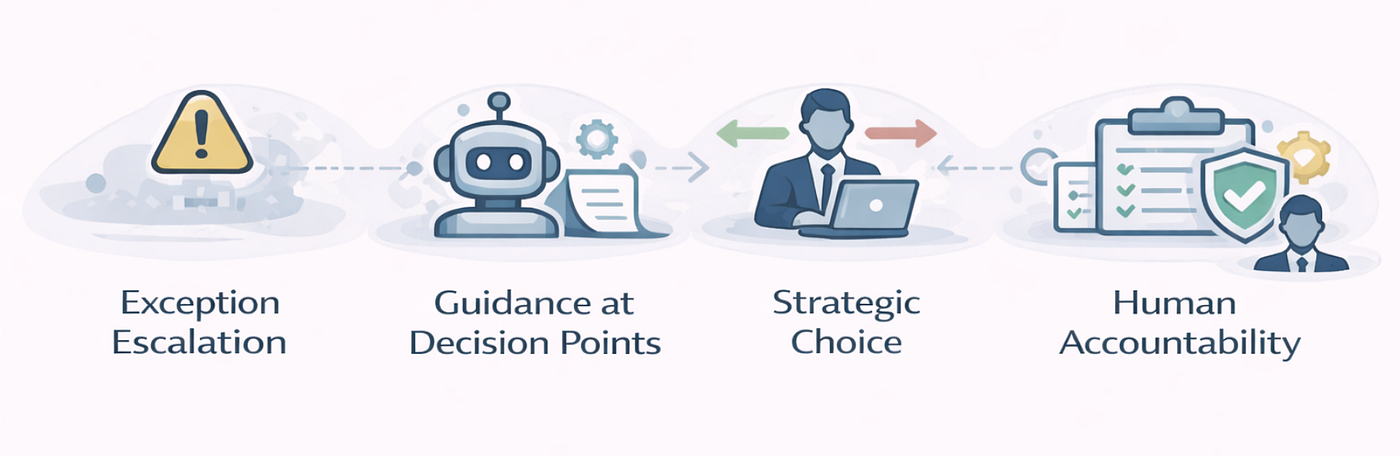
Pattern 1: Exception Escalation, Not Routine Review
Agents should handle routine cases autonomously. Humans should handle exceptions.
Instead of:
“Agent drafts response → Human reviews every response → Human approves”
Design for:
“Agent drafts response → Agent evaluates confidence → High-confidence responses auto-send → Low-confidence responses escalate to human”
This keeps humans focused on edge cases, ambiguity, and novel situations — the scenarios where human judgment matters most.
The key is defining escalation triggers clearly:
- Confidence below a threshold
- Policy conflict detected
- User sentiment flagged as negative
- Financial impact above a limit
- Request outside known patterns
When these triggers fire, the agent doesn’t guess. It escalates with context.
Pattern 2: Guidance, Not Approval
In many workflows, humans don’t need to approve every action. They need to guide direction when the agent reaches a fork in the road.
Instead of:
“Agent completes task → Human approves completed task”
Design for:
“Agent identifies decision point → Agent presents options with tradeoffs → Human selects direction → Agent executes”
This keeps the agent doing execution work — data gathering, formatting, tool orchestration — while humans do strategic work: choosing priorities, making tradeoffs, setting direction.
Example: An agent is drafting a customer communication. It identifies two approaches — apologetic tone with discount offer, or empathetic tone with service upgrade. The agent presents both, explains the implications, and asks the human to choose. Then it executes the selected path autonomously.
The human didn’t review the output. They guided the strategy.
Pattern 3: Continuous Learning from Human Corrections
When humans do intervene — rejecting an output, correcting a decision, overriding a recommendation — that signal should feed back into the system.
Instead of:
“Human corrects agent → Correction is applied → Process continues”
Design for:
“Human corrects agent → Correction is logged with reasoning → Correction becomes test case → Future agent versions are evaluated against it”
This closes the loop. Human intervention isn’t just fixing an immediate problem. It’s teaching the system what “correct” looks like in contexts the agent didn’t understand.
Over time, this reduces escalation volume. Cases that required human judgment become cases the agent handles autonomously — because the agent learned from past corrections.
Pattern 4: Human Accountability, Agent Execution
In regulated industries or high-stakes environments, certain actions require a named human to take responsibility.
Instead of:
“Agent performs action → Human reviews after the fact”
Design for:
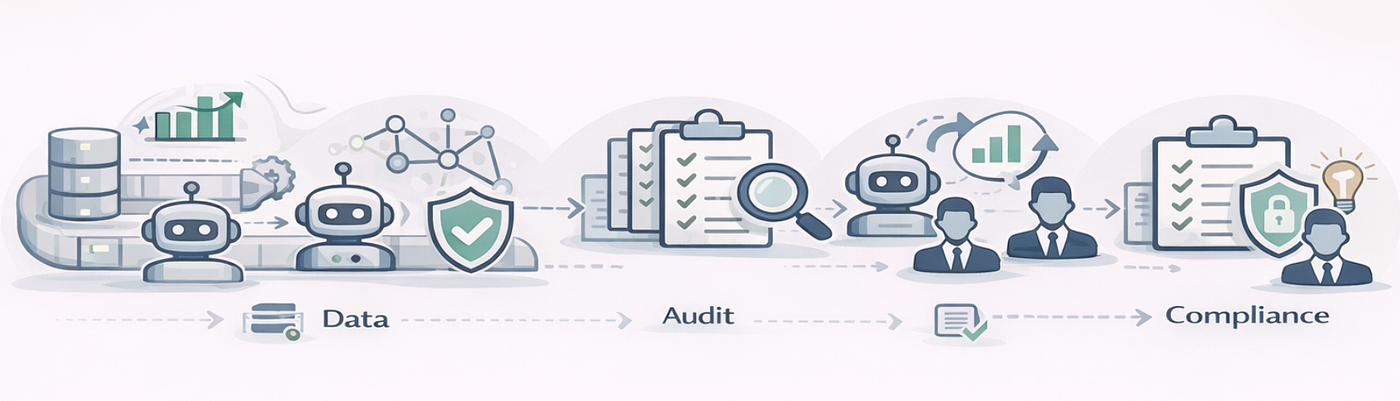
“Agent prepares action with full audit trail → Human reviews context and reasoning → Human authorizes → Agent executes with human attribution logged”
The agent does the work: gathering data, evaluating constraints, drafting the decision. The human does the authorisation: accepting accountability and confirming the decision aligns with broader context the agent can’t model.
This preserves compliance and accountability without turning humans into manual workers.
Where Human-in-the-Loop Breaks Down in Practice
Even well-designed systems encounter predictable failure modes.
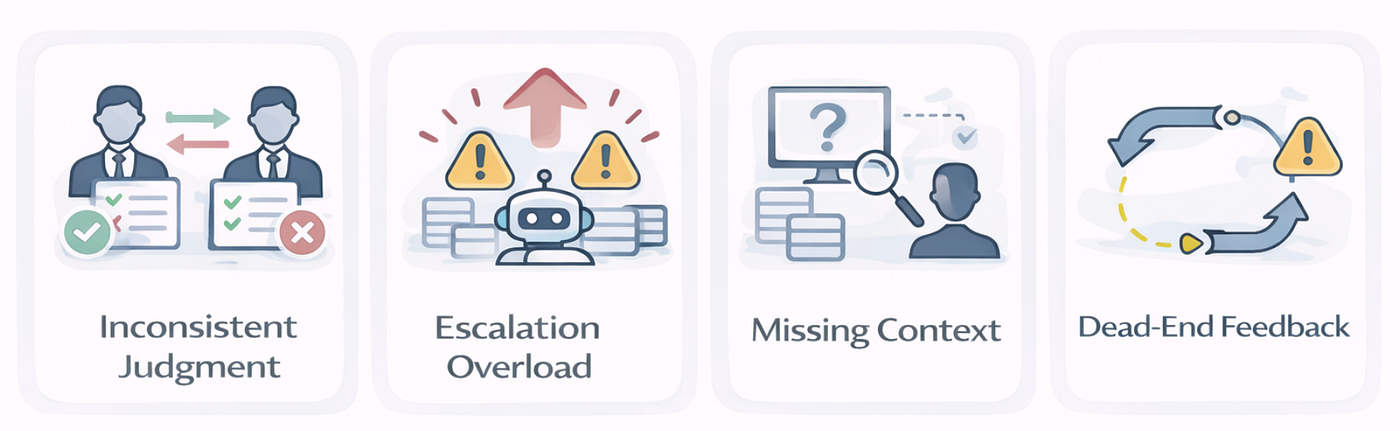
- Humans override agents inconsistently: Two reviewers see the same case and make different calls. The agent can’t learn from inconsistent feedback.
- Escalation volume grows faster than human capacity: As agent usage scales, exceptions scale with it. Teams that planned for 10 escalations per day face 100.
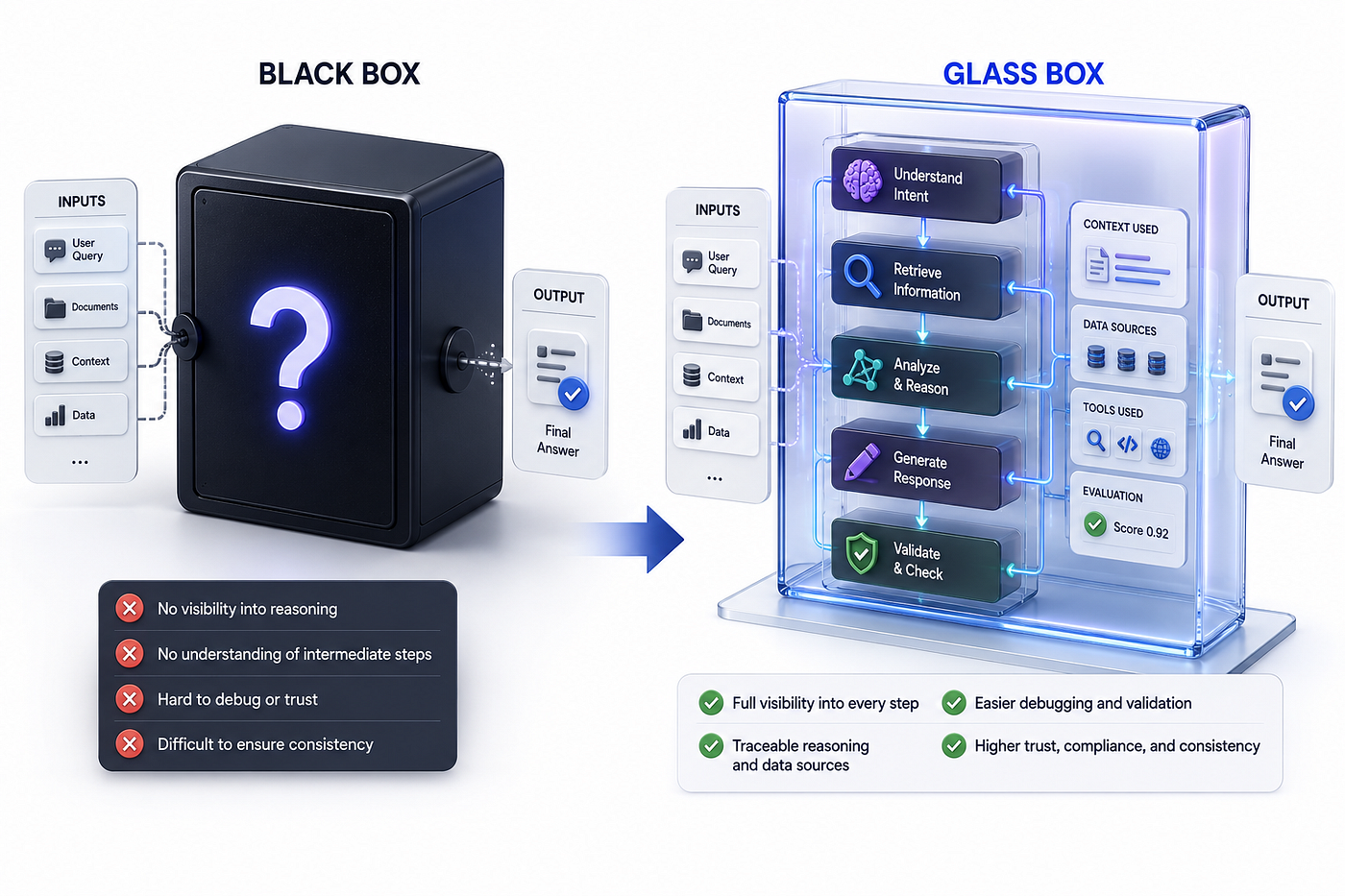
- Context isn’t surfaced effectively: The agent escalates, but doesn’t explain why. The human has to reconstruct the decision path manually.
- Feedback loops aren’t instrumented: Human corrections happen, but aren’t captured in a way the system can use to improve.
These aren’t agent problems. They’re workflow design problems.
Design Principles for Sustainable Human-in-the-Loop
Teams that scale human-in-the-loop effectively follow consistent principles:
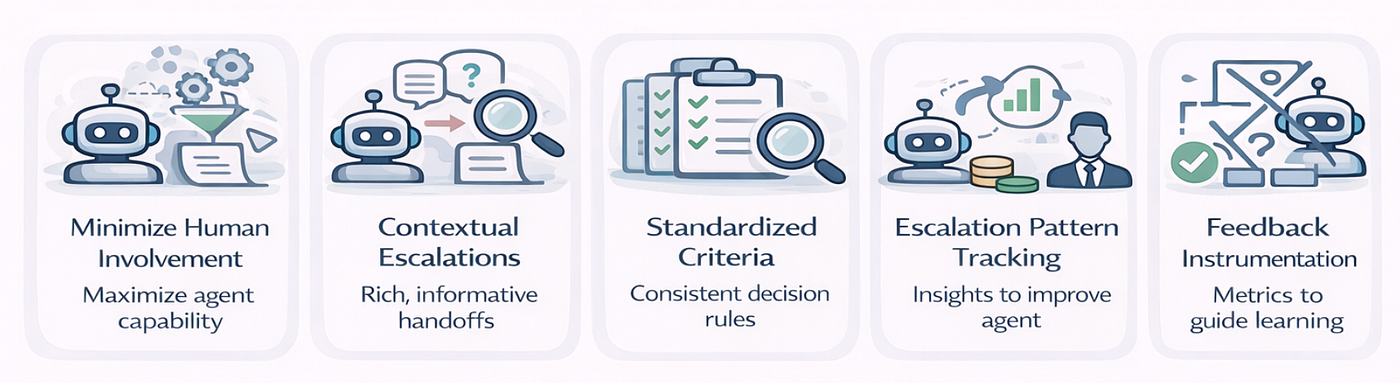
- Minimise human involvement by maximising agent capability: The goal is fewer, higher-value interventions — not more oversight.
- Make escalations rich in context: When an agent escalates, it should explain what it tried, why it’s uncertain, and what options it’s considering.
- Standardise human decision criteria: If different humans would handle the same case differently, the criteria aren’t clear enough.
- Track escalation patterns to improve the agent: Recurring escalation types signal where the agent needs better training, clearer constraints, or additional tools.
- Instrument feedback for learning: Every human correction should be captured, categorised, and used to evaluate future agent versions.
- Set escalation SLAs: If escalations sit in queues for hours, the system isn’t responsive. Define turnaround expectations and staff accordingly.
This turns human-in-the-loop from ad hoc intervention into engineered collaboration.
The Operational Shift Required
Building effective human-in-the-loop workflows requires treating humans as part of the system, not external to it.
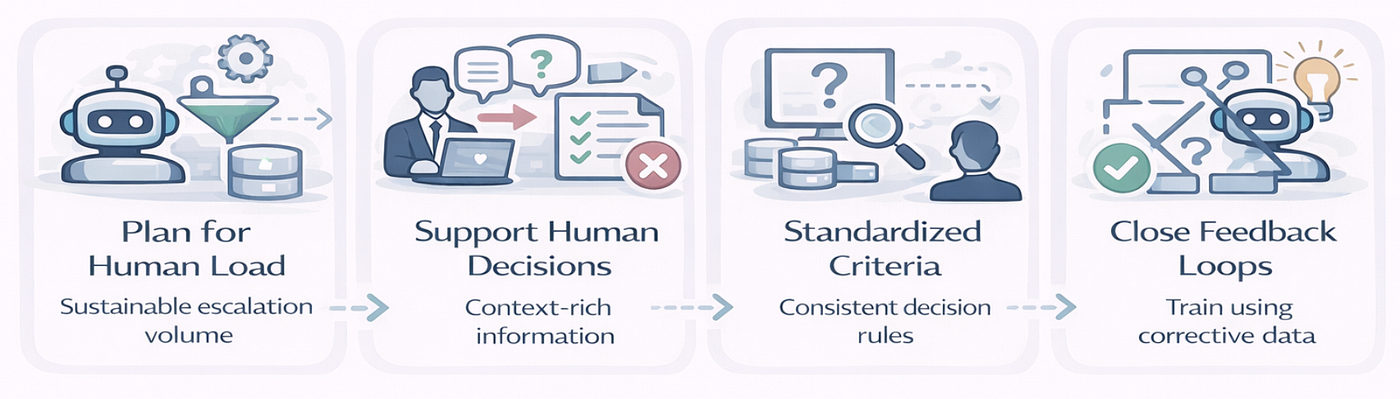
This means:
- Designing for human load, not just agent throughput: Escalation volume must be sustainable for the team handling it.
- Providing humans with decision support, not just alerts: When an agent escalates, give the human everything they need to decide quickly and correctly.
- Closing feedback loops systematically: Human corrections aren’t one-off fixes — they’re training data for the next iteration.
- Measuring both agent performance and human-agent collaboration: Success isn’t just “did the agent work?” It’s “did the human-agent system deliver the right outcome efficiently?”
This is a shift from thinking about agents as standalone tools to thinking about them as components in a collaborative system.
How AlignX Enables Effective Human–Agent Collaboration
AlignX AI empowers teams to structure and monitor human-in-the-loop workflows by setting clear escalation conditions based on factors such as policy risks, or specific workflow events. When escalation occurs, the platform delivers comprehensive context — including the agent’s decision trail, reasoning signals, and possible alternative actions — enabling humans to intervene efficiently.
It also transforms human interventions into structured feedback artifacts that can be reused as evaluation test cases in future runs. In parallel, AlignX tracks collaboration performance metrics such as escalation frequency, resolution turnaround time, and whether applied corrections meaningfully reduce repeat escalations.
Closing Insight
The future of AI agents isn’t full autonomy.
It’s intelligent collaboration — agents that know when to act, when to escalate, and how to learn from human judgment.
Enterprises that treat human-in-the-loop as a design pattern, not a workaround, will build systems that scale without losing control.
Those that don’t will face a choice: accept unreliable automation, or drown in review queues.
The answer isn’t less human involvement. It’s better human involvement — strategic, accountable, and designed to make both humans and agents more effective.
Evaluate the human-in-the-loop systems that can scale with confidence.
Book a demo with **AlignX AI **to see how exception-aware workflows, structured escalation intelligence, and continuous learning loops turn agent autonomy into controlled, accountable execution.
Connect with us **Linkedin | X**
메타데이터
- post_id
- 079faec737ed
- slug
- designing-human-in-the-loop-for-agentic-workflows-079faec737ed
- url
- https://medium.com/@AlignX_AI/designing-human-in-the-loop-for-agentic-workflows-079faec737ed
- canonical_url
- https://medium.com/@AlignX_AI/designing-human-in-the-loop-for-agentic-workflows-079faec737ed
- author_url
- https://medium.com/@AlignX_AI
- status
- ok
- fetched_at
- 2026-07-13 06:23:13