Choosing Your First Can Seamer: A Practical Buyer’s Guide for Beverage Startups and Small Producers
Buying your first can seamer feels like a milestone and a risk.
Choosing Your First Can Seamer: A Practical Buyer’s Guide for Beverage Startups and Small Producers
Buying your first can seamer feels like a milestone and a risk.
For many beverage startups, it’s the moment when an idea starts to look like a real business. At the same time, it’s a purchase that can quietly lock you into years of operational pain if chosen poorly.
Most buyers start by comparing two numbers: price and speed. That’s understandable. It’s also where many brands go wrong.
A can seamer isn’t just a machine that “closes lids.” It’s a quality gate, a risk filter, and a long-term partner in how your product survives transport, storage, and time on shelf. Choosing the right one isn’t about getting the fastest or cheapest option, it’s about getting the right level of control for where your business actually is.
This guide is written for founders, brewers, kombucha makers, cold brew producers, and CFO-level decision-makers who want to buy once, learn properly, and scale without regret.
The Real Job of a Can Seamer (Beyond “Closing Lids”)
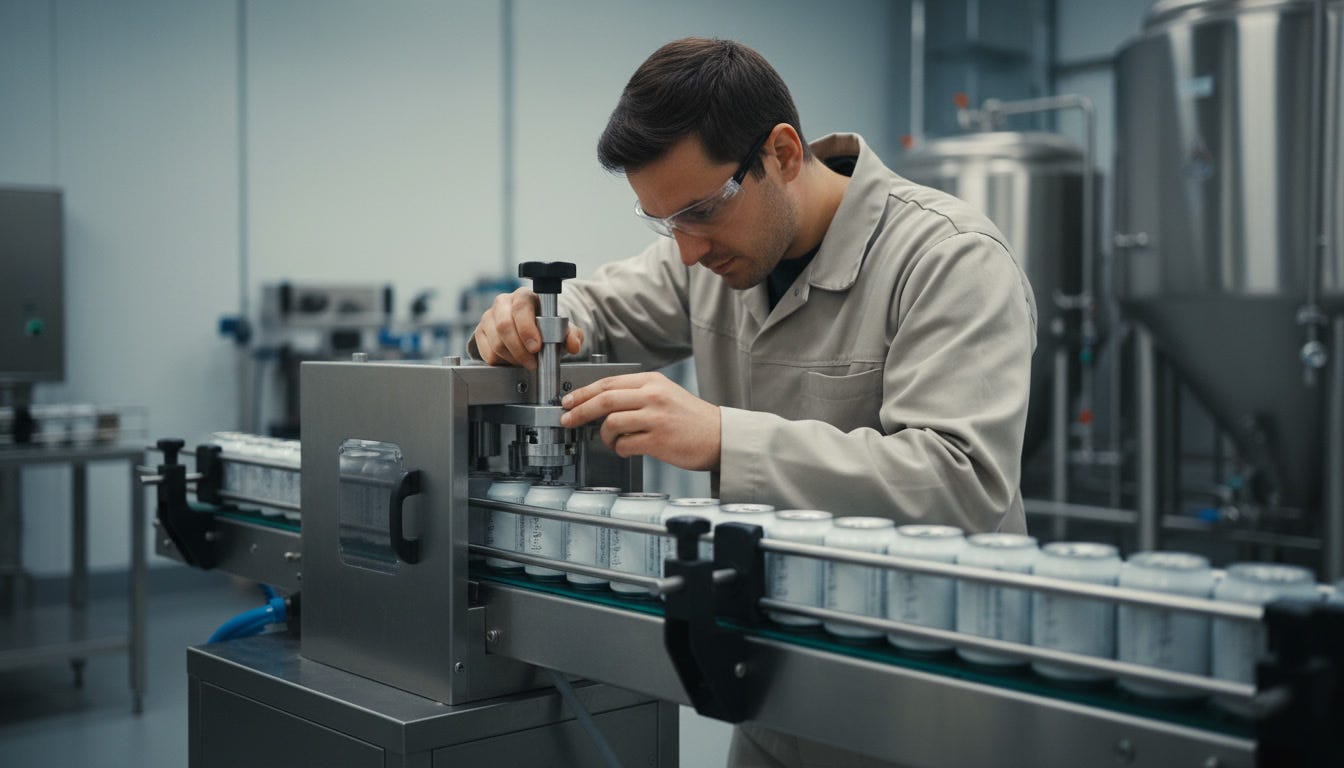
At a glance, seaming looks simple: place a lid, spin some metal, move on. In reality, a can seamer performs several critical jobs at once:
- It creates a gas-tight seal that protects carbonation and flavor
- It prevents oxygen ingress, which shortens shelf life
- It ensures mechanical strength during stacking and transport
- It protects your brand from leaks, returns, and silent quality failures
If any of those jobs are done poorly, the can may still look fine. That’s what makes seaming dangerous, failure is often delayed and hard to trace.
A good seamer doesn’t just seal cans. It reduces risk.
The Factors That Actually Matter When Buying Your First Seamer
1. Seam Repeatability (More Important Than Speed)
Consistency beats speed every time at early scale.
You don’t need 30 cans per minute if 10 of them are compromised. Seam repeatability, the ability to produce the same seam geometry can after can, is what protects shelf life and carbonation.
Ask this question before buying:
“Can my team produce the same seam quality on day 30 as on day 1?”
Machines like **iKAN** are designed around repeatability, not headline speed numbers, which is exactly what first-time producers need.
2. Adjustability and Learning Curve
Your first seamer should teach you, not hide the process.
Many low-cost or highly automated machines obscure what’s happening during seam formation. When something goes wrong, operators are left guessing.
An adjustable seamer with visible, understandable mechanics allows teams to:
- Learn seam anatomy
- Make intentional adjustments
- Diagnose issues early
This knowledge becomes an asset when production grows.
3. Materials and Build Quality
Seaming is mechanical stress. Cheap components wear quickly and drift out of tolerance.
Food-grade stainless steel, stable frames, and quality seaming rolls aren’t luxuries — they’re what keep seams consistent over time. Replacing or constantly readjusting worn components costs far more than investing correctly upfront.
4. Footprint and Facility Fit
Early-stage producers rarely have excess space.
Large industrial machines can force unnecessary layout changes, electrical upgrades, or fixed installations. Compact seamers like iKAN fit into existing workflows, allowing you to scale intelligently instead of rebuilding your facility around one piece of equipment.
When a Manual or Semi-Automatic Seamer Is the Smartest Choice
There’s a misconception that manual or semi-automatic equals “temporary” or “unprofessional.”
In reality, many successful beverage brands start with hands-on seaming because it provides:
- Better process visibility
- Faster learning
- Lower risk during experimentation
Manual and semi-automatic seamers let teams master fundamentals before committing to automation. This prevents the common mistake of automating problems instead of solving them.
For first-time buyers, control beats throughput.
The Hidden Costs of Cheap Seamers and Rushed Automation
Low upfront price often hides high long-term cost.
Cheap seamers tend to create:
- Inconsistent seams
- Higher product loss
- More downtime
- Shorter equipment lifespan
Rushed automation adds another layer of risk. Automating a process you don’t fully understand simply means you’ll make mistakes faster and waste more product doing it.
Many brands end up replacing their first seamer within a year, effectively paying twice.
How to Evaluate ROI Without Overbuying
Return on investment isn’t just about production speed. It’s about loss prevention.
A good first seamer pays for itself by:
- Reducing overfills and leaks
- Protecting shelf life
- Preventing returns and write-offs
- Supporting repeat purchases
When CFOs look at seaming equipment through this lens, the decision becomes clearer. Precision equipment often delivers stronger ROI than marketing spend because it improves every unit sold, not just customer acquisition.
Why iKAN Makes Sense as a First Commercial Seamer
The **iKAN can seamer** is often chosen not because it’s flashy, but because it’s honest.
It offers:
- Commercial-grade seam quality
- Clear, understandable operation
- Compact footprint
- A focus on learning and control
iKAN doesn’t push producers into scale before they’re ready. It supports smart growth, the kind that preserves quality and margins.
EazyCanning’s Philosophy: Scale With Understanding
EazyCanning isn’t about selling the biggest machine as fast as possible. It’s about helping producers build process confidence.
That means:
- Choosing equipment that matches your current reality
- Learning before automating
- Protecting quality as volume grows
This approach resonates with serious founders, the ones planning to still be in business five years from now.
Final Advice for First-Time Buyers
Before you buy, ask yourself:
- Do I understand seam quality well enough to troubleshoot it?
- Will this machine help my team learn or hide problems?
- Am I buying for where we are now, or where I hope to be tomorrow?
The right first can seamer doesn’t just seal cans. It builds confidence, protects your product, and gives you control over one of the most critical risks in beverage production.
Choose wisely. Your future batches depend on it.
메타데이터
- post_id
- 07aee22a23ad
- slug
- choosing-your-first-can-seamer-a-practical-buyers-guide-for-beverage-startups-and-small-producers-07aee22a23ad
- url
- https://medium.com/@eazycanning/choosing-your-first-can-seamer-a-practical-buyers-guide-for-beverage-startups-and-small-producers-07aee22a23ad
- canonical_url
- https://medium.com/@eazycanning/choosing-your-first-can-seamer-a-practical-buyers-guide-for-beverage-startups-and-small-producers-07aee22a23ad
- author_url
- https://medium.com/@eazycanning
- status
- ok
- fetched_at
- 2026-06-17 10:51:15