The Invisible Advantage (Part 2): What Being an “Indispensable” M&E Professional Actually Looks…
This is Part 2 of the Invisible Professionals series.

The Invisible Advantage (Part 2): What Being an “Indispensable” M&E Professional Actually Looks Like in Practice
This is Part 2 of the Invisible Professionals series.
If you haven’t read Part 1 yet, start here: Invisible Professionals: How to Quietly Become an Indispensable Monitoring & Evaluation Professional. It sets the foundation for everything in this piece.
Amara had been in the room for forty minutes and hadn’t said a word.
Not because she had nothing to offer. Not because she was lost. She was quiet because she was paying attention — closely, deliberately — the way only someone who truly understands the data can afford to be.
The program lead was confident. The numbers looked clean. The donor representative seemed cautiously satisfied.
But something was off.
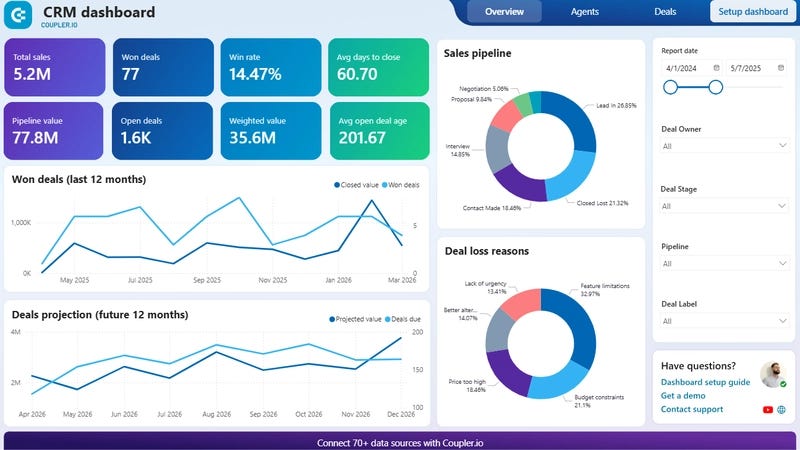
Amara had noticed it twenty minutes earlier, buried in a comparison between the Q2 field reports and the aggregated dashboard. Attendance figures were up.
Sharply up. The kind of numbers that make people smile in meetings. But the retention data — the part that showed whether participants were actually coming back — told a different story.
She waited.
Then, at the moment the room was about to move on, she spoke.
“Can we pause for a second — are we measuring activity here, or are we measuring impact?”
The room shifted.
Not dramatically. No dramatic gasps, no one slapping the table. Just a quiet recalibration. A pause. A few exchanged glances.
And then the real conversation began.
That is what being an “invisible” M&E professional actually looks like. Not silence. Not passivity. Not hiding behind spreadsheets.
It looks like showing up in ways that quietly shape decisions, systems, and outcomes.
This article is about what that is in practice — day to day, meeting to meeting, decision by decision.
First, Let’s Clear Up What “Invisible” Actually Means
Before we get practical, we need to get this right. Because “invisible” is easy to misread.
It does not mean passive. It does not mean disengaged. It does not mean avoiding responsibility or staying quiet when things go wrong.
What it means is this: low ego, high impact.
It means your influence doesn’t announce itself. It means you’re embedded in how decisions get made — not just in how reports get written. It means the room doesn’t always know you shaped the outcome, but the outcome is better because you were there.
The shift looks like this:
Most M&E professionals think of themselves as people who produce reports.
The indispensable ones think of themselves as people who shape how decisions are made.
That subtle difference in identity changes everything — how you prepare, how you listen, how you follow up, and how you handle data when it tells an uncomfortable truth.
Section 1: Before the Meeting — The Quiet Preparation That Changes Everything
Here is what most people do before a data review meeting: they skim the dashboard, export a summary, maybe add a few charts.
Here is what Amara does: she looks for what the data is trying to say.
There is a real difference between those two approaches — and it shows up the moment the meeting starts.
Ask a Different Question Going In
Most people walk in asking, “What do the numbers show?”
Amara walks in asking, “What decision will this data influence — and is the data actually telling the right story?”
That second question changes what you prepare. Instead of a Q2 performance summary, you prepare three things leadership might misinterpret. Instead of a dashboard screenshot, you prepare one risk that no one is tracking yet.
Look for Anomalies, Not Just Averages
Averages hide things. They smooth out the edges. A program averaging 78% across five regions looks healthy — until you notice that two regions are at 95% and one is at 43%. The average tells you nothing.
The distribution tells you everything.
Amara always cross-checks. Not because she doubts the data, but because she knows data can be technically correct and still misleading.
Anticipate the Questions No One Has Thought to Ask Yet
This is the real skill. Before the meeting, Amara thinks through the room: Who is in this meeting? What do they want to hear? What might they assume? Where is the risk of misreading?
She doesn’t prepare to answer questions. She prepares to prevent the wrong conclusions from being drawn.
The takeaway:
Always walk into a meeting knowing what matters — not just what exists.
Section 2: Strategic Presence, Not Constant Presence — During Meetings
Here is a common mistake that even experienced M&E professionals make: talking too much to prove value or even a point.
It is understandable. You have done the work. You know the data. You want to demonstrate that. But in a meeting, volume is not the same as value.
Amara talks less than anyone in the room. And she shapes the conversation more than anyone else.
Listen to Track Direction, Not Just Content
Most people listen to hear what is being said. Amara listens to track where the conversation is going — and whether it is going in the right direction.
She is listening for the moment when someone draws a confident conclusion from incomplete evidence. She is listening for the gap between what the data says and what the narrative assumes. She is listening for the subtle misalignment between what the program team believes and what the field data actually shows.
When she hears that moment, she does not interrupt. She waits for the right opening.
Then she intervenes — briefly, precisely, and on point.
The Art of the One Good Question
One well-placed question can do more than five minutes of explanation.
“Are we measuring activity here, or impact?”
“Is this trend consistent across all regions, or are we averaging over something significant?”
“What would we need to see in the next cycle to know this is working — not just happening?”
These questions do not attack. They do not grandstand. They simply open a door that needed opening.
That is the invisible advantage at work. Speak less, but make every contribution shift the conversation.
Translate Between Worlds
M&E sits at the intersection of data, implementation, and leadership. Those three worlds do not naturally speak the same language.
Implementation teams speak in activities — what they did, how many people they reached, what challenges they faced on the ground.
Leadership speaks in outcomes — did the program work, is it worth continuing, what should change?
Donors speak in results frameworks — are the indicators met, is reporting compliant, is the investment justified?
Amara translates. She takes what the field team is saying and frames it in terms leadership can act on. She takes what leadership is asking and grounds it in what the data can and cannot show.
That translation function albeit is quiet, but enormously valuable.
Section 3: After the Meeting — Where Real Influence Happens
Most people leave the meeting and move on. Amara considers the meeting half-finished until she follows up.
This is not about being thorough for the sake of it. It is about extending your influence beyond the room.
The Follow-Up That Does the Work
Within a day of any significant meeting, Amara sends a short, focused note. It is not a full report. It is not a replay of the meeting. It is a few clear lines:
- What was decided (or what was left undecided)
- Any risk she wants to flag before it grows
- A suggested next step, framed constructively
It might look like this:
“Based on today’s discussion, it may be worth revisiting the Indicator 3 figures before they go into the donor report. The current trend suggests we may be capturing activity volume rather than behavioral change — which could be a harder conversation to have later than now.”
That kind of note does several things at once. It reinforces her thinking. It extends her influence beyond what happened in the room. And it builds trust, slowly and quietly, over time.
Nobody called a press conference. Nobody handed out a medal. But the right person read that email, paused, and made a better decision because of it.
Section 4: How You Handle Data Differently
This is where the real professional separation happens. Not in tools or certifications. In how you relate to the data itself.
You Don’t Just Report Data — You Interpret Reality
There is a world of difference between presenting numbers and explaining what they mean.
A junior professional might write: “Attendance increased by 30% in Q2.”
Amara writes: “Attendance increased in Q2, but retention dropped over the same period. This pattern may indicate that we are successfully reaching new participants but not sustaining engagement — which points to a design question rather than a communications one.”
Same numbers. Completely different usefulness.
The question she always answers before writing anything is: “So what?” What should change because of this data? What should continue? What should stop?
If she cannot answer that, she goes back to the data.
You Protect Integrity — Even When It Is Uncomfortable
This is the part that takes real character.
There will be moments when there is pressure — sometimes subtle, sometimes not — to present results more positively than the data supports. To smooth out the difficult findings. To frame the story in a way that makes everyone feel better.
Amara does not do this. Not because she wants to be difficult. Because she understands that her long-term value depends entirely on being trustworthy.
She has learned to frame difficult findings constructively:
“The data shows improvement in reporting completeness, which is meaningful progress. What it doesn’t yet show is a corresponding change in program outcomes — so there’s more work ahead, but we’re building the foundation for it.”
Honest. Constructive. Not catastrophizing. Not glossing over.
That approach builds the kind of credibility that takes years to earn and minutes to lose.
Section 5: How To Work with Stakeholders — Quietly, Strategically
Make Others Look Good
This sounds counterintuitive. You might wonder: if I’m making my manager look good, who is making me look good?
Here is the answer: they are.
When Amara provides insights that help her program manager walk into a donor meeting confident and well-informed, that manager trusts her. Relies on her. Advocates for her in conversations she is not part of.
She does not position herself as the smartest person in the room. She positions herself as the person who makes the smartest people in the room more effective.
That is a more powerful position than the one that announces itself.
Solve Problems Before They Escalate
This is invisible impact at its clearest.
The problems that never became crises. The misaligned indicator that got corrected before the donor report. The field reporting gap that was caught in week three instead of week twelve. The data collection tool that was adjusted before the next survey cycle, saving weeks of bad data.
Nobody held a celebration for any of those things. Nobody wrote a commendation letter.
But the organization worked better. And the people who needed things to work better noticed — even if they could not quite name why.
Section 6: A Day in the Life — What This Looks Like From the Inside
Let us make this concrete. Here is a day in Amara’s life as a mid-level M&E officer on a health program.
Morning. She opens her dashboard at 8 a.m. before the team call. Everything looks broadly on track. But one region — Eastern District — is showing a consistent dip in antenatal care attendance over three consecutive weeks. Not a dramatic drop. Just a steady, quiet decline that has not triggered any alerts.
She cross-references the field notes from the last monitoring visit. There is a single line from the field officer: “Health facility closed two Tuesdays due to staff training.”
That is the explanation. It is not a program failure. But it means the trend will continue next week unless someone flags it.
She flags it before the morning call.
Midday meeting. The program team is reviewing Q2 progress. The regional coordinator reports strong numbers overall. Amara listens, tracks the narrative, and at the right moment raises the Eastern District pattern — not as a problem, but as something worth watching.
“The numbers are strong overall. Worth noting that Eastern is trending down over three weeks. It looks like it’s connected to facility closures, not program performance — but we should confirm before it shows up in the quarterly report unexplained.”
One comment. Two minutes. The right information, at the right moment, from someone who had done the work to understand it.
Afternoon. She connects briefly with the Eastern District field officer to confirm the facility closure pattern. He confirms it — and adds that the closures are now over, so the trend should correct in week four.
She also suggests a small adjustment to the field reporting template to capture facility availability as a variable going forward. A five-minute conversation. A simple fix. Data quality improves.
End of day. She sends a short summary note to her manager with three lines: what was flagged, what was confirmed, and what was adjusted. She recommends the Eastern District note be included as a brief contextual footnote in the quarterly report.
No drama. No long document. No presentation.
But a potential misreading was prevented. A field officer felt heard. Data quality improved. And the quarterly report will be more accurate and easier to defend.
That is the invisible advantage. Consistent. Quiet. Undeniable.
Section 7: The Subtle Signs That It Is Working
You will not always receive direct feedback that your work is making a difference. That is part of the deal.
But there are signs.
People start asking for your input early — before decisions are made, not after. Leaders begin referencing your insights in conversations without always crediting the source (that is not theft; that is embedding).
Teams adjust how they collect or report data based on your feedback. Problems decrease before they become visible — and no one quite knows why.
The clearest sign is this: people become reluctant to move forward without checking with you first.
It is not about authority. It is about trust, built steadily, over time.
Indispensability is measured in reliance, not recognition.
Section 8: The Mistakes That Undermine the Invisible Advantage
It is worth naming these clearly, because even experienced professionals fall into them.
Over-explaining to prove expertise. When you have to justify your value in every meeting, you have already lost the room. Quiet confidence is persuasive not about elaborate explanation.
Staying silent when it matters. The invisible advantage is not about never speaking. It is about speaking at the right moment. Choosing silence at a crucial decision point is not strategic — it is a missed opportunity.
Acting like a data gatekeeper. Hoarding information or being protective about your analysis creates friction. It positions you as an obstacle rather than a resource.
Focusing on tools instead of decisions. Knowing every feature of your M&E platform is useful. But if your conversations are mostly about tool mechanics rather than what the data means for program direction, you are operating at the wrong level.
Section 9: A Simple Framework to Start Using Tomorrow
Here is a model Amara uses instinctively, but consciously. She calls it the three layers of M&E influence.
Layer 1 — Observe. What is actually happening in the data? What feels off? What patterns are emerging that nobody has named yet?
Layer 2 — Interpret. What does it mean? What are we missing? What does the data suggest versus what does it confirm?
Layer 3 — Influence. What should change? What should continue? Who needs to know this — and how should it be framed for them to act on it?
The rule is simple: never stop at observation.
Most professionals stop at Layer 1. Some reach Layer 2. The indispensable ones live in Layer 3.
Closing: Redefining What It Means to Be Seen
You do not need to dominate rooms to shape outcomes.
You do not need your name on the recommendation to have written the thinking behind it.
You do not need a round of applause after the meeting to know the meeting went better because you were in it.
What you need is clarity. Judgment. Timing. And the discipline to show up consistently — in the small moments. The quiet follow-ups, the uncomfortable data conversations, the adjustments nobody sees but everyone benefits from.
Amara understands this. Not because she settled for less visibility, but because she chose a different kind of impact.
The kind that does not depend on being noticed to be real.
The most powerful M&E professionals are not the loudest in the room.
They are the ones the room cannot function without.
Which of these behaviors do you already practice — and which one will you start this week? Share in the comments.
This is Part 2 of the Invisible Professionals series. ← Part 1: Invisible Professionals: How to Quietly Become an Indispensable M&E Professional → Part 3: Coming soon — The Skills Roadmap: What to Build Next
메타데이터
- post_id
- 07b85d20c4f0
- slug
- the-invisible-advantage-part-2-what-being-an-indispensable-m-e-professional-actually-looks-07b85d20c4f0
- url
- https://medium.com/@amailuk3/the-invisible-advantage-part-2-what-being-an-indispensable-m-e-professional-actually-looks-07b85d20c4f0
- canonical_url
- https://medium.com/@amailuk3/the-invisible-advantage-part-2-what-being-an-indispensable-m-e-professional-actually-looks-07b85d20c4f0
- author_url
- https://medium.com/@amailuk3
- status
- ok
- fetched_at
- 2026-06-17 08:20:12