You Have to Hack The Planet Today or The Cycle Will Repeat Tomorrow
Oil became the thing everyone can be squeezed by. Here’s how to take your own household off the chokepoint.
You Have to Hack The Planet Today or The Cycle Will Repeat Tomorrow
Oil became the thing everyone can be squeezed by. Here’s how to take your own household off the chokepoint.
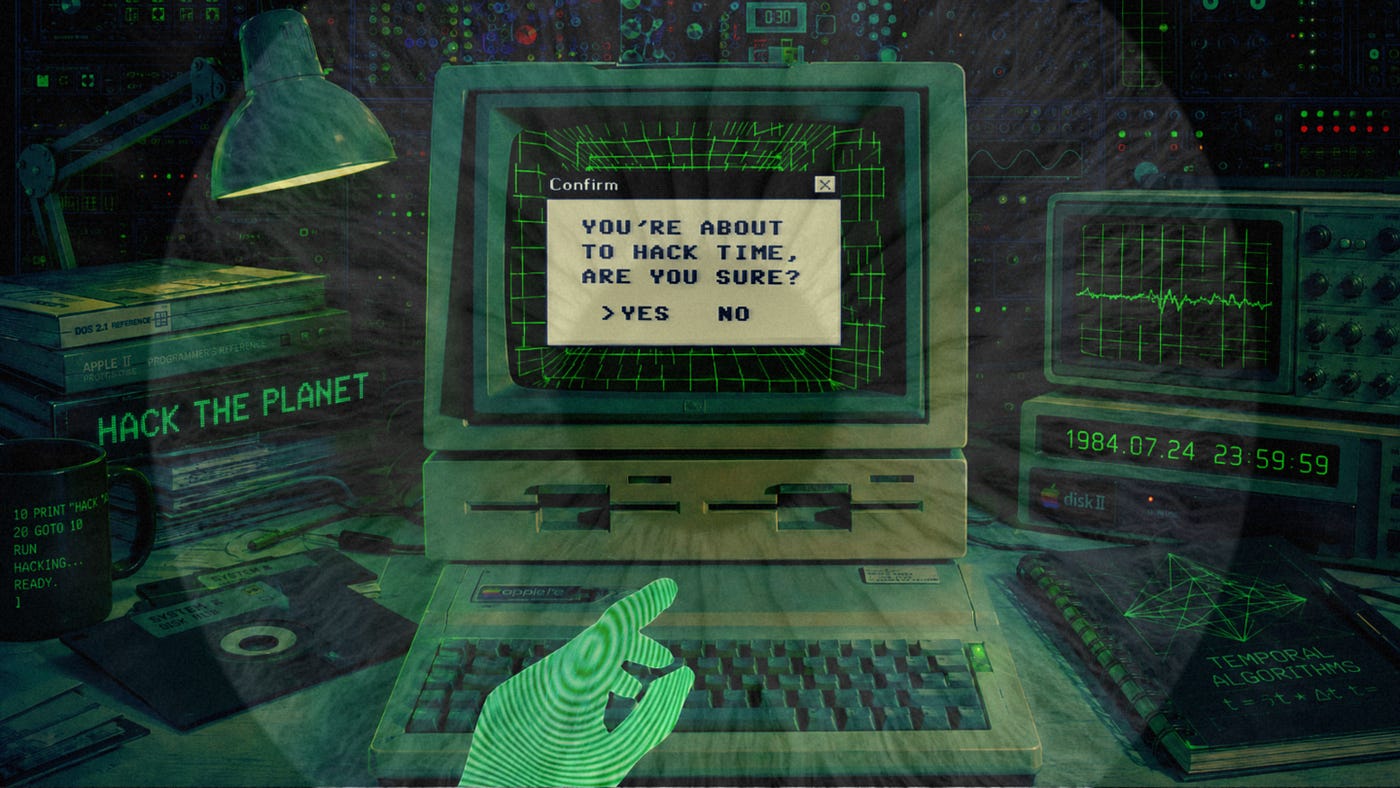
You Have to Hack The Planet Today or The Cycle Will Repeat Tomorrow (by author)
In March 2026, the government of Japan formally asked its citizens to stop panic-buying toilet paper. The shelves were emptying because of a war nearly 8,000 kilometers away. Photos circulated of hoarded supplies: cat food, toiletries, garbage sacks, and even one proud tower of Suntory beer. The economy ministry reminded everyone that toilet paper supply was fine, but everyone kept buying it.
Japan had seen this movie, one that had nothing to do with the one lived during the COVID lockdown. In October 1973, days after the Arab oil embargo began, a supermarket in Osaka’s Senri New Town put four-packs on sale and watched 200 housewives strip 1,400 rolls from the shelves before lunch. A reporter framed the bargain rush as oil-shock hoarding: the framing became a rumor, the rumor became a national shortage, and the shortage lasted into spring. The panic even crossed the Pacific. That December, Johnny Carson joked to twenty million viewers about a coming US toilet paper shortage, and by January, the United States had one. He apologized on air, to shelves that stayed empty anyway.
Panic, it turns out, ships faster than pulp.
[embed]
It’s easy to make fun of someone panic-buying toilet paper because there’s a war happening on the other side of the world. But that “silly” purchase doesn’t just appear on a shelf. Paper is pulp hauled by diesel, pressed in mills running on fuel, wrapped in plastic that began the year as crude, and trucked to her street on more diesel. Then it all gets shipped again — on more fuel — until it lands in your neighborhood store.
So toilet paper is, after all, a war in the Persian Gulf, condensed and sold by the roll.
And every home has its own “Strait of Hormuz”: a tight bottleneck somewhere far away that you never think about, can’t see, and definitely can’t control, but that can still wreck your day when it gets squeezed. It’s that one fragile link in the chain where someone else’s choices (politicians, wars, shipping routes, energy prices) suddenly show up in your life as higher costs, empty shelves, or an ordinary errand that doesn’t feel ordinary anymore.
Governments, jolted awake by their latest PTSD shock, are finally mapping the chokepoints that can bring a country to its knees. Meanwhile, most of us still can’t name the handful of fragile links that can bring an ordinary Tuesday to a halt.
[embed]
The electrocardiogram and the storeroom
You’ve watched the number outside the fuel station change twice in a week while nothing in your life (or your bank account) changed at all. The number moved because a tanker turned around, or a drone hit a pipe, or a man gave a speech. For most of your lifetime, oil pretended to be priced by supply and demand, like a market with the temperament of an accountant.
In 2026, it trades like a heart monitor during a panic attack. One scary headline and the price jumps. One rumor and it twitches again. It never really settles down — and that might be the only strategy behind the war.
For a long time, countries bought oil and gas mostly based on two simple things: who had it cheapest and who could ship it the shortest distance. And so, two great arteries carried the world’s fossil fuel supplies: Russian resources flowing west into Europe, and Gulf reserves flowing east into Asia. Both were considered unbreakable because the economics underneath them looked unshakable. Russia broke the first one in 2022, and this year’s war broke the second.
Fatih Birol, the head of the International Energy Agency, writes that after the new ‘Twin Fossil Shock’, the map is being redrawn in real time, and that the new key question is simpler (and more political): who can you actually count on? In a crisis, price and geography matter less than whether you trust a supplier to keep delivering, and whether you trust the route to stay open.
Source: EMBER
Around a fifth of everything humanity burns moved through the Strait of Hormuz every day before the war. Those flows slowed to a trickle. The IEA’s member countries answered with the largest emergency release in the agency’s five-decade history, 400 million barrels, and prices still cleared $100. An emergency reserve treats the fever. The infection is the dependency, and no stockpile touches it.
Which brings us to the storeroom.
If your usual store keeps running out of rice, you can build a bigger pantry and stockpile 20 kg bags of rice whenever they appear… or you can switch to pasta so dinner doesn’t depend on rice being available that week.
Governments across Asia are absurdly choosing the bigger storeroom.
India alone would need to spend about $7.5 billion buying barrels to reach the 90-day reserves rich countries keep, and then between $1.5 and $3 billion every single year just to sit on them, money tied up in tanks and salt caverns, waiting for a catastrophe to justify itself.
But a stockroom isn’t a plan for getting less dependent but a yearly bet that you’ll still need the same oil decades from now, an “insurance” you keep paying for, built on the very system that created the risk in the first place.
[embed]
Meanwhile, China’s electric cars and trucks currently displace around 1.8 million barrels of oil demand every day. Stretch that over 90 days and it matches Germany’s entire emergency petroleum reserve. Except a reserve gets burned once and must be refilled at whatever the war charges that week. Demand that has been deleted stays deleted, at no carrying cost, forever, and no missile has yet found a way to sink it.
Your government, probably, has a stockroom strategy.
So, probably, do you.

Source: EMBER
Your ordinary Tuesdays
The water in the shower comes out hot. The bread in the toaster jumps like magic. Then you got in a car or onto a bus. Three chokepoints before 9 a.m., every one of them fed, somewhere upstream, by a barrel.
The car is the widest one. Road transport swallows around 45% of the oil the world uses, which makes the machine in your driveway the single largest piece of Persian Gulf exposure you personally own. The stove is next: LPG cooks dinner for 2.3 billion people across Asia, and when the strait shut, the canister under the counter became a thing families ration meal by meal. Then the one nobody counts, the plate itself: about half the people alive tonight are fed by nitrogen fixed in industrial reactors running on fossil hydrogen. Half your dinner table, statistically, exists because of a chemical process the size of a small country’s energy budget.
You’ve already paid the bill for this exposure once this decade, in the smaller shock. After Russia invaded Ukraine, household spending on oil products jumped by more than $40 a month in advanced economies, and by nearly $20 a month in developing ones, where $20 meant a 55% increase. This is car-related economic stress: households that keep the tank full by cutting food, heating, and medical care, because without the car there’s no job, and without the job there’s nothing to cut. You can call it forced car ownership but it reads more like a car owning the family.
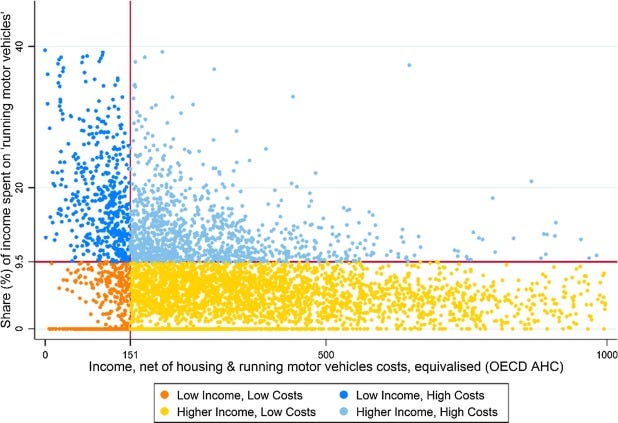
Car-related economic stress hitting low income people with the highest cost (Source: Vulnerability to fuel price increases)Car-related economic stress hitting low income people with the highest cost (Source: Vulnerability to fuel price increases)
So your ordinary Tuesday depends on a committee in Vienna deciding output quotas, an underwriter in London pricing a tanker’s war-risk premium, a captain deciding whether the lane looks safe this week, a refinery scheduler, a trucking company’s diesel margin, and a strait 39 kilometers wide at its narrowest.
None of them knows you exist. But you countersign it every time you fill the tank.
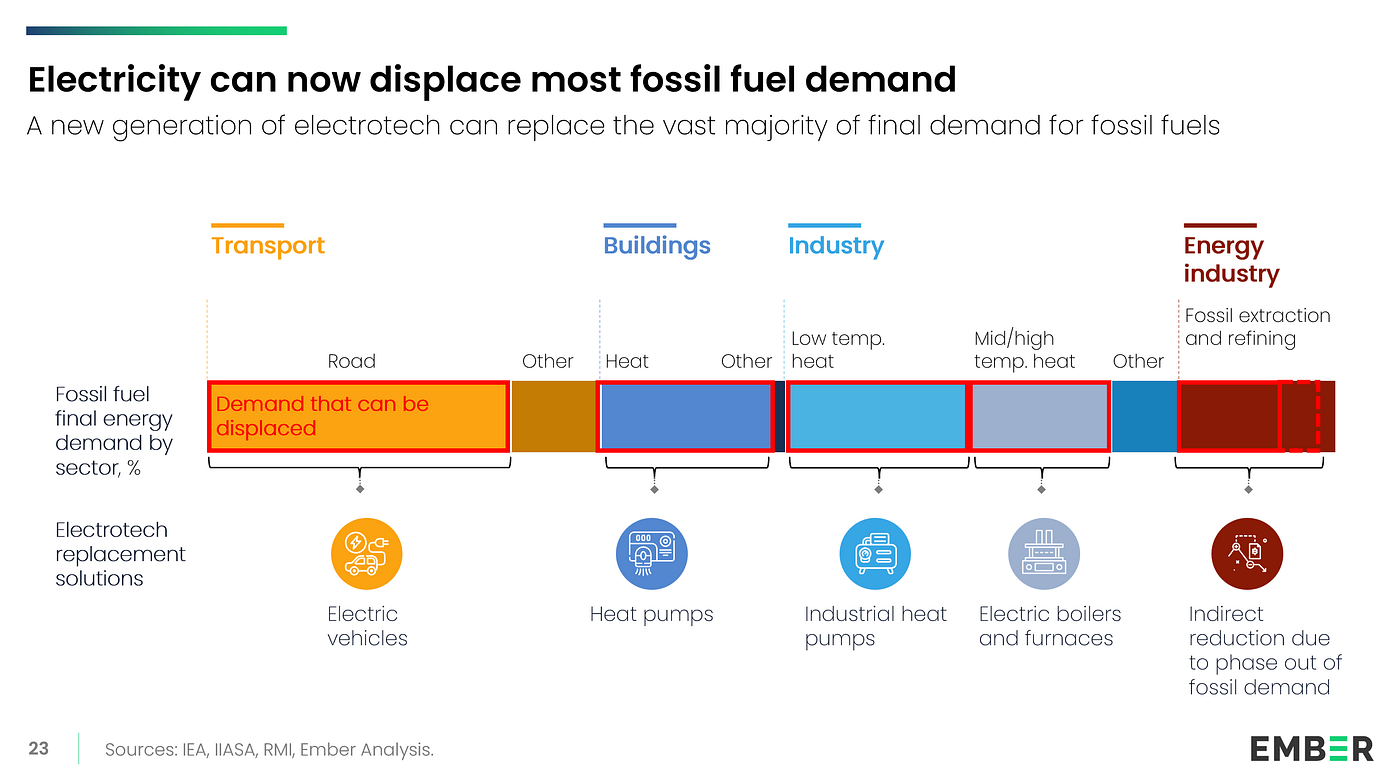
Source: EMBER
And when the contract starts smoking, the household reflex mirrors the national one: buy a bigger stockroom. Jerrycans in the shed. And the crown jewel of the bunker plan, the portable generator, which produces as much carbon monoxide as several hundred cars and kills around 100 people in the US every year, most of them in the cold months, running the machine indoors while waiting for the grid to come back. The generator is, structurally, a tiny, personal refinery customer. It moves the chokepoint from the far side of the planet into your garage while leaving it plugged into the exact same strait. And the day the pumps run dry, your insurance policy becomes a very loud paperweight.
The stockpile mimics safety. The exits are somewhere else.
This is how you hack the planet today
The last long blackout in your neighborhood, or the fuel lines, or the week the heating bill doubled: somewhere on your street, one house barely noticed. A roof that kept humming, a family that didn’t join the line. That house isn’t lucky, just early.
The hacks, smallest to largest
A heat pump delivers the same warmth as a boiler using three to five times less energy, which turns your winter from a commodity bet into a piece of hardware you own. An induction stove answers to your breaker box instead of a canister with a war built into its price.
As Martina H puts it, “the most efficient creature on Earth has two wheels and pedals. You can’t engineer grace through resistance. However, somewhere along the way, we stumbled upon a small mechanical miracle. One unassuming contraption of two wheels, a chain, and a human heartbeat. So the grayling glides, the jay soars, the reindeer trots. Yet when you hop on a bicycle, you actually become more efficient than any of them.”
Not up for a heavy workout every single day? An electric bike sounds like a whim until you read that, across a meta-analysis of 24 studies, roughly a quarter of e-bike trips directly replace car trips, and a Swedish simulation of an entire region’s daily schedules found e-bikes could take over 57.6% of car trips. More than half the driving in a modern economy fits on two electric wheels, at a hundredth of the fuel bill of the thing it replaces. Those who go all the way rarely reconsider: among EV drivers surveyed worldwide, 92% say they’ll never return to gasoline.
An electric bike sounds like a toy until you read that, across a meta-analysis of 24 studies, roughly a quarter of e-bike trips directly replace car trips, and a Swedish simulation of an entire region’s daily schedules found e-bikes could take over almost two-thirds of all car trips. More than half the driving in a modern economy fits on two electric wheels, at a hundredth of the fuel bill of the thing it replaces. Those who go all the way rarely reconsider: among EV drivers surveyed worldwide, 92% say they’ll never return to gasoline.

Energetic Cost of Locomotion in Animal (Source: Scientific American)
Then the roof. A study modeled more than half a million US households and found that around 60% would cut their electricity bills with solar and a battery, and 63% could get affordable backup power covering about half of what a household needs most when the grid fails. Berkeley Lab ran the same idea against ten real, multi-day blackouts from recent history: in seven of the ten, most homes with panels and a 30 kWh battery would have kept the lights, the fridge, and the heat running the entire time. No fuel line to wait in, no resupply schedule, and no captain deciding whether your week looks safe.
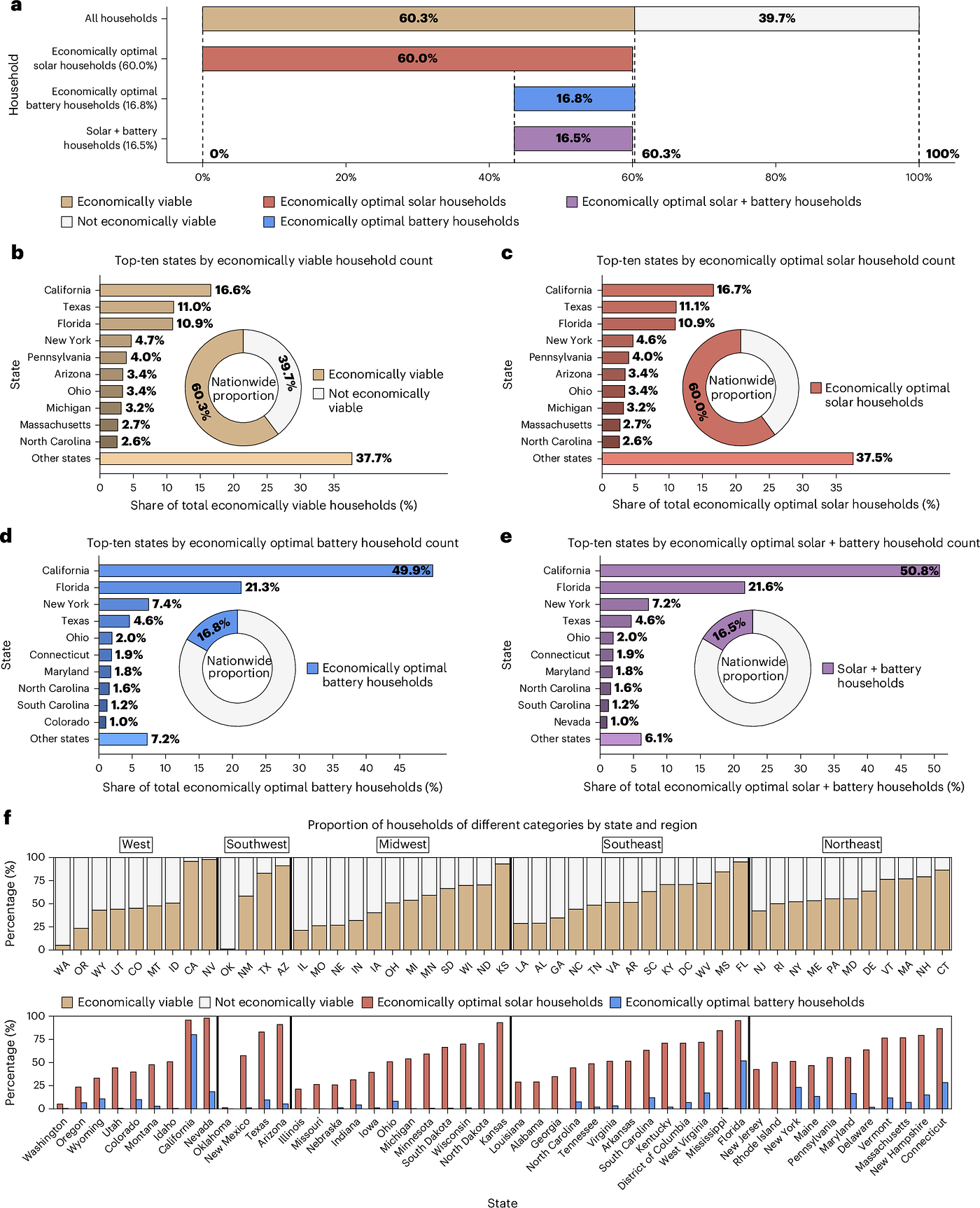
Economically viable households under net billing tariffs (Source: Solar and battery can reduce energy costs and provide affordable outage backup for US households)
If that sounds like a rich person’s insulation, Bangladesh would like a word. Its solar home systems program, built on loans as small as $100, put panels on 4.1 million roofs and gave 20 million of the poorest people on Earth electricity that answers to nobody’s navy. Ukraine, under active bombardment, with missiles specifically hunting its power plants, added 1.5 gigawatts of solar in 2025, roughly a million homes’ worth, because a country at war can’t afford infrastructure that dies from a single hit.
Every machine on that list shares one property: none of it stores anything. The stockroom strategy hoards the dependency and calls the hoard security. These machines shrink the dependency itself. A barrel you no longer need has no price, and nobody has yet worked out how to embargo a roof.

Source: EMBER
But the list is still missing its most important line, and it isn’t hardware. In July 1995, a heat wave killed over 700 people in Chicago. When sociologists went back through the mortality maps, the pattern that emerged had little to do with air conditioners. Adjacent neighborhoods with nearly identical rates of poverty and elderly residents died at wildly different rates. Where streets still had shops, foot traffic, and people who knocked on doors, neighborhoods were largely protected. Where commerce had hollowed out and people lived behind locked windows, they died alone, out of contact with anyone who might have checked.
The strongest predictor of surviving the disaster turned out to be the one thing nobody keeps in a garage: the person across the hall. The same math runs through a fuel crisis.
A block that knows who owns the cargo bike, whose roof has panels, which freezer can take the insulin when the grid drops, and which grandmother shouldn’t be alone in a heat wave, has storage no tank farm can match. The bunker individualist and his generator are optimizing for a scenario where he’s the last man on the street.[¹] The record from Chicago suggests the last man on the street is the first one the disaster finds.
So the flip, in both of its halves. The households that held were the ones that had shrunk what they needed. The streets that held were the ones where people knew who needed them. Every liter of demand you delete is a liter no war can price, and every neighbor who knows your name is a reserve that refills itself.
Nobody in Osaka could do anything about the strait. That was always true, and it’s the exact reason the panic went to the paper aisle: it was the one shelf within reach. But the reach was the illusion. The kettle, the commute, the stove, the roof, the two houses either side of yours: all within reach, all this whole time.
You can’t move the Strait of Hormuz. The one in your kitchen, you can close it yourself.
[¹]: He’s also the street’s biggest carbon monoxide event waiting for a windless night. There’s a reason the safety agencies beg people to run these machines at least six meters (20 feet) from any building: one machine, hundreds of tailpipes, no exhaust pipe out of the garage.
I help curious minds who need a relatable pen put their sharpest ideas into words: stories, perspectives, and insights that actually get read. Reach out!
***If you want to support my work, here is the place to do so.* If not, thanks for reading anyway!
메타데이터
- post_id
- 07c7d3698eb8
- slug
- you-have-to-hack-the-planet-today-or-the-cycle-will-repeat-tomorrow-07c7d3698eb8
- url
- https://thequantasticjournal.com/you-have-to-hack-the-planet-today-or-the-cycle-will-repeat-tomorrow-07c7d3698eb8
- canonical_url
- https://thequantasticjournal.com/you-have-to-hack-the-planet-today-or-the-cycle-will-repeat-tomorrow-07c7d3698eb8
- author_url
- https://medium.com/@rickylanusse
- status
- ok
- fetched_at
- 2026-07-14 17:21:48