When Google Moves the Ground Under Your Website
The May 2026 Core Update is a reminder to slow down, study the right signals, and improve what actually helps people.
When Google Moves the Ground Under Your Website
The May 2026 Core Update is a reminder to slow down, study the right signals, and improve what actually helps people.
Step by Step Plan for SEO after May 2026 Core Update
I’ve learned that the worst time to make a dramatic SEO decision is usually the exact moment I feel most tempted to make one.
That is especially true during a Google core update.
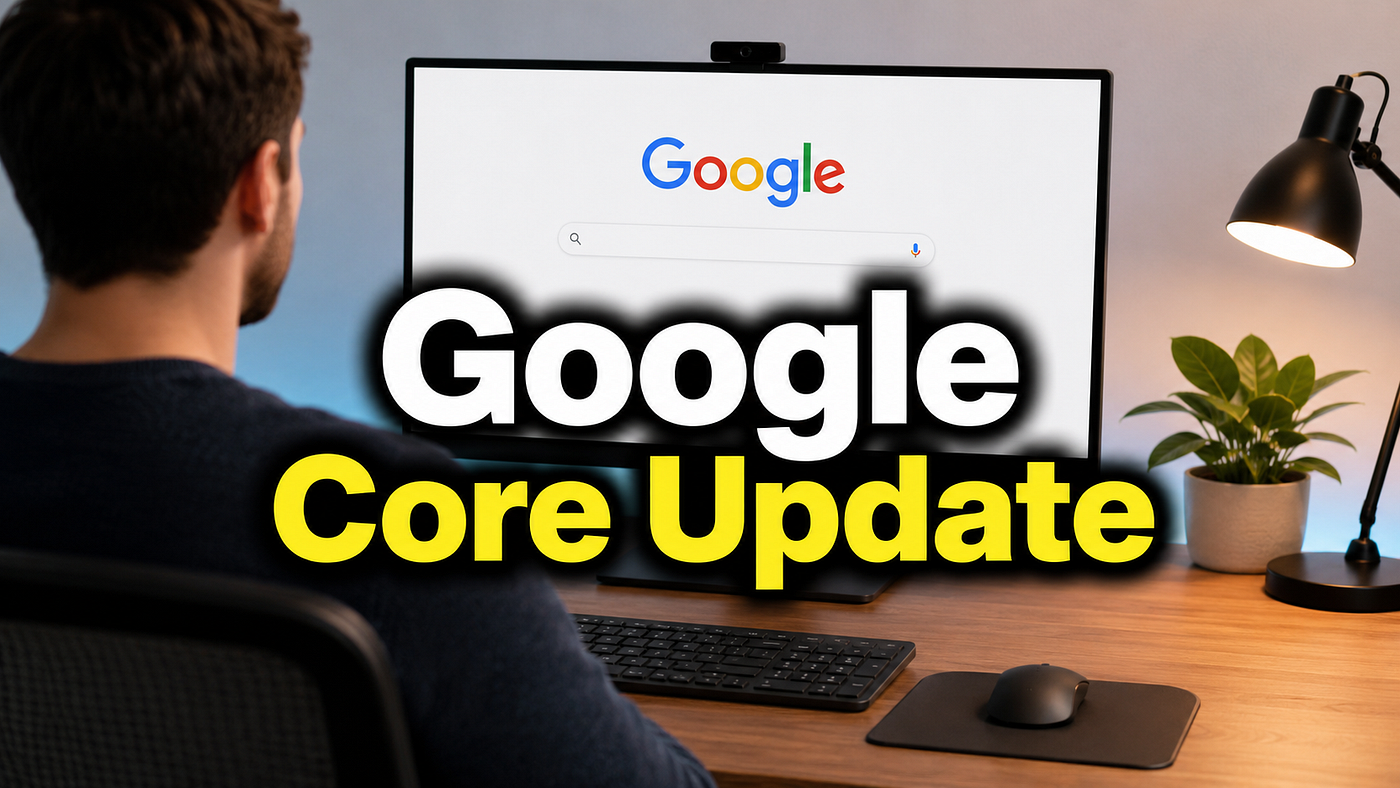
On May 21, Google officially released its May 2026 Core Update, with the rollout completing on June 2. And, as with most core updates, the first few days can feel a little like standing in a room where the floor keeps shifting. Rankings move. Traffic changes. Reports look strange. A page that was steady last month suddenly looks uncertain this month.
It is natural to want to do something.
Rewrite everything.
Delete pages.
Change titles.
Tear apart the content calendar.
Blame AI Overviews.
Blame competitors.
Blame Google.
I understand that reaction because I feel it too. When visibility matters to a business, volatility does not feel like an abstract SEO event. It feels personal. It affects leads, sales, confidence, and the conversations teams have with clients, bosses, and each other.
But this is the moment where discipline matters more than speed.
The biggest mistake companies make during a core update is reacting too quickly with aggressive changes before the rollout has finished and before the data has settled. A core update is not usually a single-page problem. It is Google reassessing quality, authority, intent, usefulness, and trust across the web.
And in 2026, that reassessment is happening in a search environment that looks different from the one many of us grew up optimizing for.
Google’s AI-driven search experiences are expanding alongside traditional rankings. So visibility shifts may not show up as a simple ranking drop anymore. A page may still rank but receive fewer clicks. A brand may lose visibility inside an AI Overview. Informational traffic may decline while conversion quality changes. Branded search demand may become a more important signal than raw organic sessions.
That means our response has to mature too.
We cannot just ask, “Did rankings go down?”
We need to ask better questions.
Did the quality of traffic change? Did click-through behavior change? Did we lose visibility in AI-generated answers? Did branded search demand rise or fall? Did conversions shift, even if traffic stayed stable? Did the search intent around our topic change?
Those questions lead to better decisions.
And better decisions usually begin with waiting long enough to see clearly.
The First Job Is Not Fixing. It Is Stabilizing.
Because the update completed on June 2, the first smart move is to avoid overreacting in the immediate aftermath. The practical window to begin serious analysis is after June 9, once there is at least a clean post-rollout period to compare against.
That does not mean doing nothing.
It means collecting the right evidence.
I would start in Google Search Console and compare May 14–20 against June 3–9. That gives me a pre-update baseline and an early post-update view. I would look at clicks, impressions, click-through rate, and average position, but I would not stop at the top-level graph.
Top-level traffic can hide the truth.
I would segment Web Search, Images, Video, and News separately. A site may look damaged overall when the real issue is isolated to one search surface. Or the opposite may happen: total clicks may look fine while a critical section of the site is losing qualified traffic.
I would also start tracking AI Overview visibility wherever possible. Not just whether we ranked, but whether our pages were cited, replaced, summarized, or pushed below an AI-generated answer.
That matters because a modern search result is no longer just ten blue links. It is a visibility ecosystem.
The page that wins today may not be the page that gets the most clicks. Sometimes it is the brand that gets cited. Sometimes it is the source that shapes the answer. Sometimes it is the company the searcher remembers and searches for directly afterward.
So before making changes, I want a calm picture of what actually moved.
Not Every Drop Deserves the Same Response
Once the data has settled, I would identify the pages with the largest drops in impressions and clicks.
But I would be careful not to treat every decline equally.
A page moving from position two to position four may sting, but it is not the same problem as a page falling from position four to position twenty-nine. Small ranking changes may simply be normal update movement. Large drops deserve deeper investigation.
I would pay special attention to informational queries because those are often the most exposed to AI Overviews. If someone searches for a broad explanation, comparison, definition, or how-to answer, Google may now satisfy more of that intent directly on the results page.
That does not mean informational content is dead.
It means average informational content is becoming easier to replace.
So the audit has to be objective.
Does this page contain real insight, or is it mostly a polished version of what everyone else has already said?
Does it show first-hand experience?
Does it answer the searcher’s actual question quickly and clearly?
Does it include examples, screenshots, data, opinions, comparisons, or lessons that could only come from someone who has done the work?
Does it build trust in the author, the company, and the brand?
That is where the real SEO work begins.
The New Standard Is Usefulness With Proof
For this update, I would evaluate impacted pages through five lenses: content quality, authority, user intent, AI search behavior, and brand trust.
Content quality is not about making articles longer. I have seen plenty of long content that still feels thin. The goal is depth, not word count.
A useful page should help the reader make progress.
It should clarify something.
It should reduce confusion.
It should bring experience to the surface.
Authority is not just a backlink metric either. Authority shows up in the confidence of the content. It shows up in examples, author bios, credentials, original observations, and the sense that a real person or team understands the problem.
User intent alignment is where many pages quietly fail. A page may target the right keyword but answer the wrong need.
The searcher may want a comparison, and the page gives a definition. The searcher may want a practical checklist, and the page gives a history lesson. The searcher may want help making a decision, and the page keeps circling the topic without committing.
AI search behavior adds another layer. If Google is extracting answers, then structure matters. Clear definitions, concise summaries, tables, FAQs, and well-labeled sections can make content easier to understand and cite.
Brand trust may be the hardest one to fake, which is exactly why it matters. Strong brands have signals beyond individual pages. They have mentions, links, consistent expertise, recognizable authors, repeat searches, and a clear place in the market.
A core update can expose the difference between content that was created to rank and content that was created to be relied upon.
Look at the Winners Before Touching the Page
Before rewriting an impacted page, I would compare it against the current top three results.
Not to copy them.
To understand what Google appears to be rewarding now.
What format is winning? Are the top pages more current? Do they include examples, screenshots, original data, or clearer explanations? Are they better organized? Do they answer the query faster? Are they written from a more credible point of view? Do they include 2026-specific references where freshness matters?
Sometimes the answer is obvious. A competitor may have a better guide, stronger internal links, clearer authorship, and more useful examples.
Sometimes the answer is more subtle. Google may be favoring a different intent entirely. What used to be a “how to” result may now be a product comparison. What used to be a broad educational search may now reward a specific tool, template, or service page.
➤ That is why diagnosis has to come before improvement.
A rewrite without diagnosis is just guessing with more effort.
Improve the Page Like a Person Will Read It
After the diagnosis, I would make meaningful improvements.
I would strengthen weak sections with real insight. I would add first-hand experience where the page feels generic. I would include screenshots, performance metrics, case examples, updated references, and clearer explanations.
I would add FAQs where they genuinely help the reader. I would improve internal links so related topics support each other. I would clean up formatting so the page is easier to scan, understand, and trust.
But I would avoid panic edits.
I would not remove major page elements based on rumors. I would not delete content unless it is truly unsalvageable. I would not rewrite hundreds of pages at scale just because traffic moved for a week. And I would not chase an algorithm loophole when the bigger pattern is obvious.
Google keeps saying the same thing in different ways: make satisfying content for people.
That advice can sound too simple when rankings are moving, but simple does not mean easy.
People-first content requires more judgment, more experience, and more care than formulaic SEO content ever did.
It asks us to be useful.
It asks us to be specific.
It asks us to prove that we know what we are talking about.
Technical Health Still Matters
A core update is usually not just a technical SEO issue, but technical problems can make everything worse.
So I would still check Core Web Vitals, mobile responsiveness, loading speed, crawlability, indexing, and page experience. I would look for broken internal links, confusing site architecture, duplicate content, and weak topical relationships.
The goal is not to treat technical SEO as a magic fix.
The goal is to remove friction.
If Google is reassessing quality and users are reassessing trust, the site should not make either job harder.
AI Overviews Change the Scoreboard
⚠️ One of the harder truths in this update is that success may no longer be measured only by clicks.
If AI Overviews reduce click-through rates on informational queries, then a brand can gain visibility while still seeing fewer visits from certain searches. That is uncomfortable, especially for teams used to judging SEO by traffic volume alone.
But the scoreboard is changing.
We need to pay attention to visibility, citations, branded search, assisted conversions, share of voice, and the quality of traffic that still comes through.
This is where brand becomes more important.
If a searcher sees your company cited, mentioned, or consistently present across a topic, they may not click immediately. But they may remember you. They may search for you later. They may trust you more when they compare options.
That means SEO is moving closer to brand building, content strategy, and authority development.
➝ The companies that win will not only publish pages. They will build a presence.
The Long Game Is Still the Best Game
🛠️ The recovery timeline from a core update can take weeks or months. In some cases, the biggest improvements may not show until a later core update or refresh.
That can be frustrating, but it also gives us a healthier way to work.
Build topic clusters with clear internal linking. Publish experience-driven content with real data. Update outdated content regularly. Strengthen author profiles and brand signals. Earn mentions and links because the work is worth referencing.
And keep monitoring.
Not nervously.
Responsibly.
Core updates are part of the search landscape now. AI search is part of the search landscape too. The answer is not to panic every time Google changes. The answer is to build something that deserves to survive change.
That means better content.
Clearer expertise.
Stronger trust.
More useful pages.
A brand people search for by name.
The May 2026 Core Update is not a reason to tear everything down. It is a reason to slow down, look carefully, and improve with evidence.
That is the work I would trust.
Not the frantic work.
The patient work.
The useful work.
The work that helps the person on the other side of the search box.
We help our clients navigate these changes all of the time, and the results speak for themself.
If you want help evaluating how this update impacts your SEO and AI visibility strategy…
Connect with me on LinkedIn to book a no obligation discovery call.
메타데이터
- post_id
- 07f97348ae0c
- slug
- when-google-moves-the-ground-under-your-website-07f97348ae0c
- url
- https://learnaitoprofit.com/when-google-moves-the-ground-under-your-website-07f97348ae0c
- canonical_url
- https://learnaitoprofit.com/when-google-moves-the-ground-under-your-website-07f97348ae0c
- author_url
- https://medium.com/@douglaslampi
- status
- ok
- fetched_at
- 2026-06-15 20:49:13