Mercedes Built Five EVs in 18 Months. Its Rivals Lost the Plot.
Monday’s electric C-Class makes five. Stellantis, Volkswagen, Porsche and Jaguar spent the same luxury EV cycle writing off $55 billion.
Mercedes Built Five EVs in 18 Months. Its Rivals Lost the Plot.
Monday’s electric C-Class makes five. Stellantis, Volkswagen, Porsche and Jaguar spent the same luxury EV cycle writing off $55 billion.
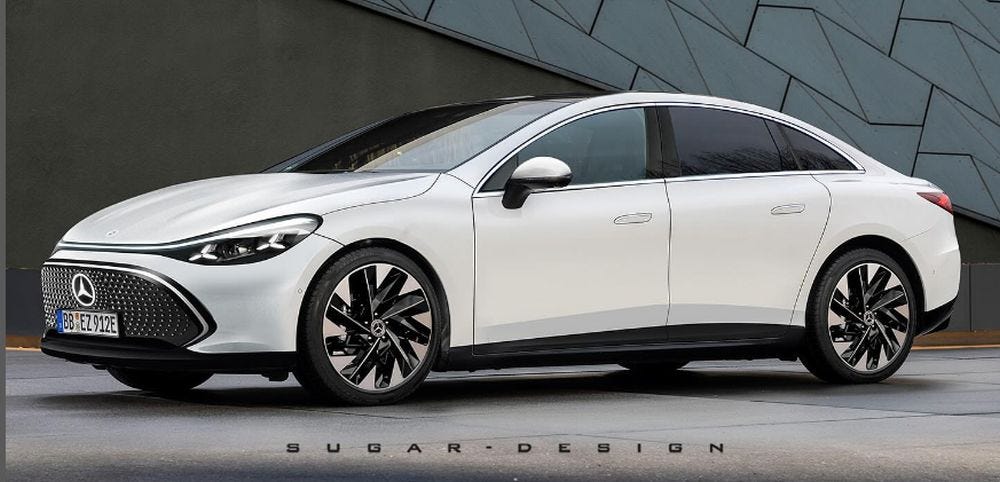
Image Source: Mercedesblog
Mercedes chose Seoul for the world premiere of the all-new electric C-Class today. Not Stuttgart. Not Shanghai. Not the Beijing motor show opening later that week. Seoul — a market the brand has been losing to Tesla and BMW for three years, and which Mercedes has decided to win back with the most important product launch in its electric line-up to date.
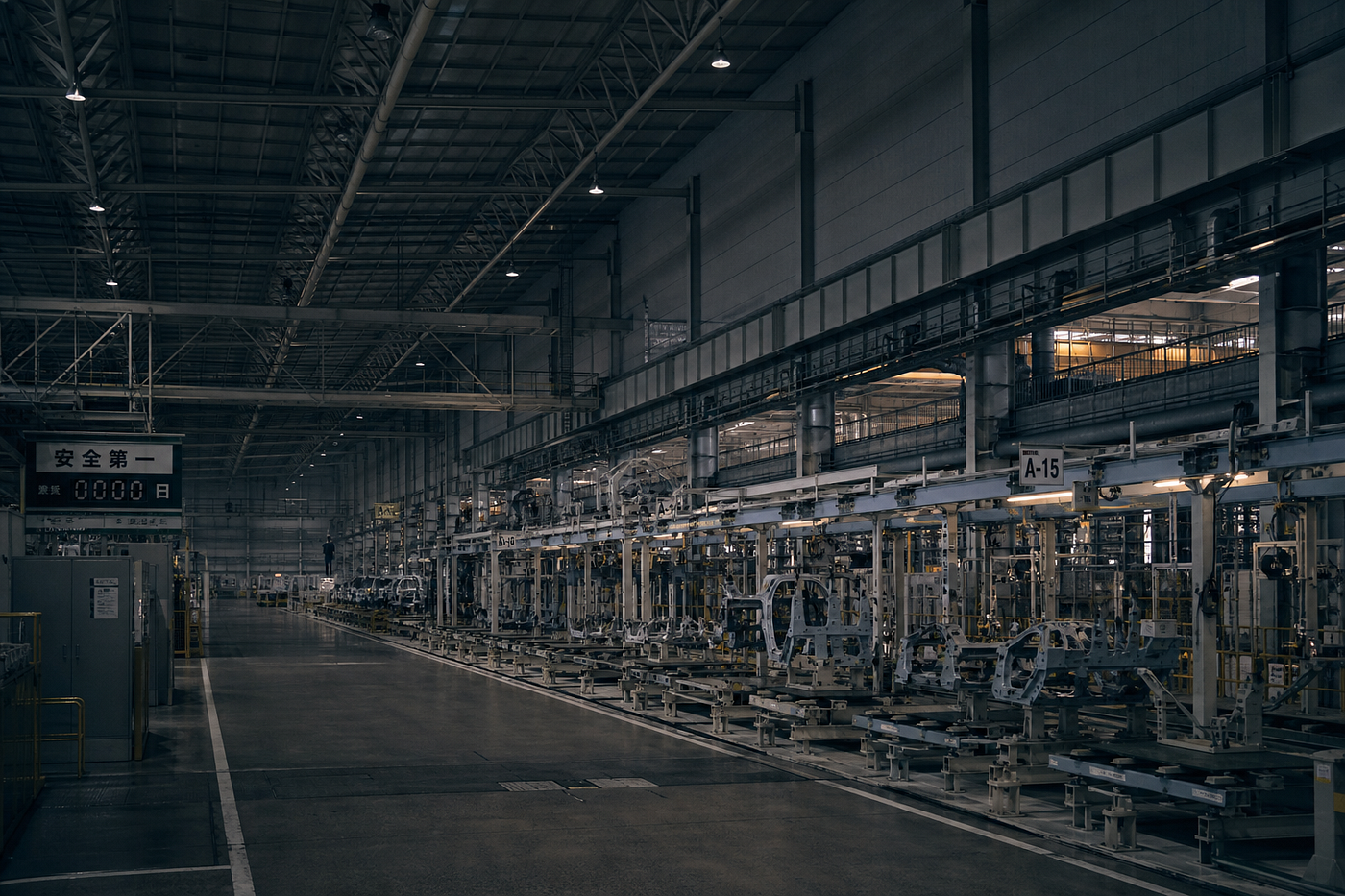
The decision looks strange only until you read the list of Mercedes’s peers this quarter. Stellantis booked €22.2 billion in EV-reversal charges in February, cancelled the fully-electric Ram 1500 in favour of a range-extender, revived the Hemi V8, and suspended its dividend. Volkswagen shut the ID.4 production line in Chattanooga last week and wrote off €500 million. Porsche has spent eighteen months walking back its 2030 EV targets. Jaguar has spent 2025 between line-ups, preparing for an EV-only relaunch that has yet to deliver a retail vehicle.
Between them, the world’s legacy premium brands have written off more than $55 billion of electric-vehicle investment in under twelve months. The story of Western luxury’s electric transition in early 2026 is a story of companies walking back — and being very loud about it.
This publication is reader-funded — no ads, no sponsors, no brand deals. If you want more writing like this to exist: **☕ Buy me a coffee** — it funds the next one directly.
Mercedes has been walking forward, quietly, for eighteen months. The consensus coverage of Monday’s Seoul premiere will treat it as a product reveal. That misreads the moment. The electric C-Class is the piece of evidence that closes an argument almost no one has been running: that while most of the global premium establishment panicked and reversed, the German brand with the longest and most cautious record in electrification executed the most coherent luxury EV programme in the industry.
The luxury EV graveyard, and the brand that wasn’t in it
The standard reading of late 2025 and early 2026 is that the EV transition was mispriced, automakers over-committed, and the correction has been severe but necessary. There is truth in that. There is also a list of names attached to it.
Porsche walked back its 2030 EV targets, with Volkswagen Group absorbing a $6 billion charge largely on Porsche’s behalf. Jaguar ran most of 2025 without a retail product on sale, pausing in transition to an EV-only future. Volkswagen killed the ID.4 in North America entirely; the ID.Buzz skipped the 2026 model year. Ford reduced shifts at its Cologne EV plant and scaled back its American EV programme alongside.
The capital written off across the industry now runs past $55 billion, and the public messaging has settled into a common line: the consumer wasn’t ready, the infrastructure wasn’t ready, the technology wasn’t ready.
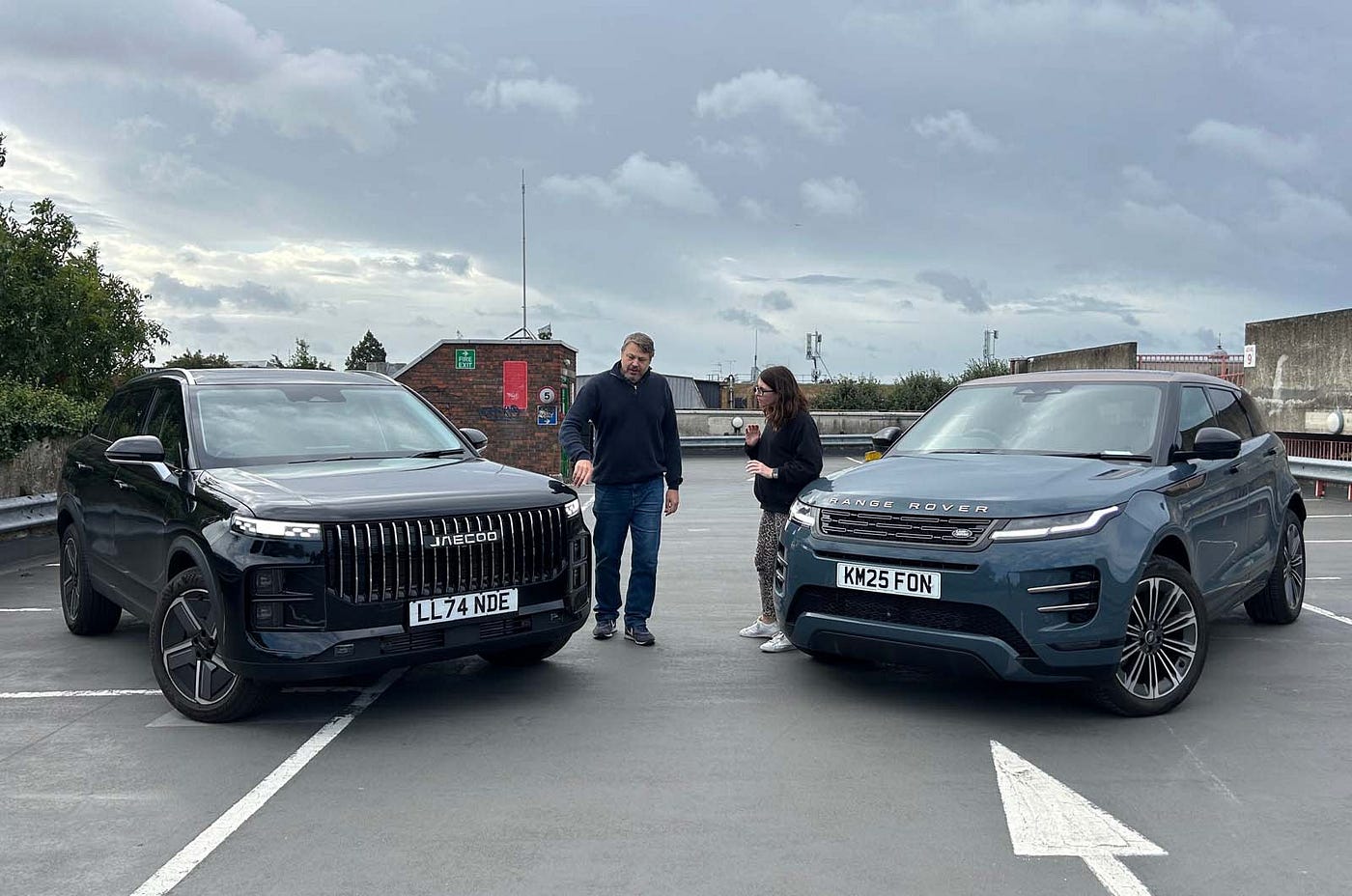
In the United Kingdom this March, the top-selling new car was a Chinese plug-in hybrid SUV — the first Chinese model ever to top the British monthly sales chart. Chinese brands now account for 15% of the UK market, up from 10% a year ago. Every legacy premium brand except Mercedes is ceding ground in the segment the CLA just colonised.
Mercedes’s name is not on the write-down list. The brand launched the Mercedes CLA in mid-2025 on an entirely new architecture, the MMA platform, and watched it win European Car of the Year 2026.
The single-motor CLA 250+ carries a WLTP-claimed range of 484 miles. Edmunds’s instrumented test recorded 434 miles of real-world driving — sixteen per cent above the EPA rating, and within striking distance of a Lucid Air Grand Touring carrying a battery a third larger.
The all-electric GLC followed at the Munich motor show in September, claiming 713 km WLTP on a 94 kWh pack. The C-Class EQ, the most strategically loaded car in the sequence, arrives Monday. A fourth model, the electric GLB, is confirmed for May. A fifth, the GLA EQ, arrives in December.
Five volume-segment Mercedes EVs in under eighteen months is not the behaviour of a company that has written off its electric future. It is a product offensive — and by this point in 2026, the only one of its kind from a Western premium marque.
Efficiency as the argument
The reason the programme works is that Mercedes ignored the obvious strategy. The obvious strategy, which most Western OEMs adopted and paid for, was to buy headline range with bigger batteries.
The CLA 250+ has an 85 kWh pack. The BMW iX uses 112 kWh to chase a similar real-world range. The Lucid Air Grand Touring has 112 kWh. Mercedes’s own EQS, the brand’s technology flagship, carries 108 kWh.
The CLA does its 434 real-world miles on a battery roughly a quarter smaller than its closest premium rivals.
It achieves this through engineering Mercedes has been refining for four decades: aerodynamic drag management, low-rolling-resistance architecture, and a two-speed rear transaxle that runs a tall second gear at motorway speeds. The 800-volt architecture, derived directly from the Vision EQXX concept that drove a thousand kilometres on a single charge in 2022, supports 320 kW DC fast charging — two hundred miles of range added in ten minutes, in the metric that actually matters to long-distance drivers. The nickel-manganese-cobalt cells in the CLA’s pack have a claimed energy density of 680 Wh/l, a figure Mercedes volunteered because it is class-leading.
The philosophical position — win through efficiency, not battery size — is the same one Mercedes took through the diesel era, and the reason W124 and W210 E-Classes delivered forty miles per gallon in real-world driving when half the fleet was managing twenty. The approach suffered during the industry’s diesel emissions fallout, for reasons unrelated to the engineering. In electric form, with no emissions-cheat temptation, it has produced the longest-range premium saloon on the European market and the only luxury EV architecture that has genuinely justified its 800-volt hardware premium.
The British starting price tells the rest of the story. A CLA 250+ lists at £45,000, rising to about £52,000 in Sport Edition trim. That is Audi A6 e-tron territory, well under the BMW i4’s top-spec pricing, and significantly below the Lucid Air’s six-figure entry point. Mercedes is not competing on range alone. It is competing on range per pound sterling.
The C-Class is not a technology demonstrator
There are journalists who will read the above and object that Mercedes has been talking a better game than it has been playing. The EQE sedan and EQE SUV have underperformed and are expected to be phased out. The EQS has never sold in the volumes Mercedes projected. The haptic-slider interior controls on the previous-generation C-Class and the first CLA facelift were widely and correctly derided.
None of this is wrong. All of it is survivable only because Mercedes has been learning publicly, and in the right direction — the electric C-Class’s pillar-to-pillar Hyperscreen brings back physical controls on the steering wheel and centre console.
The C-Class EQ matters precisely because it is not a technology showcase. The S-Class is the showcase. The EQS was the showcase. The C-Class has been, for four decades, the car that pays Mercedes’s bills.
It is the default purchase of the German mid-tier manager, the Korean senior executive, the British company-car buyer, the Australian professional, the Singaporean banker. If an all-new MB.EA-platform C-Class sells — at four hundred-plus miles of real-world range, 800-volt charging, and a competitive starting price — then Mercedes has proved that the electric transition works at the commercial core of a premium brand.
If it doesn’t, the brand’s whole EV strategy becomes a question mark by autumn. Mercedes has chosen to run the experiment on the car it cannot afford to lose.
That is a confident position, not a reckless one. Mercedes has done the work to take it. Mercedes’s 2025 global sales report records France, Denmark, India and Australia as record BEV years for the brand. Korea, Singapore and the UK sit in the queue. The argument the C-Class EQ has to win is no longer whether premium EVs have a market; it is whether Mercedes can hold the market against everything coming the other way.
Why Seoul
The choice of Seoul as the premiere venue is the part that tells you where Mercedes thinks the battle is. Mercedes has lost the Korean market over the past three years. Tesla led Korean imported car sales in Q1 2026 with 20,964 units. BMW followed at 19,368. Mercedes trailed at 15,862 — the third-ranked premium brand in a market where it held the number-one position for eight consecutive years through 2022.
Korea is a premium, tech-literate market of fifty-one million people that punches far above its weight in global premium brand league tables. Hyundai and Kia’s home market is also where their European competitors are tested most severely.
Mercedes bringing the world premiere of the C-Class EQ to Seoul — for the first time in brand history — is a signal that the electric C-Class is the vehicle Mercedes is betting will win Korea back, and that Korea is the market Mercedes considers the leading indicator of premium EV adoption across Asia-Pacific. That line runs through Sydney and Melbourne as well as Seoul: Australia’s BEV share hit a record 14.6% in March 2026, up 88.9% year-on-year, with the Mercedes-Benz C-Class the second-best-seller in the country’s over-$60,000 medium-car segment.
Picking Seoul over Shanghai for the reveal is also a quiet line in the sand on where Mercedes sees its defensibility: in markets where Chinese OEMs compete head-on with Western premium brands but cannot yet out-engineer them on efficiency, software integration, and service network.
The verdict
The luxury EV market has a winner, and the industry has been too busy narrating its own write-downs to notice who it is. Mercedes-Benz built a coherent electric platform, launched the right cars in the right order, won European Car of the Year with its entry-level saloon, and is about to land the volume-defining model in its entire electric line-up in a market its competitors had assumed belonged permanently to Tesla. Every other Western premium brand is cutting, delaying, or reversing. Mercedes is shipping.
Stellantis, Volkswagen Group and their peers spent 2025 arguing that the electric transition was too fast. They were half right. It was too fast for them.
Mercedes has been running the same transition at a pace set by its own engineering, its own product cycles, and its own reading of when each segment would be ready — and has ended up, by April 2026, with a catalogue that actively benefits from the fuel-price environment the Iran war created. Petrol spiked through March in Britain. Australian diesel passed three dollars a litre before the federal fuel excise cut. In both markets, EV demand is running well above last year. Mercedes is the only European premium brand with a finished product to sell into that shift.
That is the position every automaker’s board was supposed to be in. One of them actually got there.
Watch Mercedes’s Seoul livestream. Then watch how long it takes the rest of the industry to notice that the premium EV race, at least in Europe, Korea and Australia, is already over.
Three publications. Pick the ones that fit.
***The Strategic Edge — Geopolitics, war economy, trade, and macroeconomics. Numbers that explain what’s actually happening. [The Civic Ledger](https://civicledger.brianiselin.com/) — Policy, politics, culture, and society. Charts and cost curves you can use at work and in arguments. [Torque & Theory](https://torqueandtheory.brianiselin.com/)* — EV, hybrid, and ICE: the maths, the documents, and how to save money on the decisions that matter.
Follow one. Follow all three. Either way, you’re reading work that isn’t written for the algorithm.
메타데이터
- post_id
- 080ce7e78956
- slug
- mercedes-built-five-evs-in-18-months-its-rivals-lost-the-plot-080ce7e78956
- url
- https://torqueandtheory.brianiselin.com/mercedes-built-five-evs-in-18-months-its-rivals-lost-the-plot-080ce7e78956
- canonical_url
- https://torqueandtheory.brianiselin.com/mercedes-built-five-evs-in-18-months-its-rivals-lost-the-plot-080ce7e78956
- author_url
- https://medium.com/@brianiselin67
- status
- ok
- fetched_at
- 2026-06-12 18:14:10