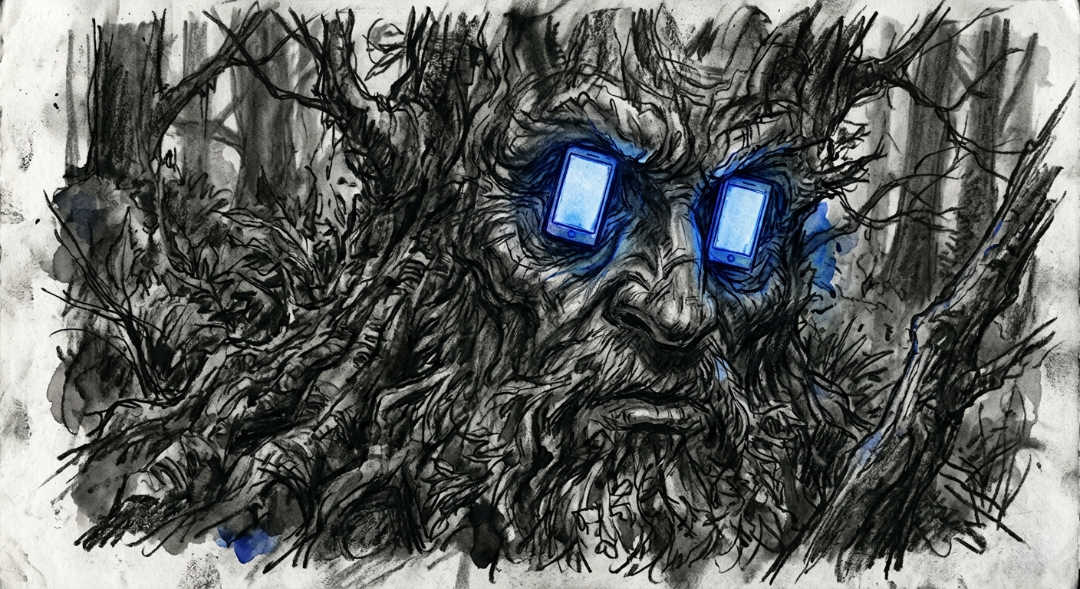
The Roots We Choose, the Burdens We Carry
Belonging, memory, loss, and the difficult work of return
The Roots We Choose, the Burdens We Carry
Belonging, memory, loss, and the difficult work of return
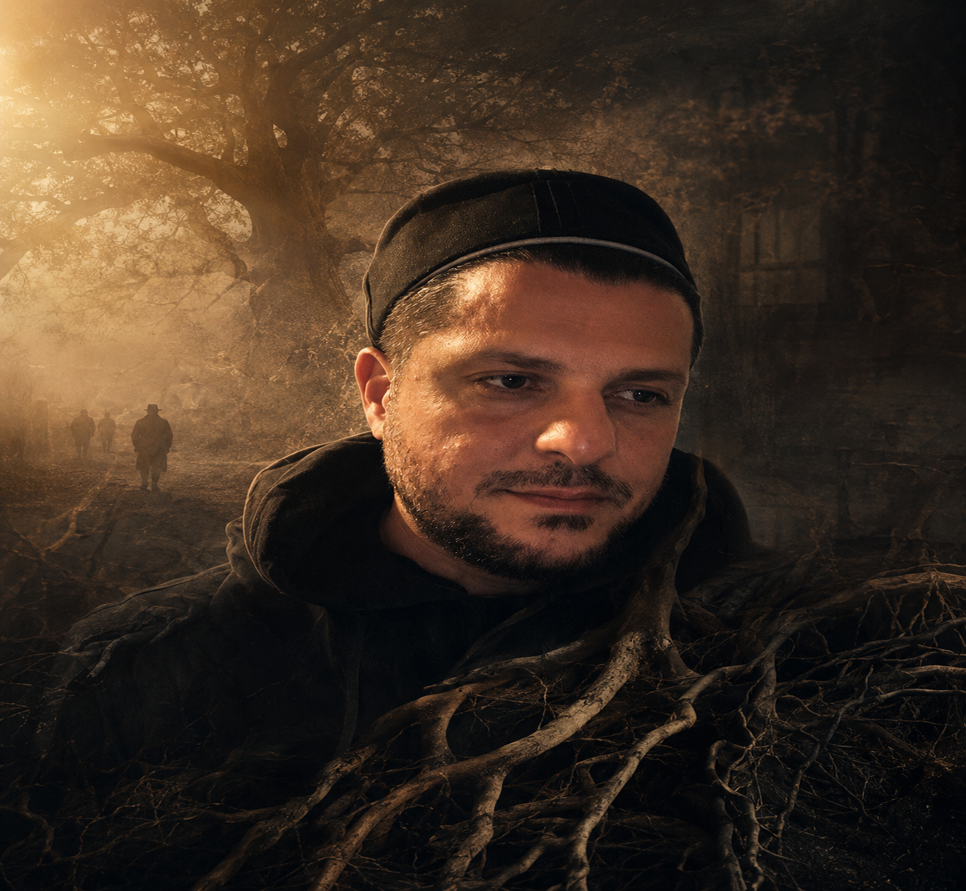
What the world could not break, the past could not bury. Beneath the weight of loss, the roots went deeper, and life began again. (Photo illustration by the Author)
The first home we lose is not always a house. Sometimes it is the belief that certain people, relationships, and certainties will remain available to us simply because they once were.
While that belief holds, belonging feels almost effortless. We do not examine it because it appears to exist beneath ordinary life, as dependable as the ground beneath our feet. A familiar voice answers the telephone. A place at the table is understood. Our name carries meaning within a family, a neighborhood, or a community. The people who witnessed our beginnings seem likely to continue recognizing us, even as we change.
Then life unsettles the arrangement.
A marriage ends. A parent dies. A friendship becomes unrecognizable. A country once experienced through streets, weather, food, and daily speech begins to exist mainly in memory. Sometimes no one leaves, yet the relationship itself disappears. Two people continue sharing a room while inhabiting separate emotional worlds. A believer continues to pray but can no longer recover the confidence that once made prayer feel natural. Someone builds the life he worked toward and discovers that achievement has not answered the question that drove him toward it.
Only then does belonging become visible as a problem.
Where do we stand when the people, places, and roles that once defined us can no longer bear the full weight of our identity? What does it mean to have roots when permanence has proved impossible?
These questions are not confined to migrants, mourners, or those whose families have fractured. They arise whenever the distance between the life we expected and the life we received becomes too wide to ignore. They concern memory and loyalty, but also grief, faith, responsibility, and the difficult task of deciding what from the past should be preserved and what should no longer govern us.
The language of roots can help us think about these matters, but only if we resist turning it into sentiment. Roots do more than attach a living thing to its place of origin. They draw nourishment, respond to pressure, and alter their direction when the ground does not yield. They hold a tree in place, but they also make adaptation possible.
Human rootedness involves the same tension. We need continuity, but we also need movement. We need memory, but not every memory deserves authority. We need connection, but connection without truth can become another form of captivity.
To take root again is not necessarily to return to where we began. It may mean learning to stand differently within the life we now have.
Belonging After Permanence
As children, many of us experience home as a fact rather than an achievement. It is the room in which we sleep, the table at which we are fed, and the network of people whose presence requires no explanation. We do not yet understand how much work is involved in creating a place where people can speak honestly without fearing humiliation or abandonment.
A house can be inherited. Belonging cannot.
Belonging develops through recognition, responsibility, and repeated acts of care. It requires affection, but affection alone is not enough. Someone may sincerely love us and still be incapable of treating us safely. A family may possess a long history while refusing to confront the injuries carried through that history. A community may speak eloquently about unity while making little room for complexity, doubt, disagreement, or change.
To belong, therefore, is not merely to be included. It is to inhabit a relationship in which one’s presence carries moral significance. The people involved become answerable for how they speak, what they protect, and what they permit. This does not eliminate conflict. It creates conditions in which conflict need not become degradation.
Many people are not searching for constant reassurance. They are searching for a place where truth does not automatically threaten attachment. They want to admit fear without being treated as weak, acknowledge failure without being reduced to it, and express disagreement without losing their standing in the relationship.
Such a place may exist within one’s family of origin, but blood does not guarantee it. It may also emerge among friends, teachers, neighbors, colleagues, caregivers, or members of a religious community. The decisive question is not simply who is related to us, but who has learned to practice fidelity. Who tells the truth without cruelty? Who protects our dignity in our absence? Who remains attentive when our lives cease to be convenient?
Chosen family is sometimes described as a substitute for the family one has lost. That description is too narrow. Chosen kinship can become a distinct moral relationship, formed through obligations that were not imposed by ancestry but accepted through love, loyalty, and trust.
Its dignity lies not in freedom from responsibility, but in responsibility freely assumed.
To communicate through conduct, “I was not required to care for you, but I have accepted care as part of my life,” is not a lesser form of commitment. In some circumstances, it is among the clearest expressions of human loyalty.
What We Inherit
Ancestry enters us through language, gesture, memory, expectation, and silence. We carry family histories even when we know little about them. A parent’s fear may shape a child’s decisions long after the conditions that produced the fear have disappeared. Migration, poverty, social exclusion, war, or unresolved conflict can influence descendants who did not experience the original event directly.
This inheritance is neither entirely oppressive nor entirely sustaining. Families transmit tenderness as well as injury. They pass down humor, hospitality, faith, resilience, recipes, stories, and ways of caring for the vulnerable. They may also pass down shame, secrecy, contempt, and rigid ideas about who is entitled to speak.
Maturity requires more than loyalty to inheritance. It requires discernment.
We do not honor our origins by condemning everything that came before us. Nor do we honor them by shielding every inherited practice from examination. A responsible relationship with the past asks which elements sustain life, which require reinterpretation, and which must end with us.
This becomes especially difficult when harmful behavior has been defended as duty, culture, or religion. Leaving such a pattern can feel like betrayal, even when departure is necessary for safety or moral integrity. A person may understand that a boundary is justified while continuing to feel guilty for establishing it.
A mature account of belonging must therefore make room for limits. Otherwise, the language of family can become a demand that injured people continue absorbing harm for the comfort of the group.
The distinction between forgiveness and reconciliation matters here. Forgiveness, where it becomes possible, does not require the denial of harm, the restoration of access, or renewed vulnerability to someone who remains unsafe. Reconciliation asks for more. It requires truth, responsibility, and sufficient change to make renewed relationship morally credible.
Where those conditions do not exist, distance may remain necessary.
Yet departure should not be confused with complete freedom. We can leave a house and continue arguing with its voices. We can end a relationship while organizing our lives around the judgment of the person we left. We can reject an inherited standard yet spend decades proving ourselves to it.
The past does not need physical proximity to exercise authority. It acts through expectation, fear, repetition, and the kinds of relationships we later consider normal. It appears in the tenderness we distrust, the approval we pursue, and the happiness we interrupt because stability feels unfamiliar.
Freedom begins when the past becomes intelligible without remaining sovereign.
The Hidden Architecture of a Life
The visible structure of a tree depends upon work that takes place beyond ordinary sight. Roots do not attract attention in the way blossoms and fruit do, yet they make both possible. They hold, receive, and adapt. When they encounter resistance, they do not always force a direct path. They may deepen, divide, or move around what cannot be penetrated.
The metaphor is useful because contemporary life often rewards the visible branches of identity while neglecting their support. Credentials, productivity, professional standing, appearance, possessions, and public recognition can all have legitimate value. None of them, however, can answer the most difficult questions on our behalf.
A title cannot mourn for us. Reputation cannot reconcile us to mortality. Achievement provides little guidance when a relationship collapses or when the person reflected in the mirror no longer resembles the self we intended to become.
At such moments, the concealed structure of a life becomes evident. We discover what we trust, whom we can call, what we believe suffering means, and whether our identity can survive the loss of a role.
This is one reason the inward life occupies an important place in Sufi thought. Sufism is not a single school, method, or temperament. It encompasses varied lineages, intellectual traditions, devotional disciplines, and bodies of literature. Yet many Sufi writers share a concern with the condition of the heart, understood not simply as the location of emotion but as a center of moral and spiritual perception.
Within this tradition, the heart may become distracted, divided, hardened, or forgetful. It may also be reoriented through remembrance, repentance, worship, ethical discipline, self-examination, and divine grace.
This possibility of reorientation is central to any serious account of return.
We do not return by pretending that no rupture occurred. Nor do we return by recovering an earlier innocence. We return by allowing what has happened to become part of our knowledge without permitting it to dictate every future relationship.
Return is not erasure. It is a change in direction.
When the Present Awakens the Past
Grief seldom remains confined to the event that first brought it into view. A current loss can disturb earlier losses that were never fully understood. A song, an empty chair, a familiar expression, or the absence of an expected message can connect the present to a much older history of separation.
The intensity of such moments may confuse us. We may believe we are reacting disproportionately when several layers of memory have converged. We are not only grieving the person who has just left. We may also be grieving the parent who was emotionally absent, the home that never felt secure, the friendship we could not save, or the younger self who learned to expect departure.
This does not mean every present emotion should be explained through childhood. Nor does it justify turning ordinary sorrow into diagnosis. It does suggest that grief has a history. What appears to be one wound may be the place where several unfinished experiences have become audible.
Some people respond to this history by keeping themselves ready to leave. They participate in relationships while withholding the part of themselves that would make loss unbearable. Their independence may be real, but it may also function as protection against dependence. They learn to leave emotionally before anyone can leave them physically.
Such a strategy may preserve dignity during unstable periods. Over time, however, caution can harden into isolation. The person becomes skilled at departure but inexperienced in staying. Safety becomes confused with distance, and freedom begins to mean disappearing before disappointment arrives.
These patterns deserve compassion. What looks like indifference from the outside may once have been a necessary form of survival. Yet survival strategies do not always recognize when their work has ended. A habit that protected us in one period may prevent intimacy in another.
For someone who associates attachment with danger, “I am staying” may demand more courage than “I love you.”
Love can be felt in a moment. Staying requires the slower work of tolerating uncertainty, communicating through disappointment, and learning that conflict does not always announce abandonment.
Staying, however, is not always virtuous. There are relationships from which departure is necessary. Endurance becomes destructive when it is used to excuse abuse, degradation, or a persistent refusal of responsibility.
The moral task is not to stay at any cost. It is to understand what fidelity, truth, and dignity require in the circumstances before us.
Breaking a Chain Is Only the Beginning
The image of a broken chain is powerful because it suggests decisive liberation. Some departures are decisive. A person escapes abuse, abandons an addiction, rejects a destructive ideology, or refuses to continue a pattern that has harmed several generations.
Yet a chain may leave an imprint after it has been removed.
Someone who was repeatedly humiliated may continue to hear contempt in neutral criticism. A person raised in instability may experience calm as a warning rather than a gift. Someone valued only for usefulness may struggle to believe that love can survive weakness, illness, failure, or reduced productivity.
This does not mean departure was futile. It means freedom has an inward dimension. External change can create the conditions for healing, but it does not complete the work automatically.
Al-Ghazali attends to this interior dimension throughout the Ihya’ ‘Ulum al-Din. Religious practice, in his treatment, cannot be separated from intention, character, self-examination, and the diseases of the heart. His concern is not only whether a person performs the correct outward action, but what desires, fears, and forms of self-deception may be operating beneath it.
A person can acquire religious knowledge while remaining morally unformed. He may speak about humility while seeking admiration, discuss patience while humiliating others, or invoke truth as a disguise for anger and pride. Outward correctness has value, but it does not by itself establish inward integrity.
Ibn ʿAta Allah al-Iskandari, particularly in the Hikam, also unsettles the illusion that spiritual progress can be secured through control. His aphorisms repeatedly expose the ego’s desire to possess outcomes, measure its spiritual status, and transform worship into another form of self-importance.
Dependence upon God, in this framework, is not passive resignation. It is freedom from the fantasy that the self can guarantee its own transformation.
Both writers direct us toward an uncomfortable recognition. Wherever we go, we eventually encounter the tendencies we have not examined. A new city, marriage, career, or religious vocabulary may alter the setting without changing the underlying pattern.
Genuine return therefore demands honesty. It asks not only what happened to us, but what we learned to reproduce. It asks when self-protection became punishment, when discernment became suspicion, and when a justified grievance began to function as an identity.
These questions do not absolve those who caused harm. They restore agency to the person who no longer wishes to be organized by it.
Longing and the Discipline of Return
Rumi’s writing is often reduced to agreeable statements about love, especially when detached from the Islamic and Qur’anic world in which his poetry developed. The Masnavi offers something more demanding. Its stories portray human beings as divided creatures, capable of longing for truth while becoming absorbed in vanity, appetite, resentment, and illusion.
In Rumi’s work, longing does not mean that every desire should be followed. Desire can deceive. Yet longing may reveal that the objects we pursue have been asked to satisfy a need beyond their capacity.
Someone may seek recognition when he is searching for worth, possession when he is searching for security, or constant activity when he is avoiding the silence in which deeper questions arise. Success can therefore coexist with emptiness. The achievement may be genuine, but the hunger has been misidentified.
The soul’s homesickness cannot be settled by accumulation alone.
Yunus Emre approaches the same problem through a language of humility, love, and moral transformation. Across the poems attributed to him, knowledge is repeatedly tested by what it produces in the person who possesses it. Learning that strengthens arrogance without deepening compassion remains incomplete.
This provides a demanding standard for religious life. Faith should not be evaluated only through the fluency with which it is defended. Its credibility is also revealed through conduct.
Does faith make us more trustworthy? Does knowledge make us more teachable? Does worship increase our care with another person’s dignity? Can we confront injustice without becoming intoxicated by self-righteousness? Can we recognize hypocrisy within ourselves before searching for it in everyone else?
These questions do not weaken commitment to truth. They ask whether truth has entered character.
Within Islam, tawbah is usually translated as repentance, but its association with turning or returning reveals an important dimension of the concept. Repentance is not regret alone. It is a redirection of the person toward God after estrangement, disobedience, forgetfulness, or moral failure.
Return does not make the past unreal. It changes the direction in which the past is carried.
This distinction matters because shame often presents itself as moral seriousness while obstructing moral repair. Guilt may identify an action that requires confession, restitution, or change. Shame can go further and declare that the person has become nothing beyond the failure.
The possibility of tawbah refuses that conclusion. A person remains accountable, but accountability is not the same as permanent exclusion. The road back may require difficult acts: abandoning the wrong, repairing what can be repaired, accepting consequences, and resisting the habits that led to the harm.
Mercy does not make this work unnecessary. It makes the work possible without reducing the person to despair.
For the Muslim, returning to Allah is not movement toward a place among places. It is a restoration of orientation. The person ceases to treat the ego, the approval of others, or the injuries of the past as the final authority over life.
One may return after years of neglect, doubt, arrogance, addiction, betrayal, or grief. The sincerity of the return is not measured by whether the person can erase his history. It is revealed through the direction he now takes and the practices through which that direction becomes visible.
The Company That Helps Us Return
Temptation rarely announces itself as destruction. More often, it presents itself as relief.
It offers temporary escape from loneliness, disappointment, restlessness, or the burden of remaining accountable to the person we are trying to become. What begins as a moment of weakness can become a habit, and what becomes habitual can eventually disguise itself as part of our identity.
The world is deceptive not because everything within it is corrupt, but because temporary things can persuade us to treat them as ultimate. A desire promises satisfaction while concealing its consequences. A private indulgence appears harmless because no one else can see it. Repetition dulls the conscience, and familiarity begins to resemble inevitability.
I know something of this struggle.
There are habits a person sincerely wants to leave but returns to when resolve weakens. Each return to the habit can produce shame, and shame can then become the excuse for repeating it. The struggle is not only to resist the act. It is to interrupt the cycle in which failure leads to despair and despair leads back to the same form of escape.
This is one reason companionship matters.
We are shaped not only by our private intentions but by the moral atmosphere in which we live. The people around us influence what appears normal, what becomes desirable, and what we are willing to excuse. Good company does not eliminate temptation, nor can another person repent on our behalf. It can, however, interrupt isolation. It can remind us of commitments we forget when desire narrows our vision.
To accompany people of sincerity is to enter a space where the better self is not treated as an illusion. Such companions do not flatter us, humiliate us, or pretend that struggle has disappeared. They remind us that discipline is possible, that failure need not become identity, and that return must sometimes be practiced repeatedly.
The companionship that helps us return is not built upon surveillance or moral superiority. It depends upon honesty, discretion, and mutual responsibility. A trustworthy companion does not make another person’s weakness into gossip or power. He protects dignity while refusing to make excuses for what harms the soul.
Such companionship also teaches us that habits are rarely broken by willpower alone. They are weakened by changing the conditions that sustain them. We learn to recognize the hours in which resolve falters, the forms of loneliness that make escape attractive, the thoughts that precede the act, and the environments in which restraint becomes more difficult.
Repentance then becomes more than an emotional response after failure. It becomes a reorganization of life.
Perhaps this is part of what it means to remain afloat. We do not survive the current by denying its force. We learn where it pulls, which conditions make us vulnerable, and whose presence helps us remember the shore.
Joy Without Denial
Discussions of spiritual depth often give suffering more attention than joy. The imbalance is understandable. Pain interrupts ordinary life and demands interpretation. Joy may pass quietly enough that we fail to study it.
Yet a person can become so practiced in survival that peace begins to feel dangerous. After prolonged instability, the body and imagination may continue waiting for the next crisis. Laughter produces guilt. Rest feels irresponsible. Happiness is treated as a temporary oversight that should not be trusted.
A serious spiritual life should not reinforce this fear.
Suffering should not be romanticized. Injury does not automatically ennoble the injured, and grief does not guarantee wisdom. A wound may produce compassion, bitterness, confusion, or several of these at once. Whatever wisdom emerges does so through the person’s response to suffering, not through suffering’s mere existence.
Joy also requires a response. It asks whether we can receive something good without trying immediately to possess it, secure it permanently, or mourn its eventual disappearance.
A shared meal, a familiar voice, a quiet morning, or the return of laughter after bereavement does not solve the problem of mortality. It allows us to inhabit life without demanding that life become permanent before we consent to love it.
This may be one of joy’s most difficult lessons. We are asked to cherish what we cannot possess indefinitely.
Sufi traditions have included disciplines of repentance, remembrance, restraint, and self-examination. They have also cultivated poetry, companionship, hospitality, service, beauty, music in some communities, and attention to the created world. Solemnity should not be mistaken for spiritual maturity. A person may speak gravely about God while remaining incapable of gratitude.
Joy can be a form of courage because it relinquishes the demand for guarantees. To love again after loss is not to forget what departure costs. It is to refuse the conclusion that vulnerability has become meaningless.
To experience joy after bereavement is not to betray the one who died. To laugh after heartbreak is not to declare that the relationship meant nothing. Grief does not become more faithful by making the living emotionally unavailable.
We Do Not Root Ourselves Alone
Modern accounts of strength often identify it with self-sufficiency. The strong person is imagined as someone who requires little, bears pain privately, and recovers without burdening others. This ideal may appear dignified, but it misunderstands the relational structure of human life.
No person becomes himself alone. Language is received from others. Identity takes shape through recognition, resistance, affection, and conflict. Knowledge depends upon teachers, communities, and inherited forms of inquiry. Even solitude has meaning partly because it differs from companionship.
The forest is useful here not because nature provides a simple moral lesson, but because it makes interdependence visible. Living systems depend upon exchanges that no single organism creates by itself. Human dependence is more ethically complex, but no less real.
Needing others does not require surrendering judgment or boundaries. Nor does community eliminate the need for solitude. Mature belonging allows for intimacy and distinction. It permits a person to receive care without becoming possessed by the caregiver, and to offer care without making another person’s dependence a source of power.
There are periods when the strongest sentence available to us may be, “Sit with me.” Its strength lies in the refusal to turn pain into performance or isolation.
The most loving answer may not contain advice. It may simply communicate that the suffering person does not have to become fully comprehensible before receiving companionship.
Home as an Ethical Practice
I no longer think of home as one place, person, or memory.
Home can be a country, a language, a family, a congregation, a classroom, a hospital corridor, a kitchen, or a friendship. It may also be the first relationship in which a person is permitted to tell the truth without being punished for disturbing the preferred story.
What unites these forms of home is not comfort alone. A home worthy of the name must be ethically inhabitable. It should not require the concealment of one’s humanity as the price of acceptance.
Such a home is built through ordinary practices. People keep confidences, acknowledge injuries, restrain contempt, and apologize without using apology as a demand for immediate absolution. They allow one another to change without pretending that every change is harmless. They learn when to speak, when to listen, and when a boundary must replace another attempt at explanation.
This work is rarely dramatic. It consists of repeated choices whose significance becomes visible over time.
For the believer, these human homes remain important but provisional. No relationship can bear the entire weight of ultimate meaning. To ask a spouse, child, teacher, community, or religious leader to become the source of final security is to burden a finite person with an impossible role.
The deepest Islamic return is to Allah. This return does not diminish human love. It frees human relationships from the demand to become absolute. We can love people intensely while recognizing that they are mortal, fallible, and unable to complete us.
Readers who do not share this theological commitment may still recognize the underlying inquiry. What occupies the highest place in one’s life? Which loyalties shape one’s character? What remains when status and possession are removed? Do our deepest commitments make us more truthful, responsible, and humane, or do they provide sophisticated ways of avoiding ourselves?
The answer is not found in what we claim to value alone. It appears in the lives our values produce.
Returning Without Becoming Who We Were
Return is sometimes imagined as restoration to an earlier condition. We want the faith we possessed before doubt, the family before conflict, the body before illness, or the self before grief altered its understanding of the world.
Most significant returns do not work that way.
We do not return to innocence. We return with knowledge.
The person who has survived betrayal may never love with the untested ease of youth. That need not make later love inferior. It may become more deliberate, less possessive, and more honest about risk. The believer who has passed through doubt may not recover an earlier emotional certainty, yet faith may acquire greater depth because it is no longer sustained by imitation alone.
A scar is not proof that suffering was beneficial. It is evidence that the body or psyche attempted repair. It may still ache, alter movement, and require care long after the wound has closed.
The goal is not to celebrate the scar or erase it. The goal is to prevent it from becoming the sole interpreter of experience.
Rootedness does not mean never leaving. It means learning what deserves to be carried, what must be mourned, and what should end with us. It means receiving inheritance without becoming imprisoned by it. It means allowing memory to speak without granting it unquestioned authority.
Some roots are given to us through blood, language, place, and history. Others develop through conscious commitment: mercy practiced when contempt would be easier, courage exercised without spectacle, service offered without ownership, remembrance restored after distraction, and love disciplined by truth.
We cannot guarantee that the people we love will stay. We cannot prevent every home from changing or every community from disappointing us. Even the identities through which we understand ourselves will be altered by time.
Impermanence does not make love irrational. It makes attentiveness necessary.
We should speak before silence hardens into estrangement. We should repair what can be repaired and leave what has become destructive. We should protect the vulnerable without confusing protection with control. We should listen while the people we love are still willing to tell us who they are. Tenderness should not be postponed as though time had entered into a private agreement with us.
When the past returns, we need not submit to it or flee immediately. We can ask what it reveals about the life we are living now. We can recognize the old chain without placing it again around the wrist.
For some, return means learning to inhabit the self without contempt. For others, it means entering community after isolation, accepting love after loss, or making peace with a history that cannot be changed.
For some of us, every lesser return eventually leads toward the return to Allah.
We do not return as perfected people. We return with divided motives, unfinished repentance, damaged relationships, memories that still trouble us, and prayers whose meaning we are only beginning to understand. The door is not approached by those who have made themselves flawless. It is approached by those who have stopped mistaking distance for permanent exclusion.
The heart does not become whole by forgetting where it was broken. It becomes habitable when the wound is no longer the only authority within it.
That may be what it means to take root again: not to recover the life we had before the storm, but to become capable of receiving life after it.
Sources and Further Reading
This essay is a work of personal and spiritual reflection rather than formal Qur’anic exegesis, historical scholarship, or clinical analysis. Its treatment of belonging, grief, the condition of the heart, repentance, companionship, habit, and moral transformation has been informed by the following primary texts in translation and secondary studies.
The Qur’an. Translated by M. A. S. Abdel Haleem. Oxford University Press, 2004. Passages especially relevant to this essay include 9:119 and 18:28 on companionship; 13:28 on remembrance and the tranquility of the heart; 31:33 and 57:20 on the deceptive character of worldly life; 39:53 on hope in divine mercy; and 66:8 on sincere repentance.
Abu Dawud, Sulayman ibn al-Ashʿath. Sunan Abi Dawud, no. 4833. See also al-Tirmidhi, Jamiʿ al-Tirmidhi, no. 2378. The report concerning the influence of close friendship directly informs the essay’s discussion of moral companionship and the company that helps a person return.
Al-Ghazali, Abu Hamid. The Marvels of the Heart: Book 21 of the Ihya’ ‘Ulum al-Din, The Revival of the Religious Sciences. Translated with an introduction and notes by Walter James Skellie. Foreword by T. J. Winter. Fons Vitae, 2010. Al-Ghazali’s examination of intention, self-deception, moral character, and the spiritual condition of the heart informs the essay’s account of inward change.
Ibn ʿAta Allah al-Iskandari. The Book of Wisdom. Translated, introduced, and annotated by Victor Danner. In Ibn ʿAta Illah/Kwaja Abdullah Ansari: The Book of Wisdom and Intimate Conversations. Paulist Press, 1978. Ibn ʿAta Allah’s aphorisms illuminate the essay’s treatment of surrender, dependence upon God, spiritual self-knowledge, and freedom from the illusion of control.
Rumi, Jalal al-Din. The Masnavi, Book One. Translated by Jawid Mojaddedi. Oxford University Press, 2004. Rumi’s treatment of longing, appetite, separation, self-deception, and spiritual return informs the essay’s discussion of desires that promise more than they can provide.
Yunus Emre. The Drop That Became the Sea: Lyric Poems of Yunus Emre. Translated by Kabir Helminski and Refik Algan. Shambhala, 1999. Yunus Emre’s poetry offers a language of humility, self-knowledge, love, and moral transformation rooted in the Turkish Sufi tradition.
Boss, Pauline. Ambiguous Loss: Learning to Live with Unresolved Grief. Harvard University Press, 2000. Boss’s work provides a useful framework for understanding losses that resist ordinary closure, including relationships in which a person remains physically present but has become psychologically or emotionally inaccessible.
Knysh, Alexander. Sufism: A New History of Islamic Mysticism. Princeton University Press, 2017. Knysh provides a historically grounded account of Sufism as a diverse devotional, intellectual, literary, and institutional tradition within Islam.
Wood, Wendy. Good Habits, Bad Habits: The Science of Making Positive Changes That Stick. Farrar, Straus and Giroux, 2019. Wood’s research clarifies why harmful habits are rarely changed through intention or willpower alone. Repetition, environmental cues, available rewards, friction, and social context also influence conduct.
© 2026 Dr. Bekim Belica. All rights reserved.
메타데이터
- post_id
- 082fb5215db6
- slug
- the-roots-we-choose-the-burdens-we-carry-082fb5215db6
- url
- https://medium.com/illumination-philosophy-and-metaphysics/the-roots-we-choose-the-burdens-we-carry-082fb5215db6
- canonical_url
- https://medium.com/illumination-philosophy-and-metaphysics/the-roots-we-choose-the-burdens-we-carry-082fb5215db6
- author_url
- https://medium.com/@drbekimbelica
- status
- ok
- fetched_at
- 2026-07-10 10:20:21