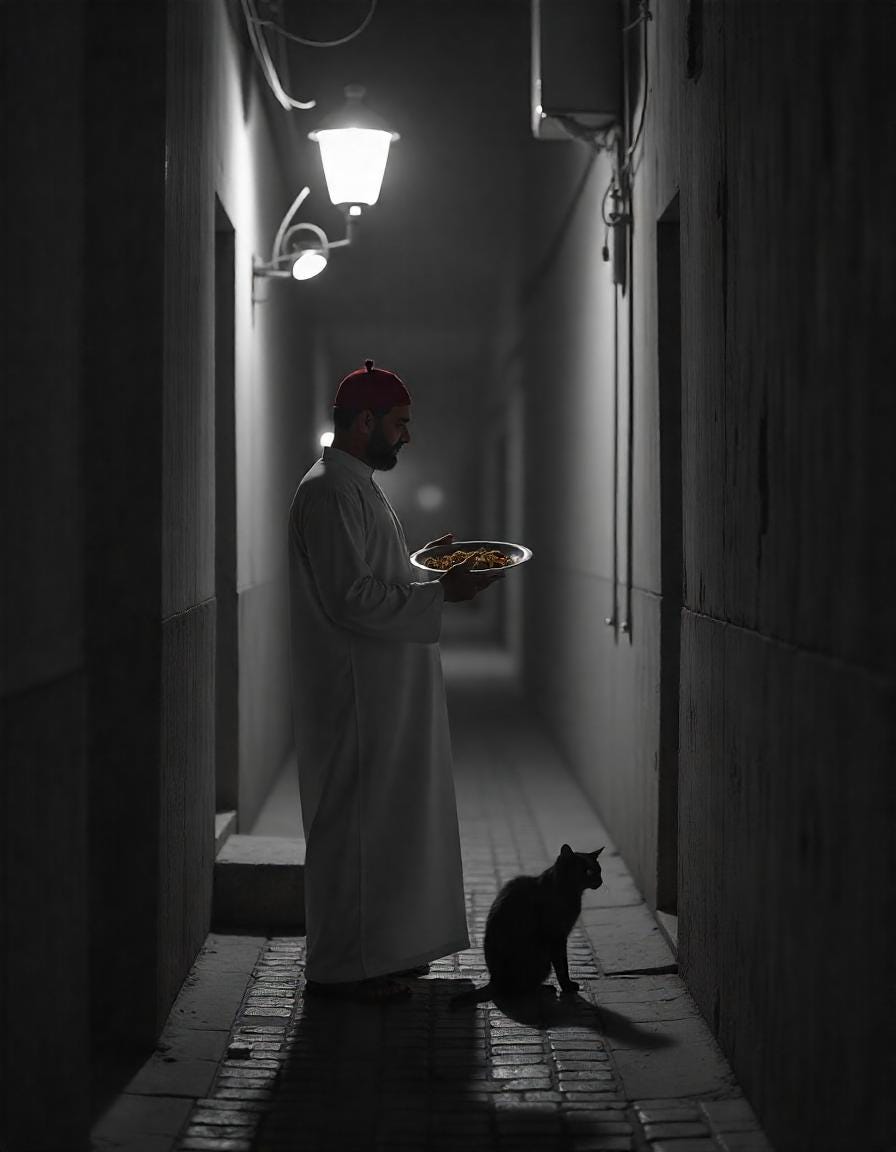
The Solitary Path: Why the “Chosen Ones” Are Always Alone in a Hyper-Connected World
In the age of 24/7 group chats, infinite scrolling, and “we’re all in this together” corporate slogans, a strange paradox has emerged. Some…
The Solitary Path: Why the “Chosen Ones” Are Always Alone in a Hyper-Connected World
In the age of 24/7 group chats, infinite scrolling, and “we’re all in this together” corporate slogans, a strange paradox has emerged. Some people — quietly, relentlessly — feel profoundly alone. Not in the casual “I need a weekend off” way, but in the bone-deep, existential sense that no one truly sees them. These are the modern “chosen ones”: the old souls, the neurodivergent visionaries, the highly sensitive intuitives, the relentless truth-seekers who seem wired for a frequency the rest of the world isn’t broadcasting on yet.
The internet has turned the ancient archetype into a viral aesthetic. TikTok is flooded with edits set to ethereal music: “If you’re reading this, you’re a chosen one… that’s why you’re always alone.” But beneath the soft lighting and angel numbers lies a brutally real psychological, neurological, and sociological truth. Chosen ones aren’t alone because the universe is punishing them. They’re alone because they were built for a different operating system — one that most people simply don’t run.
Here’s why, explained without the crystal-ball mysticism.
- Their Minds Process Reality on a Different Operating System
Chosen ones tend to score high on measures of cognitive complexity, pattern recognition, and emotional depth. Neuropsychologically, this often overlaps with traits seen in gifted adults, ADHDers, and those on the autistic spectrum — not as clinical labels, but as indicators of a brain that makes 10,000 connections while others make 100.
They don’t do small talk because their default mode network (the brain system active during introspection) is perpetually lit up. While everyone else is discussing the weather or office politics, the chosen one is mentally mapping systemic collapse, ancestral trauma patterns, and the ethical implications of AI sentience. That mismatch creates instant social friction.
Research from the Journal of Intelligence and longitudinal studies on gifted populations (like the Terman Study follow-ups) consistently shows that individuals with IQs above 130 or exceptional creative output report significantly higher rates of social isolation. It’s not arrogance. It’s loneliness by design: their minds are running software that hasn’t been widely adopted yet.
- They See the Matrix — and Once You See It, You Can’t Unsee It
Chosen ones experience what psychologists call “ontological shock” — the sudden realization that the dominant narrative (hustle culture, consumerism, performative positivity) is paper-thin. Whether it hits through a psychedelic experience, a near-death moment, a brutal betrayal, or a quiet spiritual awakening in 2023, the veil drops and never fully returns.
They start noticing the subtle manipulations: the dopamine loops in social media, the trauma-bonded relationships normalized as “loyalty,” the way society rewards numbness over sensitivity. Once you’re awake to these patterns, surface-level friendships feel like trying to have a deep conversation while wearing noise-canceling headphones. You become allergic to inauthenticity.
This is why chosen ones often lose entire friend groups during their “dark night of the soul” phase. The old crew isn’t bad people — they’re just still comfortably inside the simulation. The chosen one’s presence becomes an uncomfortable mirror, and mirrors get avoided.
- Their Energy Is a Magnet for Energy Vampires (Until They Learn the Force Field)
Highly sensitive people (HSPs) make up about 15–20% of the population according to Dr. Elaine Aron’s research, and many chosen ones fall into this category. They absorb emotional data the way others breathe air. This makes them incredible listeners, healers, and creatives — but it also turns them into walking Wi-Fi routers for everyone else’s unresolved baggage.
Toxic people, narcissists, and emotional vampires can sense this capacity from a mile away. They swarm. The chosen one gives and gives until their nervous system is fried, then finally installs boundaries. The moment those boundaries go up, the swarm moves on to easier targets. Suddenly the phone stops ringing. The invites dry up.
What looks like rejection is actually energetic hygiene. The chosen one has graduated from being everyone’s therapist to becoming their own.
- Their Life Path Requires Solitude as Fuel
Every hero’s journey — from ancient myths to modern biographies — has the same chapter: the hero leaves the village. Luke Skywalker in the desert. Steve Jobs in his wandering years. Malala Yousafzai in exile. The mission demands distance.
Chosen ones carry an internal compass that points toward creation, service, or disruption at a scale most people never consider. That compass is noisy. It requires long stretches of uninterrupted signal — walks at 2 a.m., silent writing retreats, solo travel, hours in the gym with only their thoughts. Relationships that demand constant availability become anchors instead of wings.
Modern productivity culture romanticizes the “hustle with your squad,” but the data tells a different story. Studies on creative geniuses (Csikszentmihalyi’s Flow research, Kaufman’s work on creativity) show that breakthrough work almost always happens in deep solitude. The chosen one’s aloneness isn’t a bug; it’s the feature that lets them download the next-level ideas the collective needs.
- They’ve Outgrown the Old Version of Themselves — and Most People Haven’t
Chosen ones undergo rapid identity evolution. What felt true at 25 feels like a costume by 32. They shed beliefs, careers, cities, and romantic partners like snakeskin. Meanwhile, the majority of people stay in the same psychological zip code their entire lives.
This creates a widening gap. The chosen one can’t go back to performative holiday dinners, surface-level dating apps, or friendships built on shared trauma. They want soul contracts, not small talk. They want co-creation, not codependency. And the world isn’t handing those out at scale yet.
The result? A refined circle of maybe three to five people who actually match their frequency. Everyone else becomes a memory.
The Hidden Gift No One Talks About on Social Media
Here’s the plot twist the algorithm won’t show you: this loneliness is protective, preparatory, and profoundly generative.
Solitude is where chosen ones meet themselves without distortion. It’s where they integrate childhood wounds, download original ideas, and build unshakeable internal validation. In a world addicted to external approval, the ability to sit alone in a room and not need to be seen is a superpower.
History’s chosen ones weren’t popular in their own time. They were weird, intense, “too much.” Jesus had twelve, then three, then one. Tesla died alone with pigeons. Virginia Woolf needed long solitary walks. The pattern repeats because the role requires it.
The modern chosen one isn’t broken. They’re in beta testing for the next version of human consciousness — one that values depth over likes, truth over comfort, and legacy over temporary belonging.
How to Stop Fighting the Solitude (and Start Weaponizing It)
If this article is hitting you in the chest, here’s the practical part:
- Stop pathologizing your loneliness. It’s not depression; it’s differentiation.
- Curate your environment ruthlessly — digital and physical. Low-vibe inputs create low-vibe outputs.
- Turn the solitude into a laboratory: journal, create, meditate, build. The ideas that come in the quiet are your actual assignment.
- Seek your tribe, but don’t chase it. The right people recognize each other instantly and without effort.
- Reframe: You weren’t left behind. You were sent ahead.
The chosen ones are alone right now because the rest of humanity is still catching up. They’re the early adopters of a more conscious, more integrated, less performative way of being. Their loneliness isn’t a curse.
It’s confirmation that the upgrade is working.
메타데이터
- post_id
- 0889955b4e26
- slug
- the-solitary-path-why-the-chosen-ones-are-always-alone-in-a-hyper-connected-world-0889955b4e26
- url
- https://medium.com/@iram.ahmed1997/the-solitary-path-why-the-chosen-ones-are-always-alone-in-a-hyper-connected-world-0889955b4e26
- canonical_url
- https://medium.com/@iram.ahmed1997/the-solitary-path-why-the-chosen-ones-are-always-alone-in-a-hyper-connected-world-0889955b4e26
- author_url
- https://medium.com/@iram.ahmed1997
- status
- ok
- fetched_at
- 2026-06-24 04:09:36