Exploring transitions with neighbourhood associations
Reflections from a workshop in Helsinki
Exploring transitions with neighbourhood associations
Reflections from a workshop in Helsinki
Written by Radhika Motani

Idea cards and experiments at the workshop
Background and purpose
The first phase of the Scaling transition-inspired approaches with neighbourhood associations in Finland project (see the previous blog) explored how neighbourhood associations in Helsinki and Espoo currently contribute to nature and sustainability efforts, and how their work can be strengthened to address current and future climate-related challenges.
The second phase of the project focused on bringing neighbourhood associations together to share and reflect on these findings, learn from transition-inspired approaches, discuss current gaps and opportunities, and collaboratively explore ideas for neighbourhood experiments.
The workshop aimed to
- introduce the transition streets/transition movement approach
- create opportunities for peer learning between associations
- identify neighbourhood strengths, activities and opportunities for future action
- generate small, practical ideas that associations could experiment with locally.
Workshop Approach
A key principle of the workshop was to begin with existing strengths rather than problems. Rather than beginning with problems, we first recognised the activities already taking place across neighbourhoods. This approach enabled participants to identify opportunities for collaboration and build on existing initiatives rather than starting from scratch.
The workshop brought together representatives from four neighbourhood associations across Helsinki, including one participant who was also from the City of Helsinki. Information about the project and workshop was shared through multiple channels, including HELKA (the umbrella organisation for Helsinki neighbourhood associations) and Jalotus (the Finnish hub for the Transition movement and sustainable living). The workshop was facilitated by two organisers.
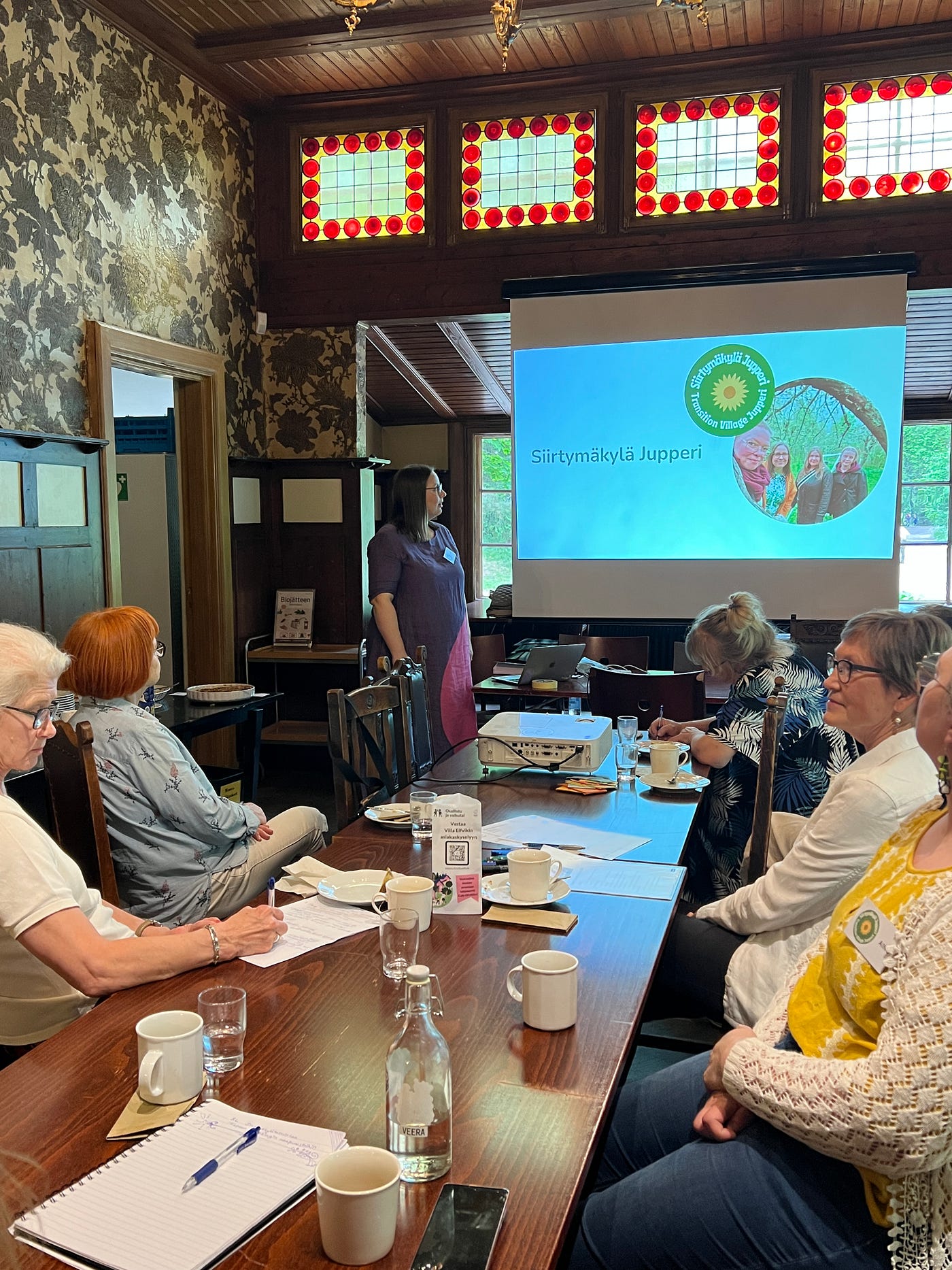
The workshop began with a presentation of the findings from the research phase of the project (see the previous blog), followed by presentations on the case study of Jalotus and ***Roihuvuori seura***. Participants then worked in small groups, first mapping the sustainability and nature-related activities already taking place in their neighbourhoods before identifying opportunities where community engagement could be strengthened.
We introduced inspiration cards featuring examples of transition initiatives and local sustainability activities to support the ideation process. Participants used these as prompts for discussion before developing small-scale experiment ideas relevant to their own neighbourhoods. The activities were designed to encourage participants to learn from one another, collectively identify opportunities, and develop practical ideas that could be tested and adapted within their own local contexts.

Drafting experiments at the workshop
Workshop ideas and outcomes
1. Existing neighbourhood activities and strengths
Participants identified a range of activities already taking place in their neighbourhoods, at varying capacities and scales. We clustered them around four broad themes:
- Repair and circular economy: Repair cafés, bicycle repair spaces and initiatives that encourage reuse, repair and sharing of resources. Participants also discussed opportunities to make these activities more accessible through free workshops and shared community spaces.
- Learning and skills: Workshops, citizen science initiatives and opportunities to develop practical skills and exchange knowledge. Examples included residents collecting biodiversity data, as well as activities that help people develop everyday repair and sustainability skills.
- Nature connection and stewardship: Guided nature walks, local biodiversity monitoring and creative initiatives that encourage residents to engage with and care for their local environment. Participants shared examples such as Meadow Watch, where residents monitor the management of a local meadow, local nature photographers sharing biodiversity through social media and community exhibitions, and even a symbolic community gathering where residents placed candles around trees to raise awareness of flying squirrels affected by planned tree removals.
- Community building and local identity: Activities that bring neighbours together through shared learning, volunteering and participation. One example was a guided neighbourhood street walk, where residents explored the history and nature of their own street before gathering informally for coffee in a nearby green space. Another participant described using a bunny mascot at local events to engage children and families in conversations about local nature.
Across these discussions, participants highlighted that many existing initiatives already contribute to both environmental sustainability and stronger neighbourhood connections, even if they are not always articulated and framed as sustainability activities.
Several participants also described local nature not only as something to protect, but as an important community space that enables neighbourhood life.
As one participant explained: “We don’t have a space for our activities, but the local nature is the place for our functions.”

Browsing idea cards at the workshop
2. Opportunities and challenges
The discussions centred around themes such as:
- Community participation: Increasing long-term commitment from volunteers, encouraging broader participation, and engaging young people in neighbourhood activities.
- Sharing resources: Developing neighbourhood systems for sharing tools, equipment and other resources to make sustainable practices easier and more accessible.
- Coordination and visibility: Improving communication between organisations, creating shared databases or platforms, and making existing activities easier for residents to discover and navigate.
- Skills and knowledge: Creating more opportunities for people to learn practical sustainability skills, particularly around repair, maintenance and community gardening. Participants discussed that many residents are interested in activities such as community growing but often lack practical guidance on how to get started, suggesting a need for simple resources and opportunities for neighbours to learn from one another.
Overall, participants felt that neighbourhoods already have many good ideas and motivated residents. The main barriers were less about generating new initiatives and more about coordination, limited resources, sustaining volunteer participation, and making existing activities, knowledge and resources more visible and accessible. Participants also reflected on the challenge of engaging different groups within neighbourhoods.
As one participant observed: “Children are receptive and enthusiastic. We don’t see many young adults in our activities, though they are socially conscious and could potentially be engaged through these topics. However, they are busy. Families with children are overstretched.”

Workshop at Roihuvuori seura
3. Small Experiments
To support discussions and ideation, we shared a set of idea cards featuring examples of transition initiatives and neighbourhood sustainability projects before developing their own small-scale experiments. We encouraged participants throughout the exercise to develop small, achievable experiments that could be built on existing community resources, tested locally, adapted over time, and supported through collaboration between residents, neighbourhood associations and other local actors.
The proposed experiments included:
- Neighbourhood swap boxes: Small exchange points located in apartment buildings or other shared neighbourhood spaces, such as rubbish collection points, where residents can leave and take useful household items. The aim was to promote reuse, reduce waste, and encourage a culture of sharing among neighbours.
- Community lending centres: Building on the existing lending service operated by the Roihuvuori Association, participants discussed expanding access through a better-organised and user-friendly borrowing system. Residents could also contribute their own tools and equipment, encouraging a stronger culture of sharing while making better use of resources already available in the neighbourhood.
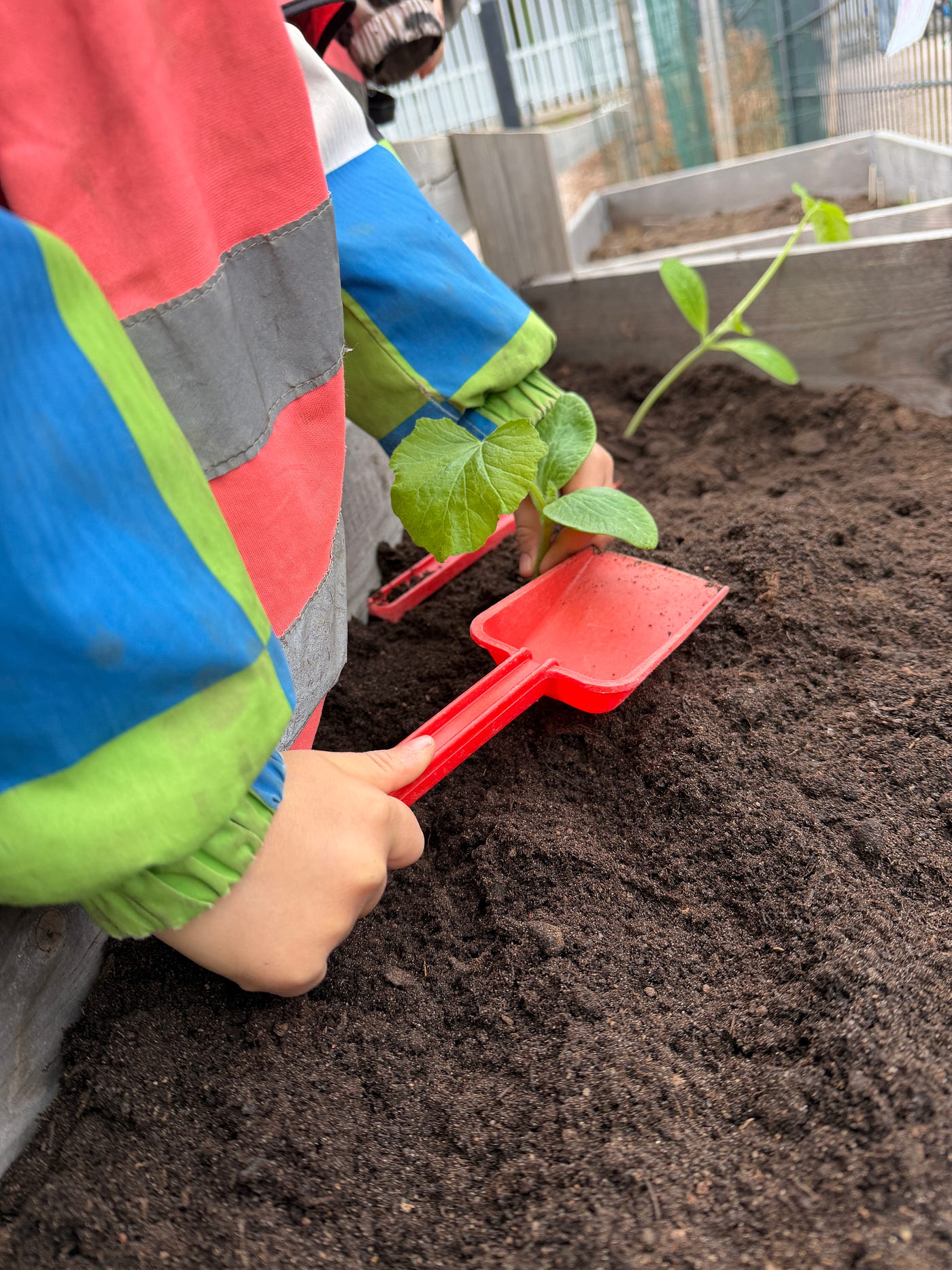
- Small community garden in Pajamäki: A small number of raised planting beds located near the local shopping area, where residents could learn to grow food together, share responsibility for maintenance and celebrate the harvest at the end of the season. Participants shared that practical guidance and support during the initial setup would be essential.
- Biodiversity-friendly housing association yards: Small sections of existing lawns could be transformed into more natural habitats for pollinators and other wildlife. Participants discussed that it would be beneficial to clearly mark these areas and provide information to residents, helping to reframe naturalistic planting as intentional rather than “untidy.” Participants identified that practical guidance on establishing and maintaining these spaces was important.
Reflection and next steps
1. Neighbourhood associations already contribute significantly to sustainability: Many existing activities contribute to sustainability, even if they are not explicitly framed as climate or environmental initiatives.
2. Social sustainability and environmental sustainability are closely connected: Discussions repeatedly highlighted that community relationships, volunteering and inclusion are essential conditions for long-term sustainability work.
3. Learning through small experiments: Participants responded positively to framing ideas as experiments rather than projects. This reduced pressure and encouraged practical thinking. One of the important aspects of the workshop was hearing practical examples from different associations and how they implement them.
As one participant reflected, “Recognising these issues is already a step forward. Changing attitudes and ways of thinking is where sustainability work begins”.
This sentiment captured one of the reflections from the workshop: neighbourhood sustainability is not only about implementing new activities, but also about creating awareness, building confidence and supporting people to take action together.
The ideas generated during the workshop will inform the next phase of the project and contribute to ongoing discussions about how transition-inspired approaches can support neighbourhood associations in strengthening nature, sustainability and community resilience. More broadly, the workshop facilitated a space where different neighbourhood associations could come together and exchange experiences, learn from one another, and discuss practical ideas rooted in their own local contexts.
About the writer
This blog was written by Radhika Motani. The workshop was designed by Radhika Motani, with workshop materials developed together with Maija Tiensuu and Anni Leppänen. The workshop was facilitated by Radhika Motani and Anni Leppänen.
About the project
Scaling transition-inspired approaches with neighbourhood associations in Finland is a project funded by Jalotus, Transition Network and City of Espoo. The project is delivered by Transition Village Jupperi, a resident group for nature and sustainability in a neighbourhood of Jupperi, Espoo and its surrounding areas, as well as a social enterprise Futures mundane.

Project partners: Transition village Jupperi, City of Espoo, Jalotus and Transition Network.
메타데이터
- post_id
- 08994c102bf7
- slug
- exploring-transitions-with-neighbourhood-associations-08994c102bf7
- url
- https://medium.com/siirtym%C3%A4kyl%C3%A4/exploring-transitions-with-neighbourhood-associations-08994c102bf7
- canonical_url
- https://medium.com/siirtym%C3%A4kyl%C3%A4/exploring-transitions-with-neighbourhood-associations-08994c102bf7
- author_url
- https://medium.com/@annileppanen
- status
- ok
- fetched_at
- 2026-07-08 21:20:17