Inside the AI Revolution at the NYSE: How Amazon’s Bedrock is Reshaping Wall Street
The New York Stock Exchange (NYSE) has long been a symbol of American capitalism — a bustling trading floor where fortunes are made and…
Inside the AI Revolution at the NYSE: How Amazon’s Bedrock is Reshaping Wall Street
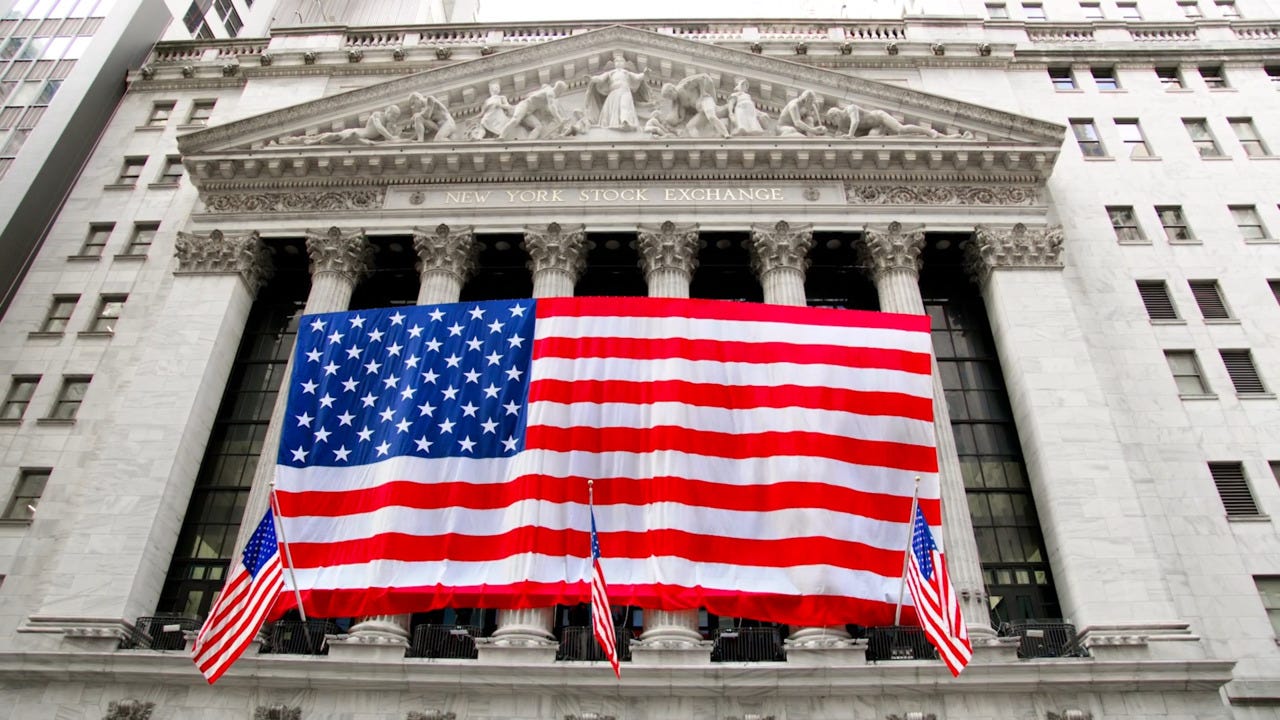
The New York Stock Exchange (NYSE) has long been a symbol of American capitalism — a bustling trading floor where fortunes are made and lost. But beneath the iconic exterior, a transformative shift is underway. The NYSE’s adoption of Amazon Bedrock, a platform built to harness the power of advanced AI models, represents more than a technological upgrade — it’s a profound reinvention of how the financial markets operate in the age of artificial intelligence.
The Core of the Revolution
At the heart of this transformation lies a sophisticated network of foundation models that work in tandem to enhance virtually every aspect of the exchange’s operations. Once dominated by human traders yelling across the floor, the NYSE now leverages AI to process millions of data points per second, identifying patterns and anomalies that no human could detect.
Among the arsenal of AI tools are Claude (developed by Anthropic), Meta’s Llama 2, and Amazon’s own Titan model. Together, these models form an intricate system that powers market surveillance, predictive analytics, and real-time decision-making.
Take market surveillance as an example: what was once a painstaking process requiring days of manual investigation has become instantaneous. AI models now analyze thousands of securities simultaneously, flagging suspicious patterns of market manipulation in milliseconds. “The accuracy and speed are light-years ahead of where we were,” says Sarah Chen, a former NYSE regulatory officer. “AI doesn’t just help regulators — it redefines the very concept of oversight.”
The New Frontier of Trading
The impact of AI is perhaps most visible in trading itself. High-frequency trading, already a dominant force on Wall Street, has reached unprecedented levels of sophistication. Predictive analytics powered by Bedrock allow market makers to anticipate order flows and adjust strategies with surgical precision.
Traditionally, market analysis relied on quarterly reports, earnings calls, and carefully parsed news releases. But Amazon Bedrock enables the NYSE to process real-time sentiment data, pulling insights from sources as diverse as social media, economic trends, and global events. This allows the market to react to signals before they even register on a human trader’s radar. The result? A new paradigm some are calling the “predictive market” — where AI anticipates shifts before they occur.
Overcoming the Challenges
However, this revolution hasn’t been without its challenges. Integrating cutting-edge AI into an infrastructure handling trillions of dollars in daily transactions required meticulous planning. Many of the NYSE’s systems date back decades, and replacing or modernizing them involved a phased, cautious approach. “You can’t just flip a switch,” explains Marcus Rodriguez, a senior systems architect at the NYSE. “Every system had to be tested, audited, and fail-safed to ensure the integrity of the market.”
Regulatory compliance has also been a significant hurdle. Financial markets are among the most heavily regulated industries in the world, and for good reason: they underpin the global economy. AI systems must not only be powerful but also transparent and accountable. Every decision made by the AI must be explainable to regulators — a daunting requirement for machine learning models that are often considered “black boxes.”

Humans in the Loop
Despite fears that AI might replace human traders, the reality is more nuanced. Rather than eliminating the human element, AI has redefined it. “We’re not replacing humans — we’re empowering them,” says Dr. Lisa Patel, head of AI implementation at the NYSE. Human traders now focus on high-level strategy and negotiation, leaving repetitive or computational tasks to AI systems.
Market makers, for example, have adapted by using AI-generated insights to make more informed decisions. Instead of competing against machines, they’ve learned to collaborate with them, leveraging AI’s strengths in data processing while relying on human judgment for complex, nuanced calls. The result is a symbiotic relationship that has made markets more stable and efficient.
A Glimpse Into the Future
The NYSE’s partnership with Amazon Bedrock is only the beginning. The exchange is already exploring advanced applications of AI, such as dynamic market structures and new trading mechanisms that could fundamentally change how securities are bought and sold.
One of the most intriguing developments is the blurring of traditional roles within the market. The lines between trading, market making, and analysis are dissolving as AI systems integrate these functions in ways that were previously unimaginable. This convergence is paving the way for entirely new market architectures.
The Ripple Effect
The changes underway at the NYSE are influencing markets around the world. Other exchanges, from London to Tokyo, are closely watching the NYSE’s experiment, with many already launching their own AI initiatives. The success of the NYSE-Amazon Bedrock partnership has set a new benchmark for what’s possible in financial market infrastructure.
The implications for investors are profound. On one hand, markets are becoming more efficient, with tighter spreads and better price discovery. On the other, the rapid evolution of AI-driven markets introduces new complexities, as traditional investment theories struggle to keep up with the behavior of AI-optimized trading systems.

The Path Forward
As the NYSE continues to push the boundaries of AI in financial markets, one thing is clear: there’s no turning back. The integration of AI into market infrastructure is not a passing trend — it’s a seismic shift that will shape the future of finance for decades.
But the success of this transformation will depend on more than just technological innovation. Regulators, investors, and market participants must work together to adapt to this new reality. Transparency, accountability, and collaboration will be critical as the industry navigates the challenges of this new paradigm.
The NYSE trading floor may still hum with human activity, but its future is increasingly powered by invisible algorithms running on Amazon’s cloud. As one senior executive at the NYSE put it, “We’re not just evolving — we’re rewriting the rules of the financial world.”
The AI revolution at the NYSE is a glimpse into the future of global markets — a future where human ingenuity and machine intelligence combine to create a financial system that’s faster, smarter, and more interconnected than ever before. How that future unfolds will depend on the choices made today. One thing is certain: the NYSE, with Amazon Bedrock at its core, is leading the way.
메타데이터
- post_id
- 089fc76642c0
- slug
- inside-the-ai-revolution-at-the-nyse-how-amazons-bedrock-is-reshaping-wall-street-089fc76642c0
- url
- https://medium.com/@melvinmanchau/inside-the-ai-revolution-at-the-nyse-how-amazons-bedrock-is-reshaping-wall-street-089fc76642c0
- canonical_url
- https://medium.com/@melvinmanchau/inside-the-ai-revolution-at-the-nyse-how-amazons-bedrock-is-reshaping-wall-street-089fc76642c0
- author_url
- https://medium.com/@melvinmanchau
- status
- ok
- fetched_at
- 2026-08-04 16:04:48



