Emotion, Expression, and Creation
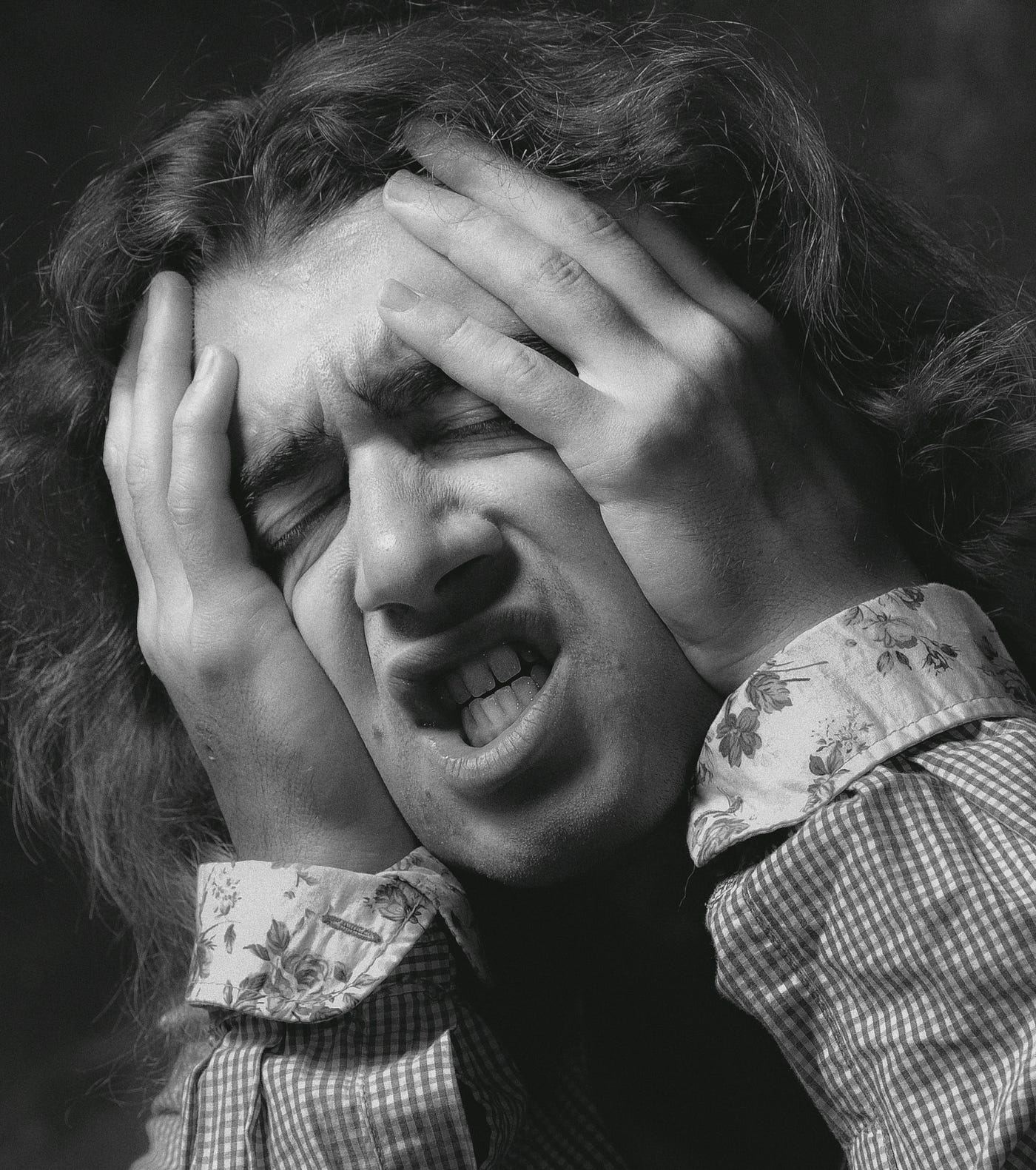
Some emotion drives the artistic effort; some emotion is at the heart of artistic expression
Emotion, Expression, and Creation
Some emotion drives the artistic effort; some emotion is at the heart of artistic expression

Edvard Munch: “The Dead Mother and the Child” (public domain; from https://commons.wikimedia.org/wiki/File:Munch,_The_dead_mother_and_the_child.jpg)
How do your emotions fit into your creative process?
In my previous post on writing groups, one commenter wrote about sobbing while reading her work to an audience, which led me to consideration of the roles emotion plays in the creative process, and how that differs for different writers and other artists.
The commenter writes fiction (and perhaps other stuff, too), and I was thinking that poets, authors of fiction, and memoirists are often working into deep, personal emotional territory. By contrast, as a writer of non-fiction interested in understanding the world, myself, and other people, I generally aim for reason rather than emotion (granting that there is no clean separation between them — see, for example, Antonio Damasio’s Descartes’s Error). But there are powerful emotional factors that drive my creativity, too.
Emotion is a fuel that motivates action, creation, and expression.
Why I write
One major driver of my writing is anxiety.
I write because writing helps me manage and process anxieties.
Writing helps me understand what I’m feeling, and thus regulate my emotions.
Writing also helps me focus on positive emotions, particularly hope, rather than the anxieties and fears that crowd into my mind.
By writing about my hopes, I exercise the positive emotional circuits in my brain.
Because I have maintained a healthy, long-term writing practice with some success, writing gives me hope, even as I battle with severe anxiety about how my writing will be received and other stuff, too.
Having been paralyzed by fear and doubt, as a writer and as a human, I empathize with those who have suffered similarly, and I write to help those people. This adds the hope (conceit?) that I am making some sort of contribution to the betterment of society and humanity.
But anxiety is not the emotional content of my writing. I do frequently write about dealing with the anxieties that strike me and many other writers, but that’s writing to counter anxiety, not to express or evoke it.
Writing to build my brain and cognitive habits
Neurophysiological and cognitive-behavioral perspectives suggest that the things we think about most often are what will come to mind most easily. The more we focus on one set of ideas, the more we build neurological circuits for those ideas.
When I write, I’m trying to shape my entire emotional landscape through my practice, both directly, through the practice of focusing on positive possibilities, and indirectly through the hope that I will help people.
The emotional content of my non-fiction
I want my writing to inspire hope through persuasion rather than expression. By contrast, a poem might attempt to evoke the emotion of hope through use of imagery and appeal to experience.
My emotional palette is much more limited than that of the poet or creative writer, and perhaps that reflects my personal desire to limit the attention I give to the negative emotions.
Expression and processing
Recently, I’m facing some grief over the loss of a long-term home. Change comes, and loss hurts. The question of grief has been much at the forefront of my conscious thought, at least partly in the context of the comment about sobbing while reading. (Aside: sobbing is not exclusively a product of grief; other emotions also cause tears.)
Although I have found comfort in my writing practice, it is not direct engagement with my grief, but rather a tool for setting my grief aside. But grief is, I think, an emotion that needs some direct engagement. I don’t think that we can just always put that grief aside, look at it, acknowledge it, but not let the feelings impact us.
Talking with my cousin this morning, I said “I need to own the grief and feel it, but I can’t let it own me.”
My primary tool for engagement with grief is music. As an amateur musician, playing music written by others, I can follow the emotional paths of their art. On losing my long-term home, I sing Sandy Denny’s “Who Knows Where the Time Goes,” Townes van Zandt’s “To Live is To Fly,” or Jerry Garcia and Robert Hunter’s “Standing on the Moon,” and I’m on the verge of tears because my emotions are akin to those of the songwriters and singers.
A friend of mine who was lead singer for a band said that he could only perform due to “rock and roll possession” and I have certainly been possessed by the emotions of songs that I’m playing.
To me, the physicality of playing music is a dimension of the processing emotion that doesn’t exist in writing. But perhaps it would exist if I were writing emotively expressive material. There is certainly a parallel in the physicality of sobbing, as Rebekah did while reading her work, and the physicality of singing the songs of others, whether or not I weep.
Dealing with grief
I’m not sure that grief is ever resolved fully, though. Do we ever entirely get over the loss of loved ones? Don’t people often continue to feel and mourn the early death of a parent, sibling, or child for decades? Isn’t there even the possibility that long-term grief for a lost loved one can be part of emotional health? (Of course, there is huge variation between individuals, and some expressions and experiences of grief are healthier than others.)
Although we may never fully resolve deep grief, we do have choices about how we behave. People get drunk; they do drugs; they weep and lament; they create art.
The emotively powerful great works of art are a social good: they help each of us deal with the difficulties that are our own. Macbeth’s lament that “Tomorrow, and tomorrow, and tomorrow / Creeps in this petty pace from day to day,” speaks to something many of experience, and reading it or hearing it allows us to feel heard.
Attempting to express such feelings in our own creations allows us a different approach to processing these emotions. Frustration can arise because our work is rarely as good as the work of the masters who inspire us the most. But if we’re practicing our art as a way of approaching our emotions, perhaps we can forgive ourselves if we don’t write as well as Shakespeare. Our poetry may be pathetic, but we can still feel. I remember my step-brother talking about listening to the Allman Brothers Band’s “Whipping Post” while getting his wisdom teeth pulled and my father mocking the lyrics. “Took all my money; wrecked my new car” may not be great poetry, but the emotion is powerful.
Grief and community
At the recommendation of an acquaintance, I have been reading Francis Weller’s Wild Edge of Sorrow which talks about grief through a community-oriented lens, which views grief as an apprenticeship to becoming a community elder. (I am simplifying.)
What I like about the book most is its recognition of the practical aspect of grief: of the lived experience of grief and the activities of grieving. He speaks of “rituals,” a word that makes me uncomfortable for the religious and spiritual connotations, but that is absolutely in line with my belief in the power of practice (regular activity to build ability).
I also like the sense that each individual’s encounter with grief can build the community by creating art. I don’t know whether Shakespeare personally felt the suicidal questioning Hamlet expresses — maybe Shakespeare was just intellectualizing or imagining a melodramatic character whose experiences life differently than Shakespeare himself. But does that matter? If the simple words “to be or not to be,” and their feeling of despair resonate with people through the centuries, maybe it doesn’t.
As someone currently experiencing grief, I can say that I have been helped by those friends and family with time to listen and give space to my grief without telling me to stop feeling the emotions. My community has been greatly supportive, which has helped me keep going.
Writing and grief
Writing helps me deal with my internal darkness, including grief. Writing can give greater clarity to issues that are distressing me. It helps me sort out different threads of the emotions — the different ideas that are triggering distress. For example, writing helps me separate the grief of my loss from the anxieties about my future, and thus helps me find ways to approach each problem individually. Separating my anxieties from my grief helps me manage grief both directly and indirectly. Directly, I can look for ways to deal with grief, such as reading a book or practicing the rituals the book suggests. Indirectly, I can try to address the anxieties, and by reducing anxiety, calm my nervous system, which helps lighten the grief.
Originally published over on Substack: https://substack.com/home/post/p-202762195
Interesting? Useful? Helpful? Clap, comment, and subscribe. Buy me a coffee?
메타데이터
- post_id
- 08decdefeded
- slug
- emotion-expression-and-creation-08decdefeded
- url
- https://medium.com/never-stop-writing/emotion-expression-and-creation-08decdefeded
- canonical_url
- https://medium.com/never-stop-writing/emotion-expression-and-creation-08decdefeded
- author_url
- https://medium.com/@thoughtclearing
- status
- ok
- fetched_at
- 2026-06-21 07:44:09