Retrieval-Augmented Generation (RAG): How It Works and Why It Matters in AI
In the ever-evolving landscape of artificial intelligence, staying at the cutting edge means constantly integrating new techniques and…
Retrieval-Augmented Generation (RAG): How It Works and Why It Matters in AI
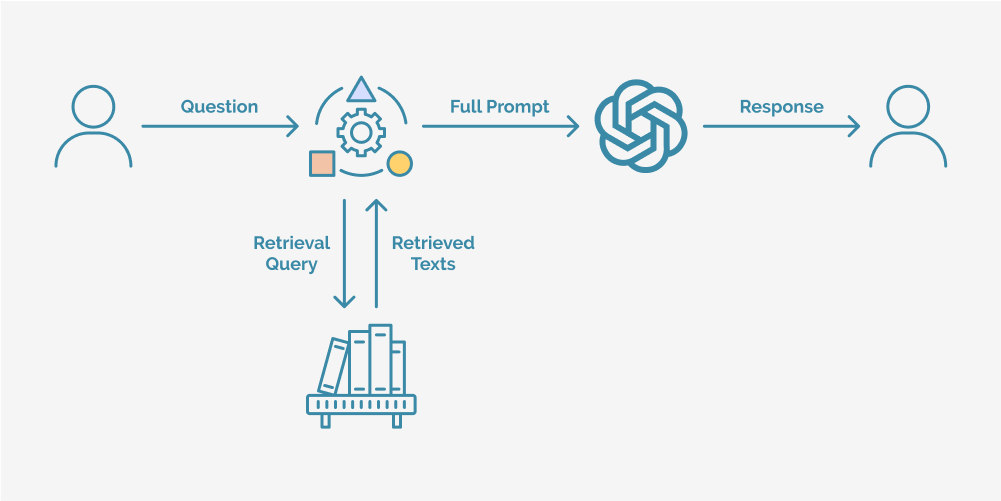
What Is RAG?
In the ever-evolving landscape of artificial intelligence, staying at the cutting edge means constantly integrating new techniques and methods to overcome the limitations of traditional models. One such groundbreaking approach is Retrieval-Augmented Generation (RAG). RAG has become a vital tool in enhancing the capabilities of Large Language Models (LLMs) by grounding their responses in real-world data, thus reducing hallucinations, providing up-to-date information, and ensuring more contextually relevant outputs.
What is Retrieval-Augmented Generation (RAG)?
At its core, Retrieval-Augmented Generation (RAG) is an innovative technique that synergizes the power of information retrieval with text generation. By integrating external data sources into the generative process, RAG allows AI models to produce more accurate and context-aware responses. This approach is particularly useful in scenarios where the knowledge embedded within an LLM is outdated or insufficient, as it supplements the model’s responses with up-to-date, detailed information retrieved from vast datasets.
The Core Components of RAG: A Deep Dive
To fully appreciate how RAG works, it’s essential to understand its key components. Each part plays a critical role in ensuring that the system functions seamlessly, providing accurate and relevant outputs.
- Retriever Component: This is the heart of the RAG system. The retriever searches through large datasets or knowledge bases to find the most relevant documents or pieces of information that match the user query. It’s designed to quickly and efficiently sift through vast amounts of data to pinpoint the exact information needed.
- Embedding Model: To facilitate effective retrieval, both the user query and the documents in the database are converted into vectors — mathematical representations of text. The embedding model ensures that these vectors capture the semantic meaning of the text, allowing for more accurate matches between queries and documents.
- Vector Database: The vector database is where the precomputed vector embeddings of documents are stored. This component is crucial for fast retrieval, as it allows the system to quickly compare the query vector against stored vectors and find the most relevant matches.
- Generator Component: Once the relevant information is retrieved, the generator component takes over. This part of the system generates the final text output, blending the retrieved data with the original query to produce a coherent and informative response.
- Synthesis Module: The synthesis module ensures that the retrieved information and the generated response are seamlessly integrated. It combines these elements in a way that makes the final output logical, consistent, and contextually appropriate.
- Query Processing Module: Before the retrieval process begins, the user query must be prepared. The query processing module handles this task, converting the raw input into a form that can be effectively embedded and used for retrieval.
- Post-Retrieval Filtering: Not all retrieved data is equally useful. The post-retrieval filtering step ensures that irrelevant or low-quality data is removed, leaving only the most pertinent information for use in the final response.
- Contextualization Module: To provide responses that are contextually aware, this module considers additional context, such as previous interactions or related queries. This helps the system maintain a coherent flow of conversation and improves the relevance of the responses.
- Hybrid Retrieval System: The hybrid retrieval system balances between dense and sparse retrieval methods, combining semantic understanding with exact matches to ensure comprehensive retrieval of information.
The RAG Workflow: Step-by-Step Process
Understanding the workflow of RAG gives insights into how this system works in practice:
- Query Conversion: The first step in the RAG process involves converting the user query into a vector. This vector represents the query in a high-dimensional space, capturing its semantic meaning.
- Database Search: Using the query vector, the system searches the vector database for documents or pieces of information that are semantically similar. The goal is to retrieve contexts that are highly relevant to the query.
- Context Retrieval: The most relevant information is retrieved from the database and passed on to the next stage of the process.
- Response Generation: The LLM uses the retrieved contexts along with the original query to generate a response. This step combines the strengths of both retrieval and generation, producing an answer that is informed by external data.
- Final Output: The final response is produced, incorporating both the user query and the retrieved information, resulting in a more accurate and contextually relevant output.
Real-World Applications of RAG
RAG’s versatility and power make it applicable in various domains, revolutionizing how AI systems interact with users:
- Chatbots & Conversational Agents: RAG enhances the capabilities of chatbots, enabling them to provide more accurate and detailed responses in customer support scenarios. By retrieving relevant information in real-time, these systems can offer solutions that are both current and contextually appropriate.
- Content Generation: In content creation, RAG ensures that the output is not only creative but also grounded in factual information. This is particularly useful in generating articles, reports, or any content that requires a high level of accuracy and detail.
- Question-Answering Systems: RAG is particularly powerful in educational and research contexts, where it can be used to provide detailed explanations, summaries, and answers based on the most relevant and up-to-date information available.
- Healthcare: In the medical field, RAG can assist healthcare professionals by retrieving relevant medical data, thus supporting diagnosis and treatment decisions with the most current information.
The Advantages of Using RAG
RAG offers several key advantages that make it a valuable tool in the AI toolkit:
- Accuracy: By grounding responses in real documents, RAG significantly reduces the chances of hallucinations, a common issue with traditional LLMs.
- Up-to-date Information: RAG ensures that the information used in responses is current, pulling from the latest data sources.
- Enhanced Reasoning: The integration of external context allows for more logical, fact-based responses, improving the overall quality of interactions.
- Customizable: RAG systems can be tailored to specific domains, such as legal, medical, or technical fields, ensuring that the responses are not only accurate but also domain-specific.
Challenges and Limitations of RAG
Despite its many advantages, RAG is not without its challenges:
- Complexity: The combination of retrieval and generation increases the overall complexity of the model, making it more challenging to develop and maintain.
- Scalability: Managing large databases, particularly in real-time applications, can be difficult and resource-intensive.
- Latency: The retrieval process can introduce delays, particularly when dealing with large datasets, potentially slowing down response times in real-time applications.
- Context Limitation: While RAG can handle moderate context, it may struggle with very large context requirements, leading to incomplete or fragmented responses.
- Bias: The quality and neutrality of the retrieved sources play a crucial role in the final output. If the retrieval process is biased, it can introduce or amplify biases in the responses.
As AI continues to evolve, the importance of techniques like RAG will only grow, providing smarter, more reliable, and efficient systems. Whether you’re building chatbots, content generation tools, or complex question-answering systems, understanding and implementing RAG could be the key to unlocking the full potential of your AI solutions.
메타데이터
- post_id
- 093614fcda5c
- slug
- retrieval-augmented-generation-rag-how-it-works-and-why-it-matters-in-ai-093614fcda5c
- url
- https://medium.com/@harshit_56733/retrieval-augmented-generation-rag-how-it-works-and-why-it-matters-in-ai-093614fcda5c
- canonical_url
- https://medium.com/@harshit_56733/retrieval-augmented-generation-rag-how-it-works-and-why-it-matters-in-ai-093614fcda5c
- author_url
- https://medium.com/@harshit_56733
- status
- ok
- fetched_at
- 2026-08-08 21:34:13