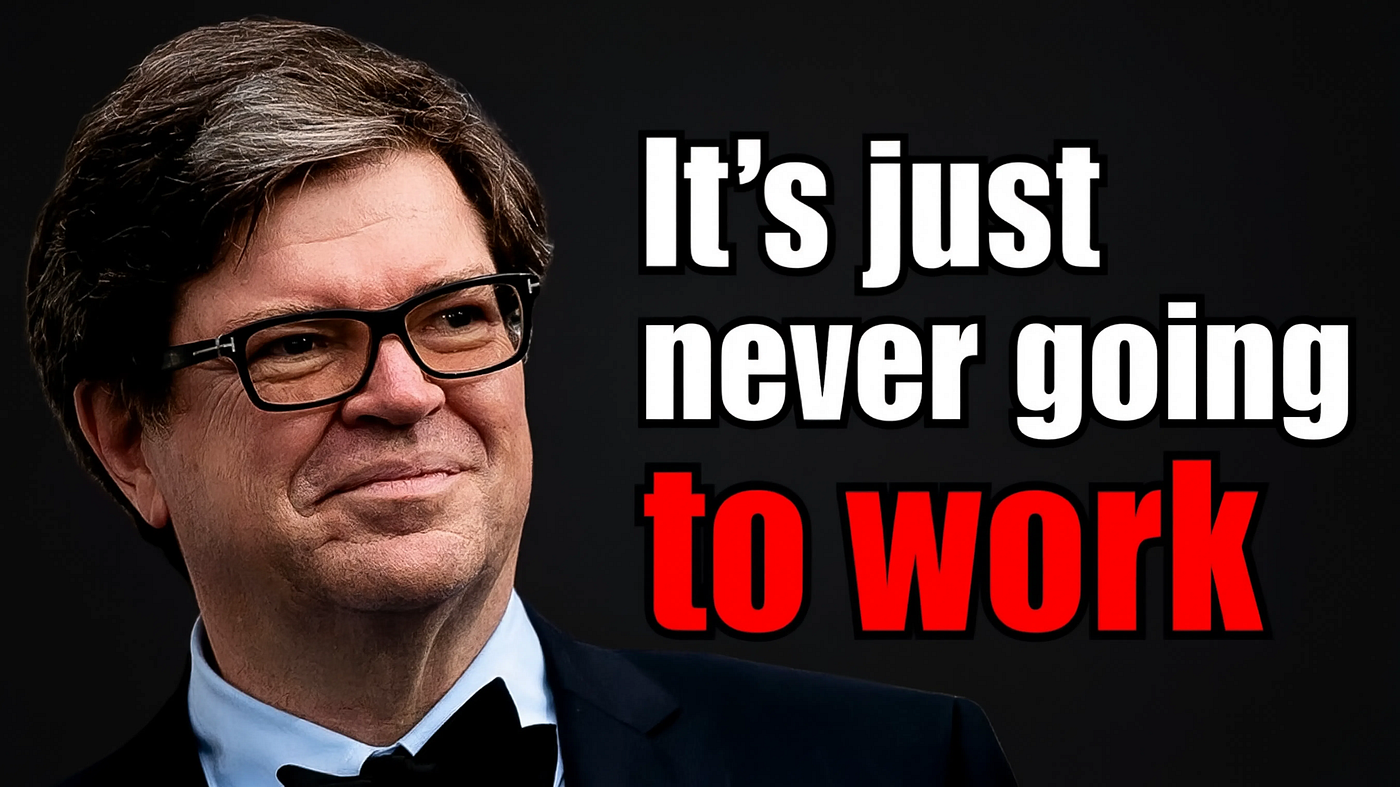
The AI World’s Favorite Engineer: Why Andrej Karpathy Commands So Much Respect
The Engineer Behind OpenAI, Tesla, and a Generation of Developers
Andrej Karpathy | Vibe Coding | AI Engineer | Machine Learning
The AI World’s Favorite Engineer: Why Andrej Karpathy Commands So Much Respect
The Engineer Behind OpenAI, Tesla, and a Generation of Developers
Andrej Karpathy
Read here for FREE
On May 19, 2026, Andrej Karpathy posted seven sentences on X. Bloomberg had a terminal headline within the hour.
He had joined Anthropic.
The post drew nearly 3 million views before the business day was over. Not because of drama or surprise announcements, but because of who Karpathy is and what it means when he moves. The AI community watches him the way people watch a barometer. When he changes direction, you pay attention.
If you are new to all this, here is the short version: Karpathy was one of 11 people who started OpenAI in 2015. Elon Musk personally recruited him to lead Tesla’s AI work in 2017. He taught Stanford’s first deep learning course. He coined the term vibe coding, which Collins Dictionary named its Word of the Year for 2025. And now, at 39, he is at Anthropic, using Claude to help train the next version of Claude.
That career arc is not typical. Most people in tech pick a lane. He kept building in all of them.
Before All of This, There Was a Rubik’s Cube
Karpathy was born in Bratislava, Slovakia, in 1986. His family moved to Toronto when he was 15. While studying computer science and physics at the University of Toronto, he started posting tutorials on YouTube in 2006 under the name badmephisto. The videos taught people how to solve the Rubik’s cube in under 20 seconds.
The channel has over 9 million views. Feliks Zemdegs, who went on to become one of the fastest speedcubers in the world, cited those videos as part of how he learned.
What those tutorials show, more than anything, is how Karpathy approaches a problem. He was not just demonstrating steps. He was explaining the structure underneath them. He taught people to see the cube as 26 individual pieces rather than 54 colored stickers. Once you see it that way, the whole thing becomes manageable.
That same instinct shows up in everything he has built since.
Stanford, Fei-Fei Li, and the First Deep Learning Course
After his bachelor’s at Toronto and a master’s at the University of British Columbia, Karpathy moved to Stanford for his PhD under Fei-Fei Li, one of the most respected computer vision researchers in the field and the creator of ImageNet.
His thesis, completed in 2015, was called Connecting Images and Natural Language. It focused on getting neural networks to understand both what they see and what that means in words. That intersection of vision and language is now basically the foundation of modern AI assistants.
During his PhD, he also built Stanford’s first dedicated deep learning course: CS231n, Convolutional Neural Networks for Visual Recognition. It started with 150 enrolled students in 2015. By 2017 it had grown to 750. He made all the lecture videos, notes, and assignments freely available online.
Videos from those lectures have over Millions of views.
Not because of production quality. Because they were genuinely good.
OpenAI, Tesla, and What It Looks Like to Actually Ship
Karpathy joined OpenAI as a founding research scientist in 2015, during a period when the organization was still small and the field was more academic than commercial.
In 2017, Elon Musk recruited him directly to run Tesla’s AI and Autopilot Vision work.
What he built there was substantial. When he arrived, Tesla’s Autopilot relied on radar and had real limits in complex environments. By the time he left in 2022, Tesla had moved to a vision-only system. No radar. Just cameras and neural networks processing the world in real time. His team handled everything internally: data labeling, model training, and deployment on Tesla’s custom-built inference chip.
In a short post when he departed, he noted that Autopilot had gone from lane keeping to navigating city streets during his five years there. No exaggeration, no fanfare. Just what happened.
Software 2.0: A 2017 Essay That Read Like a Map
While still at Tesla, Karpathy published an essay in 2017 called Software 2.0.
The argument was this: traditional programming (Software 1.0) involves humans writing explicit instructions in code. Software 2.0 is different. Humans curate data, and the neural network figures out the logic itself. The model’s weights are the code. Gradient descent is the compiler. Datasets are the source material.
At the time, it sounded like theory. Reading it now, it describes the infrastructure the entire industry has built since. MLOps, model hubs like Hugging Face, the whole stack around training and deploying large models, it maps almost exactly onto what that essay sketched out eight years ago.
That kind of foresight, stated clearly and early, is part of why people take him seriously.
Teaching the World for Free
After leaving Tesla in 2022, Karpathy spent time on what he called a sabbatical. What he actually did was build some of the most useful free AI education on the internet.
His YouTube series, Neural Networks: Zero to Hero, walks through building neural networks from scratch, starting with backpropagation and ending with a working GPT implementation.
Along the way he built:
- micrograd: a tiny autograd engine in about 100 lines of Python that shows exactly how neural network training works under the hood
- makemore: a character-level language model built step by step across multiple videos
- nanoGPT: a clean, readable implementation of GPT-2 that runs on a single machine
These were not simplified explainers. They were actual implementations, built live, with real code and real math, starting from the absolute basics. People who went through the series came away understanding the fundamentals of how large language models work, not just how to call an API.
Hacker News users called it better than most paid courses. That tracks.
Return to OpenAI, Then Out Again
In early 2023, Karpathy returned to OpenAI. He worked on GPT-4, focused on mid-training and synthetic data generation. GPT-4 was the first OpenAI model that could accept both text and images, and it marked a clear shift in what language models could do in practice.
He left again in February 2024. No drama. He later said nothing happened and encouraged people to keep the conspiracy theories coming as they were entertaining.
A few months after leaving, in July 2024, he launched Eureka Labs, an AI education company. The idea was to build courses where AI teaching assistants could provide personalized, adaptive instruction at scale. His first planned course was LLM101n, aimed at teaching people how to actually build a language model.
Vibe Coding
In February 2025, Karpathy described a way he had been coding with AI tools. He called it giving in to the vibes: describe what you want, let the model generate the code, accept the output without reviewing every line, paste error messages directly back to the AI, let the codebase grow organically.
He called it vibe coding.
The phrase spread fast. Merriam-Webster listed it as slang within weeks. By the end of 2025, Collins Dictionary named it their Word of the Year, beating out competitors including clanker, aura farming, and broligarchy.
The entire category of tools that let people build software through natural language prompts now has a name that came from one post.
Then, on December 26, 2025, he posted something different. He wrote that he had never felt so far behind as a programmer. That the profession was being restructured. That he could probably be ten times more effective if he actually put together what AI tools had made possible in the past year.
It spread for a different reason. If Karpathy feels that way, most developers are further behind than they think.
Where He Is Now
On May 19, 2026, Karpathy joined Anthropic’s pretraining team, reporting to Nick Joseph, Anthropic’s head of pretraining.
His specific mandate: build a team that uses Claude to accelerate the research behind training Claude itself.
Pretraining is the large-scale, compute-intensive phase that gives a model its core knowledge. It is expensive, technically demanding, and central to what any frontier model can do. Karpathy is working on using AI to make that process better, faster, or both.
In his announcement, he said the next few years at the frontier of large language models would be especially formative. He also said he remains passionate about education and plans to return to it in time.
Why He Commands This Much Respect
There are a lot of technically strong people in AI.
Fewer can explain what they know clearly enough that a complete beginner can actually follow along. Even fewer have actually shipped products that tens of millions of people use, while also writing essays that shaped how the industry thinks.
Karpathy has done all three, across multiple roles, over a decade in which the field changed direction several times.
His respect is not built on personality or influence. It is built on a track record of being right about things before they became obvious. The Software 2.0 framing. The vision-only Autopilot. The Zero to Hero series. Vibe coding.
He does not tend to chase the current hype. He tends to identify what the structure underneath it actually is, explain it simply, and move on to the next thing.
That is not a common skill set. It is why, when he posted seven sentences on X in May 2026, people stopped what they were doing.
메타데이터
- post_id
- 0971b8a5dcdc
- slug
- the-ai-worlds-favorite-engineer-why-andrej-karpathy-commands-so-much-respect-0971b8a5dcdc
- url
- https://medium.com/the-ai-studio/the-ai-worlds-favorite-engineer-why-andrej-karpathy-commands-so-much-respect-0971b8a5dcdc
- canonical_url
- https://medium.com/the-ai-studio/the-ai-worlds-favorite-engineer-why-andrej-karpathy-commands-so-much-respect-0971b8a5dcdc
- author_url
- https://medium.com/@coustom.no.03
- status
- ok
- fetched_at
- 2026-06-12 18:14:10