Why Polish Language Cases Feel So Hard
A simple way to understand Polish cases without getting overwhelmed
Why Polish Language Cases Feel So Hard
A simple way to understand Polish cases without getting overwhelmed

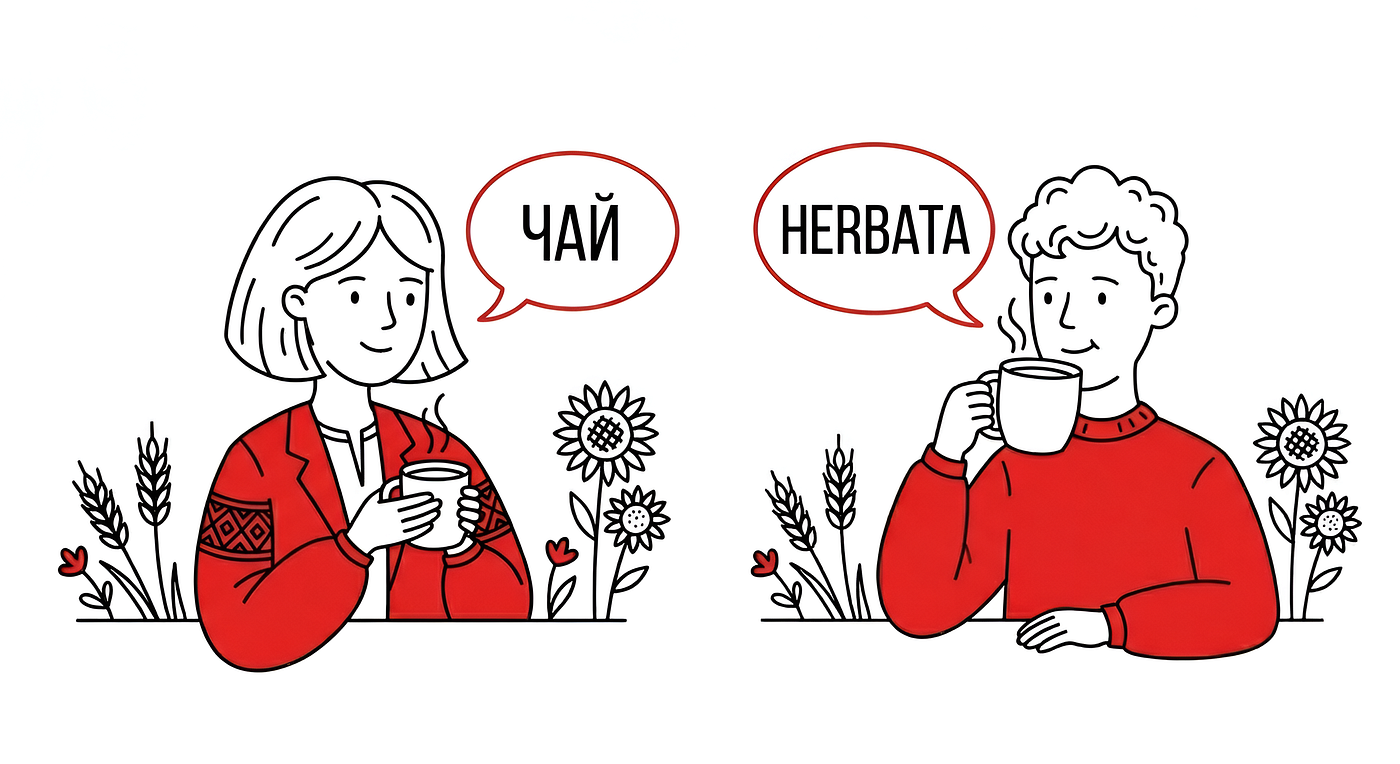
Image generated by the author with Gemini
“I’ve been trying to learn Polish for 4 months. Love the culture, the sound of it. But I hit cases and I just… stopped. It felt like the language was personally hating me.” — overheard on Threads
That post gets upvoted every single time it appears.
Polish attracts people hard — the music, the history, the family roots, the sheer stubbornness of wanting to crack something difficult.
And then cases happen.
And people disappear.
Let’s fix that.
So What If I Told You Knowing a Word Isn’t Enough?
In Polish, knowing a word is just the beginning.
You also need to know what it looks like when it’s the subject of a sentence.
When it’s the object.
When someone is giving something to it.
When you’re talking about it.
When you’re going somewhere with it.
The word changes every single time.
There are 7 of these forms. 7 cases.
And before you close this tab — hear me out.
Think about English for a second. You already do something similar without noticing. He becomes him. She becomes her. Who becomes whom (okay, maybe you skip that one).
Your brain handles this automatically because you’ve been doing it since age three.
And while we’re at it, English has twelve tenses. 12. Past simple, past continuous, past perfect, past perfect continuous… nobody quits English screaming impossible.
But seven cases in Polish? Suddenly, it’s a crisis.
Polish just does endings more. And more consistently. Once the logic clicks, you stop seeing chaos and start seeing a system.
The Seven Cases — Explained Like You’re Ten
Imagine a kid named John — universal enough, right? — who wants to go outside and play with his friends, maybe slide down an icy hill on his bottom. He’s not walking out in just his underwear — his mum won’t allow it. He needs:
(1) a jumper,
(2) trousers,
(3) socks,
(4) boots,
(5) a hat,
(6) mittens,
(7) a scarf.
Seven things.
Photo by Maciej Karoń on Unsplash
Each one does a different job. The boots aren’t doing what the scarf does. The hat isn’t doing what the socks do. But together, the kid is dressed, warm, and ready.
A Polish word works the same way. Each case is a layer. Alone, the base form is just John standing in his underwear in January. With all seven cases at your disposal, the word is fully dressed — ready for any sentence, any context, any situation you throw at it.
Think of cases as name tags. Every noun wears one depending on its job in the sentence.
Seven jobs. Seven tags.
1. Nominative — “Who or what is it?”
The base form.
The subject.
The word exactly as you’d find it in a dictionary.
Pies śpi. — The dog is sleeping.
Not like dogs? No worries — I’ve got a cat example for every single case. You’re welcome.
Kot śpi. — The cat is sleeping.
2. Genitive — “Of whom? Of what? There isn’t any.”
Nie mam psa. — I don’t have a dog.
Nie mam **kota**. — I don’t have a cat.
“Dog” in English stays “dog” no matter what.
In Polish, the whole sentence goes negative, and the word changes with it.
Pies becomes psa; kot becomes kota.
Polish marks the mood of the sentence directly on the noun.
This is also the case you’ll use when complaining.
Nie mam czasu. I don’t have time.
Nie mam pieniędzy. I don’t have money. You’ll be fluent in Genitive within the first week.
3. Dative — “To whom? For whom?”
Daję psu jedzenie. — I’m giving the dog food.
Daję kotu jedzenie. — I’m giving the cat food.
The cat will ignore you either way. Grammatically correct or not — it does not care.
4. Accusative — “Whom? What?”
Widzę psa. — I see a dog.
Widzę kota. — I see a cat.
The direct object. The thing is getting acted upon. This one you’ll use constantly and pick up fast — probably the first case that starts feeling natural without you even noticing.
Actually, this case is quite tricky — it’s almost like Schrödinger’s cat: both simple and complicated at the same time.
It can look like the nominative, or it can resemble the genitive.
Wait — don’t close the tab! It’s not that complicated.
5. Instrumental — “With whom? By means of what?”
Idę z psem. — I’m going with the dog.
Idę z kotem. — I’m going with the cat.
Jestem nauczycielem. — I am a teacher.
That last one surprises everyone.
In English, “teacher” just sits there unchanged. In Polish, it shifts because you’re being something, and Polish finds that deeply worth noting.
You have to commit to your identity grammatically.
6. Locative — “About whom? Where?”
Never appears without a preposition. Always needs a companion — w (in), na (on), o (about).
Mówię o psie. — I’m talking about the dog.
Mówię o kocie. — I’m talking about the cat.
Mieszkam w Warszawie. — I live in Warsaw.
Think of it as the gossip case. Where are you? What are you talking about? It always knows where you are and what you’re doing — and it will tell the sentence.
7. Vocative — “Hey, you!”
Psie! — Hey, dog!
Kocie! — Hey, cat!
Speaking of cats — kotku is what Polish people say to someone they love. Partners, children, that one friend who gets everything.
Mamo! — Mom!
Panie Kowalski! — Mr. Kowalski!
Modern Polish speakers increasingly skip the Vocative in casual conversation and just use the Nominative instead. So why learn it at all?
Because the one time you use it correctly — addressing someone’s grandmother at Sunday dinner, getting a professor’s attention in the hallway — every Polish person in the room will turn and look at you with something between shock and respect.
Worth it entirely for that moment.
Will You Be Understood Without Cases?
Sometimes. Polish people are patient, and context is generous.
But drop endings randomly, and you’ll occasionally say something that’s technically a sentence and emotionally a catastrophe.
A wrong ending can shift who’s giving what to whom or turn a neutral statement into something baffling.
Polish speakers will understand you’re trying. They’ll also notice every single error.
Most people who quit Polish never got this far. They hit the word cases, felt the panic, and closed the tab.
You didn’t.
You now know what separates English from Polish at the deepest level — meaning lives in word order in one language and in word endings in the other.
Seven endings. Seven questions.
You won’t learn all seven cases in week one. Nominative and Accusative carry you further than you’d expect. Genitive forces itself into your life immediately, whether you’re ready or not. The rest arrive gradually, one real sentence at a time, over months of actual learning.
That’s how it works.
You’ve already done the hardest part — you decided to understand instead of run.
If you enjoyed this breakdown of the Polish language, you’ll find more language learning tips, strategies, and honest insights in my other Medium articles.
메타데이터
- post_id
- 099ceb849eac
- slug
- why-polish-language-cases-feel-so-hard-099ceb849eac
- url
- https://medium.com/language-mind/why-polish-language-cases-feel-so-hard-099ceb849eac
- canonical_url
- https://medium.com/language-mind/why-polish-language-cases-feel-so-hard-099ceb849eac
- author_url
- https://medium.com/@polskizleo
- status
- ok
- fetched_at
- 2026-07-09 06:39:14