Financial Astrology for Agriculture Commodities: A Practical Guide for Traders
Agriculture commodities are among the most cycle-driven markets in the world. Prices of wheat, corn, soybeans, rice, sugar, cotton, coffee…
Financial Astrology for Agriculture Commodities: A Practical Guide for Traders
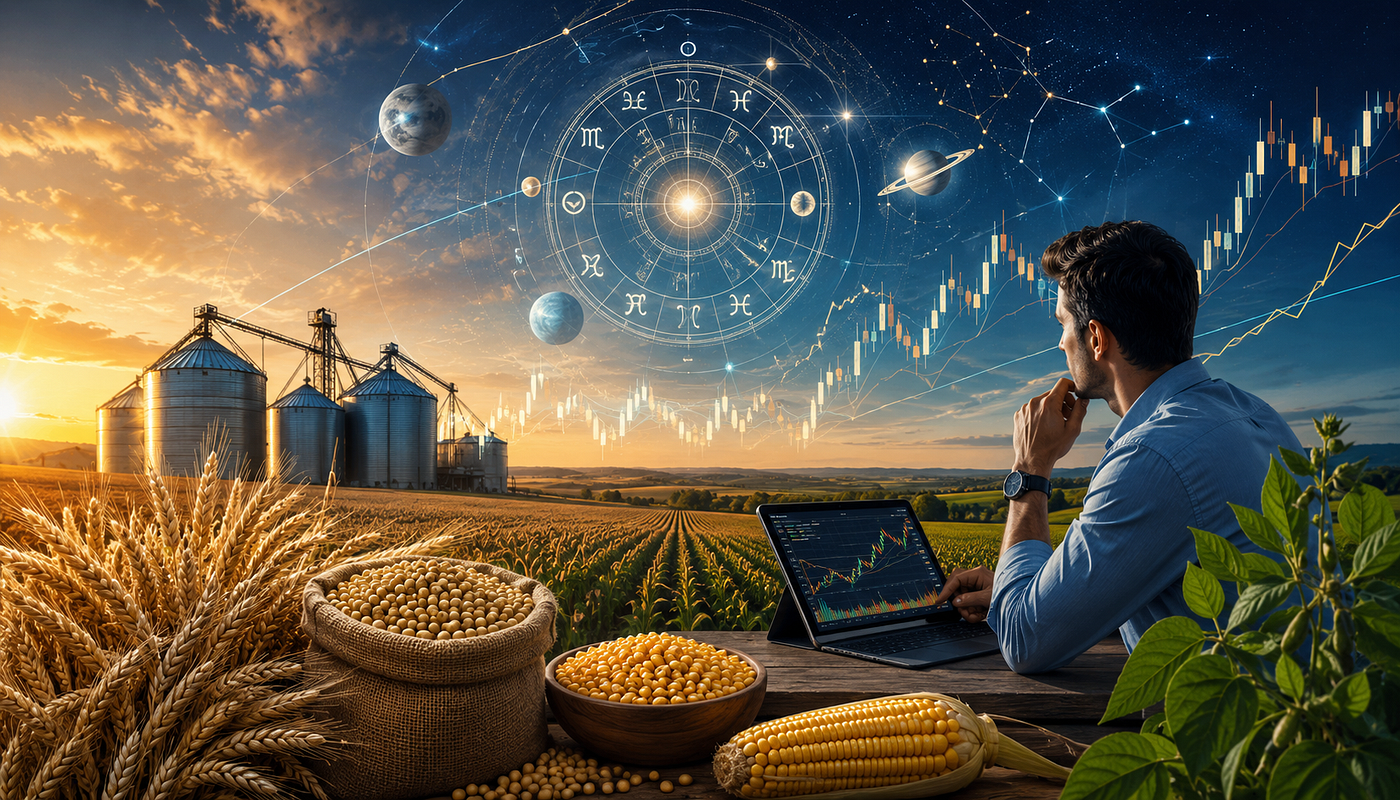
Agriculture commodities are among the most cycle-driven markets in the world. Prices of wheat, corn, soybeans, rice, sugar, cotton, coffee, and other crops move with weather, planting seasons, harvest expectations, export demand, storage levels, currency strength, and government policy. Yet beyond these visible factors, many traders also study timing through planetary cycles. This approach is known as financial astrology for agriculture commodities, and it offers a unique way to understand crop market rhythm, volatility, and potential reversal windows.
You can read the complete guide here: https://rajeevprakash.com/assets/agriculture-commodity-forecasts-using-astrology/
Why Agriculture Commodities Need Timing
Agriculture markets are different from many financial assets because they are directly linked with nature. A crop cannot be produced instantly. It needs land, water, temperature, labour, transport, storage, and seasonal timing. Because of this, even small changes in weather or supply expectations can move prices sharply.
For example, if traders expect drought in a major wheat-growing region, prices may rise before the actual harvest numbers are known. If rainfall improves suddenly, prices may fall because the supply outlook changes. This makes agriculture commodities very sensitive to timing.
Financial astrology helps traders study these timing windows. It does not replace crop reports, weather models, technical charts, or supply-demand analysis. Instead, it adds another layer for understanding when price movement may become stronger, emotional, or unstable.
What Financial Astrology Means in Crop Markets
Financial astrology studies how planetary transits, lunar phases, eclipses, retrogrades, and seasonal astrological cycles may align with market sentiment and price trends. In agriculture commodities, this approach becomes especially interesting because farming itself follows natural cycles.
The goal is not to say that a planet directly causes wheat, sugar, or cotton prices to rise. A better way to understand it is that astrology may help traders identify periods of stress, abundance, delay, speculation, or volatility.
A trader using financial astrology for agriculture commodities may ask whether the market is entering a period of supply pressure, emotional buying, policy uncertainty, or trend exhaustion. Then the trader compares that timing window with real market data.
The Moon and Short-Term Commodity Sentiment
The Moon has a deep connection with agriculture because it is traditionally linked with water, fertility, growth, public mood, and short-term rhythm. In financial astrology, the Moon is often used to track emotional shifts in markets.
In crop markets, New Moon periods may suggest fresh expectations, new sentiment, or the beginning of a short-term trend phase. Full Moon periods may bring stronger emotions, sharper reactions, or possible turning points.
For traders, lunar cycles are useful when they appear near important chart levels. If soybean prices are near support during a New Moon and selling pressure starts to fade, traders may watch for recovery signs. If wheat prices are near resistance during a Full Moon and momentum is weakening, traders may prepare for a possible pullback.
The Moon should not be used alone. It works best as a timing alert.
Saturn and Supply Pressure
Saturn represents restriction, scarcity, delay, structure, discipline, and reality checks. In agriculture commodities, Saturn may reflect supply limits, export restrictions, poor crop conditions, storage issues, logistical delays, or slow market movement.
When Saturn themes become strong, traders may focus on whether supply is truly tight. If inventories are low and demand remains stable, Saturn can support higher prices. However, Saturn can also bring correction when the market has become too speculative.
For example, if traders have already pushed corn prices higher because of a shortage fear, but later data shows that supply is better than expected, Saturn may represent the reality check that cools the rally.
Saturn teaches traders to respect facts. It asks whether the bullish or bearish story is supported by real data.
Jupiter and Expansion in Agriculture Prices
Jupiter represents growth, abundance, optimism, expansion, and large-scale movement. In crop markets, Jupiter can show expanding supply, rising demand, stronger export activity, or increased speculative interest.
Jupiter can support higher prices when demand is rising or when traders believe a shortage story may grow larger. However, Jupiter can also pressure prices if it reflects abundant harvests and comfortable inventories.
This is why Jupiter must be interpreted with context. In a strong demand environment, Jupiter may support bullish price action. In a bumper crop year, Jupiter may point toward excess supply and lower prices.
For traders, Jupiter is useful because it highlights expansion. The key question is whether the expansion is happening in demand, supply, optimism, or speculation.
Mars and Fast-Moving Crop Volatility
Mars represents heat, aggression, conflict, speed, and sudden action. Agriculture commodities can react strongly during Mars-related periods, especially when weather stress or geopolitical risk is already present.
Mars may align with heatwaves, drought fears, export tensions, war-related supply concerns, panic buying, or sudden technical breakouts. Since crops are highly sensitive to temperature and rainfall, Mars can become important during key growing stages.
However, Mars does not always mean prices will rise. It means the market may move sharply. If prices are overbought, Mars may trigger aggressive selling. If prices are near support and supply fear increases, Mars may support a strong rebound.
Traders should use smaller position sizes and clear stop-loss levels during fast-moving Mars periods.
Mercury and Market Information
Mercury is connected with communication, trade, data, contracts, transport, and reports. Agriculture markets depend heavily on information. Weather forecasts, crop progress reports, export sales numbers, government estimates, shipping updates, and currency movements can all change price direction.
During strong Mercury periods, crop markets may react quickly to fresh data. During Mercury retrograde periods, traders may see confusion, revisions, delays, mixed signals, or sudden changes in market interpretation.
For practical trading, Mercury periods remind traders to verify information before acting. A weather model can change. A government report can surprise the market. A rumour can create a false breakout. Confirmation is essential.
Venus and Soft Commodities
Venus represents value, comfort, beauty, sweetness, luxury, and consumption. This makes Venus useful for studying soft commodities such as sugar, coffee, cocoa, and cotton.
These markets are influenced not only by supply but also by consumer demand, lifestyle trends, currency movement, and global trade. Venus-related periods may highlight demand patterns, pricing strength, or sentiment around consumption-driven commodities.
For example, sugar prices may respond to production issues, but they also reflect consumption and ethanol demand. Coffee may respond to weather in Brazil or Vietnam, but global consumer demand also matters. Cotton connects with fashion, textiles, and retail demand.
Venus helps traders look at the demand side of agricultural commodities.
Rahu and Speculative Food Market Trends
In Vedic astrology, Rahu represents obsession, amplification, foreign influence, technology, uncertainty, illusion, and sudden attraction. In agriculture commodities, Rahu may appear when speculation becomes intense.
Food inflation fears, export bans, geopolitical shocks, or sudden media focus on shortages can create Rahu-like market behaviour. Traders may chase prices because they fear missing a major move. This can create sharp rallies, but it can also create unstable bubbles.
Rahu is powerful because it amplifies emotion. For traders, the lesson is clear: when everyone becomes too certain about a crop shortage or price surge, risk may be rising.
How Traders Can Use Financial Astrology Practically
A practical trader should begin with fundamentals. First, study the crop calendar. Is the market in planting season, growing season, harvest season, or export season? Then review weather, inventories, demand, government policy, and currency trends.
Next, study the technical chart. Mark support, resistance, moving averages, trendlines, momentum, and volume. Only after this should astrology be added as a timing layer.
If a major lunar phase, Mars period, Saturn pressure, Jupiter expansion, Mercury data window, or eclipse appears near an important chart level, traders can become more alert. However, the trade should still depend on confirmation from price action.
Risk Management Comes First
Agriculture commodity markets can change quickly. Weather forecasts shift, governments change export policies, currencies move, and crop reports surprise traders. No astrology method can remove this uncertainty.
Traders should always define entry levels, stop losses, targets, position size, and invalidation points. Financial astrology can help improve timing awareness, but discipline protects capital.
Final Thoughts
Financial astrology for agriculture commodities gives traders a unique way to study crop market cycles. The Moon may highlight short-term sentiment. Saturn may show scarcity or discipline. Jupiter may reflect expansion. Mars may bring sharp volatility. Mercury may influence data and trade flows. Venus may shape soft commodity demand. Rahu may amplify speculation and emotional market behavior.
The best results come when astrology is combined with weather analysis, crop reports, seasonal patterns, technical charts, volume, currency trends, and strong risk management. Used wisely, financial astrology can help traders prepare for volatility before it appears on the price chart.
Read the complete guide here: https://rajeevprakash.com/assets/agriculture-commodity-forecasts-using-astrology/
메타데이터
- post_id
- 09a34d8a700b
- slug
- financial-astrology-for-agriculture-commodities-a-practical-guide-for-traders-09a34d8a700b
- url
- https://medium.com/@astromore_31874/financial-astrology-for-agriculture-commodities-a-practical-guide-for-traders-09a34d8a700b
- canonical_url
- https://medium.com/@astromore_31874/financial-astrology-for-agriculture-commodities-a-practical-guide-for-traders-09a34d8a700b
- author_url
- https://medium.com/@astromore_31874
- status
- ok
- fetched_at
- 2026-06-09 15:37:30