Our World Is Going to Hell in a Handbasket
But we can avoid the heat by reframing our perceptions
Our World Is Going to Hell in a Handbasket
But we can avoid the heat by reframing our perceptions

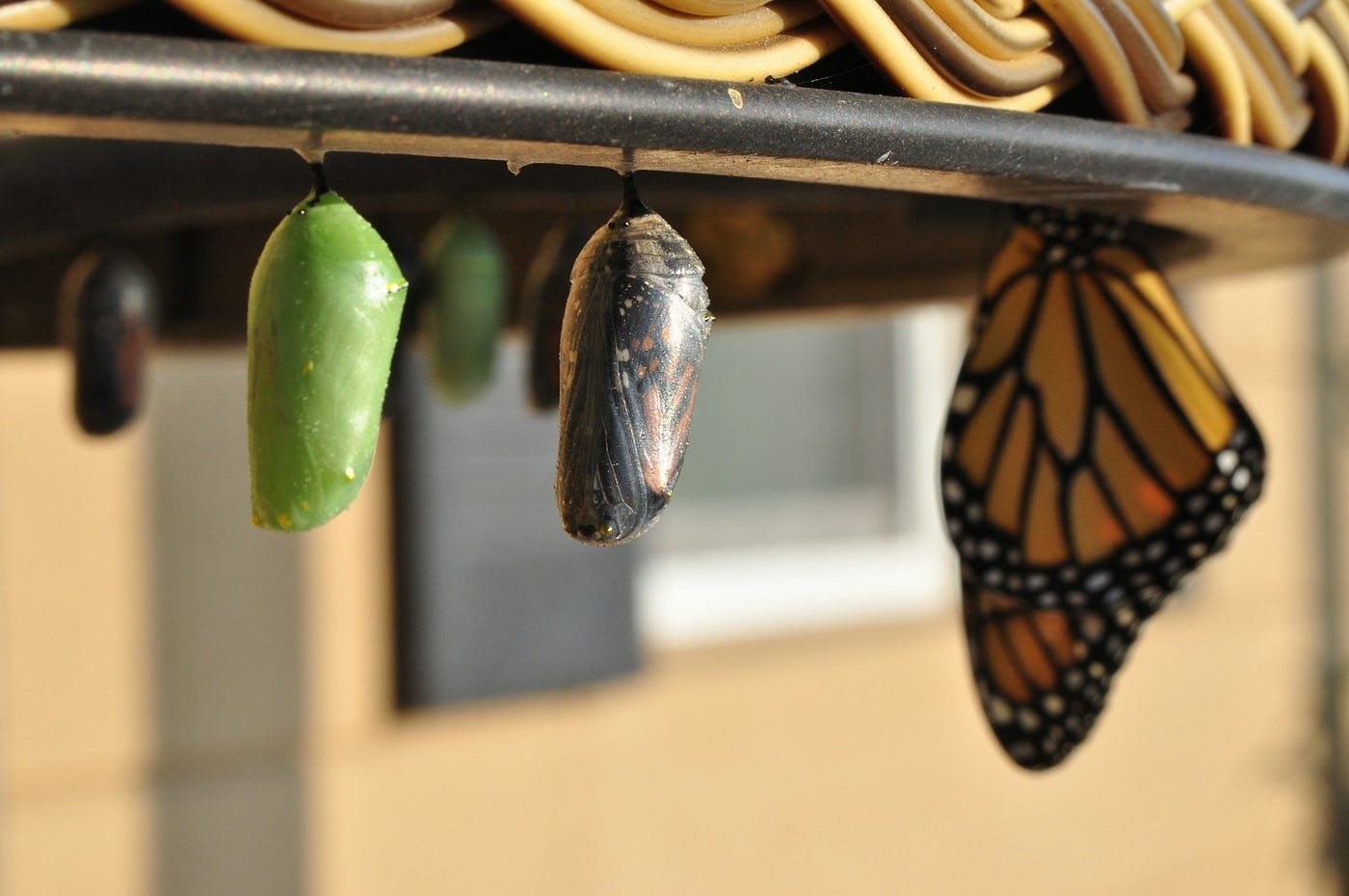
There will be a future. We will impact it. (image by author)
Women are better than men at anticipating consequences and making cautious choices. So, name a few brilliant women philosophers or thinkers throughout time. I dare you. Can’t do it? Make no mistake, we women have had our toes in the rivers of deep thought forever.
Maitreyi (1000 BCE), Gargi Vachaknavi, Hypatia of Alexandria (c. 370–415 CE). Look them up. Too old to be relevant? Check out Martha Nussbaum at my hometown’s University of Chicago. And then there’s British novelist George Eliot (AKA Mary Ann Evans) and the much-disputed theory of meliorism.
“I don’t know that I ever heard anybody use the word meliorist except myself.” — George Eliot
How the word worked its way into English
George wrote that sentence in a personal letter or two in the last quarter of the 19th century, and then her peers generously credited her with coining meliorist and meliorism. Ms. Eliot spent a fair amount of energy pondering the world’s condition and how to improve it.
However, records suggest that meliorism may have been bandied about for 20 or 30 years before she penned it. At some point, someone pondered the Latin word melior, translated as "better," and pushed us toward a better perspective. The word reaches back to the Latin melior, meaning “better,” which also gave us meliorate and ameliorate.
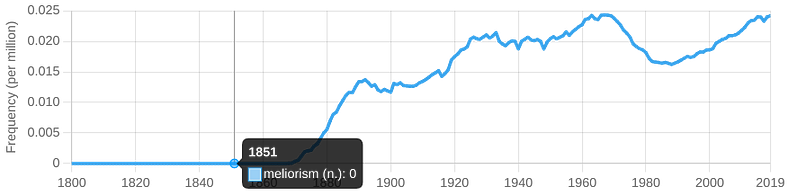
The growth of word frequency “meliorism” (from https://www.etymonline.com/word/meliorism)
What meliorism is or is not
Think about Stoicism, the pop-culture ideal of ancient Greece and Rome, which schooled people to observe life’s ups and downs and foibles without being all judgy. Experience life. Contemplate life. Respond reasonably. Don’t get overwhelmed and try to wrestle life to the ground and control it. Be free from destructive, irrational passions. They call that attitude apatheia — which begets peace of mind, which gives rise to acceptance without dangerous passion, which precludes coveting that which we don’t have and that which we are not.
All good. Enter meliorism.
“A term given to that view of the world which believes that at present the sum of good exceeds the sum of evil and that, in the future, good will continually gain upon evil. The term is said to have been invented by George Eliot to express a theory mediating between optimism and pessimism.” — 1911 Encyclopedia Britannica
Partner that with reasonable pragmatism and stoicism, and, to my mind, you could very well be making progress.
Stepping away from the women of philosophy for a second, William James’s Pragmatism opines that another movement — pragmatic thinking — shows the wisdom of focusing on duty and values. He sees that as naturally favorable to the melioristic view. Now we can blend acceptance with duty, values, and melioristic thought.
Then it becomes less painful to contemplate all the asshats running the world, our industries, and our lives — or even living next door to us?
To get to that blend, we have to accept that progress can be a real thing, and any one of us can disrupt the status quo to make the world better. James described meliorism as being “halfway between metaphysical optimism and pessimism.”
Humans can inform positive change, improving our world and existence, by actively incorporating empathy, creativity, and kindness into our way of walking our personal paths. But we’re not required to go around like giggling Pollyannas wearing rose-colored contact lenses; we can still be realists.
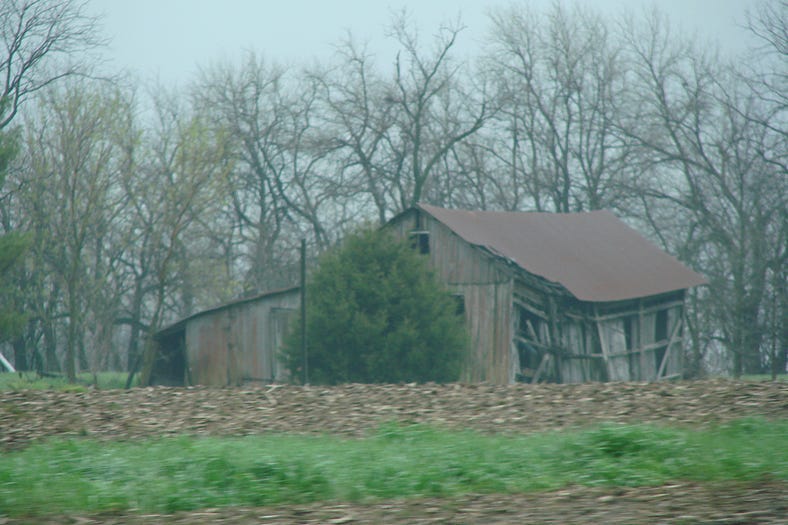
Will our futures look like this, or can we fix the problems? (image by the author)
It’s a good word and a solid idea, but what’s in it for me?
James was all on about rational faith, or a committed belief in human progress. We can all latch onto that, right? I mean, just look at where we once were and where we are now in many ways. Progress.
To make progress, we have to act. We must motivate ourselves to think, act, and produce change by letting go of the fear of failing or screwing up. That’s not to say we put our heads down and charge forward without considering the end game. Pragmatism asks us to look at what actually works, examine consequences, learn from evidence, and adjust accordingly. It’s about looking ahead to possible outcomes without being immobilized by the chance of failure.
William James makes a lot of sense when he encourages us to be courageous — walk through our fears of failure so we don’t step right over ways to enhance life. For sure, we will all trip over our own feet and be seduced into believing bullshit, denying our critical thinking, or following asshats. But that’s ok as long as we dust off, reassess, and dive in again. Otherwise, we will not meliorate.
We have to own the doctrine that the world is neither the worst nor the best possible, but that it is capable of improvement. And we are the agents of improvement.
What’s in it for us could be magnificently liberating. Here’s how I try to frame my thinking:
I can’t prevent mass shootings. I can’t cure climate change on my own. I can’t make the US Congress behave like adults and focus on fraught issues that negatively impact our lives. I seem to be powerless to put a reasonable, pragmatic, right-thinking, honest person at the head of my government or any other. I can’t make sure all people get adequate or safe food, water, medical care, or housing. As humans, we will be challenged by these things. Bad stuff happens to good people.
I accept that these things are cyclical and part of our world. Instead of collapsing under the weight or being depressed because I can’t make everything right, I choose to recognize the scope and limits of my influence.
It’s ok to make the best of that. A friend once told me to have two metaphorical buckets before me. One holds those things I can do nothing about. The other contains challenges I can influence or fix. I don’t worry about the former, and I devote appropriate energy to the latter. It works.
I remain—mostly—mindful, calm, centered, and purposeful. I take action wherever I can. That keeps me sane and fuels my self-esteem so I can use my capabilities for positive change on manageable scales to help those I can reach. That’s all I should ask of myself in each moment.
“The truth lies at the foot of every error, and human progress cannot be made without it.” — William James
Well, why isn’t everyone meliorating?
The positivity of meliorism is the very thing that fires up its critics. Some say the idea ignores the fact that humankind cannot control everything. That desire to control is precisely the root of most of our ills. Out of every new technology, ostensibly created to serve mankind, there is a dark side full of potential or actual harm. Consider AI technology. Right now, under our noses, great good is coming from medical AI technology, while, at the same time, humans have to be wary of the incredible problems artificial intelligence may unleash on us.
Due to that wariness, we humans will seek still more control and likely make poor decisions and take faltering steps as we seek to better our world — or maintain control over it.
Daniel Sommer Robinson’s A Critique of Meliorism points out, “[Meliorism] irreverently slaps the universe in the face and boastfully turns to the stupendous task of making it better through the sole instrumentality of creative human intelligence.”
Robinson admonishes that meliorists scathingly condemn the existing world as a sorry state of affairs and affirms with confident assurance the ability of human intelligence to make it over. And all the while, we have proven that we can’t always succeed.
Still, what kind of thought or action does always succeed? No one philosophy or school of behavior will ever, for me, answer all questions and solve all problems. To whatever extent I can, I pragmatically, stoically, and sometimes stubbornly try to meliorate whatever needs meliorating. .
The rest of the story
Let’s wrap up this tri-fold philosophical musing in a neat little package.
We all feel the looming presence of an undetermined future. Dystopia? It could happen, I suppose, but it’s highly likely that we can work with natural processes and come up with solutions before zombies shuffle across Main Street.
Utopia? There’s a fatal flaw in utopian thinking: Utopia fails to acknowledge the differences between people that result in differences in experience. Those differences are essential to our survival.
Homo sapiens will — together — purposefully or accidentally determine our collective future, whether we choose to embrace our society or reject it. It seems like thinking in meliorative terms might move us further forward in a better way than parking our entitled asses on designer sofas and wringing our hands.
Do humankind a favor and pick one tiny challenge you can make better right now. Then consider making that a habit.
메타데이터
- post_id
- 09c969db89d6
- slug
- our-world-is-going-to-hell-in-a-handbasket-09c969db89d6
- url
- https://medium.com/a-little-stoic-wisdom/our-world-is-going-to-hell-in-a-handbasket-09c969db89d6
- canonical_url
- https://medium.com/a-little-stoic-wisdom/our-world-is-going-to-hell-in-a-handbasket-09c969db89d6
- author_url
- https://medium.com/@maryanpelland
- status
- ok
- fetched_at
- 2026-07-13 06:23:13