What We Put in Our Mouths When Words Fail Us
Authored by Ashrita S, Mediator (CALORIE), Science Gallery Bengaluru
What We Put in Our Mouths When Words Fail Us
Authored by Ashrita S, Mediator (CALORIE), Science Gallery Bengaluru
This is a narrative article connecting 3 exhibits: Museum of Edible Earth, What I Eat in 80 Diets and 12 Lemons, by focusing on the eating disorders [Pica, Binge Eating and Anorexia] mentioned in the respective exhibits. Potentially triggering content.
The lovely scent that followed the rain always tempted young Navika. Petrichor as it was called, would lead her to the wet earth in her lawn. Once, she sneaked a bit of soil into her mouth, not out of hunger, but curiosity. The musty, raw and metallic taste was strangely comforting. At that age, food was just an instinct. You eat when you are hungry, tired, anxious…or to make the world less boring.
As she grew older, eating acquired rules. Lunchboxes were compared at school. Portion sizes were commented upon. Along the way, plates became mirrors. Wanting too much felt greedy, wanting too little felt virtuous. In her teenage years, her appetite turned into suspicion. She aimed to disappear quietly. Navika was now afraid of how food could cause too much pleasure…too much presence in her stomach, and life. Eating became an act of discipline and control rather than survival. Her comfort came from numbers, repetition and restraint. Once playful and experimental, the body now became something to manage.
Adulthood brought her abundance. However, the rules did not change, they multiplied; various diets and its promises, data, routine, content. Her bingeing cycled around eating freely, then correcting. Indulge, then cleanse. Pleasure followed by punishment. Survival? Control? No, it turned into oscillation. Navika was trapped in a rhythm of too much, too little.
Food changed with her. But it also changed her. Food learned her anxieties and adapted to each stage of her life. Only later, standing in the gallery, did these phases begin to speak back to her.
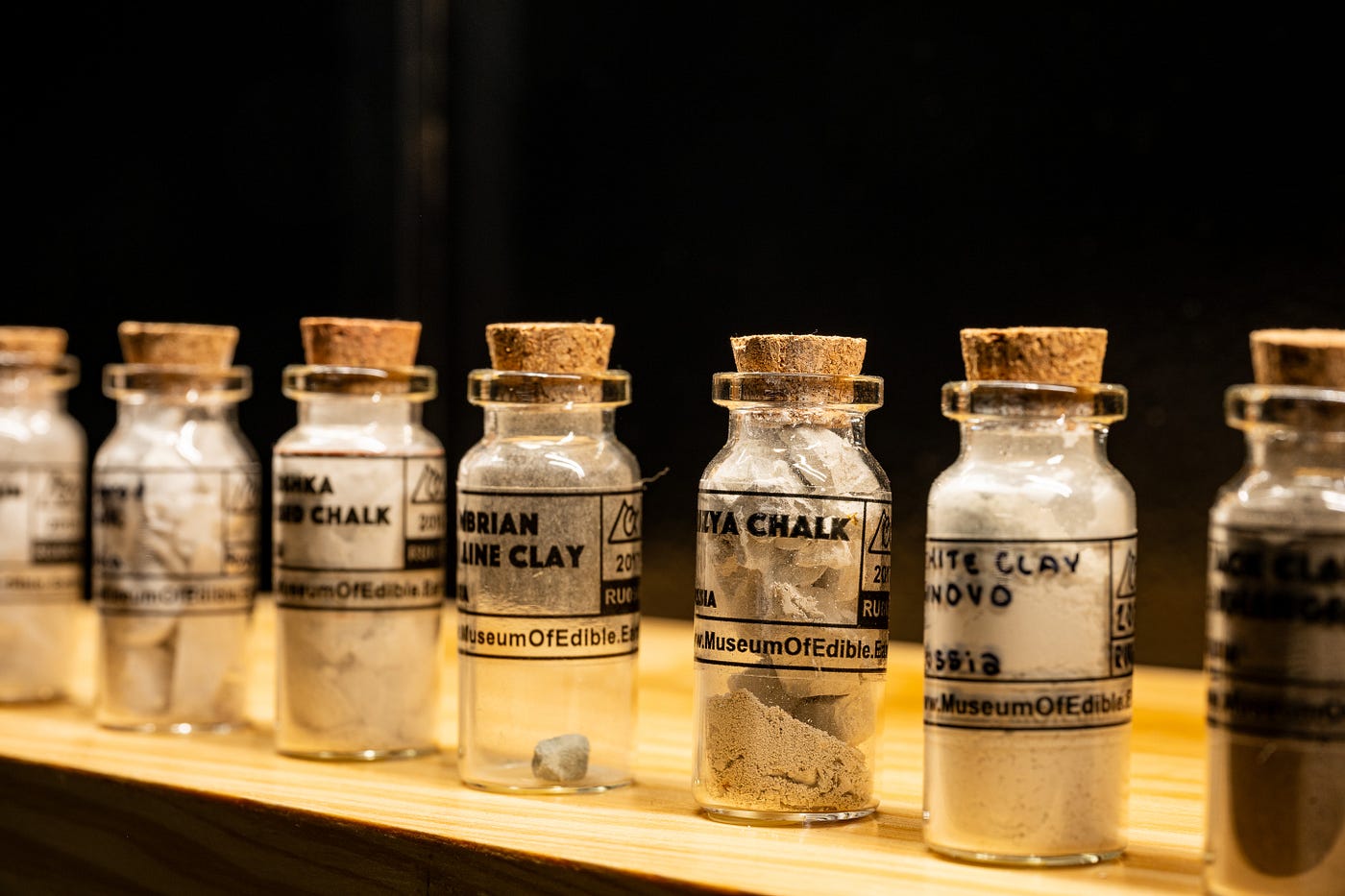
Museum of Edible Earth (Close up)
The Museum of Edible Earth displays a large collection of earth labelled with geography and culture. These are shaped by famines, comfort and religion among many other factors. This exhibit introduces Pica, a condition where people consume non-food substances that are not culturally accepted. Sounds irrational? Here, eating earth, known as Geophagia is framed as knowledge. It is not about craving something strange, but rather of filling an absence. Nutritional, emotional or social. The body often finds its own vocabulary.
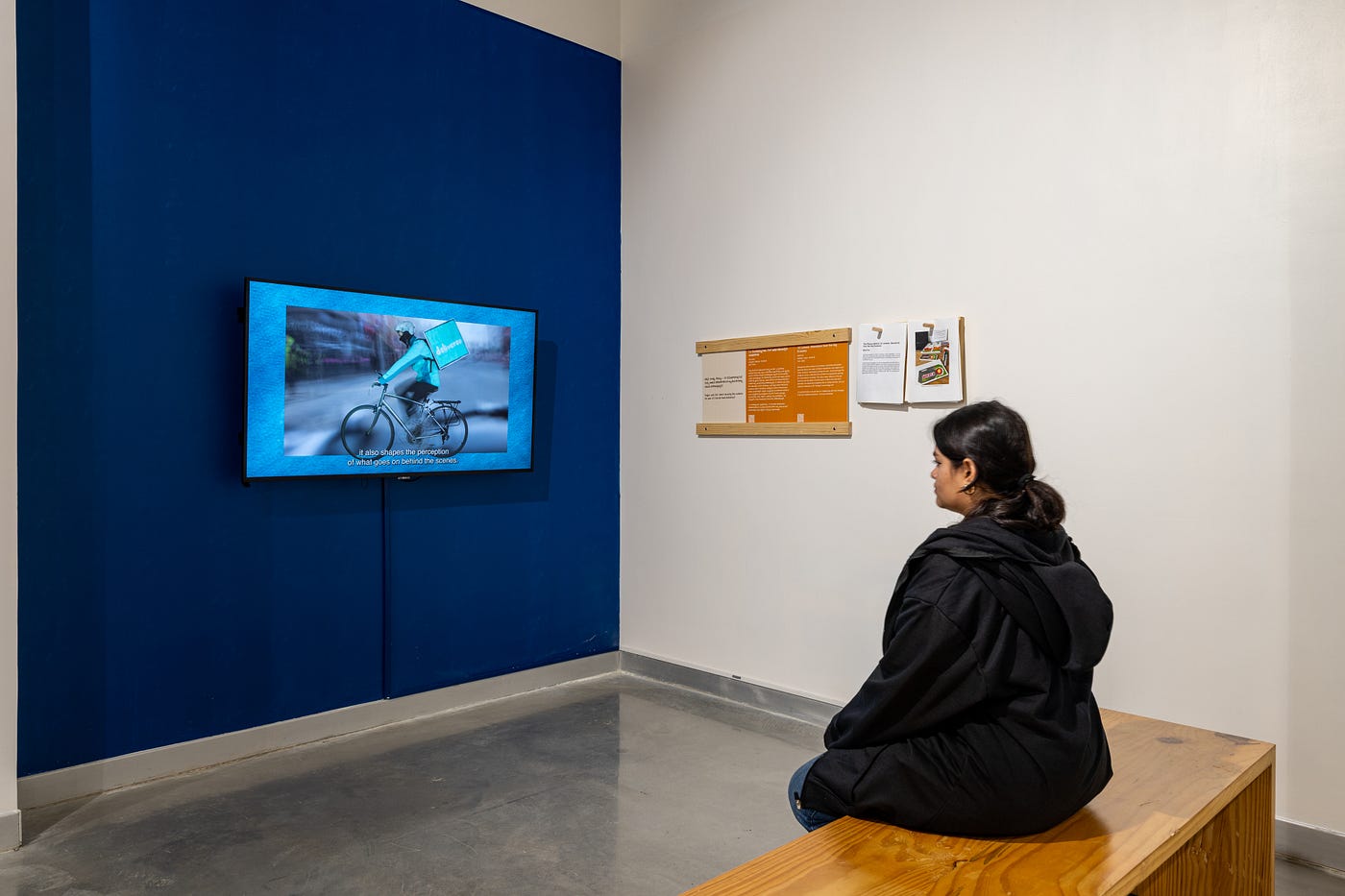
12 Lemons
12 Lemons, an exhibit on the adventures of the gig economy, also highlights Anorexia. It looks into the ritual of eating where discipline replaces desire. The refusal of food masquerades as strength. But anorexia is not simply about avoiding food, it is also about constantly editing yourself in a world that demands perfection.
Then comes What I Eat in 80 Diets, a work that mirrors the noise of contemporary food landscapes. One of the documented pieces here openly talks of binge eating. Here, the body is no longer starved into silence but overwhelmed into compliance. Hunger becomes confusingly tangled. Eating into exhaustion becomes the norm.
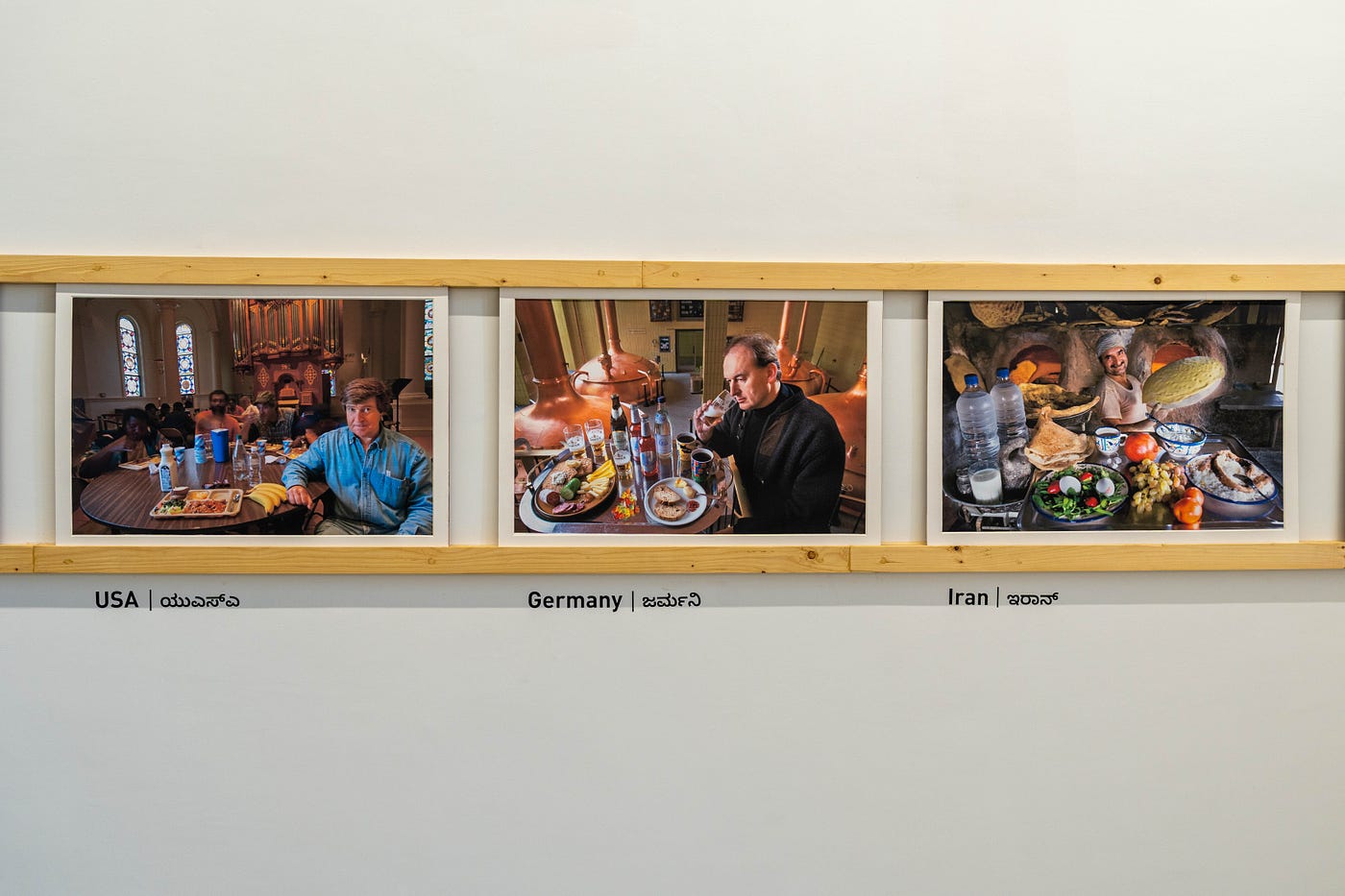
What I Eat in 80 Diets (Partial Segment)
These three exhibits map a trajectory that feels uncomfortably familiar to Navika. The function of eating has changed throughout her life, from survival, to control, to coping. From instinct, to restraint, to overload. She tried to adapt not only to her body, but also society. Eating, at its core, has never been just biological. It is historical, political, and emotional.
Naming these experiences as pica, anorexia and binge eating does not flatten them. It sharpens our understanding that these are not isolated conditions, but rather responses shaped by our environment, culture and time. In each of these cases, the body speaks when language fails. What makes these exhibits notable is their refusal to moralise. It is not with the intent to judge the eater, but rather to question the world that produced these patterns. The drive here is to acknowledge that hunger takes many forms, and not all of them can be solved with a meal.
As she leaves the gallery, she realises. Food has grown with her. It has been both her refuge and weapon. Sometimes, eating is not solely about nourishment. Sometimes, it is the body learning how to survive in a world that keeps changing its rules.
메타데이터
- post_id
- 09c9c0532e4e
- slug
- what-we-put-in-our-mouths-when-words-fail-us-09c9c0532e4e
- url
- https://medium.com/@sciencegallerybengaluru/what-we-put-in-our-mouths-when-words-fail-us-09c9c0532e4e
- canonical_url
- https://medium.com/@sciencegallerybengaluru/what-we-put-in-our-mouths-when-words-fail-us-09c9c0532e4e
- author_url
- https://medium.com/@sciencegallerybengaluru
- status
- ok
- fetched_at
- 2026-06-29 22:44:20