*182* Biology 7/8 Persistence as the Condition of Function: From Structural Discontinuity to the…
The contemporary approach to biological systems rests on an assumption that has gradually become implicit: an observable structure, once it…
182 Biology 7/8 Persistence as the Condition of Function: From Structural Discontinuity to the Illusion of Reduced Systems

The contemporary approach to biological systems rests on an assumption that has gradually become implicit: an observable structure, once it reaches a sufficient level of organisation, would inherently contain the conditions of the function it appears to express. This idea now permeates fields as diverse as cerebral organoids, cell-based therapies, molecular biology, and genetics. It manifests in the belief that a reduced version of a system preserves its nature, that a stem cell already contains the blueprint of a complete organ, that an organoid may be treated as a miniature brain, or that DNA constitutes a direct memory of life. Within this framework, the system is conceived as an assembly of parts whose function emerges mechanically, and what is observed locally is extended to the whole without discontinuity. In this same logic, the brain is often described as a simple assembly of parts, where function is assumed to emerge directly from structure, and where local observation is extended to the entire system without questioning the conditions that make such extension possible.
Such apparent continuity conceals a fundamental rupture. Reducing a system does not preserve it; it alters its nature. A stem cell does not contain an organ awaiting deployment; it responds to a set of conditions — chemical signals, physical constraints, energetic organisation, and environmental context — that entirely determine the type of organisation that may emerge. What is observed in the laboratory is not the unveiling of a pre-existing structure, but the manifestation of a conditional response. If those conditions change, the result changes. What is produced is therefore never autonomous, but dependent on the framework within which it emerges. A reduced system is therefore not a simplified version of the original, but a fundamentally different system whose behaviour depends entirely on the conditions that sustain it.

This dependence introduces an essential distinction between formation and existence. A structure cannot be defined by its appearance, but only by its capacity to persist. An organisation that does not persist is not a transient structure; it never constitutes a real structure. This is not a process of formation followed by disappearance, but an impossibility of establishment. A bond that does not hold does not exist; an organisation that cannot be maintained is not a structure. Stability is not a secondary property; it is the very condition of existence. From this perspective, function cannot be separated from persistence: without the ability to be maintained over time within a system, what appears as function is only a temporary configuration.

This principle applies across all scales. A molecule exists only through the stability of its bonds over time. If those bonds cannot be maintained, there is no stable state, no preserved intermediate, and no identifiable organisation. In an environment defined by a single, constant interaction, without interference or competing processes, no structure can persist if that interaction does not allow the stability of bonds. Within such a framework, certain structures we consider fundamental simply cease to exist — not because they are destroyed, but because they can never be established. This shows that what we call “existence” is not a given, but a condition continuously sustained by the system.

This logic reveals a general principle: a system does not directly produce what appears to be observed; it enables or prevents the persistence of structures depending on its internal conditions. What is interpreted as production is in fact a condition of possibility. Structure alone can never explain function, because the system defines what can persist, and therefore what can exist.

This structural limitation becomes even more evident when examining experimental models such as cerebral organoids. These are not miniature brains, but local organisations of cells stabilised under artificial conditions. They lack full vascularisation, integrated immune responses, endocrine regulation and continuous systemic interaction. Their exchanges remain limited, their environment is constrained, and their stability depends on externally maintained conditions. What they reveal is not the functioning of a brain, but the capacity of cells to organise locally under controlled parameters.

In a living organism, by contrast, every cell is embedded within a continuous and dynamic network of interactions. Signals are not only transmitted but constantly modulated, amplified, or attenuated depending on the global state of the system. Function does not arise from structure alone, but from the coherence of these interactions over time. A neuron can generate electrical activity, but without synchronisation, regulation and integration into a larger network, this activity carries no functional meaning. The transition from local activity to global function is not a matter of scale, but a transformation of nature.

The same misunderstanding appears in the interpretation of the blood–brain barrier. Commonly described as a passive filter, it is in reality an active and adaptive regulatory system. The passage of substances is not determined solely by their molecular properties, but by their compatibility with the system’s equilibrium. The same molecule may be allowed, transformed or expelled depending on the physiological context. The brain does not simply filter — it evaluates, adjusts and corrects continuously through mechanisms such as active transport and efflux systems. What appears as selection is in fact dynamic regulation.

A comparable reduction occurs in the interpretation of proteins such as HP1. When approached strictly as structural elements of chromatin, they are assumed to directly account for DNA stability and organisation. However, this interpretation neglects the conditions under which these interactions occur. Once factors such as hydration state, intracellular dynamics, molecular fluxes and energetic gradients are reintroduced, it becomes clear that the observed role of HP1 is not autonomous. Its activity reflects the state of the system in which it operates. What appears as a structural function is in reality the expression of a dynamic equilibrium.

This dependence on conditions requires a redefinition of function itself. The presence of activity, even when complex, is not sufficient. A function presupposes integration within a global system, continuous regulation, and the capacity to persist over time. Without persistence, there is no function — only a transient configuration stabilised under specific conditions.


Key Structural Breakpoints Revealed
. What is Commonly Assumed. What Emerges from This Analysis. A reduced system preserves its nature. A reduced system becomes a different system. A stem cell contains a complete organ. A cell only responds to conditions imposed on it. An organoid is a miniature brain. An organoid is a dependent local structure. Structure alone defines function. Function emerges from continuous interactions. Neural activity equals function. Activity without integration has no full meaning. The brain works like a filter. The brain continuously regulates and adjusts. Molecules act based on fixed properties. Their effect depends on system equilibrium. Replacing cells restores function. Restoration depends on global system balance. Integration is a simple addition. Integration transforms the entire system. Stability in lab equals real stability. Lab stability can be artificial and constrained. A coherent structure is a functional system. A structure may not sustain itself over time. Local observation explains the whole. Local and global must be understood together

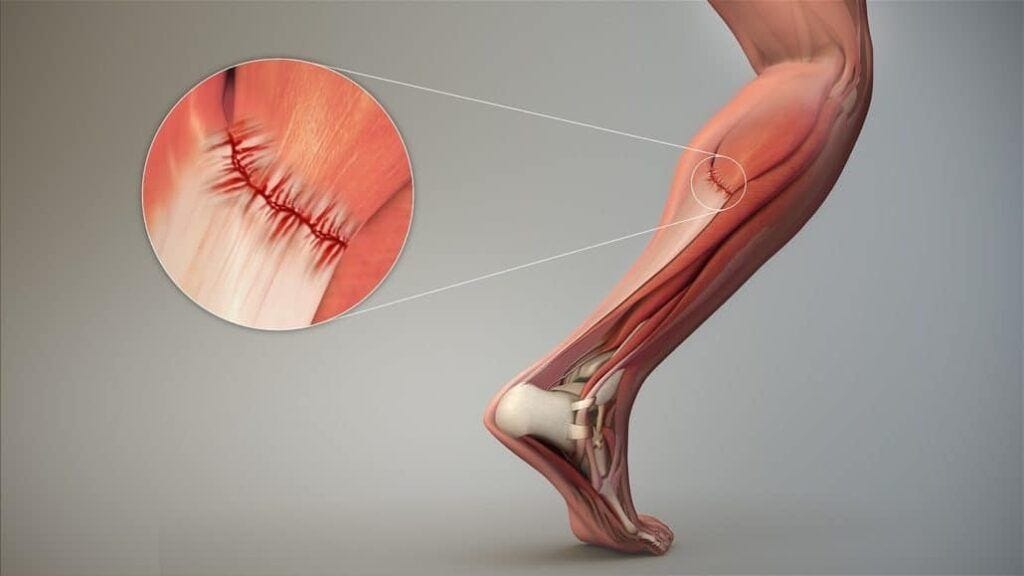
This requirement of persistence allows for a re-evaluation of cell-based therapies, particularly in the case of the Achilles tendon or neurodegenerative conditions such as Parkinson’s disease. The introduction of cells is often interpreted as a reconstruction of the system. In reality, a cell does not simply add itself to a system; it enters an already structured environment, with its own constraints, balances, and internal dynamics. To function, it must integrate with existing rhythms, electrochemical conditions, communication networks, and regulatory mechanisms. This integration necessarily transforms the system itself. It may produce a local improvement, but this improvement remains dependent on global stability. Without coherence at the system level, the effect remains partial, unstable, or temporary.

However, when examined more closely, this idea begins to break down. Non-coding DNA represents the majority of the genome. It is difficult to treat something so dominant as merely supportive. A biological system does not maintain such a large proportion of elements for a minor role. This suggests that its real function is more fundamental than commonly described.

In reality, DNA does not operate by clearly separating what produces from what controls. Everything is interconnected. Some regions directly produce, while others do not act in that way, yet remain essential to how that production takes place. The difference is not one of importance, but of function. DNA operates through multiple levels working together: material, structure, organization, regulation, expression, and the overall state of the system. Each level plays a distinct role, but none functions independently.


The environment into which these cells are introduced is therefore decisive. In conditions such as Parkinson’s disease, the tissue is already profoundly altered: chemical imbalances, metabolic disruptions, disorganised circuits, and long-term adaptations. A cell that functions under laboratory conditions may fail in an unstable biological environment where the necessary conditions are not present. This creates a gap between theoretical capacity and actual outcome. What is observed locally cannot be extended to the system as a whole.


This limitation is also evident in genetic analysis. DNA is never read directly. Every interpretation relies on comparisons, databases, and pre-existing models. The result obtained is a construction, dependent on the methodological framework. What is presented as genetic truth is in fact a conditional estimate. The further back in time the analysis extends, the more dominant interpretation becomes. DNA does not provide direct access to the past, but a reconstruction dependent on available references.

Across all these domains, the same error recurs: a local structure is treated as a complete system, activity is confused with function, and partial observation is extended to the global. This extrapolation ignores the fact that living systems are not defined by their isolated components, but by the continuity of their interactions. A cell, a protein, or a genetic sequence does not contain in itself what it appears to produce; it participates in a system state upon which it entirely depends.


Biological systems do not evolve through abrupt events, but through gradual modifications of their operating conditions. An organisation may appear stable while being under constraint, accumulating imperceptible adjustments that progressively alter its overall behaviour. This phase is difficult to detect precisely because it presents no visible rupture. Yet it does not correspond to true stability. A system does not correct its imbalances locally; it modifies the global conditions of the environment. When such a modification occurs, it does not restore the initial state, but establishes a new regime of operation in which certain structures become incompatible.
What enters is not what exits unchanged. Information is adjusted, modulated, and aligned with the current state of the system.

This means that genetic information is not directly expressed. It is first transformed. Between the sequence and its expression, there is a decisive step where conditions are set. Accessibility, intensity, timing — these are not secondary variables. They are defined at this interface level. This is where potential becomes functional.

There is no logical continuity between a transformed state and an original state. Observing a structure does not provide direct access to its origin. What is observed is always conditioned by the present state of the system. An unstable structure is not a structure, and a function cannot be defined independently of its capacity to persist.

The fundamental question therefore shifts: it is no longer whether a structure can appear, but whether the conditions for its persistence are met. As long as this persistence is not demonstrated, what is observed cannot be considered a real function, but only a dependent, conditional, and potentially ephemeral organisation. Life does not reside in the mere appearance of forms or activities, but in the continuity of their maintenance, in the coherence of their interactions, and in the capacity of the system to preserve its integrity through time.


Non-coding DNA is therefore not a secondary layer of the genome. It is the point where information becomes usable. Without it, there is no clear transition between what exists in DNA and what is expressed in the cell. What defines the system is not production alone, but the conditions that make production possible, stable, and coherent. This adaptive interface is where genetic information becomes functional reality.
— — — — — — — — — — — — — — — — — — — — — — — —
메타데이터
- post_id
- 09d383dd7bb4
- slug
- 182-biology-7-8-persistence-as-the-condition-of-function-from-structural-discontinuity-to-the-09d383dd7bb4
- url
- https://medium.com/@gouvielos/182-biology-7-8-persistence-as-the-condition-of-function-from-structural-discontinuity-to-the-09d383dd7bb4
- canonical_url
- https://medium.com/@gouvielos/182-biology-7-8-persistence-as-the-condition-of-function-from-structural-discontinuity-to-the-09d383dd7bb4
- author_url
- https://medium.com/@gouvielos
- status
- ok
- fetched_at
- 2026-06-09 15:37:30