How Amazon Knows What You’ll Buy Tomorrow
A Data Analytics Journey from Business Problem to Business Decision.
How Amazon Knows What You’ll Buy Tomorrow
A Data Analytics Journey from Business Problem to Business Decision.
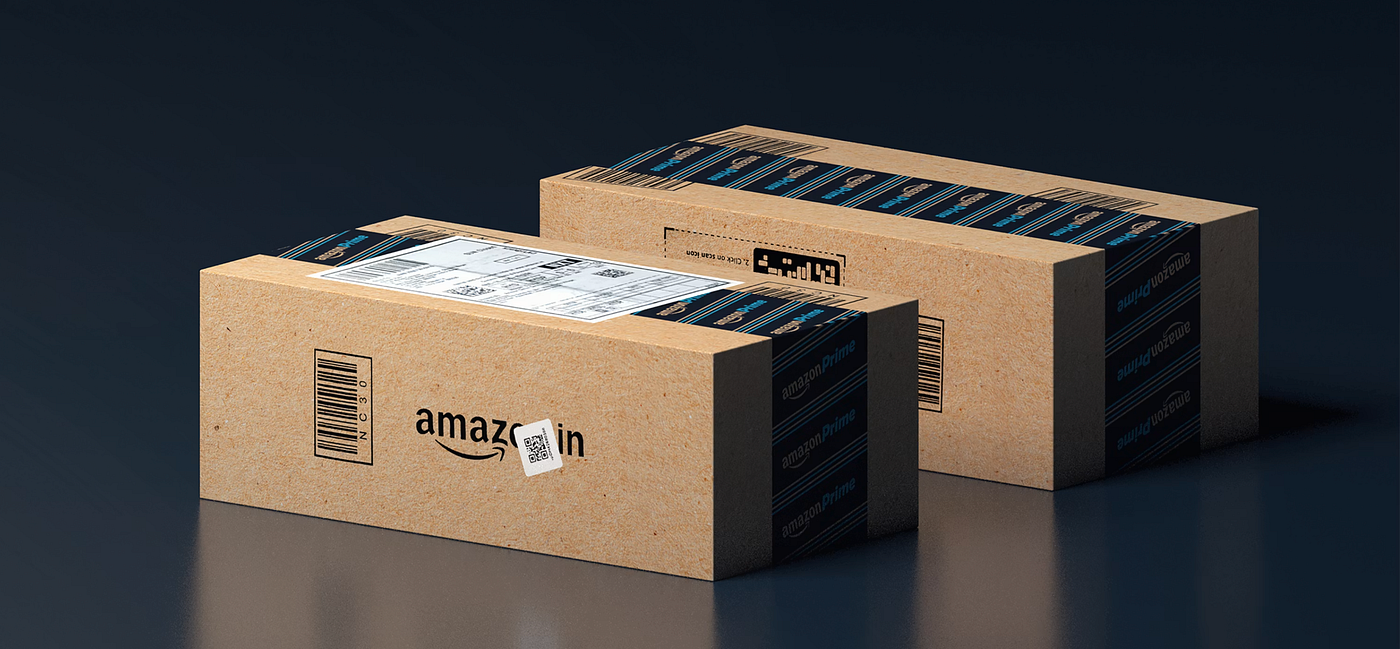
The Invisible Decision Behind Every Amazon Order
Most people have experienced it. You find a product on an e-commerce marketplace like Amazon, open the product page and discover it is out of stock! It is a minor inconvenience for the customer. For Amazon, however, it represents a much larger problem.
Consider what has to happen before a customer places an order. Inventory must already be sitting in a warehouse. Space must be allocated to store it. Suppliers must have delivered it. Transportation networks must be prepared to move it. All of these decisions are made before Amazon knows exactly who will buy the product and when.
Now multiply that challenge across millions of products and hundreds of fulfillment facilities serving customers around the world.
This raises a fundamental question: how does Amazon decide how many units of each product to stock and where to stock them before demand actually appears?
At first glance, this looks like a logistics problem although in reality, it is a decision making problem shaped by uncertainty. Amazon must continuously make inventory decisions and adjustments without knowing the future. The company cannot objectively eliminate uncertainty however it can definitely leverage data to reduce it. That process begins with understanding the cost of being wrong.
The Billion Dollar Inventory Dilemma
Every inventory decision involves some degree of trade offs. If Amazon stocks too much inventory, products occupy warehouse space for longer than necessary leading to capital being tied up in unsold goods and increased storage costs. Products can even become obsolete before they are sold.
The opposite can be equally costly. If inventory levels are too low, products become unavailable when customers want them. Leading to lost sales, missed delivery promises and customers may choose a competitor instead. Afterall, customer retention is a critical business metric.
Many people assume that the ideal solution is to eliminate “stockouts” completely. In practice, that would require carrying huge amounts of inventory across every product category. The cost of doing so would be unsustainable. The real objective is balance. Amazon only needs enough inventory to meet expected demand while avoiding unnecessary storage costs. Every inventory decision therefore becomes a prediction about future customer behavior.
Interestingly, the lowest cost inventory decision is not always the best one. Amazon might decide to place inventory in a warehouse where local demand is lower just because that location can efficiently serve as a hub for multiple nearby regions. The goal is not simply to stock products where demand is highest, but is to optimize the performance of the entire fulfillment network.
The challenge is deciding what they are likely to buy tomorrow. To make that decision, Amazon needs evidence.
What Can Data Tell Us About Tomorrow?
The first source of evidence comes from historical sales data.
If a product has sold for several years, that sales history provides valuable clues about future demand, patterns often emerge over time. Some products sell steadily throughout the year while others experience predictable seasonal spikes. However historical sales alone rarely provide the complete picture.
Imagine Amazon is trying to estimate future demand for umbrellas. Past sales may reveal that demand increases during the monsoon season. Weather forecasts may indicate heavier than usual rainfall this year. Customer searches for umbrellas might already be increasing. But a supplier could be experiencing production delays.
Each of these factors contains information that may influence future demand, Amazon therefore relies on a wide range of signals. These internal signals include sales history, search activity, product page views, shopping cart additions, wish lists, returns, inventory levels and supplier performance and external signals may include weather conditions, holidays, festivals, promotional events, economic trends and regional purchasing behavior among many other metrics.
A sudden increase in searches for a product can sometimes appear weeks before a corresponding increase in purchases. In some cases, customer behavior reveals demand before sales data does. This is one reason why companies increasingly look beyond transaction records when trying to understand future demand.
No single dataset can explain future demand. Sales data may reveal what customers bought. Search activity may reveal what they are considering. Weather forecasts may reveal when demand is likely to change. The challenge is combining these signals into a coherent picture. Collecting data is only the beginning. The next challenge is determining which signals actually matter.
Finding Patterns Hidden in the Noise
Large organizations generate vast amounts of data every day. Not all of that information is useful. Records may contain errors others may even be incomplete. Certain events are unusual and do not represent normal customer behavior. Before any forecasting takes place, analysts must determine which patterns are meaningful and which are simply noise.
This stage is often called exploratory data analysis (EDA).
Suppose analysts discover that umbrella sales increase sharply every year between June and September. That pattern may indicate seasonality.
Suppose they notice that demand is significantly higher in some cities than others. That may reveal regional preferences.
During EDA, analysts may discover that umbrella demand peaks two weeks after the first major rainfall in a region rather than at the start of the monsoon season itself. Findings like these often become more valuable than the forecasting model because they reveal how customers actually behave.
Now imagine that umbrella sales suddenly increase tenfold during a single week because a product went viral on social media. Analysts must decide whether that spike represents a lasting trend or a temporary spike event.
These distinctions matter because poor data interpretation leads to poor decisions. Analysts are not just looking for patterns, they are also looking for explanations in every case. A recurring spike in demand is useful only if the underlying cause is understood. Otherwise the pattern may disappear as quickly as it appeared. The objective therefore is not merely to describe what happened in the past but to understand why it happened and whether it is likely to happen again. Only after identifying reliable patterns can analysts begin estimating future demand.
Estimating Demand Before It Happens
Forecasting is the process of estimating what is most likely to happen based on available evidence.
Consider a simple example. Suppose a particular umbrella sold 500 units in June, 700 units in July and 1,200 units in August during the previous year. Weather forecasts suggest a stronger monsoon this year and online searches for umbrellas are already increasing.
Taken together, these signals suggest that demand may rise again.
Forecasting models use historical patterns and current information to estimate future demand. The exact methods may vary from traditional statistical techniques to advanced machine learning systems but the objective remains the same: reduce uncertainty. Consumer preferences may change. Competitors may launch new products. Supply chains might experience disruptions. Unexpected events occur regularly. For this reason, forecasts are never perfect, they do not need to be. A highly accurate forecast does not always produce the best inventory decision. If replenishment lead times are long or warehouse capacity is limited, operational constraints may matter more than forecast accuracy itself.
A forecast that is directionally correct can still improve business decisions. If demand is expected to rise significantly, the exact number matters far less than recognizing the trend early enough to act on it. A forecast does not remove uncertainty although it provides a better basis for making decisions than guesswork. The real value of forecasting appears when those estimates influence business actions.
When Predictions Become Business Decisions
Many discussions about analytics stop at forecasting. In practice, forecasting is only an intermediate step. Business value is created when forecasts lead to decisions.
Suppose Amazon predicts unusually strong demand for air conditioners across southern India over the coming months. Several decisions may follow. Additional inventory can be ordered from suppliers, products can be moved closer to regions where demand is expected to increase, warehouse space can be reserved in advance, transportation capacity can be adjusted to support higher shipment volumes and safety stock levels can be increased to reduce the risk of shortages. These actions may seem obvious in hindsight. The challenge is that they must be taken before demand actually materializes. This is what makes forecasting valuable. It gives decision makers time.
Customers never see these decisions directly. What they experience is a product being available when they need it and arriving within the promised delivery window. Organizations invest in forecasting because better predictions support better decisions not because they want predictions. The forecast matters because it changes what the business does next.
When the Forecast Is Wrong
No forecasting system is perfect. Some challenges are difficult even for the most advanced analytical models. New products present an obvious problem because they have little or no historical data. Sudden changes in customer preferences can quickly invalidate previous assumptions. Supply chain disruptions may limit product availability even when demand forecasts are accurate. Unexpected events can create even greater difficulties. A viral social media trend, a natural disaster or a major economic shock can cause demand patterns to change almost overnight.
To address these challenges, organizations increasingly use machine learning systems that can process larger volumes of data and adapt more quickly to changing conditions. Scenario analysis and real time forecasting are also becoming more important as businesses seek to respond faster to unexpected events. Despite advances in technology, uncertainty never disappears but simply becomes more manageable.
What Amazon’s Inventory Problem Teaches Us About Analytics
Amazon’s inventory challenge offers a useful lesson about the role of analytics in modern businesses where the goal is better decisions, not perfect prediction. Historical sales, customer behavior, weather patterns, supplier performance and countless other signals help reduce uncertainty. Forecasting models transform those signals into estimates of future demand. Decision makers then use those estimates to determine what inventory to buy, where to place it and when to replenish it.
What customers see is a simple shopping experience. What exists behind that experience however is a continuous cycle of data collection, analysis, forecasting and decision making. Amazon does not for a fact know exactly what customers will buy tomorrow. What it does have instead is a system that continuously learns from data and converts that learning into action.
Amazon’s challenge is complicated by the sheer scale of its catalog. A forecasting mistake involving a popular product can affect thousands of orders within hours. A mistake involving millions of products simultaneously can ripple through warehouses, transportation networks and supplier relationships across entire regions.
That ability to make informed decisions before demand appears is what keeps products available, delivery promises intact and one of the world’s largest retail operations running at scale. This principle applies to most businesses alike.
References:
[1] Hyndman, R. J. & Athanasopoulos, G. Forecasting: Principles and Practice.
[2] Amazon Science. Forecasting Research.
[3] AWS. Demand Forecasting and Supply Chain Guidance.
[4] Amazon Business. Demand Forecasting and Inventory Planning.
[5] McKinsey & Company. Supply Chain Analytics.
메타데이터
- post_id
- 09dafce3d4b4
- slug
- how-amazon-knows-what-youll-buy-tomorrow-09dafce3d4b4
- url
- https://medium.com/@ameerakallil/how-amazon-knows-what-youll-buy-tomorrow-09dafce3d4b4
- canonical_url
- https://medium.com/@ameerakallil/how-amazon-knows-what-youll-buy-tomorrow-09dafce3d4b4
- author_url
- https://medium.com/@ameerakallil
- status
- ok
- fetched_at
- 2026-07-18 00:16:15