Why Your Breath Feels Stuck — and What Happens When You Let It Flow Again
You’re lying in bed and your breath is shallow, as if your body has forgotten how to breathe. That tightness in your chest, those quick…
Why Your Breath Feels Stuck — and What Happens When You Let It Flow Again
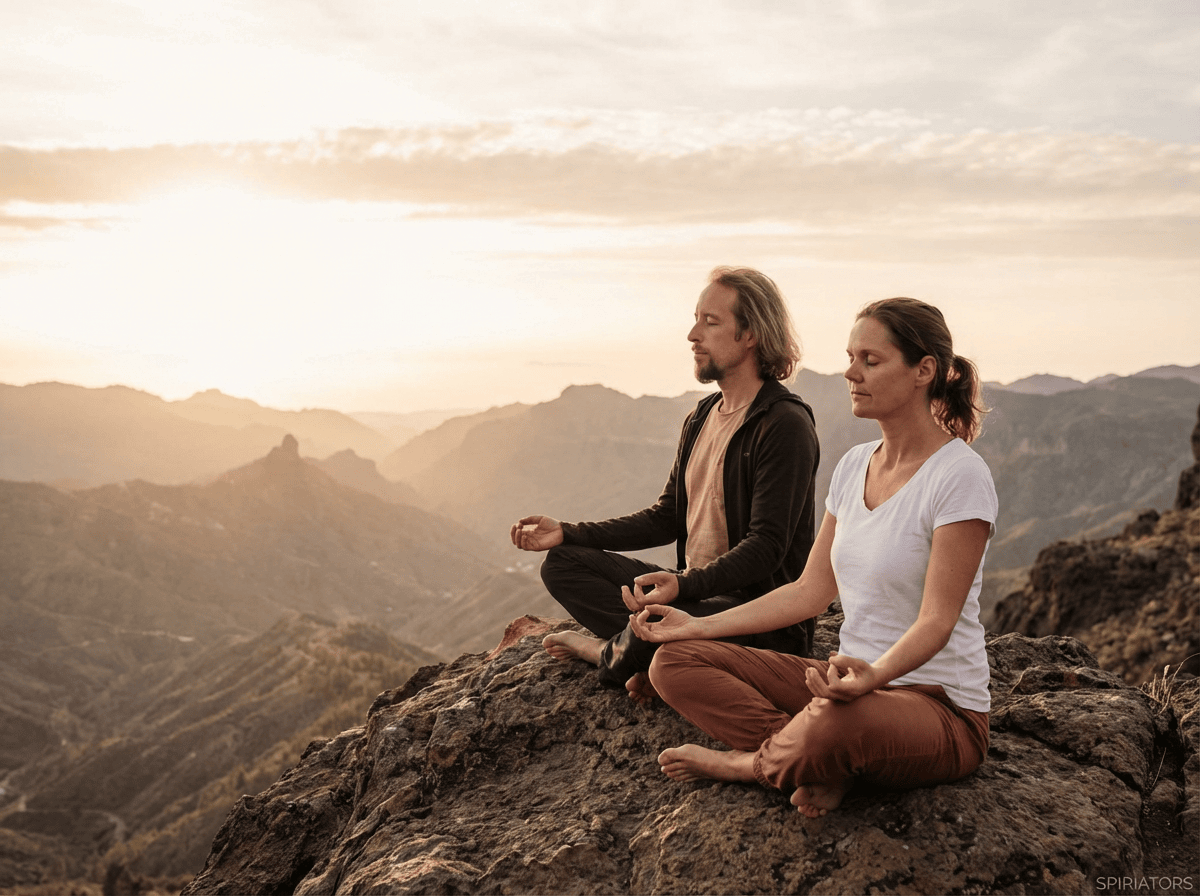
Let the Breath flow again
You’re lying in bed and your breath is shallow, as if your body has forgotten how to breathe. That tightness in your chest, those quick short gasps — it isn’t random. It’s your nervous system stuck in survival mode. And no amount of “just relax” will fix it, because the problem isn’t in your thoughts. It’s in your breath pattern.
Connected breathing is a way to break that pattern. Not by fighting harder, but by consciously reconnecting with what’s already there. It’s an active breath technique where you inhale and exhale without pauses — usually through the mouth, in a flowing rhythm. It sounds simple, and at its core, it is. But the impact on your body and mind is anything but shallow.
In this article, I’ll walk you through what connected breathing actually does, what it feels like, how it differs from other breathwork methods you’ve probably heard of, and how to safely try your first session.
What Connected Breathing Actually Does to Your Body
Your autonomic nervous system has two main settings: sympathetic (gas pedal) and parasympathetic (brake). Under stress, the gas pedal stays pressed. Your heart rate goes up, your breathing becomes shallow, your muscles tighten. Useful when you need to run from danger — but for most of us, that pedal is pressed far more often than necessary.
This isn’t a character flaw. It’s not that you’re “bad at relaxing.” Your body is doing exactly what it evolved to do: keep you safe. The problem is that modern life triggers that safety response constantly — deadlines, notifications, arguments, scrolling. And the brake pedal gets fewer and fewer opportunities to engage.
Connected breathing directly influences this system. By breathing consciously and without pauses, you activate the vagus nerve — the major nerve connecting your brain to your heart, lungs, and gut. Research shows that structured breathing measurably increases heart rate variability, meaning your nervous system becomes more flexible. Not stuck in survival, but able to move between action and rest. Heart rate variability might sound like a dry metric, but it’s one of the strongest indicators of overall nervous system health. When HRV goes up, your body can adapt. When it’s low, you’re stuck in one gear.
A 2025 study demonstrated that even a single session of slow-paced breathing has a direct effect on reaction time and postural control. That might sound technical, but it means something concrete: after just one 10-minute breathing session, your body already responds differently. Your reaction times improve. Your balance stabilizes. You haven’t “changed” — you’ve given your nervous system a reminder that it’s safe.
This is the foundation everything else builds on. Not a mystical experience. Not a hack. Just your body remembering it can shift.
What You Feel — and Why It Can Be Intense
This is the part that surprises most beginners. Connected breathing is felt. Not subtly — genuinely, physically. And that’s exactly the point.
Most people experience tingling in their hands and around their mouth in the first few minutes. Warmth flowing through your arms. A mild light-headedness, as if more oxygen is coming in than you’re used to. After 5 to 10 minutes, a sense of spaciousness often opens in the chest — as if there’s literally more air than you thought.
These sensations aren’t random. They’re your body responding to a new rhythm. When you’ve been breathing shallowly for extended periods — which most of us do under stress — the sudden increase in oxygen and the continuous flow of breath creates a cascade of physical responses. Tingling is often the first sign: your extremities waking up. The warmth that follows is blood flow redistributing. The spaciousness in your chest? That’s your diaphragm remembering it has room to move.
In longer sessions, emotions can surface. Sadness you didn’t know was there. Old tension releasing. A sudden urge to cry, or laugh, or just be still. That’s not a sign something is going wrong — it’s a sign something is moving. Your body finally getting space to release what it was holding.
I remember my first session vividly. About eight minutes in, my hands started buzzing. Not painfully, just… alive. And then something let go in my chest that I didn’t even know I was holding. No dramatic story, no buried trauma. Just a layer of tension I’d been carrying for so long I’d stopped noticing it. That’s the kind of release connected breathing can create.
What you should not ignore: chest pain, nausea, or a feeling that you might faint. That’s your body saying: pause for a moment. That’s not pushing through — that’s listening. If you experience these, stop the session, breathe naturally, and drink water.
It’s Not Wim Hof. It’s Not Pranayama. Here’s the Difference.
“Isn’t this just Wim Hof?” — the question we get most often. The answer: no. And here’s why it matters.
Wim Hof is a specific technique: hyperventilation followed by breath retentions (holding your breath). It’s intense, focused on cold tolerance and physical performance. The breath holds are a deliberate stressor — you’re training your body to handle CO2 buildup. It’s effective for what it does, but it’s not designed to calm your nervous system.
Pranayama is the ancient yogic breath tradition with dozens of different techniques, each with its own rhythms and purposes — alternate nostril breathing, breath of fire, kapalabhati. It’s a vast system, and some forms are calming while others are quite stimulating.
Holotropic breathwork — developed by Stanislav Grof — is a far more intense form: 2 to 3 hours long, with evocative music, lying down, in a group. It’s designed to induce a non-ordinary state of consciousness that goes beyond the everyday. Powerful, but not something you do on a Tuesday morning before work.
Connected breathing is the milder, more modern variant. Shorter (usually 20 to 60 minutes), with calmer music, and focused on regulating your nervous system rather than a mystical experience. It’s accessible. It’s safe. And it’s something you can do on your own after an introduction.
A large blinded study from 2024 found that subjective improvement from breathwork comes partly from ritual and attention, not just from the technique itself. That’s not a disappointment — it’s an honest nuance. It means the intention with which you breathe truly matters. The environment you create, the way you show up, the gentleness you bring — these are not side effects. They’re part of the mechanism. Connected breathing isn’t a trick. It’s a practice.
Your First Session: 10 Minutes, No Experience Needed
Ready to experience it? Here’s a safe, simple first session. No special equipment. Just you, your breath, and 10 minutes.
Step 1: Create space. Choose a spot where you won’t be disturbed. Put your phone on silent. Have a glass of water and optionally a light blanket nearby — your body temperature can shift during a session. Sit upright with support for your lower back, or lie down if that feels better. Soft eyes, jaw relaxed, shoulders dropped. This isn’t meditation. You don’t need to clear your mind. You just need a quiet space.
Step 2: Start with 5 seconds in, 5 seconds out. Through the mouth, in a flowing motion with no pause between inhale and exhale. Don’t force it — just find a relaxed, continuous stream. The breath should feel circular: the end of the exhale flows directly into the next inhale. Set a timer for 10 minutes. If this feels comfortable, you can later extend to 6/6 or 7/7. You can use this free breathing timer to keep your pace steady without checking your phone.
Step 3: Observe what happens. Tingling? Warmth? Mild dizziness? Beautiful — that’s your body responding. Emotions coming up? Let them be. You don’t need to resolve anything. Just breathe and feel. There’s no wrong experience here. Even “nothing happened” is valid data about where your nervous system is right now.
Step 4: Stop at signals. Chest pain, nausea, faintness — that’s your body asking for a pause. Stop immediately. Breathe naturally. Drink water. This is not a competition. There’s no gold star for pushing through discomfort.
Step 5: Integration. After the session: breathe naturally for 1 to 2 minutes. Drink water. Stay seated or lying down for 5 minutes. Don’t rush to stand. Write down briefly what you noticed — one sentence is enough. “Hands tingled at minute 4.” “Felt sad around minute 7, then it lifted.” After 4 or 5 sessions, you’ll see patterns. That’s your micro-data. That’s how you start understanding what your breath is telling you.
A systematic review of 19 studies shows that breathing exercises are a safe, low-threshold intervention for anxiety and stress. Three times per week, 10 to 20 minutes, is a solid baseline for most beginners. More isn’t automatically better — recovery and integration matter just as much as the session itself.
When You Shouldn’t Do This Alone
Practicing on your own is valuable. But there are moments when a coach isn’t a luxury — it’s a necessity.
If you have acute PTSD, a panic disorder, epilepsy, heart or lung conditions, or are pregnant — don’t start alone. That’s not weakness, that’s wisdom. A certified breath coach knows how much space your nervous system can handle and holds that space when you can’t yet.
Also, if you notice you keep cutting your home sessions short, or if emotions feel overwhelming — that’s a signal, not a failure. It means your nervous system is asking for more safety than it can create on its own. That’s exactly what breathwork coaching is for.
At Spiriators, we work 1-on-1, always attuned to what your system can handle. No pressure, no program — you set the pace. We’re always beginners, that’s our approach.
Not a Quick Fix — and That’s Good News
If you were hoping for a “change your life in 10 minutes” promise, I’ll be honest: that doesn’t exist. What does exist is this: 10 minutes of conscious breathing that gives your nervous system a signal. That you’re safe. That you can relax. That there’s space.
The first time might feel unfamiliar. The second time, you start recognizing patterns. The third time, you notice your breathing feels different even outside the session — deeper, calmer, more natural. That’s not magic. That’s your body remembering how it’s supposed to breathe.
Connected breathing is a practice, not a pill. It works because you work. And every session, however short, is a step. Not toward an end goal, but toward more connection with who you already are.
If this resonates, I’d love to hear from you. You can find more of my work at Spiriators.
메타데이터
- post_id
- 09fe2a9c33b6
- slug
- why-your-breath-feels-stuck-and-what-happens-when-you-let-it-flow-again-09fe2a9c33b6
- url
- https://medium.com/@johannesaloijsius/why-your-breath-feels-stuck-and-what-happens-when-you-let-it-flow-again-09fe2a9c33b6
- canonical_url
- https://medium.com/@johannesaloijsius/why-your-breath-feels-stuck-and-what-happens-when-you-let-it-flow-again-09fe2a9c33b6
- author_url
- https://medium.com/@johannesaloijsius
- status
- ok
- fetched_at
- 2026-07-09 15:12:33
