Designing an Event-Driven Node.js Backend for Batch Image Processing and Client Notifications
Came across a situation where users can upload large batches of images at once from a mobile app. While uploading files to cloud storage is…
Designing an Event-Driven Node.js Backend for Batch Image Processing and Client Notifications
Came across a situation where users can upload large batches of images at once from a mobile app. While uploading files to cloud storage is relatively straightforward, the real challenge begins afterward: asynchronously processing each image while keeping the system scalable & responsive. A classic example of an event-driven backend architecture.
Here’s an illustration of the high-level architecture of the solution:
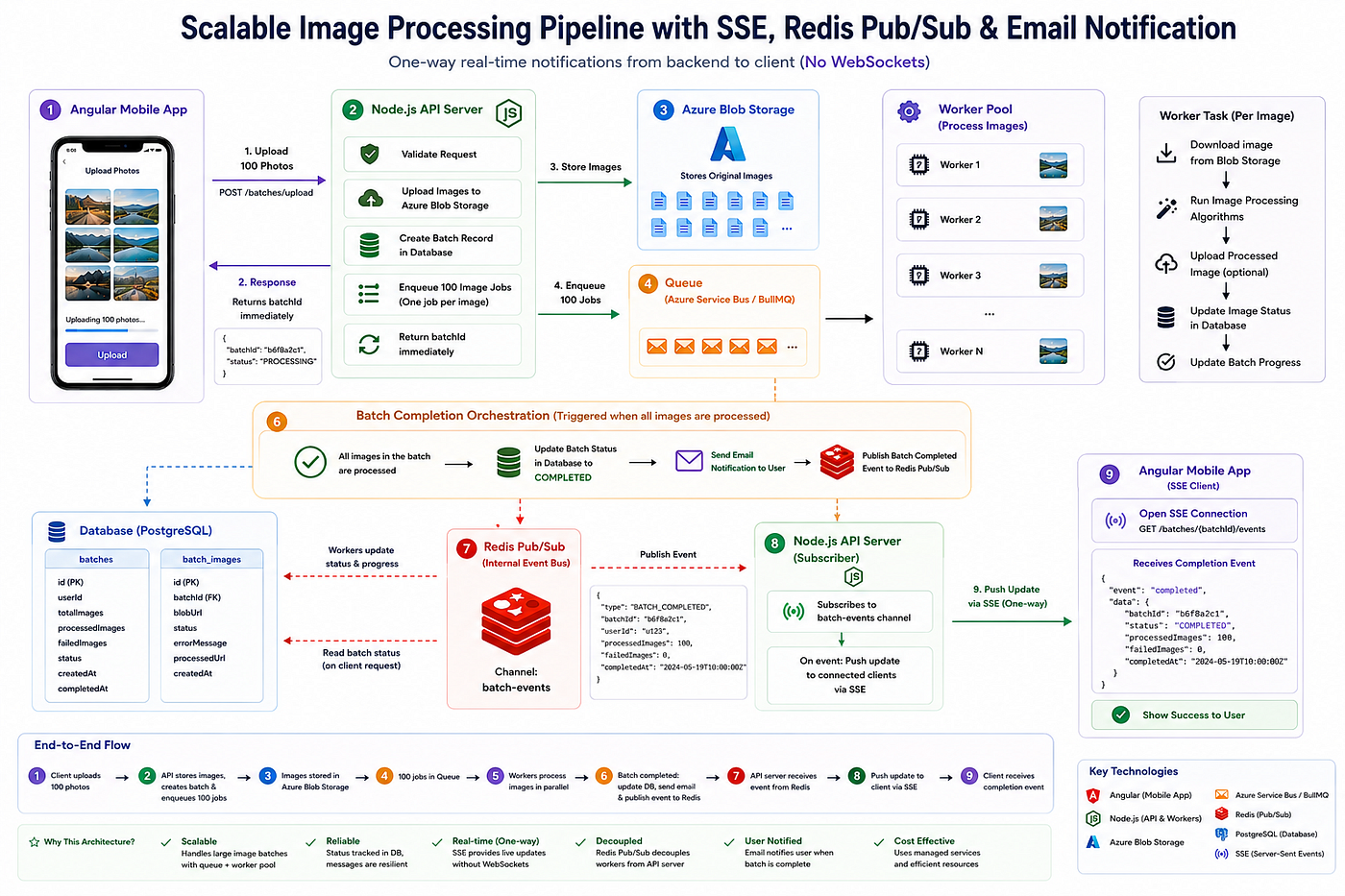
Assume an Angular app uploads a batch of images to a Node.js backend. The backend immediately stores the files in blob storage, creates a batch record in the database, and enqueues one processing job per image. Instead of processing images within the request lifecycle, the work is delegated to background workers through a queue.
This keeps the API responsive while enabling image processing to scale independently through worker pools.
Each worker independently:
- downloads an image from blob storage,
- runs image processing algorithms,
- updates image status in the database,
- and reports progress back to the batch.
Once all images in the batch are processed, the system enters a completion orchestration phase.
At this stage:
- the batch is marked as
COMPLETED, - an email notification is sent to the user,
- and a completion event is published through an internal Pub/Sub channel.
The Pub/Sub layer decouples workers from the API server. Workers simply emit events such as BATCH_COMPLETED, while the API server subscribes to these events and pushes one-way real-time updates to connected clients using Server-Sent Events (SSE).
This creates a clean event-driven architecture where:
- background processing scales independently,
- side effects such as email notifications remain asynchronous,
- and frontend clients receive lightweight real-time updates immediately after batch completion.
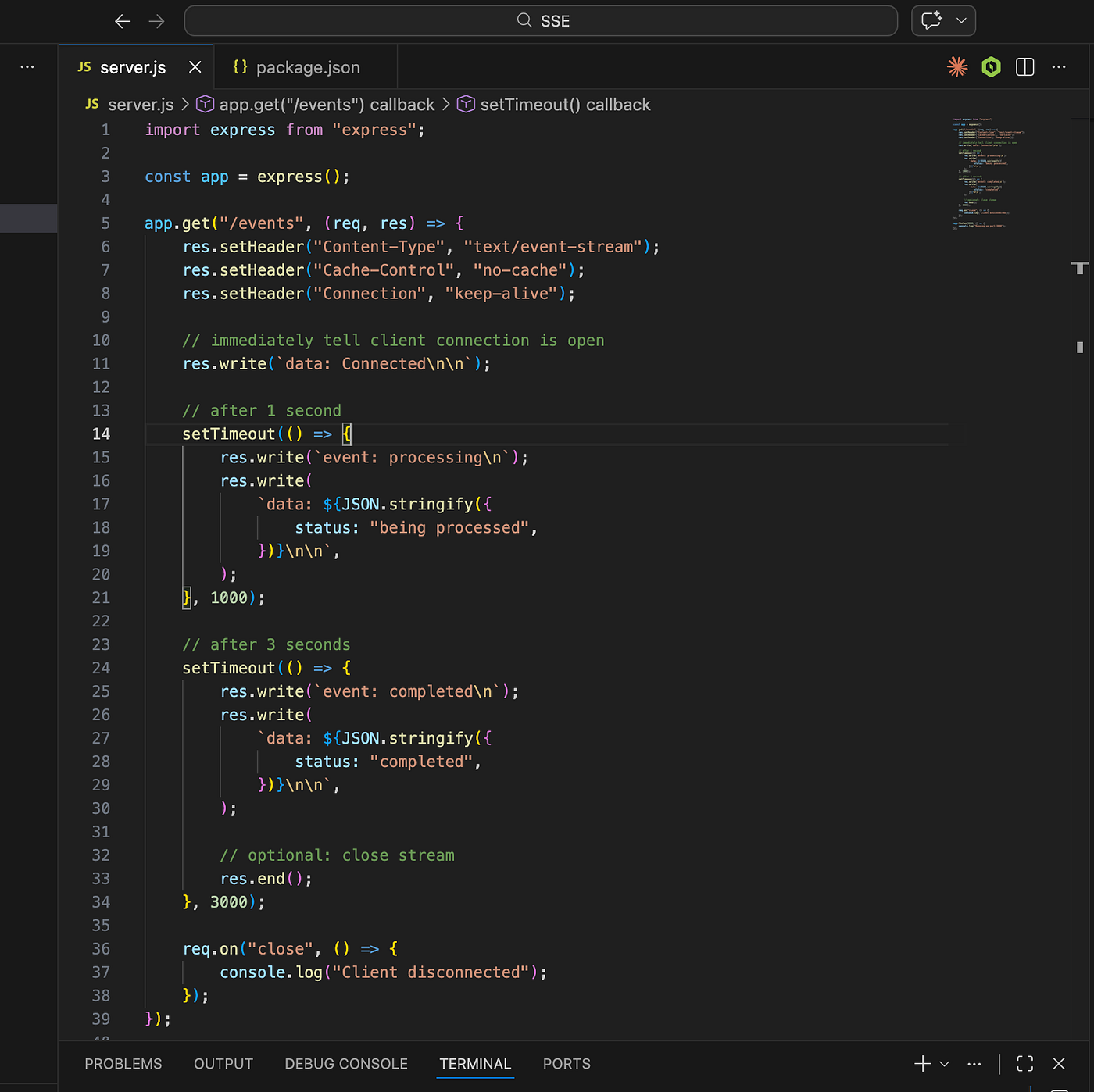
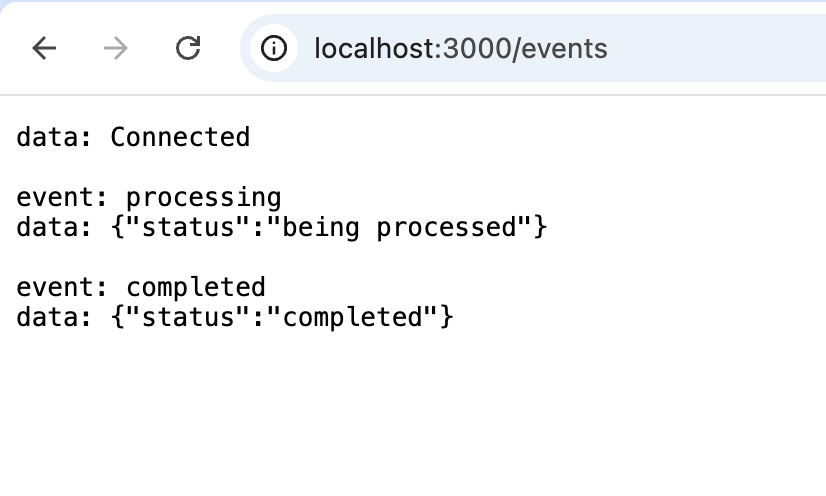
Curious about Server Sent Events (SSE)?
here is a simple example.
메타데이터
- post_id
- 0a0cd2d84ec2
- slug
- designing-an-event-driven-node-js-backend-for-batch-image-processing-and-client-notifications-0a0cd2d84ec2
- url
- https://medium.com/@hamzeen/designing-an-event-driven-node-js-backend-for-batch-image-processing-and-client-notifications-0a0cd2d84ec2
- canonical_url
- https://medium.com/@hamzeen/designing-an-event-driven-node-js-backend-for-batch-image-processing-and-client-notifications-0a0cd2d84ec2
- author_url
- https://medium.com/@hamzeen
- status
- ok
- fetched_at
- 2026-06-09 15:37:30