Understanding Hantavirus
Disclosure: I wrote this article and used AI as a “professional editor” to refine and shorten overly long or complicated sentences.
Understanding Hantavirus
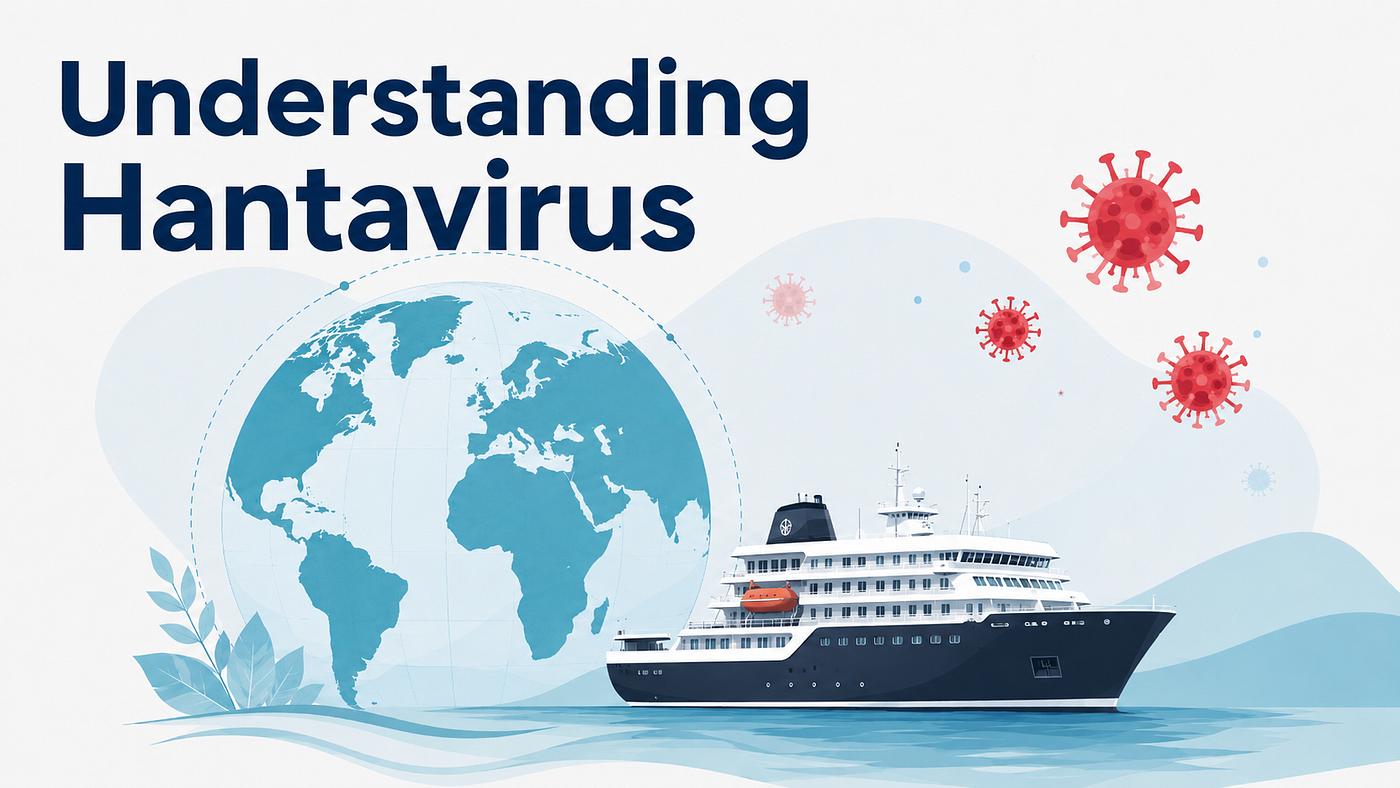
Image generated with the assistance of AI.
Disclosure: I wrote this article and used AI as a “professional editor” to refine and shorten overly long or complicated sentences.
.
Although hantaviruses can be found globally, many people have never heard of them before. I live in California, and hantavirus infections have caused deadly cases here before, most recently in 2025. But there is one big difference between these cases and the one that was reported in early May 2026. The latest outbreak happened on a cruise ship.
Cruise ships are certainly not immune to outbreaks. Common ones include norovirus and respiratory infections. This, however, is the first time a hantavirus outbreak has been reported on board.
So, why is this unusual, yet the W.H.O. assesses the risk to the public as low?
.
What Is Hantavirus?
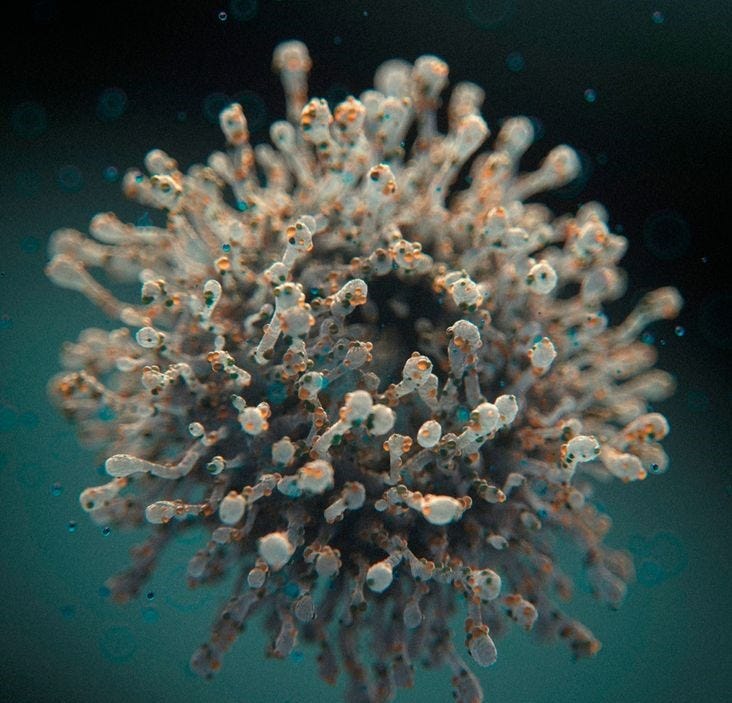
Hantavirus is not one virus; it is a group of viruses. To be more precise, it is a group of viruses in the genus Orthohantavirus, which belongs to the family Hantaviridae. Viruses in the group include Sin Nombre virus, Seoul virus, Andes virus, and Puumala virus, among others. I could continue to tell you that these viruses are enveloped, negative-sense, single-stranded RNA viruses, but that gets way too scientific.
It is more important to know that not all viruses in this group cause the same disease in humans. In the United States, Sin Nombre virus is the main cause of hantavirus pulmonary syndrome, or HPS, in humans. Early symptoms of HPS look a lot like the flu: fever, fatigue, muscle aches, headache, dizziness, chills, nausea, vomiting, diarrhea, or abdominal pain. Several days later, HPS can progress to coughing, shortness of breath, and fluid buildup in the lungs. The CDC estimates that about 38% of people who develop respiratory symptoms die from the disease. There is no specific antiviral treatment. Like with **measles**, medical care is supportive.
In Europe, Puumala virus is predominant and causes thousands of infections in some years, but only very few deaths. Puumala virus usually causes nephropathia epidemica, a kidney-related illness considered a milder form of hemorrhagic fever with renal syndrome, or HFRS. This disease pattern is significantly less lethal than hantavirus pulmonary syndrome.
Hantaviruses usually spread from rodents to people when infected urine, droppings, saliva, or nesting materials are disturbed and contaminated particles become airborne. Depending on the virus, the rodent reservoir can be a mouse, rat, vole, or another wild rodent. Once exposed, people usually develop symptoms within one to eight weeks.
The most recent outbreak in California in 2025 was linked to deer mice and resulted in three fatal infections, most likely involving Sin Nombre virus.
So, what happened on the cruise ship? Was there a rodent infestation? Or how did people get infected with hantavirus?
.
The Cruise Ship Outbreak
There was no rodent infestation on the MV Hondius, a small expedition cruise ship that holds about 196 passengers. Instead, there was an infection with the only virus from the hantavirus group that is known to have the ability to spread from human to human: Andes virus, a hantavirus associated with parts of Argentina and Chile. For human-to-human transmission, the virus requires very close contact, such as sharing a cabin, sharing a bunk room, or providing direct medical care to a sick patient.
One current hypothesis is that a Dutch couple may have been exposed to Andes virus before boarding, during a months-long birdwatching trip through Argentina, Chile, and Uruguay that included regions where hantavirus is known to be endemic. The husband became ill on April 6 and died on April 11, but hantavirus was not suspected. The ship continued sailing. His wife became ill and disembarked at Saint Helena on April 24, then flew to South Africa and died on April 26. Around the same time, other passengers began developing severe respiratory illness. Because early testing focused on more common respiratory causes and hantavirus was unexpected on a cruise ship, the diagnosis was not made until May 2, when a British passenger in intensive care in South Africa tested positive.
By the time hantavirus was diagnosed as the cause, symptomatic people and other passengers had already left the ship and continued traveling on their own. At the time of this article, May 7, 2026, the outbreak is still a developing situation. As of this date, public health authorities have linked at least eight infections to the outbreak across multiple countries, with three confirmed deaths: the Dutch couple and a German passenger who died on board on May 2. While experts do not expect the start of a pandemic, as the virus does not easily spread between humans, international tracing of people potentially exposed to the virus has become the main focus of health authorities, especially as at least 30 passengers left the cruise ship at Saint Helena on April 24, before hantavirus was confirmed and before full isolation and contact-tracing measures were in place.
Early sequencing results have not revealed anything unusual so far, but the full genomic analysis is still ongoing. At this point, there is no public evidence that a new mutation made the virus spread more easily.
.
For now, the situation is still developing. The next weeks of contact tracing will show whether this stays a small, contained outbreak or whether further cases emerge among people who already left the ship. Based on what is currently known about Andes virus, the risk to the wider public is expected to remain low either way.
.
If you’d like to keep reading:
Subscribe to my newsletter on **Substack** (free, email delivery)
If you’d like to follow my work professionally (and read articles there as well):
Connect with me on **LinkedIn**
If you find this writing useful and want to support independent science communication:
You can support my work on **Patreon** (optional)
메타데이터
- post_id
- 0a401c7b99e2
- slug
- understanding-hantavirus-0a401c7b99e2
- url
- https://medium.com/@scienceworthknowing/understanding-hantavirus-0a401c7b99e2
- canonical_url
- https://medium.com/@scienceworthknowing/understanding-hantavirus-0a401c7b99e2
- author_url
- https://medium.com/@scienceworthknowing
- status
- ok
- fetched_at
- 2026-06-09 15:37:30