On Letting Herself Go …
Truth is, she’d found out something that most of us never discover
On Letting Herself Go …
Truth is, she’d found out something that most of us never discover
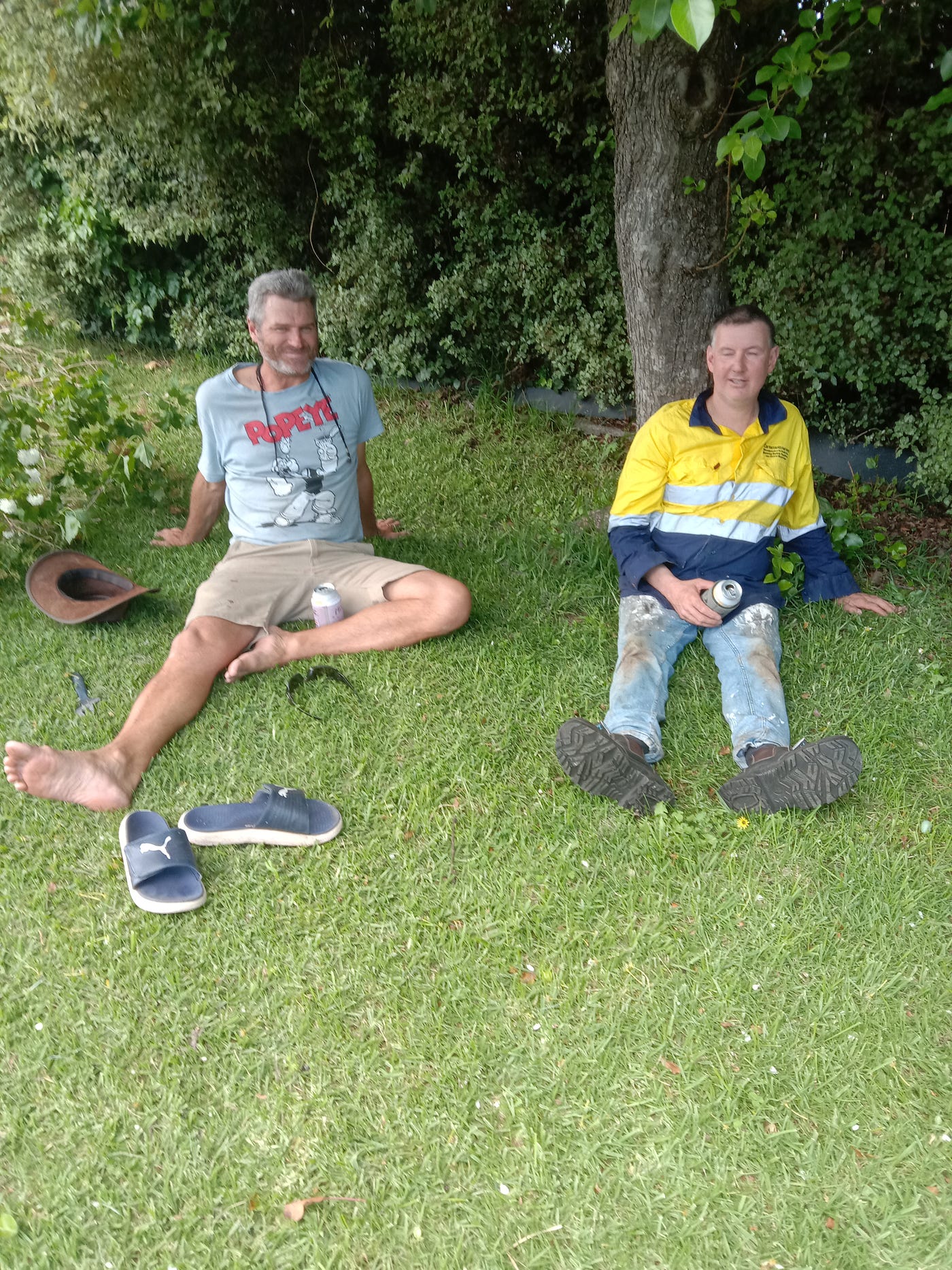
Photo by Jack Bass on Unsplash
Not a member? Click here to read for free.
“[What’s the greater risk? Letting go of what people think — or letting go of how I feel, what I believe, and who I am?](http://“What’s the greater risk? Letting go of what people think — or letting go of how I feel, what I believe, and who I am? “)”
Back in the seventies, stunningly beautiful Rachel Ward was held in high regard for … well her beauty of course!
I was one of her admirers for her acting prowess, and her basic niceness, for want of a better word, but her beauty didn’t escape me either.
Rachel ultimately met her husband Brian Brown on the set of The Thorn Birds and life subsequently went on for her in Australia.
I lost track of her in the busyness of my own life to be honest, and have only caught up in recent times to find she has now eschewed all she had to crawl through to guarantee success on the big screen.
Success, yes, but at what cost?
Being a successful actor demands so much that we laypeople don’t tend to think about really.
We know little about what it takes to maintain ‘beauty’.
- the thick, clawing makeup
- the fillers to cover up the blemishes … and yes, we all have them!
- being rigorously filmed under the magic lighting
- Undergoing the nips and tucks, the additions and subtractions, all designed to produce an actor as close to perfection as is possible
- all that, before acting even begins
Sounds exhausting to me.
I’ll leave you to ponder the excessive number of hours spent hanging around for all of this, the frustrations, the boredom, and then at the end of the day, the rigorous washing off of makeup to do it all again the next day.
Apart from wealth and fame for some, which has appeal for many, is this really living?
Or is this just a means to an end?
Do most actors reach the end of their lives feeling a little short-changed … because when I think about it, money isn’t necessarily true purpose.
So imagine a few days ago when I stumbled over an article on Rachel Ward to find that the British-born actress is now a land owner in NSW, in a wonderful rural area I have long admired.
And last night I happened to watch her documentary on (Australian Broadcasting Company) ABC.
“In fact, Rachel now manages the 350-hectare property she owns with actor husband Bryan Brown in the New South Wales Nambucca Valley and has converted its land management methods to regenerative farming.”
That many acres is not to be sneezed at in terms of running things efficiently and well.
The land I now see as a metaphor for Rachel’s potential.
In her late sixties, face beaten by the wind and the sun, dressed in unironed clothes and farm boots, she really has let herself go.
It’s something she had to do!
I read that she rarely combs her hair, and, shock horror, wears the same clothes for the week and often washes in their pond!
Imagine Farmer Rachel out in the wind and rain, among cow pats and the likes, failing to change her clothes every day! Who would have thought?
EXCEPT: Rachel has found her purpose, and that came about after a scary forest fire that spared her land, but scarred all the farms close by.
“Her embrace of this farming “revolution” followed a depressive episode she suffered in the wake of the devastating Black Summer bushfires of 2019–2020 that came after years of drought.
“While some fences and fringing forest were lost, the farm largely escaped the fire, but the frightening experience left Rachel racked with worry about climate change and the type of planet her grandchildren would grow up in.”
Sure, she was relieved that her land had been spared, but I suspect not for long. Drought is a constant fear in Australia, it being the second driest continent on earth, especially when you know that bushfires often follow, and they’re happening with more frequency!
The future looked bleak.
What about the grandchildren?
What about the wildlife?
What about the earth?
But she then realised that she couldn’t leave things to others. If she couldn’t change, why would others?
This thought became her purpose.
[Purpose is an “intention to accomplish something that is at the same time meaningful to the self and consequential for the world beyond the self.” It gives your life meaning and a sense of direction.](http://Purpose is an “intention to accomplish something that is at the same time meaningful to the self and consequential for the world beyond the self.” It)
Luck also had it that “she was reading Charles Massey’s seminal book about regenerative farming, Call of the Reed Warbler, at the same time as her farm manager, Mick Green Jnr, was exploring new ways of farming in the wake of the fires.
“We started to talk about how we could change the management of the farm,” she says. She learned about regularly moving stock from pasture to allow grasses to regenerate, known as rotational grazing, and how to use bio-fertiliser and reduce chemicals.
“It was exciting because it was new,” she says. “The fires were the catalyst to go. ‘We have to change, we have to start doing things differently.’”
Cattle are the world’s leading agricultural source of greenhouse gases. A single cow releases about 100 to 120 kg of methane annually. While methane is short-lived, it has a warming potential 28 times more potent than carbon dioxide. [1, 2]
This is the statistic that is often tossed into arguments re whether we should be eating meat, or not, or, breeding cattle.
But in the regenerative system, cattle work as mobile composters, helping to improve the soil and, as a result, store more carbon.
You know when things are working well. You may not feel it right away, but you will see it in the land.
“Rachel says she watched her ground go from compacted dirt to soil teeming with life, worms and insects, able to hold more rainfall. The richer soils, which can pull carbon down from the atmosphere, helped Rachel feel she was doing her bit to combat climate change.”
And now picture Rachel with a large part of her life spent acting, and parenting, now witnessing the regeneration of land, land now affected by time, care, hard toil and collaboration with others, acting within the land rather than on the stage. This was definitely hers to choose.
Yours to choose too if you happened to have even just a little garden. We can’t all have acreages, but every little bit helps.
[“A man has made at least a start on discovering the meaning of human life](http://A man has made at least a start on discovering the meaning of human life when he plants shade trees under which he knows full well he will never sit.) when he plants shade trees under which he knows full well he will never sit.”
Those of you who would like to be inspired in a very small way, might get some inspiration from Katie Michaelson’s story today.
https://medium.com/the-daily-cuppa/the-first-thing-you-can-do-before-0afb9f002155
메타데이터
- post_id
- 0a4817a11adc
- slug
- on-letting-herself-go-0a4817a11adc
- url
- https://medium.com/reign-verses-raine/on-letting-herself-go-0a4817a11adc
- canonical_url
- https://medium.com/reign-verses-raine/on-letting-herself-go-0a4817a11adc
- author_url
- https://medium.com/@mariarattray
- status
- ok
- fetched_at
- 2026-06-14 11:28:49