The Boltz AI Red Hat Train Just Made Its Third Stop
Six months ago they signed their first deal and it looked like a moment. Now it’s three deals and it feels like momentum.
The Boltz AI Red Hat Train Just Made Its Third Stop
Six months ago they signed their first deal and it looked like a moment. Now it’s three deals and it feels like momentum.
This piece originally ran on Medium on January 22, 2026, shortly after Boltz announced its Pfizer partnership. The thesis was that this wasn’t a drug discovery deal — it was an infrastructure deal, and infrastructure deals have a way of compounding. Takeda signed on in June. This week, GSK made three. I’m republishing the original case below, with an update at the end.
I’ll admit some quiet satisfaction here. Calling a pattern after one data point is a guess. Calling it after three is starting to look like it was never really a guess.

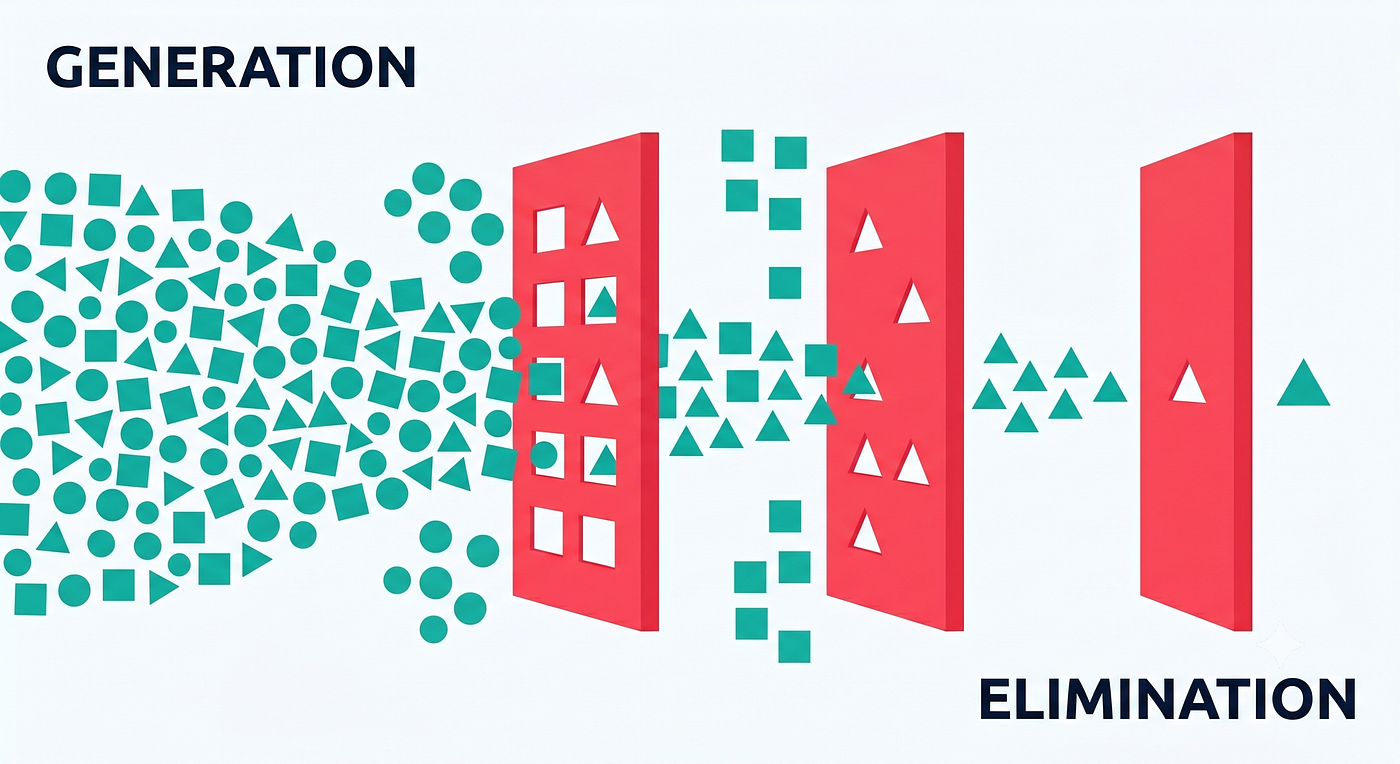
From raw discovery to standardized execution — the shape biology is taking.
Author’s Note
Before diving into the enterprise implications of the Pfizer deal, it’s worth acknowledging the foundation beneath all of this. Boltz exists in a broader ecosystem shared by AlphaFold, OpenFold, Chai-1, and others — and exists in part by building upon the work of others. No company is an island. This is not a story of one model beating another; it’s the story of an ecosystem finally mature enough to power the world’s largest R&D engines.
This isn’t a drug discovery deal. It’s an infrastructure deal — and those tend to reshape industries far more deeply.
Remembering Linux: History doesn’t repeat, but it rhymes
If you developed or ran specialized software in the 1980s, you almost certainly grew up on Unix. Early versions were proprietary, based on AT&T code. Later, Berkeley produced a more open (though not fully open) variant. Both were designed for the mainframe-heavy environments of the era.
In 1991, Linus Torvalds (then 21!) posted his now-famous message to the Minix newsgroup: the first version of a fully open-source Unix replacement kernel was available. With the help of the GNU project, modern Linux was born: open, freely distributed, and capable of running on almost any (half) decent hardware.
It wasn’t just another operating system. The open-source nature of Linux was a shockwave that permanently altered computing.
What’s remembered less clearly is the second revolution that followed roughly a decade later: Red Hat Enterprise Linux (RHEL), which made Linux safe for companies through conservative development, certification, and support.
Though the timelines are compressed, the Boltz–Pfizer announcement follows the same arc.

The Usenet post that started a revolution. Linus Torvalds’ first public post about what would come to be known as Linux. “Just a hobby, won’t be big and professional like GNU.” Seeing around corners is hard, even for those who might change the world.
Contextualizing the Pfizer/Boltz announcement
If you’ve been following the biomolecular AI space, you’ve seen the headlines:
Boltz and Pfizer announced a strategic collaboration to develop and deploy “state-of-the-art biomolecular AI foundation models.” On the surface, this looks like standard industry fare. Big Pharma pays a scrappy AI startup to help find better drugs. We’ve seen dozens of these deals.
Yawn.
But look closer.
This isn’t a drug discovery deal.
It’s an infrastructure deal.
This partnership answers a question many of us have been asking for months: What’s Boltz’s game plan? Now we have an answer. They’re not trying to develop their own drugs, and they’re not selling shrink-wrapped software. They’re executing the Red Hat playbook. They’re building the operating system for the biotech century — and Pfizer just bought the first enterprise subscription.
That distinction matters more than the press release language suggests. Here’s why.
The “Linux Moment” Has Arrived
To understand what just happened, rewind to enterprise computing in 1999. Back then, CIOs had two real choices:
Proprietary Unix (Solaris, AIX): powerful, stable, vertically integrated — and brutally expensive.
Linux: free, open, technically brilliant…and chaotic. No support. No guarantees. No one to call when it broke.
Enterprises didn’t just buy software.
They bought certainty.
Biology in 2026 is in the exact same place.
AlphaFold 3 is the Solaris of our time. Technically extraordinary. Tightly controlled. Google holds the weights, restricts commercial use, and keeps you on its servers. For pharma teams guarding billion-dollar IP, uploading lead candidates into someone else’s black box is a non-starter.
OpenFold is the Debian Linux of biology. Open, performant, community-driven — and without priority support. Who patches it at 3 AM? Who certifies that it won’t hallucinate a bond angle that sends your discovery down a dark alley?
Enter Boltz.
Boltz didn’t invent the kernel. Transformer-based folding and interaction models already existed. What Boltz did was package them, stabilize them, and extend them. And now, they’ve enterprise-ified them. Call it the enHatification of the biomolecular stack. The Pfizer announcement is effectively the RHEL 1.0 launch.

The EnHatification of the Biomolecular Stack. EnHatification (n): The strategic process by which a fragmenting, high-maintenance open-source ecosystem (the “kernel”) is stabilized into a certified, supported, and indemnified enterprise-grade distribution (the “Red Hat”). Researchers get access. IT gets reliable and essential infrastructure.
Pfizer isn’t paying for a model or unique software. They’re paying for a certified, supported distribution of the drug discovery operating system.
Pfizer’s own language makes this clear: “empowering scientists across the company,” “generative workflows for small-molecule and biologics design,” “refining models on Pfizer’s extensive historical data.”
Missing are words like milestones or asset ownership.
In other words: no discovery risk transfer, no molecule-specific bets. This is platform adoption, not R&D outsourcing.
OpenFold and Boltz Are Solving Different Problems
Although OpenFold and Boltz share technical DNA, they are optimizing for fundamentally different risks — and different roles in the biological stack.

OpenFold and Boltz are both open source, but have so far embraced different objectives.
This distinction positions Boltz as the leading candidate for enterprise adoption.
The Power of the Commons: The Hidden Engine Behind the Bio-AI Stack
Boltz doesn’t exist in a vacuum. It sits atop the open-source structural commons the industry quietly built in response to AlphaFold 3’s closed-source pivot. That commons rests on three pillars:
1. OpenFold (Apache 2.0): The shared kernel
A pre-competitive consortium of fierce competitors — BMS, J&J, AbbVie, Takeda, Novo Nordisk, NVIDIA, and others — co-funding a fully open, commercially usable AF3-class model. This isn’t altruism. It’s a compromise structure that scales under competitive pressure.
2. Apheris Federated Learning: The data-relevance engine
Each company trains models behind its firewall. Data never leaves the institution; only encrypted model updates do. The result is something unprecedented in pharma: an open model with more proprietary data behind it than its closed competitors.
3. Boltz: The enterprise distribution
OpenFold provides innovation insurance — no one can ever “turn off” the science. But even the companies participating wring their hands about indirect data leakage and spoiling IP advantages. Boltz, in contrast, provides execution certainty, including uptime, support, indemnification, and a roadmap aligned with pharma timelines. This is the “one neck to wring” enterprises demand.
Pfizer didn’t just buy software: They’re effectively buying into an ecosystem.

The Infrastructure of the Commons. This simplified view of the ecosystem — it excludes other competitors like Chai-1 — rests on three pillars: the OpenFold ‘kernel’ (innovation insurance), Apheris federated learning (data relevance), and Boltz (execution certainty). Together, they turn a potential software monopoly into a shared industry utility.
Selling “Boring” Reliability
Red Hat didn’t win by being exciting. They won by being boring — predictably, relentlessly boring. In drug discovery, exciting models get Nature papers. Boring models get drugs into the clinic because every downstream failure compounds cost, time, and regulatory exposure.
Boltz’s recent releases differentiate themselves not by academic novelty, but by industrial utility:
1. Triage-scale affinity prediction. Boltz-2 predicts binding affinities at roughly 1,000x the speed of physics-based FEP. However, as I’ve discussed, the reliability of Boltz-2 for affinity prediction is primarily good for targets reflected in the training set. When applied to novel systems, predictions can be poor. When applied to suitable systems, it sits as a highly valuable tool for Affinity Funneling — pruning vast chemical space so physics methods can focus where they matter. As models are retrained on Pfizer’s internal data, this funnel only improves over time. (And in a sign of how fast this space is moving, SandboxAQ just announced an OpenFold-based affinity-prediction head — another reminder that capability hopscotches, but infrastructure endures.)
2. Biologics ideation. BoltzGen shows strong facility in ideating protein and peptide binders. In biologics, ideation is far from a drug — but in a field where computational methods still lag those for small molecules, this capability is intriguing.
3. Structure and complex prediction. Competitive with AlphaFold and OpenFold, with known failure modes. Not novel — but reliable.
4. Integrated sanity checks. Non-physical hallucinations are corrected before they propagate downstream. Reducing unusable output matters in a numbers game where each failed candidate costs real money.
Boltz isn’t selling a magic solution engine. They’re selling reliable machinery for triage and idea generation.
Why This Matters Right Now
While OpenFold and Apheris demonstrated that the industry can collaborate, the Pfizer deal is the first unmistakable signal that the era of model tourism is ending.
Until now, pharma faced two choices:
- Build AI infrastructure in-house (expensive, risky, slow)
- Enter bespoke discovery collaborations (expensive, IP-complex, milestone-heavy)
Boltz introduces a third option: license-supported, enterprise-grade AI infrastructure.
This is how markets always shift: first to capability, then to reliability, and finally to standardization.
Linux didn’t stop being interesting because it failed. It stopped being interesting because it became inevitable.
A necessary caveat. None of this implies inevitability, monopoly, or technical supremacy. Biology is messier than software, regulation moves slower than code, and today’s leading models will almost certainly be outperformed. Boltz may not be the ultimate winner, and Pfizer’s adoption doesn’t crown a champion. What is new — and difficult to reverse — is the category itself: enterprise-grade, supported AI infrastructure for biology. That shift matters more than which implementation dominates in the long run.
What would break this thesis? This analogy fails if large pharma ultimately decides that AI models remain too strategically sensitive to externalize — if regulatory expectations harden to require full in-house control of models, training data, and inference pipelines, or if foundation models plateau in ways that prevent reliable reuse across targets. In that world, AI infrastructure would remain bespoke, vertically integrated, and company-specific — more mainframe than Linux. The Pfizer–Boltz deal would then read not as category formation, but as an outlier experiment. It doesn’t look that way now, but the longer you’re in this field, the more you realize looking around corners is always difficult.
Phase 3: The Middleware Opportunity
If Phase 1 was packaging the kernel and Phase 2 was paid certainty, Phase 3 will be platform expansion.
Red Hat didn’t stop at the OS. Pharma won’t either.
1. Bio-middleware. Wet-lab instruments speak incompatible dialects. Middleware will normalize raw output — machine outputs, assay results — into AI-ready tensors. This layer won’t be glamorous, but it will determine who sets the standards. TetraScience and Ganymede are emerging as leaders here.
2. The regulatory wrapper (GxP). Versioning, provenance, uncertainty tracking, and audit trails will become mandatory. This will be Red Hat’s FIPS moment for pharma. Boltz doesn’t address this (at the moment), but expect that such capabilities will be integrated into AI infrastructure (by someone) as the industry continues to mature.
3. Orchestration (DMTA loops). The unit of work isn’t a model — it’s Design–Make–Test–Analyze. Boltz sits as a cornerstone here, and is poised to eventually evolve from a prediction engine into a coordinating agent.
The “IBM Exit”
Two decades after making Linux safe for enterprise, IBM bought Red Hat — not for Linux revenue, but to own the support ecosystem.
If a similar outcome emerges here, the most natural acquirers are full-service life science platforms like Thermo Fisher or Danaher. They already live inside pharma’s workflows, and owning the AI infrastructure layer would be a logical extension.
An IPO is also plausible. What matters is that Boltz is selling support, not software — and that model scales. The Red Hat/CentOS split demonstrates how you can chase profit and not alienate (most of) the open source community, and not break any licensing laws.
The Post-Standardization Era
Standardization doesn’t imply a monopoly. Just as the rise of Red Hat didn’t stop the proliferation of Ubuntu, a dominant Boltz ecosystem won’t stifle innovation from others like OpenFold or Chai-1. Instead, it creates a tiered market: community-driven platforms will continue to prosper as the ‘test labs’ for the next generation of researchers, while the world’s largest R&D engines will lean toward the safety, support, and ‘boring’ reliability of a certified enterprise distribution.
We don’t chase standardization for its own sake. We chase it so the industry can stop troubleshooting the operating system of the lab — and start focusing on the medicine itself. Standardization is liberation.
Since January
Three enterprise pharma companies have now signed on. Takeda deployed Boltz’s models across its research organization in June, with the same structural fingerprint as Pfizer — platform access with target-specific fine-tuning on their own data, no milestone language, no upfront asset transfer. This week, GSK made three — direct access to Boltz’s proprietary models, the Boltz Lab and API interfaces, agent integrations, and joint fine-tuning on GSK’s own data.
That’s the pattern I flagged in January, now repeating on a roughly four-month cadence. One deal is a bet. Two is a coincidence you note. Three, in six months, across three pharma companies with no obvious coordination between them, is a category forming in real time.
One additional data point reinforces this without complicating it. In June, Pfizer also signed a license agreement with Chai Discovery — early access to Chai-3 and a custom model tuned to Pfizer’s biologics workflows. This isn’t hedging on Boltz; it’s what category maturity looks like. Red Hat customers never ran RHEL exclusively — they standardized on it for production systems while running Ubuntu or CentOS for specific workloads where the fit was better. Pfizer is doing exactly that: licensing execution certainty from Boltz across the stack, and frontier antibody design capability from Chai where the science demands it. The category doesn’t require a single winner. It requires standardization — and Pfizer is now buying from two vendors inside the same category.
The caveats above still hold — this doesn’t crown Boltz the permanent winner, and biology can still surprise everyone by moving slower or differently than software did. But the question I posed in January — is this a one-off or an infrastructure play — has an answer now. It’s the second one.
Here’s the next test, stated plainly enough to be wrong: if the cadence holds, a fourth top-20 pharma should sign a structurally similar deal — platform access, no milestones, retrain-on-our-data language — by roughly end of Q4 2026. If that window passes with no fourth deal, or if the next deal looks more like a bespoke discovery collaboration than an infrastructure license, the pattern is weaker than this piece claims. I’d rather commit to that now than only ever grade myself on the calls that already landed.
Conclusion
When Linux became boring, it didn’t just end the operating system wars; it liberated a generation of developers to build the modern web without worrying about the underlying kernel. We are now at a similar precipice in biotechnology.
We aren’t chasing standardization for its own sake. We make AI infrastructure “boring” so that the science can finally become exhilarating again. By solving for uptime, data provenance, and indemnification, the industry gives bench chemists something more valuable than a flashy architecture: the freedom to stop troubleshooting the “operating system” of their lab and start focusing on the patients waiting for a cure.
Boltz appears to be on a trajectory to become the standard — but the real story isn’t the engine. It’s where that engine allows us to go. In a world of reliable, boring infrastructure, the only thing left to be exciting is the medicine itself.
I write A Half Life on Substack — observations from drug discovery, computational chemistry, AI, and how the field actually works. Sometimes just life. Free to follow.
메타데이터
- post_id
- 0a554e70c30d
- slug
- the-boltz-ai-red-hat-train-just-made-its-third-stop-0a554e70c30d
- url
- https://medium.com/@dapscience/the-boltz-ai-red-hat-train-just-made-its-third-stop-0a554e70c30d
- canonical_url
- https://medium.com/@dapscience/the-boltz-ai-red-hat-train-just-made-its-third-stop-0a554e70c30d
- author_url
- https://medium.com/@dapscience
- status
- ok
- fetched_at
- 2026-07-15 17:14:21