Different Oak Leaves You Might Encounter
Oak trees are among the most recognizable trees in North America, but identifying them is not always as simple as it seems. One of the…
Different Oak Leaves You Might Encounter
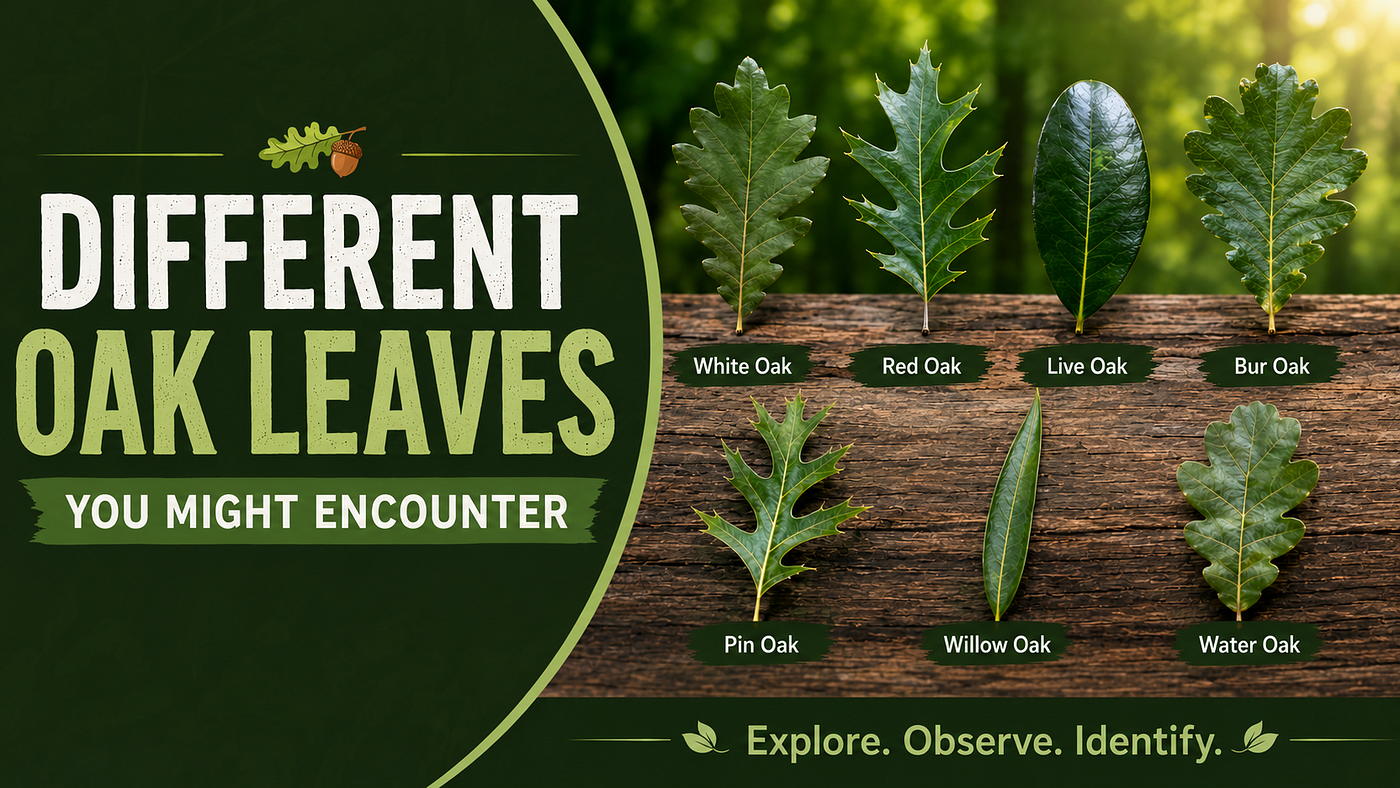
Oak trees are among the most recognizable trees in North America, but identifying them is not always as simple as it seems. One of the easiest ways to tell oak species apart is by examining their leaves. Each species has its own unique leaf shape, size, and texture, making leaves one of the most reliable identification features.
Whether you are exploring a park, maintaining your landscape, or simply curious about the trees around you, learning to recognize different oak leaves can make tree identification much easier.
Why Oak Leaves Are Important for Identification
While bark, acorns, and the overall shape of a tree can provide helpful clues, oak leaves are often the quickest way to identify different species. Their lobes, edges, veins, and overall appearance can reveal valuable information about the type of oak you are looking at.
When examining an oak leaf, pay attention to:
- Leaf shape
- Number of lobes
- Rounded or pointed edges
- Leaf size
- Color
- Texture
- Vein pattern
Studying several leaves from the same tree will usually give you a more accurate identification than looking at just one.
White Oak Leaves
White oak leaves are known for their rounded lobes and smooth edges. They have a soft, classic appearance that makes them easy to distinguish from many other oak species.
Key Characteristics
- Rounded lobes
- No bristle tips
- Deep rounded indentations
- Medium to dark green color
- Red or brown fall foliage
White oak leaves are among the easiest to recognize because of their rounded, balanced shape.
Red Oak Leaves
Red oak leaves are very different from white oak leaves. Their lobes are pointed and each tip ends with a small bristle.
Key Characteristics
- Pointed lobes
- Tiny bristle tips
- Deep sinuses between lobes
- Glossy green surface
- Bright red fall color
The pointed lobes are usually the fastest way to identify a red oak.
Live Oak Leaves
Live oak leaves have a completely different appearance than most other oak species.
Instead of deeply lobed leaves, they feature:
- Oval shape
- Thick leathery texture
- Dark green upper surface
- Pale green underside
- Evergreen foliage in many southern climates
Because live oaks retain their leaves much longer than deciduous oaks, they are easy to recognize throughout the year.
Bur Oak Leaves
Bur oak leaves have one of the most unusual shapes in the oak family.
Their leaves typically include:
- Large rounded lobes
- Narrow middle section
- Broad upper half
- Thick texture
The unique hourglass shape makes bur oak leaves stand out from other oak species.
Pin Oak Leaves
Pin oak leaves are deeply divided with narrow, pointed lobes that give the tree a delicate appearance.
Key Characteristics
- Deep leaf cuts
- Sharp pointed lobes
- Bright green summer foliage
- Red to bronze fall color
Their deeply cut leaves make pin oaks relatively easy to identify.
Willow Oak Leaves
Willow oak leaves often surprise people because they look very different from traditional oak leaves.
Instead of lobes, they have:
- Long narrow leaves
- Smooth edges
- Flexible texture
- Bright green color
Because of their shape, willow oaks are frequently mistaken for willow trees.
Water Oak Leaves
Water oak leaves are unique because their shape can vary greatly, even on the same tree.
Some leaves are narrow while others have rounded ends resembling small spatulas.
Typical features include:
- Smooth margins
- Rounded tips
- Thick green foliage
- Variable leaf shapes
This natural variation sometimes makes water oaks more difficult to identify.
How Oak Leaves Change Throughout the Year
Oak leaves change as the seasons progress, providing additional clues for identification.
Spring
New leaves emerge with lighter green colors and softer textures.
Summer
Leaves become darker, thicker, and reach their full size.
Fall
Many deciduous oak species display attractive shades of:
- Yellow
- Orange
- Red
- Brown
Evergreen species such as live oaks retain their foliage much longer, although older leaves are gradually replaced with new growth.
Common Mistakes When Identifying Oak Leaves
Many beginners make simple mistakes when trying to identify oak trees.
Some of the most common include:
- Looking at only one leaf
- Ignoring whether the lobes are rounded or pointed
- Relying only on leaf color
- Forgetting to examine bark and acorns
- Confusing evergreen and deciduous species
Using multiple identifying features together provides much more accurate results.
Learn More About Oak Tree Identification
Oak leaves are one of the best tools for identifying different species, but they are only one part of the process.
For a complete step-by-step guide, explore our article on **how to identify an oak tree**. It explains how to recognize oak species using leaves, bark, acorns, growth habits, and other key characteristics, making it easier to identify different types of oak trees with confidence.
Final Thoughts
Oak leaves come in a wide variety of shapes, sizes, and textures. From the rounded lobes of white oaks to the slender leaves of willow oaks, each species has characteristics that make it unique.
By learning to recognize these differences, you can identify oak trees more confidently and gain a deeper appreciation for one of North America’s most iconic tree groups.
메타데이터
- post_id
- 0a7fbd13072a
- slug
- different-oak-leaves-you-might-encounter-0a7fbd13072a
- url
- https://medium.com/@treeamigos.tx/different-oak-leaves-you-might-encounter-0a7fbd13072a
- canonical_url
- https://medium.com/@treeamigos.tx/different-oak-leaves-you-might-encounter-0a7fbd13072a
- author_url
- https://medium.com/@treeamigos.tx
- status
- ok
- fetched_at
- 2026-08-06 15:03:11