Hantavirus Fuels Cancer Pathways, While Vanguard, BlackRock & State Street Fund Pfizer and J&J’s…
Hantavirus Fuels Cancer Pathways, While Vanguard, BlackRock & State Street Fund Pfizer and J&J’s Massive Oncology Takeover
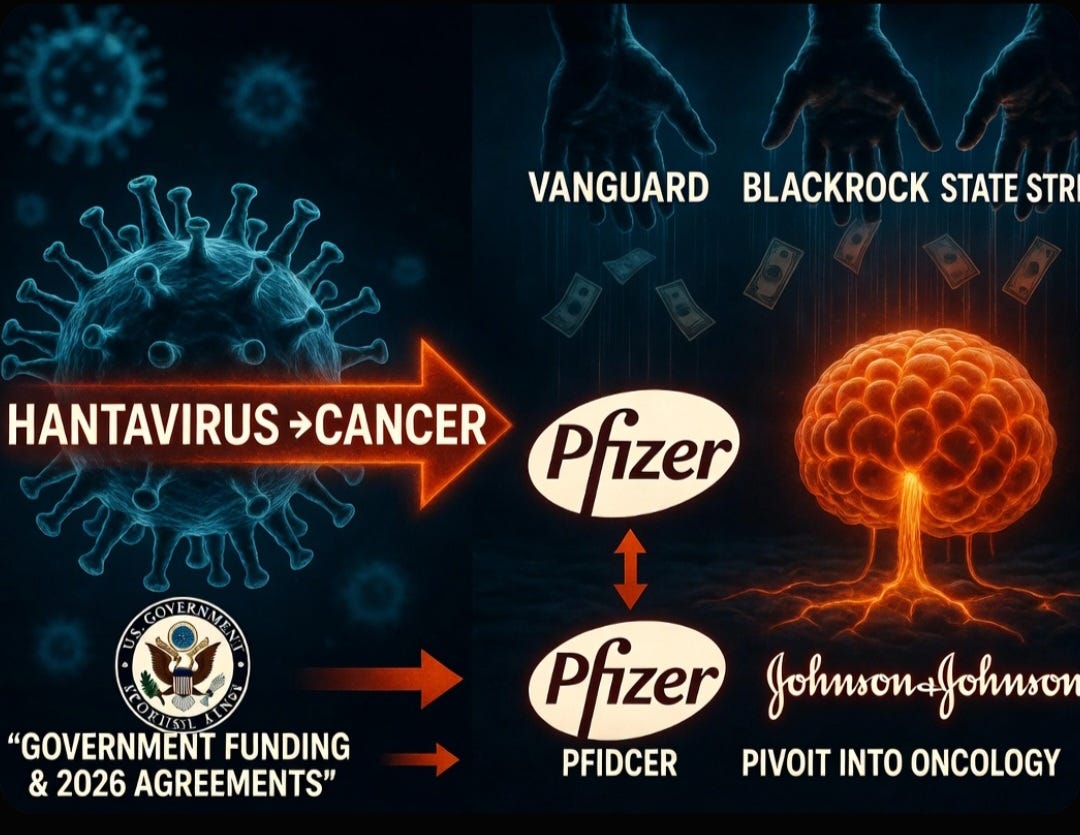
Published research has established direct biological connections between Hantavirus and multiple core mechanisms of cancer development, tumor survival, and progression. These are not fringe observations. They are documented in peer reviewed studies.
━━━━━━━━━━━━━━━━━━
Hantaviruses actively:
• Inhibit apoptosis (programmed cell death), allowing infected cells to evade natural destruction. This is a defining hallmark of cancer cells. This occurs through interference with mitochondrial death signaling, upregulation of pro survival BCL 2, inhibition of granzyme B and caspase 3, and protection from cytotoxic lymphocyte killing.
• Drive chronic inflammation and cytokine activation, creating tumor promoting microenvironments.
• Disrupt endothelial and vascular signaling, pathways central to angiogenesis, metastasis, and tumor vascularization through VEGF and related cascades.
• Induce oxidative stress, mitochondrial dysfunction, and cellular damage, fueling DNA instability and carcinogenesis.
• Deploy immune evasion and altered signaling through TNF alpha, Fas, caspase pathways, and inflammatory remodeling. These are mechanisms now aggressively targeted in oncology and immunotherapy.
━━━━━━━━━━━━━━━━━━
These overlapping pathways, TNF α signaling, VEGF, Fas, caspases, immune escape , are foundational in modern cancer biology.
Hantavirus research illuminates precisely the survival tactics cancer cells exploit.
━━━━━━━━━━━━━━━━━━
The Aggressive Corporate Repositioning
As these scientific overlaps deepen, Pfizer and Johnson & Johnson have executed a decisive pivot away from waning pandemic era assets into:
• Oncology • Biologics • Immune therapeutics • Cell and gene therapy • Precision medicine • Advanced cancer infrastructure
Post 2025, with mRNA emergency programs slowing and COVID related funding and procurement declining, both companies accelerated massive capital deployment into long term oncology dominance precisely when contraction might have been expected.
Pfizer continues heavy investment in its oncology pipeline, ADCs, and next generation assets.
J&J has doubled down on similar fronts.
━━━━━━━━━━━━━━━━━━
Government Alignment and Manufacturing Expansion
In 2026, Johnson & Johnson quietly secured a major U.S. government agreement involving:
• Drug pricing cooperation • Tariff exemptions • Domestic manufacturing expansion • Commitments to increased U.S. production
This coincided with new manufacturing facilities in North Carolina and Pennsylvania, advancing its $55 billion U.S. investment initiative heavily focused on:
• Oncology • Biologics • Cell therapy • Advanced therapeutics
Pfizer has similarly ramped up oncology R&D, acquisitions, and infrastructure amid the broader sector transition.
━━━━━━━━━━━━━━━━━━
Institutional Concentration
The Same Hands Direct the Flow
This repositioning occurs under concentrated institutional control.
The largest asset managers dominate ownership and influence capital allocation across pharma, biotech, healthcare ETFs, and indexes.
Pfizer Major Institutional Owners (recent filings)
• Vanguard Group: ~9.5% • BlackRock: ~8.7% • State Street: ~5.3% • Geode Capital: ~2.3%
Overall institutional ownership: ~65–68%
Johnson & Johnson Major Institutional Owners
• Vanguard Group: ~10.1% • BlackRock: ~8.7% • State Street: ~5.6% • Geode Capital: ~2.4%
Overall institutional ownership: ~74%
━━━━━━━━━━━━━━━━━━
These same players, Vanguard, BlackRock, State Street, and aligned giants, hold commanding stakes across pharmaceutical leaders, oncology focused entities, biologics, and precision therapeutics.
Their influence flows through:
• Pensions • Retirement accounts • S&P 500 index funds • Passive investment vehicles
Creating tight alignment on sector strategy.
━━━━━━━━━━━━━━━━━━
The Coordinated Strategic Sequence
Phase 1
COVID accelerated global biotech infrastructure, mRNA platforms, and emergency capital.
Phase 2
Pandemic funding and procurement normalized.
Phase 3
Massive reallocation into oncology, biologics, immune modulation, cell therapy, AI drug discovery, and precision medicine.
Phase 4
Governments treat advanced pharma and biologics manufacturing and therapeutic infrastructure as strategic national assets, extending incentives, tariff relief, domestic production mandates, and direct agreements.
━━━━━━━━━━━━━━━━━━
Pfizer and J&J are expanding oncology, biologics, and domestic facilities aggressively while many sectors retrench.
Government coordination, especially J&J’s 2026 deal, and institutional concentration reinforce this as a high conviction, system level shift.
━━━━━━━━━━━━━━━━━━
The Convergence
The convergence is stark:
• Hantavirus revealed cancer biology pathways • Exploding oncology and biologics investment • Institutional ownership overlap • Government backed infrastructure builds • AI powered therapeutics
What started as pandemic infrastructure acceleration has evolved into a deliberate, heavily capitalized bet on:
• Cancer • Immune therapeutics • Advanced biologics
Steered by the most powerful financial and corporate actors.
━━━━━━━━━━━━━━━━━━
The quiet repositioning is now overt.
The lines are drawn.
메타데이터
- post_id
- 0aabafa72f8f
- slug
- hantavirus-fuels-cancer-pathways-while-vanguard-blackrock-state-street-fund-pfizer-and-j-js-0aabafa72f8f
- url
- https://medium.com/@shqutajv/hantavirus-fuels-cancer-pathways-while-vanguard-blackrock-state-street-fund-pfizer-and-j-js-0aabafa72f8f
- canonical_url
- https://medium.com/@shqutajv/hantavirus-fuels-cancer-pathways-while-vanguard-blackrock-state-street-fund-pfizer-and-j-js-0aabafa72f8f
- author_url
- https://medium.com/@shqutajv
- status
- ok
- fetched_at
- 2026-06-29 01:02:39






