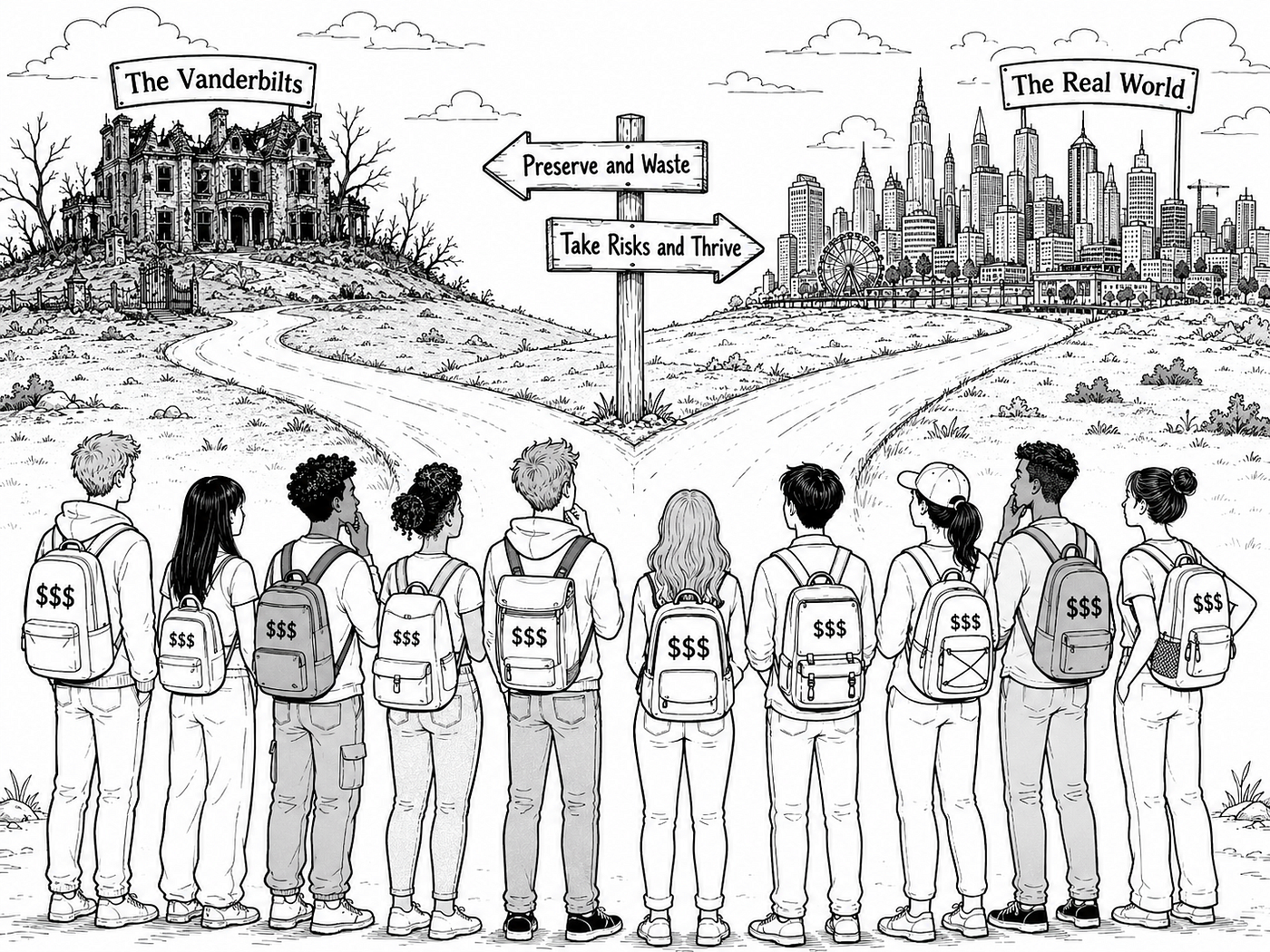
Why The US Won’t Win The World Cup This Year
…but they just might someday, if they inject some ‘badass’ into their game.
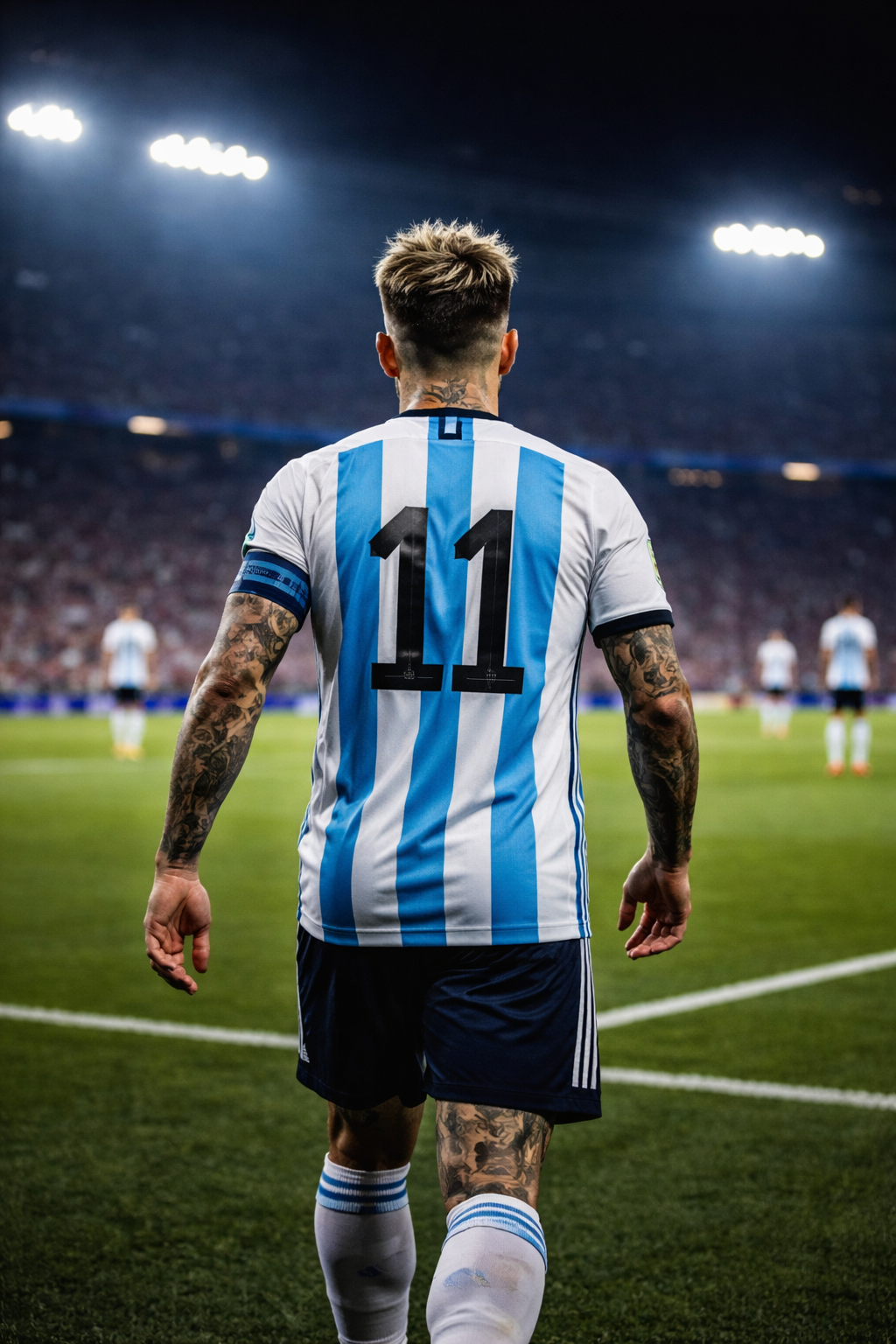
If you are going to have badass tattoos, then be badass!
Why The US Won’t Win The World Cup This Year
…but they just might someday, if they inject some ‘badass’ into their game.
Not so many years ago, I spent a couple of weeks in Buenos Aires. I went there for “the football”. Well, maybe I went there to see a very historic city too, in a remarkable country, but deep down it was for football. And it was the same for my travel companion.
We did some interesting things on our trip, like visiting where Evita is entombed, taking in a Tango performance, enjoying a night at the opera in El Teatro Colón, and eating some good steak in Palermo. But they were all fillers, things to do when we couldn’t get to a football match.
Just to be clear, when I use the word ‘football’, I am referring to the sport played by the likes of Maradona, Messi, Ronaldo and Beckham. It is also called ‘soccer’, and I’m fine with that too. (More about that later.)
Like London, where there are somewhere in the order of 15 fully professional clubs, Buenos Aires also has a huge concentration of pro outfits. By some counts, it has 25. Both cities have clubs that are known the world over, e.g. Chelsea, Arsenal, Boca Juniors, River Plate etc.
Now compare that to major cities in the US. New York, the biggest of them all, has 11 franchises, spread across five major sports.
Each club in the Argentinian capital defines its neighborhood, its region of the city, and vice versa. Even more so than in London, and that’s a statement in and of itself.
The legendary Liverpool manager Bill Shankly once said, “Some people believe football is a matter of life and death, I can assure you it is much, much more important than that”.
Especially in Buenos Aires, as we were to witness first hand. Our whole lives, we had read about their ‘off the charts’ devotion to the game and to their teams. We’d watched the 1978 World Cup on TV. And yet it truly only became real when we were there in-person.
So, having arrived, my mate and I learned that it is very hard to get tickets to games. They are usually only distributed among members of official supporters clubs, and since we weren’t members and didn’t know any, that door was closed to us. (And to compound the difficulty, ‘away’ fans are banned from all games.)
Our original plan was to take in three games while there, yet despite our most desperate efforts we could not get tickets to a River Plate game, so we couldn’t achieve our goal. But we could live with that, because the team we both wanted to see most of all was Boca Juniors, and at their stadium, La Bombonera.
Luckily, my travel companion is a very clever fellow, and a seasoned world traveler. He can pretty much land anywhere, and figure it all out.
Which he duly did, and hey presto he snagged tickets for us to a Boca game, at La Bombonera, and one at the home of a club named San Lorenzo. (I won’t reveal how he got his hands on them, a story for another day maybe.)
And so it is that at the San Lorenzo vs. Huracán match, an intense local rivalry, is where this story really begins.
To even get to the San Lorenzo ground in Boedo, a working class neighborhood, was an expedition. Situated a distance to the west and south of the city’s ritzier spots, very much outside the tourist bubble of sections like Palermo where we stayed, getting there required my pal’s sharpest sherpa skills. Three trains and maybe a mile of walking through inelegant streets in various states of disrepair, brought us within sight of the top of the stands, poking as they were above the surrounding apartment buildings, and within earshot of the crowd, as it revved up its chanting and synchronized bouncing. The force and rhythm of this massive mosh pit created the illusion that the earth was shaking beneath us, and that structures were wobbling around us. Or maybe it wasn’t an illusion.
A growing number of clusters of young men, clad in the blue and red of San Lorenzo, hustled along beside us. This ratcheting up of intensity in the air, made us more eager still to be inside the ground.
First, however, was the small matter of hunger. The smell of meat being cooked invaded our nostrils. Traveling out from our accommodation in Palermo had left us ravenous, and it being a full hour before kick-off, there was time to eat. We followed the scent and found ourselves on a tiny side-street off the beaten path, which looked like it had recently been the target of an aerial bombing mission; massive craters in the roadway, derelict houses here and there, and broken, uneven paving. Meanwhile, there in the middle of the street was a gathering of families, men, women and little kids, seated at little tables, feasting heartily as if at a picnic in a pleasant public park in a more affluent part of the world. A pair of unleashed mongrel dogs wagged their tails at their feet, anticipating the occasional falling morsel.
From the limited choices on offer at the vendor’s grill, we availed of a couple of beef sandwiches, and sat at one of the tables. I recall thinking that it might not be safe to eat the food from such an unregulated foodservice outlet, and saw myself doubling up in pain, diarrhea flowing out one end of me. Such thoughts passed from my mind with my first bite. I can’t remember ever eating such a tasty combination of bread and meat, and to this day I feel it was one of the healthiest meals I’ve ever had, so well did it agree with my digestive system. I can’t explain why, except to think that it was free of all the preservatives and other chemicals that my food is usually host to.
Satisfied, we arose and made our way to the match. More and more fans were being funneled with us to the stadium. We found our gate, and our tickets held up under scrutiny (i.e. they weren’t counterfeit). After a pat-down, we began the climb to our seats in the stands.
I won’t try to describe what we experienced next; **this video will give you an idea**.
I’ve been on the terraces at big games in England and Italy as far back as the 1980s, a daredevilish and dangerous milieu that, for better or worse, no longer exists. (I will leave you to research the topic of football terraces from that era.) Here’s a game I was at in Dublin, **once upon a time**. I tell you, none compare to the atmosphere and militant rowdiness of the San Lorenzo game, and for that matter, at La Bombonera a few days later.
Incidentally, among scenes of mad delirium, San Lorenzo **defeated their bitter enemy one-nil**.
Total side note: San Lorenzo was the favorite team of the late Pope Francis.
All this fanaticism for club football in Argentina rolls up to the national side, as it does for most countries the world over. Countries like Spain, France, Mexico, Senegal, and Brazil, just to name a few.
The endeavors of the national team are joined at the hip to the emotions of entire populations.
National identity is inseparable from football.
Not so in the US.
Which brings me to the real reason I am writing this story.
I have lived in the US for many years. (You can probably deduce elsewhere in this article where I spent my formative years.) I am of America now, and I love my adopted country. Through it all, soccer remains my favorite sport. But, much as I would like to have a Shankly-esque life-or-death passion for the USMNT, the US Men’s National Team, I simply can’t get there. To fill the gap, **I remain a fanatico for these lads.**
There are many reasons why soccer is not the biggest men’s sport in America and I don’t need to go into them in too much depth here, just to mention that competition with four major team sports plays a big role in this. And other stuff doesn’t help, **as Landon Donovan talks about here**. Landon, it should be noted, was a great player in his day.
Landon also wants to fix US soccer so it can realistically compete for the world’s number one spot, which any fan will tell you is occupied by the winner of the World Cup.
I want the same thing, Landon. Here’s my solution:
Instead of examining all the reasons for the problem in detail, let’s just consider a radically different approach to the game, transcending the business of soccer, and have a strategy grounded in culture and identity.
Which is why I tell the story of the San Lorenzo match.
My basic point is this:
Soccer has not gripped the hearts and minds of most of the American people, a prerequisite to winning the World cup, because the way it has been created in the US is just too clean, too nice.
Can you picture the kids on the streets of Boedo having access to the lovely facilities and fields made available to even poor US kids?
Nope, the kids on the streets around the San Lorenzo’s ground (el Nuevo Gasómetro, by the way) are to be seen kicking a tattered football around its cratered thoroughfares, or on an unassuming patch of ground, with maybe a spot of grass here and there, using bundled up sweaters for goalposts.
Let’s imagine American kids doing this.

US kids can play rough too.
Soccer, you see, was born of the industrial revolution in England, given life by those who themselves were to live out their lives toiling in factories, in coal mines or eking out an existence in cities full of crowded tenements. Eventually, some men of means were smart enough to see that there was money to be made and the sport became professional. But the hordes on the terraces compartmentalized that fact. Football, at its most primal is all about grunge and tribal conflict. A soccer pitch is a cauldron of fire, the realm of gladiators. A goal is a stake through the heart of the other team. This is why hooligans find a home in soccer.
Yes, Pele called it the beautiful game, and it is, it truly is, but that was his way of countering the perception of soccer as a gentleman’s game played by thugs.
Therefore, I propose we change soccer in the US…
…with a re-brand.
Let’s create a badass vibe.
Tough. Uncompromising.
Starting with the USMNT
Soccer will become a more attractive sport among the people of the US because of this. It will start at the top and trickle down.
How will we do that, exactly, I hear you ask?
Like this:
- Pick one place to play home games. Make it a symbol of US soccer. A shrine, a place that comes to carry the same aura as Wembley, or the Nou Camp. Stop this practice of playing all over the county, which is good in an inclusive sense but is not really helping to conjure up enough visceral passion. My preference would be a place like Philadelphia, which would leverage the image for the city that the Eagles have created. But don’t use their stadium. It’s okay to start with Subaru Park, which only seats about 18,000, and that’s okay. A packed little stadium can be as intimidating and hostile to the opposition as a big one. Maybe just change the name of the place, or give it a badass nickname.
- Don’t lose at home, to anyone, for a bunch of games, for years even. Hang tough for a draw against the better teams. Play defensively if you must, but do not lose! Sooner or later you will be boasting that no foreign team has won on American soil for yea many years. Other teams will not want to play in the US. The USMNT will be feared. I know this because the Republic of Ireland did it back in the day, went unbeaten in Ireland for quite a stretch, before they even qualified for a major tournament like the World Cup. Everyone, even the world’s top teams, feared playing in Dublin.
- Build a reputation for having players sent off. Seriously. Not for violent, dangerous tackles, you don’t want to ruin anyone’s career by causing a horrific injury. Get sent off for lashing out, in the heat of battle, some ‘in your face’ stand-offs with loud and bad language, a couple of shoves, some bench clearing, that kind of thing. Let there always be an animal tension during a USWNT game, something just waiting for a spark to ignite it. You might lose a game or two, though let that not be at home, but you’ll be showing the world what you are really made of. Players like Roy Keane and Eric Cantona were excellent footballers, yet they were equally feared for their steel on the field. And the US women’s team, the USWNT, knows a little about ‘on the field’ badass, and they have the medals to show for it.
- Embrace the word ‘soccer’. Reappropriate it. It was the English that coined the word originally, it’s derived from ‘Association Football’. The word made its way to the US and stayed there, while the English discarded it. Now they are dismissive when Americans use it. Americans should use it unashamedly. Too often I see Americans using the word ‘football’ when talking to non-Americans, as if to appease them. No more appeasement. Make the word ‘soccer’ synonymous with ‘badass’.
I have other ideas too. One is at the youth level. Create commercial spaces that resemble street soccer and let kids just run around and play with a less-than-pristine football, without uniforms, using clothing for goal posts, like in the picture above. That’s the world I grew up in. Sure there’ll be some cuts and bruises and some crying, and maybe a rare broken bone or two, but most kids will thrive.
Maybe there’s a reason Italy, four time winners, has not qualified for the last three World Cups, losing out to tiny countries like Kosovo and North Macedonia, places that have a tougher history of late than Italy. Their people are made more badass these days, I think.
So USMNT guys, let’s have those badass tattoos you sport, really stand for something.
메타데이터
- post_id
- 0aad76c2e614
- slug
- why-the-us-wont-win-the-world-cup-this-year-0aad76c2e614
- url
- https://blog.venturemagazine.net/why-the-us-wont-win-the-world-cup-this-year-0aad76c2e614
- canonical_url
- https://blog.venturemagazine.net/why-the-us-wont-win-the-world-cup-this-year-0aad76c2e614
- author_url
- https://medium.com/@paul_69309
- status
- ok
- fetched_at
- 2026-07-11 08:58:46